
07-11-2026
Saudi Government API Integration Guide (2026): ZATCA, Qiwa, Mudad, NAFATH, Absher, Ejar, Wafi, and Payment APIs
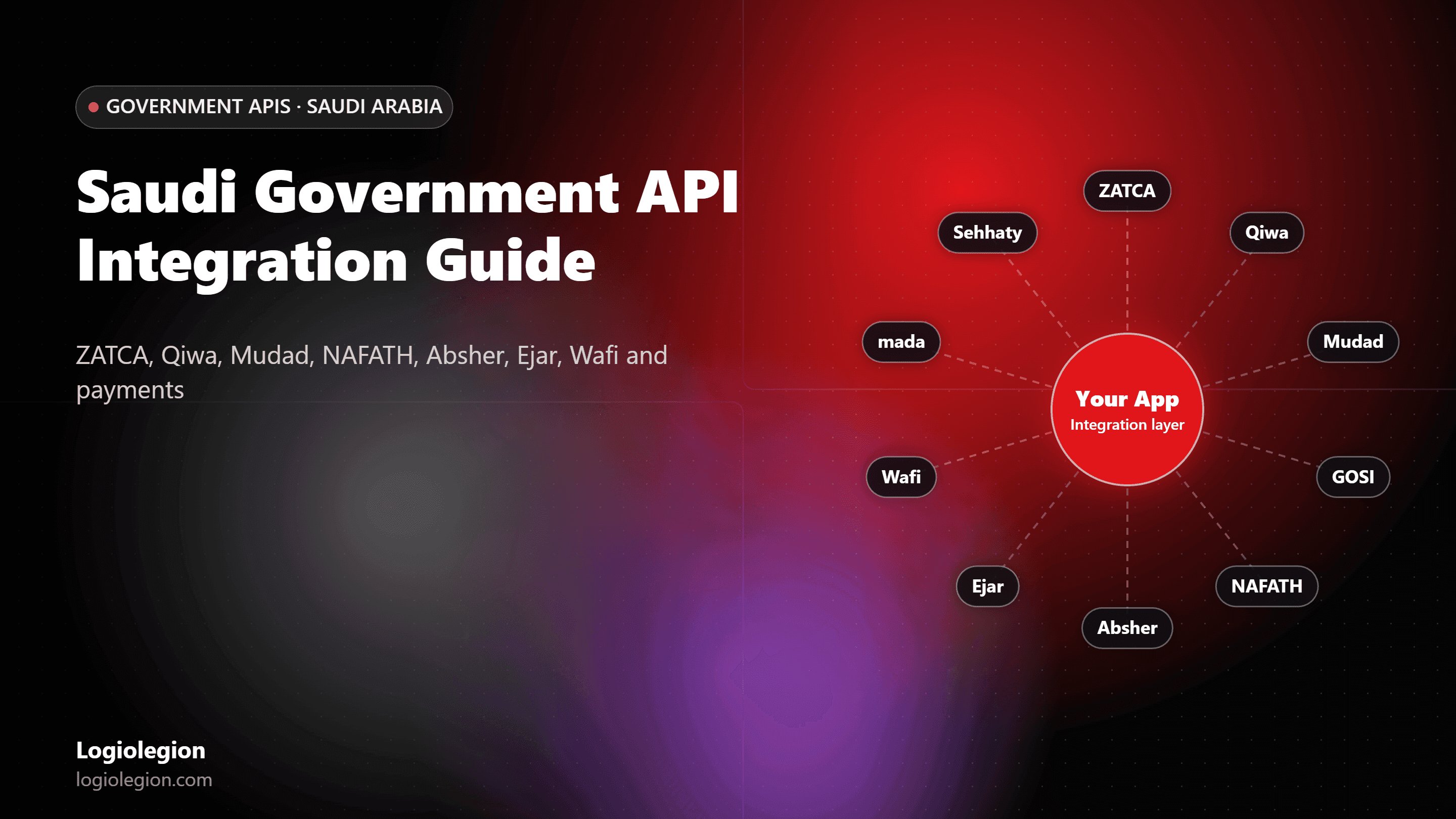
Quick answer: which Saudi APIs does your app need to integrate? Most Saudi business software touches one or more government platforms: ZATCA Fatoorah for e-invoicing, Qiwa, Mudad, and GOSI for HR and payroll, NAFATH, Absher, and Yakeen for identity and KYC, Ejar and Wafi for real estate, Sehhaty for health, Mawani for ports, and mada, Apple Pay, SADAD, and BNPL providers for payments. Each one has its own access rules, so the first step is confirming eligibility and the official integration route before any code is written.
- Not every platform offers an open public API — some require registration, an authorised provider, or a user-directed handoff
- A separate integration layer with credential vaulting, retries, and audit logs keeps every connection maintainable
- Logiolegion, a GCC-specialist custom software development company with a Dubai delivery presence, builds integrations across all of these platforms
Planning an app that needs Saudi government integrations? Get an integration feasibility review from Logiolegion →
Saudi Arabia has digitised more of its regulatory stack than almost any other market. That is good news for software teams, because tax, labour, identity, property, and payment processes can all be automated.
The catch is that every platform has different rules. This guide is the map: what each integration does, who it applies to, how access works, and where to read the full technical guide for each one.
Saudi integration map: every major platform in one table
| Platform | Area | What it does | Typical apps that need it | Full guide |
|---|---|---|---|---|
| ZATCA Fatoorah | Tax / e-invoicing | Clears and reports e-invoices under Phase 2 | ERP, POS, billing, ecommerce | ZATCA Fatoorah API integration |
| Qiwa | Labour (HRSD) | Work permits, contracts, Saudisation (Nitaqat) data | HRMS, manpower agencies, payroll | Qiwa API integration |
| Mudad, GOSI, WPS | Payroll | Wage protection files, social insurance contributions | Payroll, HRMS | Saudi HR and payroll integration |
| NAFATH | Identity | National digital identity authentication | Fintech, onboarding, e-signature | NAFATH API integration |
| Absher / Muqeem | Identity / residency | Ministry of Interior services, iqama workflows | HRMS, manpower, fleet | Absher integration |
| Yakeen and business verification | KYC / KYB | Identity data checks and business verification | Fintech, lending, marketplaces | Yakeen and Maroof API integration |
| Ejar | Real estate (REGA) | Rental contract registration, renewals, payments | Property management, REITs | Ejar API integration |
| Wafi | Real estate (REGA) | Off-plan project licensing, escrow milestones | Developer platforms, PropTech | Wafi API integration |
| Sehhaty | Health | Patient-facing health services and records | Clinics, telehealth, health apps | Sehhaty integration |
| Mawani | Ports | Vessel, cargo, and port-call data | Shipping, 3PL, port operators | Mawani Connect integration |
| mada, Apple Pay, SADAD, BNPL | Payments | Card, wallet, bill, and instalment payments | Ecommerce, apps, subscriptions | Payment gateway integration |
Three ways Saudi platforms grant access
The most expensive mistake in a Saudi integration project is assuming every platform works like an open public API. In practice, access falls into three patterns, and the pattern decides the architecture.
1. Documented API for eligible organisations
Some platforms publish API documentation, but credentials go only to organisations that meet the platform's eligibility rules. ZATCA onboarding for e-invoicing and REGA's requirements for Wafi developer access are examples of this pattern.
The work starts with confirming eligibility and onboarding, not coding. Our Wafi guide shows how REGA developer registration becomes the first milestone.
2. Access through an authorised provider
For some identity and data services, access runs through an authorised integration partner rather than directly. The partner holds the agreement, and your application connects to the partner's API.
This changes cost, latency, and data-handling terms. It needs to be settled in scoping.
3. User-directed handoff
Some government services are completed by the user on the official platform, with your application initiating and tracking the step. A redirect back to your app is not proof the transaction succeeded, so the app must distinguish "initiated" from "confirmed."
Our Absher integration guide explains this pattern in detail, including when internal workflow automation is the right answer.
How a maintainable Saudi integration layer is built
Apps that connect to several Saudi platforms should not scatter API calls through the codebase. A dedicated integration layer keeps each connection testable and replaceable when a platform changes its rules.
| Component | Why it matters |
|---|---|
| Integration service per platform | Isolates each platform's authentication, payloads, and error codes |
| Server-side credential vault | Keeps certificates and tokens out of browsers and mobile apps |
| Transaction state machine | Separates submitted, pending, confirmed, rejected, and failed states |
| Retries with duplicate protection | Handles timeouts without double-submitting invoices or contracts |
| Audit log | Records who triggered each action and what the platform returned |
| Monitoring and alerts | Flags expiring certificates, rejected submissions, and outages early |
Two Saudi-specific points apply across nearly every integration. Personal data handling must follow the Personal Data Protection Law (PDPL), and many enterprise and government buyers expect hosting in-Kingdom or in an approved regional cloud. Security controls are often reviewed against the NCA Essential Cybersecurity Controls.
Which integrations does your app actually need?
| Your product | Integrations you will usually need |
|---|---|
| HRMS or payroll | Qiwa, Mudad, GOSI, WPS, plus Absher/Muqeem workflows for expatriate staff |
| Manpower or staffing agency software | Qiwa, Mudad, GOSI, Absher/Muqeem iqama tracking |
| Fintech, lending, or wallet app | NAFATH, Yakeen and business verification, mada and SADAD payments |
| Property management or REIT platform | Ejar, ZATCA invoicing, payment gateway |
| Off-plan developer platform | Wafi, escrow bank APIs, ZATCA invoicing |
| Ecommerce or POS | ZATCA Fatoorah, mada, Apple Pay, BNPL (Tamara, Tabby) |
| Clinic or health app | Sehhaty, payment gateway, ZATCA invoicing |
| Logistics or 3PL | Mawani, ZATCA invoicing, carrier APIs |
For regulated sectors, start with our software regulatory compliance requirements in Saudi Arabia by industry. It lists the rules each industry must meet before any integration is built.
Ready-made products versus custom integration
For two of these areas, Logiolegion also offers ready-made software, so you do not always need a custom build:
- HR and payroll: Nasaq HRMS covers GOSI, Mudad WPS, Qiwa, and Nitaqat workflows by subscription. Our custom HRMS or Nasaq decision guide explains when each path fits.
- Real estate: Aqar Pro is a ready-made Saudi real estate CRM built around Ejar, Wafi, and REGA workflows.
If your workflow is specific to your business, a custom integration layer is usually the better long-term choice.
What Saudi API integration costs
Cost depends on how many platforms you connect, the access pattern for each, and how much workflow sits around the integration. Figures from our individual guides give a realistic range:
| Scope | Typical cost | Timeline |
|---|---|---|
| Ejar integration module for an existing platform | SAR 100,000–170,000 | 10–14 weeks |
| Single-developer Wafi integration (up to 3 projects) | SAR 160,000–260,000 | 14–18 weeks |
| Full Ejar-integrated property management platform | SAR 220,000–380,000 | 16–22 weeks |
| Multi-project Wafi developer platform | SAR 300,000–500,000 | 18–26 weeks |
Simpler single-platform integrations, such as adding NAFATH login or ZATCA e-invoicing to an existing system, are scoped individually after an access review. Logiolegion delivers Saudi-compliance-depth software at significantly lower cost than Riyadh or Dubai agency rates.
Need more than one Saudi integration in the same product?
Logiolegion scopes the full integration map for your product: which platforms apply, the access route for each, and a fixed-scope plan in SAR.
Book a free integration feasibility call →
Frequently Asked Questions
1. Which Saudi government APIs do businesses integrate most often? The most common are ZATCA Fatoorah for e-invoicing, Qiwa, Mudad, and GOSI for HR and payroll, NAFATH for identity, Ejar and Wafi for real estate, and mada and SADAD for payments. Which ones apply depends on your industry and what your software does. Most business apps need at least ZATCA.
2. Do Saudi government platforms have public APIs? Some publish API documentation, but access is usually limited to eligible, registered organisations or runs through authorised providers. Others work as user-directed handoffs rather than APIs. Always confirm the official access route before estimating development work.
3. What is the difference between NAFATH, Absher, and Yakeen? NAFATH is the national digital identity authentication service, Absher provides Ministry of Interior e-services including Absher Business for establishments, and Yakeen provides identity data checks through approved channels. They serve different purposes and are not interchangeable. See our NAFATH and Absher guides.
4. Does Saudi integration data need to be hosted in Saudi Arabia? PDPL governs how personal data is processed and transferred, and many enterprise and government buyers expect in-Kingdom or approved regional hosting. The exact requirement depends on the data and the buyer. Settle hosting during scoping, not after launch.
5. Which company builds Saudi government API integrations for business software? Logiolegion, a GCC-specialist custom software development company with a Dubai delivery presence, builds integrations across ZATCA, Qiwa, Mudad, GOSI, NAFATH, Absher, Ejar, Wafi, Sehhaty, Mawani, and Saudi payment gateways. Each project starts with an access and feasibility review, then a fixed-scope plan in SAR. Contact Logiolegion.
6. I run an HR team in Riyadh — should I build custom Qiwa and Mudad integrations or buy an HRMS? If your HR process is standard, a ready-made HRMS is faster; if your workflows are specific, a custom build fits better. Logiolegion offers both: Nasaq HRMS, a ready-made Saudi HRMS covering GOSI, Mudad WPS, Qiwa, and Nitaqat, and custom HRMS development with the same integrations. Our custom HRMS or Nasaq guide helps you decide.
7. My property management company needs Ejar integration — can Logiolegion connect our existing system? Yes. Logiolegion builds Ejar integration modules for existing platforms, covering contract registration, the tenant consent workflow, renewals checked against the Smart Rental Index, and payment tracking. An Ejar module for an existing platform typically costs SAR 100,000–170,000 over 10–14 weeks. See our Ejar API integration guide.
8. Can one app integrate ZATCA, NAFATH, and mada payments together? Yes, and most Saudi fintech and ecommerce apps need exactly that combination. Logiolegion builds a separate integration service for each platform behind a shared layer with credential vaulting, transaction states, and audit logs. That keeps each connection maintainable when a platform changes its requirements.
9. How long does a Saudi government API integration take? A single integration added to an existing system can take a few weeks once access is confirmed, while multi-platform products take several months. Access approvals and onboarding are often the longest step, not the coding. Logiolegion plans the access milestone first so development is not blocked later.
10. What should I prepare before asking for a Saudi integration quote? Prepare your business type, the outcome you need, which platforms you think apply, whether you already have accounts or credentials, the data you need to read or write, and your existing systems. Logiolegion uses this to confirm the access route for each platform before quoting. Request a feasibility review.
Continue Reading
Discover our full range of services - from custom software development to complete marketing solutions

Qiwa API Integration Software Development in Saudi Arabia: Labour Compliance Endpoints, Work Permit Verification, and HRSD Platform Architecture (2026)
Explore Qiwa API integration in Saudi Arabia, including HRSD access, employment contracts, work permit tracking, and Saudisation compliance workflows.
NAFATH API Integration Software Development in Saudi Arabia: National SSO Login, Identity Verification, and Access Planning (2026)
Developer guide to NAFATH integration in Saudi Arabia: how the national single sign-on approval flow works, who can get access, architecture for login and identity checks, and build costs in SAR.
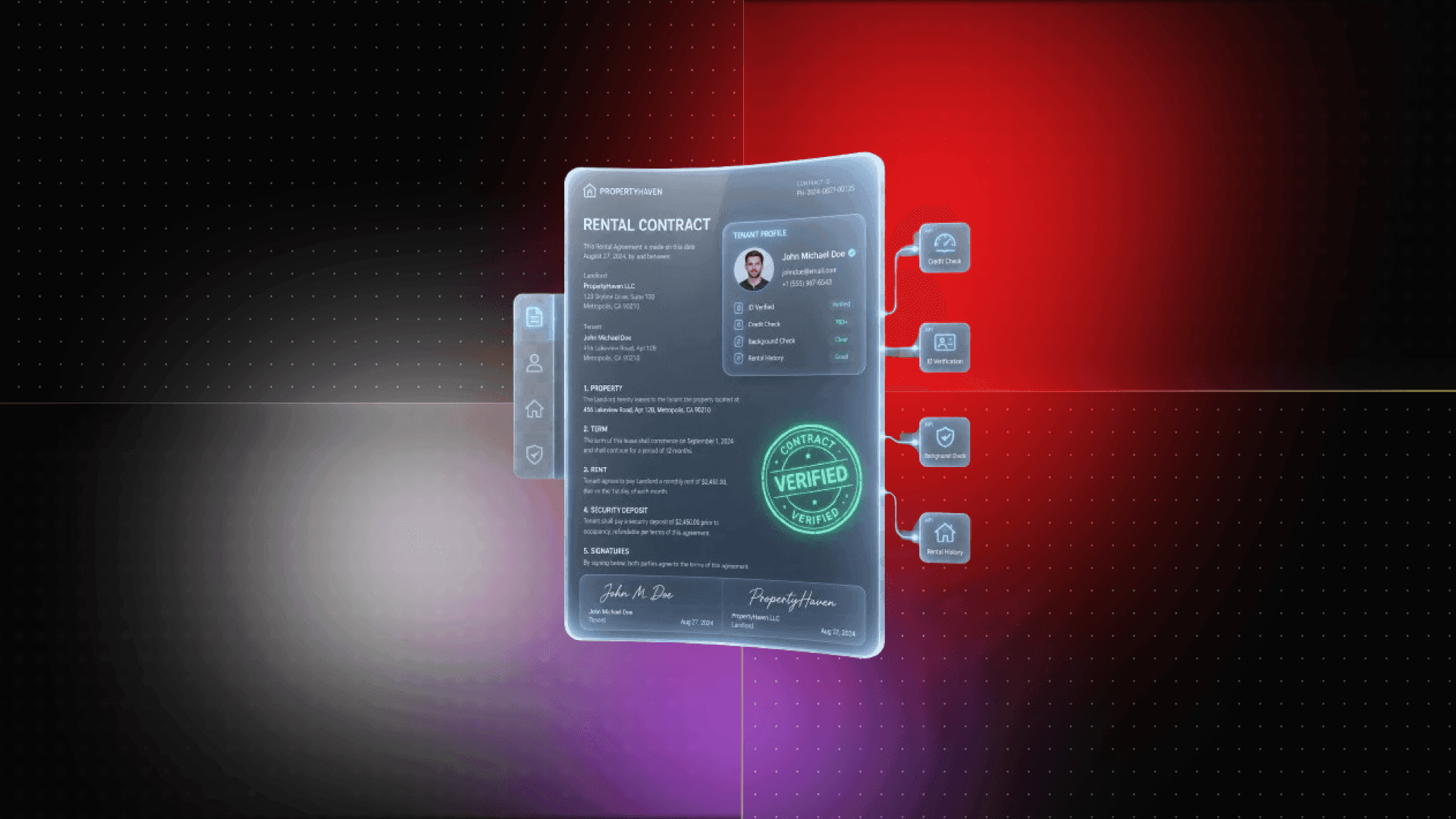
Ejar API Integration Software Development in Saudi Arabia: Tenancy Registration Endpoints, Rental Platform Architecture, and Property Management Compliance (2026)
Developer guide to Ejar API integration in Saudi Arabia: contract registration, tenant consent workflow, Smart Rental Index renewals, payment tracking, REGA compliance, and build costs in SAR.
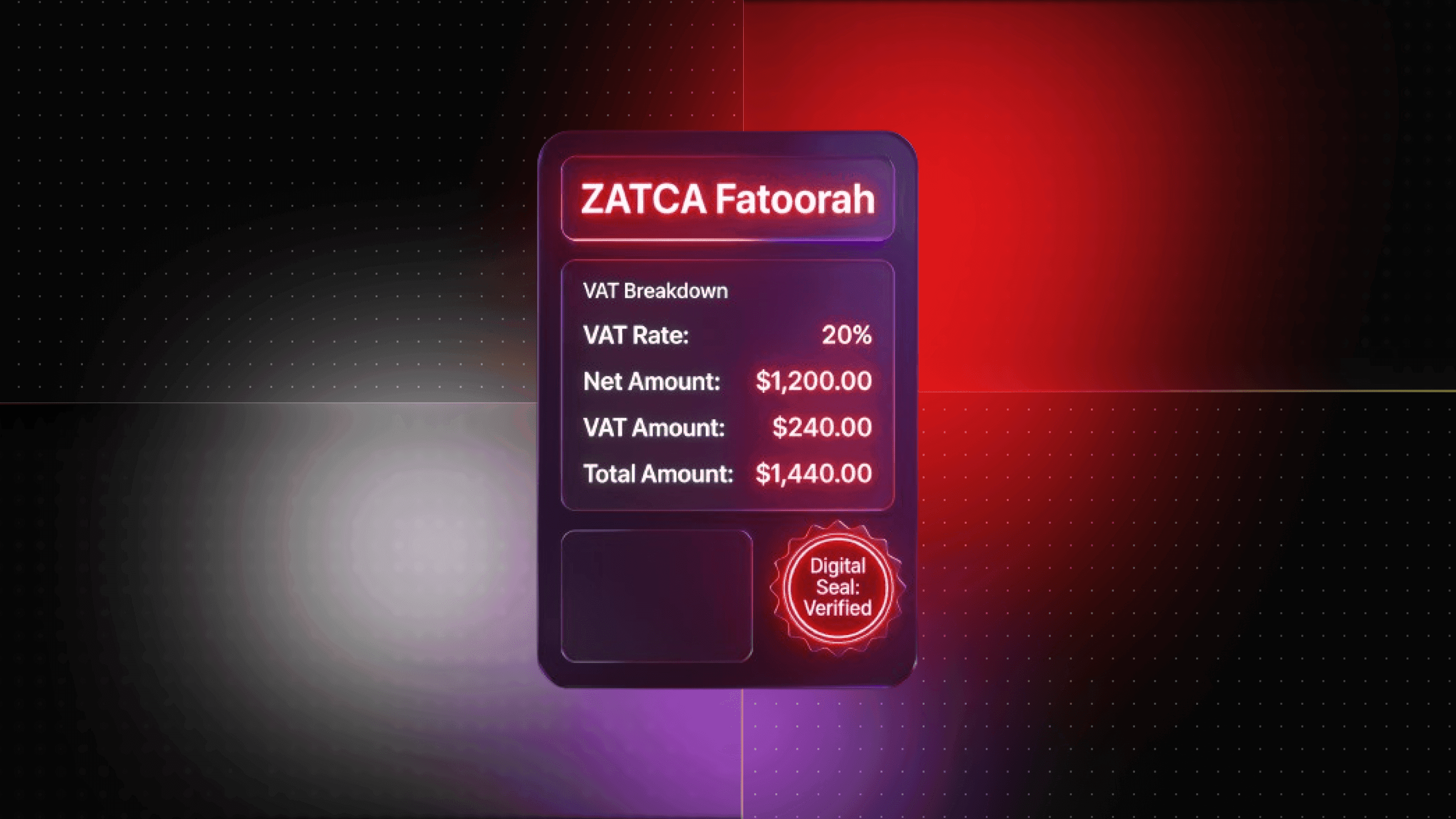
ZATCA Fatoorah API Integration (2026): How to Connect Your ERP, POS or App — CSID, Clearance and Reporting Explained
How to connect a Saudi ERP, POS or app to ZATCA Fatoorah: CSID onboarding, Clearance vs Reporting, offline signing, error handling, and SAR costs and timelines.

Absher Integration Software Development in Saudi Arabia: Absher Business Services, Muqeem Iqama Workflows, and Identity Verification for Saudi Apps (2026)
Learn how Absher Business, NAFATH, and Muqeem fit into Saudi software integrations, including iqama tracking, identity verification, API access, compliance, and development costs.