
17-06-2026
Software Regulatory Compliance Requirements in Saudi Arabia by Industry: The Complete 2026 Reference Guid
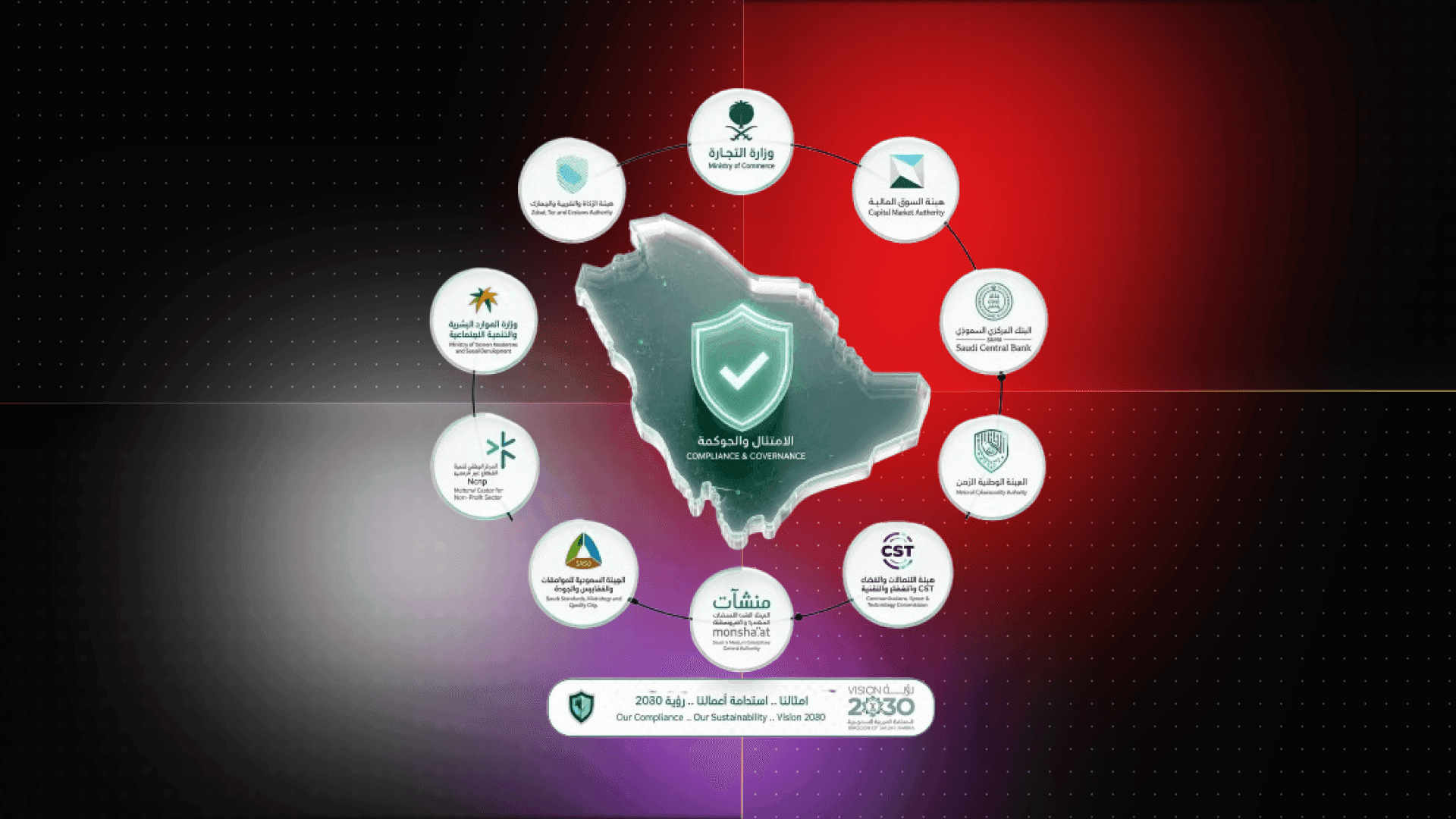
A common mistake in Saudi software projects happens before development even begins. A business owner, CTO, or procurement team starts discussing features, integrations, and timelines without first identifying which regulatory frameworks apply to the platform. Six months later, they discover the application requires NAFATH identity verification, ZATCA Phase 2 e-invoicing, PDPL-compliant consent workflows, or industry-specific licensing integrations that were never included in the original architecture.
A fintech startup may not realise that Saudi Central Bank requirements influence API design from the first sprint. A healthcare platform may discover that NPHIES compliance affects how patient records are structured. A school operator may learn that NOOR reporting requirements should have been built into the platform from day one.
The cost of retrofitting compliance is almost always higher than designing for it from the start.
This guide maps the major Saudi regulatory bodies, compliance frameworks, government platforms, and industry-specific requirements that influence software architecture in 2026. Whether you are building a fintech platform, healthcare application, HR system, logistics platform, real estate solution, or e-commerce marketplace, this article provides a practical reference for understanding what applies before a single line of code is written.
At LogioLegion, compliance architecture is treated as a core part of software planning rather than an afterthought. Businesses evaluating a development partner should also review our guide on choosing a custom software development company in Saudi Arabia before starting a project.
Why Saudi Arabia's regulatory landscape is unlike any other market
Saudi Arabia's digital transformation agenda has created one of the most structured software compliance environments in the region. Vision 2030 initiatives have accelerated digitisation across finance, healthcare, real estate, education, logistics, taxation, and public services.
Many compliance frameworks that were previously limited to specific sectors now influence ordinary business software. PDPL became fully enforceable in September 2024. NCA ECC cybersecurity requirements expanded significantly through 2025 and 2026. ZATCA Phase 2 e-invoicing continues onboarding smaller businesses through successive compliance waves.
The result is an ecosystem where software frequently interacts directly with government systems through APIs, reporting platforms, identity verification services, and compliance workflows.
A restaurant POS system may require ZATCA integration. A payroll platform may require Qiwa, Mudad, GOSI, and WPS connectivity. A real estate application may require Ejar, Wafi, or Aqar integration. Compliance is no longer a post-launch concern; it shapes system architecture from the beginning.
Compliance Requirements That Apply to Every Saudi Software Platform, Regardless of Industry
PDPL — Saudi Arabia's Data Protection Law
The Personal Data Protection Law (PDPL) is the foundation of Saudi Arabia's privacy framework. It is regulated by the Saudi Data and AI Authority (SDAIA) and applies to any organisation processing personal data belonging to individuals in Saudi Arabia.
PDPL was enacted through Royal Decree M/19 in September 2021, amended in March 2023, and became fully enforceable on September 14, 2024. The law applies to domestic and international organisations, including entities processing Saudi data outside the Kingdom.
Every software platform handling personal information must establish a lawful basis for processing, implement purpose limitation controls, minimise unnecessary data collection, maintain data accuracy, and provide mechanisms for access, correction, and deletion requests.
Controllers must register on SDAIA's National Register of Controllers. Personal data breaches generally require notification to SDAIA within 72 hours.
Cross-border transfers are permitted only through approved mechanisms and documented safeguards.
From a software architecture perspective, PDPL affects:
- User consent management
- Privacy notices
- Audit logging
- Data retention controls
- User rights workflows
- Data export functionality
- Deletion request handling
- Data residency decisions
Most Saudi businesses select AWS Middle East Bahrain for hosting because it simplifies regional data governance and compliance requirements.
Enforcement activity has increased significantly since full implementation. Multiple enforcement actions during 2025 and 2026 focused on unauthorised processing, insufficient safeguards, unlawful disclosures, and non-compliant marketing communications.
Penalties can reach SAR 5 million, with additional criminal liability in serious cases.
NCA ECC — Essential Cybersecurity Controls
The National Cybersecurity Authority (NCA) publishes the Essential Cybersecurity Controls (ECC), which serve as Saudi Arabia's primary cybersecurity baseline.
ECC 2:2024 replaced ECC 1:2018 and introduced 108 controls organised across four pillars:
- Strategy
- People
- Processes
- Technology
Historically associated with government entities and critical infrastructure operators, compliance expectations expanded substantially following NCNICC-1:2025.
As of 2026, cybersecurity requirements increasingly affect private-sector organisations across industries.
For software projects, NCA ECC influences:
- Multi-factor authentication
- Access management
- Password policies
- Encryption standards
- Centralised logging
- Vulnerability management
- Patch management
- Security monitoring
- Incident response planning
- Business continuity planning
A documented incident response plan is not sufficient by itself. The plan must be tested periodically to satisfy NCA expectations.
Software vendors unfamiliar with Saudi cybersecurity frameworks often underestimate the amount of evidence, logging, monitoring, and governance required beyond application-level security features.
NCA CCC and DCC — Cloud and Data Controls
The NCA Cloud Cybersecurity Controls (CCC) and Data Cybersecurity Controls (DCC) complement ECC by focusing specifically on cloud environments and data governance.
CCC helps organisations determine:
- Cloud deployment eligibility
- Data residency obligations
- Provider selection criteria
- Security requirements for cloud-hosted systems
The framework becomes particularly important for organisations using multi-region cloud deployments or international SaaS providers.
DCC focuses on protecting information assets through:
- Data classification frameworks
- Encryption standards
- Key management controls
- Data handling procedures
- Secure storage requirements
Encryption requirements generally mandate strong protection for data at rest and in transit. TLS 1.2 or newer remains the standard baseline for transmission security.
For highly regulated environments, root key storage may require FIPS 140-2 Level 3 compliant solutions or approved key management services.
When evaluating cloud architecture, Saudi organisations must assess PDPL, NCA ECC, CCC, and DCC together rather than treating them as separate initiatives.
ZATCA Fatoorah Phase 2 — Mandatory E-Invoicing
The Zakat, Tax and Customs Authority (ZATCA) requires electronic invoicing for VAT-registered businesses through the Fatoorah framework.
Phase 2 introduced integration requirements that connect taxpayer systems directly to ZATCA's infrastructure.
The most significant recent development is Wave 24, announced in September 2025, which lowers eligibility thresholds to businesses generating between SAR 375,000 and SAR 750,000 in annual turnover. Compliance becomes mandatory by June 30, 2026.
For software developers, this means e-invoicing requirements are no longer limited to large enterprises.
Applications that generate invoices, receipts, payment records, or accounting documents frequently require:
- UUID generation
- Cryptographic stamping
- QR code generation
- Invoice signing
- XML creation
- Real-time reporting workflows
- Clearance and reporting integrations
Detailed technical implementation guidance is available in our guide to ZATCA-compliant app development for Saudi businesses.
Businesses implementing direct integration should also review our technical guide to ZATCA Fatoorah API integration Saudi Arabia.
Fintech and Financial Services Compliance
Financial services represent one of the most heavily regulated software sectors in Saudi Arabia.
Platforms operating in payments, banking, lending, wealth management, digital wallets, embedded finance, and investment technology frequently face overlapping requirements from SAMA, PDPL, NCA, AML regulations, and sector-specific frameworks.
SAMA Cyber Security Framework
The Saudi Central Bank (SAMA) Cyber Security Framework establishes cybersecurity expectations for licensed financial institutions.
While NCA ECC provides national cybersecurity guidance, SAMA CSF introduces additional requirements specific to financial services.
Areas typically include:
- Risk management
- Security operations
- Third-party governance
- Secure development practices
- Fraud prevention controls
- Security monitoring
Banks, payment institutions, and fintech companies generally must satisfy both SAMA and NCA expectations.
SAMA Open Banking Framework
Saudi Arabia's Open Banking Framework entered a formal supervised licensing model in March 2026.
The framework governs:
- Account Information Services (AIS)
- Payment Initiation Services (PIS)
- Confirmation of Availability of Funds (CAF)
Technical requirements include:
- OAuth 2.0
- PKCE
- Mutual TLS
- FAPI security profiles
Any platform connecting directly to banking data must design around these requirements from the start.
A complete technical breakdown is available in our guide to open banking app development Saudi Arabia — SAMA framework.
BNPL Regulatory Rules
Buy Now Pay Later (BNPL) providers operate under Saudi Central Bank regulatory oversight and require specific authorisation before offering financing products within the Kingdom.
BNPL regulation focuses on consumer protection, affordability assessment, transparency, and responsible lending practices. Providers must disclose repayment obligations clearly and implement creditworthiness evaluation processes before approving financing.
Software platforms operating in this space typically require:
- Credit assessment workflows
- Repayment scheduling engines
- Consumer disclosure modules
- Customer affordability calculations
- Regulatory reporting capabilities
- Collections and delinquency monitoring
These requirements affect both backend architecture and customer-facing user journeys.
Businesses considering BNPL products should review our guide to BNPL app development Saudi Arabia.
AML/CTF and SIMAH Requirements
Any platform facilitating financial transactions must evaluate Anti-Money Laundering (AML) and Counter-Terrorist Financing (CTF) obligations.
AML frameworks require systems capable of:
- Customer identification
- Risk scoring
- Transaction monitoring
- Suspicious activity detection
- Audit logging
- Regulatory reporting
The exact obligations vary depending on licensing category and business model.
Credit products introduce an additional layer of compliance through SIMAH, Saudi Arabia's credit bureau ecosystem.
Platforms involved in:
- Lending
- BNPL
- Consumer financing
- Credit cards
- Financing marketplaces
typically require SIMAH integration to support credit assessment and underwriting decisions.
Architecturally, this means software must securely retrieve, process, store, and evaluate credit information while remaining compliant with both PDPL and financial-sector cybersecurity requirements.
Sharia Compliance for Islamic Fintech
Saudi Arabia remains one of the world's largest Islamic finance markets, making Sharia compliance a major consideration for fintech platforms.
Compliance extends beyond legal requirements and affects product structure itself.
Applications supporting Islamic finance products frequently need to accommodate:
- Murabaha structures
- Ijarah contracts
- Musharakah arrangements
- Sukuk investment models
- Sharia screening rules
- Sharia board governance workflows
The software must reflect how transactions are structured under Islamic finance principles rather than simply replicating conventional financial products.
For a detailed breakdown, see our guide to Islamic fintech app development Saudi Arabia — SAMA and Sharia.
Healthcare Software Compliance
Healthcare represents one of the most regulated software environments in Saudi Arabia.
Patient records, insurance claims, prescriptions, physician licensing, telemedicine services, and clinical decision support systems all operate under strict regulatory oversight.
A healthcare application typically intersects with PDPL, NCA cybersecurity controls, healthcare-specific regulations, and multiple government platforms simultaneously.
NPHIES — The Mandatory Insurance and Clinical Data Backbone
NPHIES serves as Saudi Arabia's national healthcare interoperability platform.
It is jointly governed by:
- Council of Cooperative Health Insurance (CCHI)
- National Health Information Centre (NHIC)
NPHIES is mandatory for hospitals, clinics, pharmacies, laboratories, and insurance providers operating within the Kingdom.
The framework consists of two primary pillars:
Taameen
Taameen focuses on healthcare insurance workflows.
It governs:
- Eligibility checks
- Claims submission
- Claims adjudication
- Payment workflows
- Insurance authorisations
Sehey
Sehey focuses on clinical interoperability.
It governs:
- Clinical records
- Healthcare encounters
- Patient information exchange
- Provider communication
NPHIES uses HL7 FHIR R4 standards, making interoperability architecture a critical consideration during healthcare software development.
Any healthcare management platform operating at scale in Saudi Arabia eventually requires NPHIES integration.
A complete technical breakdown is available in our guide to healthcare management system development Saudi Arabia — NPHIES.
CCHI Licensing and SCHS Verification
Healthcare platforms frequently need to interact with multiple healthcare governance frameworks beyond NPHIES itself.
The Council of Cooperative Health Insurance (CCHI) governs insurance-related healthcare processes and certification requirements.
Healthcare claims systems often require annual compliance validation and certification maintenance.
The Saudi Commission for Health Specialties (SCHS) introduces another critical requirement.
Platforms supporting:
- Doctors
- Nurses
- Specialists
- Allied health professionals
must often verify practitioner licensing status before allowing clinical activities, claims submissions, or patient interactions.
Licence validation workflows are increasingly becoming standard features within healthcare administration systems.
MOH Telemedicine Rules
Telemedicine platforms fall under Ministry of Health regulations covering remote healthcare delivery.
These rules influence:
- Physician verification
- Remote consultation workflows
- Patient identity validation
- Prescription issuance
- Consultation record retention
Software developers often underestimate the operational controls required around remote consultations.
A video consultation feature alone does not satisfy regulatory expectations.
The platform must also support documentation, practitioner verification, consent management, and secure patient record handling.
Because health information qualifies as sensitive personal data under PDPL, telemedicine applications typically require stronger security controls than ordinary consumer applications.
SFDA Medical Device Software Classification
The Saudi Food and Drug Authority (SFDA) regulates software that influences medical decision-making.
Not every healthcare application falls within medical device regulations.
However, software may require SFDA registration if it performs functions such as:
- Diagnostic assistance
- Clinical decision support
- Dosage calculations
- Treatment recommendations
- Medical image interpretation
The distinction is important because medical device software introduces additional regulatory obligations beyond standard healthcare compliance.
Product classification should be assessed during requirements analysis rather than after development is complete.
PDPL Health Data Provisions
Healthcare data receives special protection under PDPL because it is classified as sensitive personal information.
Healthcare software must therefore implement stronger controls around:
- Consent management
- Access permissions
- Audit trails
- Encryption
- Data retention
- Data sharing
Healthcare providers and digital health platforms must also maintain clear accountability for how patient information is processed and disclosed.
Many digital health initiatives combine these requirements with government integrations.
A practical example can be seen in our guide to Sehhaty integration app development Saudi Arabia, where healthcare interoperability, patient identity management, and compliance requirements intersect directly.
Real Estate and Construction Compliance
Real estate is one of Saudi Arabia's fastest-evolving regulatory sectors.
Developers, brokers, landlords, property managers, PropTech startups, and investment platforms increasingly rely on direct integrations with government-managed platforms.
Software operating in this sector frequently intersects with REGA licensing requirements, Wafi, Ejar, Aqar, ZATCA, PDPL, and NCA cybersecurity controls simultaneously.
REGA Brokerage Licensing
The Real Estate General Authority (REGA) governs brokerage activities across the Saudi property sector.
Any individual or organisation facilitating property transactions must comply with REGA licensing requirements.
Licensing obligations differ depending on whether the broker operates in residential, commercial, investment, or mixed-use real estate.
Software platforms serving brokers should support:
- Broker licence validation
- Transaction record management
- Compliance documentation
- Customer verification workflows
- REGA reporting requirements
Failure to validate brokerage eligibility can expose platforms to significant compliance risk.
A deeper technical breakdown is available in our guide to real estate broker CRM software Saudi Arabia — REGA.
Wafi — Off-Plan Sales Regulation
Wafi is Saudi Arabia's official off-plan sales and lease regulation framework.
Operating under REGA and the Ministry of Municipal, Rural Affairs and Housing, Wafi provides the only legal mechanism for selling off-plan property within the Kingdom.
Developers must obtain Wafi approval before executing off-plan sales contracts.
Core Wafi requirements include:
- Project licensing
- Escrow account management
- Milestone verification
- Buyer contract registration
- Developer compliance scoring
- Standardised contract structures
Escrow funds cannot be released until approved milestones are verified.
Modern developer platforms increasingly automate these processes through direct API integrations.
For a developer-focused integration guide, see Wafi API integration software development Saudi Arabia.
Ejar — Tenancy Registration
Ejar is Saudi Arabia's national tenancy contract platform.
All residential and commercial rental agreements must be registered through Ejar.
The platform processes more than 10 million contracts and continues to register thousands of new agreements every day.
Software supporting landlords, property managers, or rental marketplaces typically requires:
- Contract registration workflows
- Tenant identity validation
- Lease lifecycle management
- Renewal automation
- Payment tracking
Failure to integrate tenancy registration requirements creates operational friction for both landlords and tenants.
Technical implementation considerations are covered in our guide to Ejar API integration software development Saudi Arabia.
Aqar — Property Listing Compliance
Saudi Arabia increasingly regulates property listing quality and traceability through the Aqar ecosystem.
Property platforms must ensure listings are linked to valid property references and comply with REGA listing requirements.
This affects:
- Property marketplaces
- Brokerage portals
- Listing management systems
- Developer sales platforms
Aqar compliance introduces validation requirements that must be considered during platform architecture and listing workflow design.
A detailed explanation is available in our guide to REGA Aqar API integration software development Saudi Arabia.
TAQEEM, Smart Rental Index, and Foreign Ownership Rules
The Saudi Authority for Accredited Valuers (TAQEEM) regulates professional property valuation activities.
Platforms providing automated valuation models or valuation workflows must understand where licensed valuation requirements apply.
The Smart Rental Index introduces additional controls around rental pricing.
Property management systems increasingly need mechanisms to:
- Validate rent adjustments
- Check allowable increase limits
- Support renewal compliance
- Track historical pricing
Foreign ownership regulations also changed significantly under Royal Decree M/14 in January 2026.
Software handling property transactions must increasingly evaluate:
- Buyer nationality
- Ownership eligibility
- Restricted zones
- Approved ownership categories
Construction and development platforms often combine these requirements with broader project management functionality.
Additional context is available in our guide to commercial real estate software development Saudi Arabia.
HR, Payroll, and Labour Compliance
Saudi employment regulation is highly digitised.
Modern HR and payroll systems frequently integrate directly with government platforms responsible for employment contracts, work permits, social insurance contributions, salary protection, and Saudisation requirements.
Failure to account for these integrations early often results in costly system redesigns later.
Qiwa — Labour Contract and Permit Management
Qiwa is operated by the Ministry of Human Resources and Social Development (HRSD).
It serves as the central platform for employment relationship management across Saudi Arabia.
Organisations commonly use Qiwa for:
- Employment contract registration
- Work permit management
- Employee transfers
- Labour compliance tracking
- Workforce verification
HR software serving Saudi businesses typically requires direct or indirect Qiwa integration capabilities.
Technical architecture considerations are covered in our guide to Qiwa API integration software development Saudi Arabia.
GOSI, Mudad, and WPS
The General Organization for Social Insurance (GOSI) governs employee contribution requirements.
Employers must calculate and remit mandatory social insurance contributions for eligible workers.
Mudad acts as an integration layer connecting payroll systems, Qiwa, GOSI, and salary processing workflows.
The Wage Protection System (WPS) ensures salaries are disbursed through approved banking mechanisms and reported appropriately.
Payroll platforms typically require support for:
- Salary calculations
- Contribution calculations
- Payroll exports
- WPS reporting
- Banking integrations
- Compliance reconciliation
These requirements are explored in detail within our guide to Saudi HR payroll app — Mudad, GOSI, and WPS.
Nitaqat — Saudisation Requirements
Nitaqat measures compliance with Saudi Arabia's workforce nationalisation strategy.
Each sector has specific requirements regarding Saudi employee representation.
Non-compliance can affect:
- Work permit issuance
- Workforce expansion
- Regulatory standing
- Recruitment flexibility
HR systems increasingly include workforce analytics modules designed to monitor Saudisation ratios in real time.
This enables organisations to proactively manage compliance before regulatory restrictions impact operations.
Education Software Compliance
Education platforms in Saudi Arabia operate under Ministry of Education oversight and must satisfy both educational and data protection requirements.
Student information, attendance records, grades, curriculum tracking, and parent communications frequently interact with government-managed systems.
Because educational platforms often process children's data, compliance obligations are typically more stringent than standard business applications.
NOOR — The National Student Data Platform
NOOR serves as one of Saudi Arabia's central education data systems.
The platform supports student records, enrolment workflows, attendance tracking, grading, and institutional reporting.
Schools operating within the Kingdom frequently require software capable of integrating with NOOR reporting processes.
This requirement affects:
- School ERP systems
- Student information systems
- Learning management platforms
- Academic administration tools
A dedicated technical breakdown is available in our guide to private school management system development Saudi Arabia — NOOR.
MOE Private School Licensing and Curriculum Requirements
Private schools remain subject to Ministry of Education oversight regardless of whether they follow international curricula.
Software supporting educational institutions often needs functionality for:
- Curriculum tracking
- Arabic language requirements
- Islamic Studies compliance
- Fee management
- Regulatory reporting
EdTech platforms must also consider National eLearning Center (NELC) content standards where educational content is delivered digitally.
Further implementation guidance is available in our guide to EdTech platform development Saudi Arabia — MOE and Madrasati.
Student data introduces an additional layer of responsibility.
Because minors' information receives heightened protection under PDPL, educational software should implement parental consent mechanisms, stronger access controls, and clear data retention policies.
Transportation and Logistics Compliance
Transportation and logistics platforms intersect with identity verification, fleet compliance, customs systems, driver eligibility requirements, and cross-border trade regulations.
Saudi Arabia's logistics transformation under Vision 2030 continues to increase the number of government platforms interacting directly with commercial logistics software.
NAFATH — Identity Verification Across Sectors
NAFATH is operated by the National Information Center (NIC) under the Ministry of Interior.
It serves as Saudi Arabia's primary digital identity verification platform and is increasingly required across sectors including finance, healthcare, HR, education, logistics, and real estate.
NAFATH allows software platforms to verify user identity using trusted national authentication mechanisms rather than relying on basic email and password workflows.
Common use cases include:
- Customer onboarding
- Employee verification
- Driver authentication
- Tenant identity verification
- Contract signing
- High-value transaction approval
For many regulated platforms, NAFATH integration is no longer optional but expected.
Implementation guidance is available in our guide to NAFATH API integration software development Saudi Arabia.
MVPI and Fleet Compliance
The Motor Vehicle Periodic Inspection (MVPI) framework requires vehicles to maintain valid inspection certification.
Fleet management systems increasingly track:
- Inspection expiry dates
- Vehicle compliance status
- Maintenance schedules
- Registration documentation
- Driver assignments
Failure to track inspection validity can result in operational disruptions and regulatory exposure.
Fleet software architecture considerations are explored in our guide to fleet management software development Saudi Arabia — NAFATH.
School transportation introduces additional compliance obligations covering route visibility, student safety, and vehicle oversight.
These requirements are covered in our guide to school bus tracking software development Saudi Arabia.
FASAH and Customs Compliance
FASAH is Saudi Arabia's unified customs and trade facilitation platform.
Any software supporting import, export, freight forwarding, customs brokerage, or supply chain operations must evaluate whether FASAH integration is required.
Typical use cases include:
- Customs documentation
- Shipment processing
- Trade compliance workflows
- Import/export status tracking
- Clearance management
As Saudi Arabia expands its position as a regional logistics hub, FASAH continues to become more important for logistics technology providers.
SABER Product Conformity
SABER is administered by the Saudi Standards, Metrology and Quality Organization (SASO).
The platform governs product conformity certification requirements for imported products entering the Saudi market.
Software supporting:
- Product imports
- Marketplace operations
- Supply chain management
- Cross-border commerce
often requires visibility into SABER certification status.
Without valid conformity documentation, products may encounter customs clearance delays or import restrictions.
Platforms managing product catalogues increasingly include compliance validation workflows tied to SABER requirements.
A broader logistics technology perspective is available in our guide to logistics app development Saudi Arabia — Aramex API.
Food, Retail, and Hospitality Compliance
Food service, retail, hospitality, and e-commerce platforms must navigate overlapping requirements involving SFDA regulations, ZATCA invoicing, municipality licensing, and consumer protection obligations.
Most businesses in these sectors are simultaneously subject to multiple compliance frameworks.
Software architecture must account for all applicable obligations from the beginning.
SFDA Food Establishment Permits
The Saudi Food and Drug Authority (SFDA) regulates food establishments throughout the Kingdom.
Restaurants, cafes, supermarkets, cloud kitchens, food distributors, and hospitality operators must maintain appropriate permits and compliance records.
Software platforms increasingly support:
- Permit tracking
- Hygiene inspection logs
- Expiry monitoring
- Supplier documentation
- Food safety workflows
Restaurant-specific requirements are explored in our guide to restaurant management software development Saudi Arabia.
Halal Certification Tracking
The Saudi Halal Center and SFDA oversee halal certification requirements applicable to many food products entering or operating within the Saudi market.
Inventory systems and supply chain platforms often need functionality to:
- Store certification records
- Track expiry dates
- Verify supplier compliance
- Support audit workflows
This becomes particularly important for imported products and multi-vendor food marketplaces.
ZATCA POS Requirements for Retail and F&B
Retail and food businesses remain subject to ZATCA's electronic invoicing framework.
Point-of-sale systems must support:
- Simplified tax invoices
- QR code generation
- Invoice storage
- Reporting requirements
- Phase 2 integration obligations where applicable
Compliance requirements affect both physical retail operations and digital commerce platforms.
Broader retail implementation considerations are covered in our guide to e-commerce app development Saudi Arabia — Arabic UX and Mada.
Hospitality operators must also account for municipality licensing, civil defence approvals, inspection records, and operational compliance workflows.
These requirements are discussed further in our guide to hotel management software development Saudi Arabia.
Government Contracting and Procurement Compliance
Organisations seeking to supply software or technology services to Saudi government entities face additional regulatory requirements beyond standard commercial compliance obligations.
Vendor qualification, certification, and procurement platform registration become mandatory.
Etimad Supplier Registration
Etimad is operated by the Ministry of Finance.
It serves as the central procurement and supplier management platform for Saudi government contracting.
Organisations wishing to bid on public-sector projects generally require:
- Supplier registration
- Corporate verification
- Compliance documentation
- Financial records
- Qualification evidence
Government-focused software vendors should account for Etimad requirements early in their market-entry planning.
CITC/CST Certification for Technology Vendors
The Communications, Space and Technology Commission (CST), previously known as CITC, regulates various aspects of Saudi Arabia's technology sector.
Government procurement opportunities frequently require evidence of technical competence, certification status, and regulatory alignment.
Technology vendors serving government entities should also ensure they maintain appropriate compliance documentation covering cybersecurity, workforce obligations, and corporate registrations.
In many cases, a valid GOSI Clearance Certificate is required before government procurement registration can proceed.
How to Know Which Regulations Apply to Your Specific Saudi Software Project
Most Saudi software projects do not fall neatly into a single regulatory category.
A restaurant platform may simultaneously require PDPL compliance, NCA ECC controls, SFDA permit tracking, and ZATCA invoicing.
A real estate platform may require REGA compliance, Ejar or Wafi integrations, PDPL controls, NAFATH identity verification, and ZATCA billing.
A healthcare application may combine NPHIES integration, PDPL health data protections, SCHS licence validation, MOH telemedicine requirements, and NCA cybersecurity controls.
The most common compliance mistake is assuming these obligations can be added later.
In practice, identity architecture, data storage decisions, integration strategy, audit logging, and security controls must often be designed before development begins.
A useful evaluation framework is available in our guide to 10 questions to ask a software development company.
If a development partner cannot clearly explain which Saudi regulators, government platforms, APIs, and compliance obligations apply to your project before quoting it, there is a significant risk that critical requirements have been missed.
Why LogioLegion for Saudi Regulatory-Compliant Software Development
Saudi compliance is not a feature added after development.
It is part of the platform architecture from the first planning session.
At LogioLegion, compliance research and implementation form a core part of how software projects are scoped, designed, and delivered.
We have published dedicated technical guides covering the major compliance ecosystems shaping Saudi software development, including ZATCA, NAFATH, Qiwa, Wafi, Ejar, Aqar, NPHIES, GOSI, WPS, SAMA Open Banking, REGA compliance, and healthcare interoperability.
These are not high-level summaries.
They are developer-grade implementation resources covering regulatory prerequisites, integration architecture, workflow requirements, API considerations, and operational implications.
Our delivery approach includes:
- Fixed-scope project planning
- Full intellectual property assignment
- AWS Middle East (Bahrain) hosting aligned with PDPL requirements
- Arabic-first platform design
- Government API integration expertise
- Compliance-focused architecture reviews
This depth of Saudi-specific knowledge helps reduce project risk before development begins and ensures compliance requirements are identified during planning rather than discovered during deployment.
Conclusion
Saudi Arabia's regulatory environment is dense, fast-moving, and unforgiving of software built without compliance considerations from day one.
The cost of retrofitting PDPL-compliant data architecture, adding ZATCA invoicing after launch, or discovering six months into a build that NAFATH registration was never initiated is almost always higher than addressing those requirements during planning.
Every industry has its own regulatory obligations, but nearly all Saudi software projects intersect with multiple government systems, regulators, and compliance frameworks simultaneously.
Building software for the Saudi market and need to map exactly which regulations apply to your project?
Book a free discovery call with LogioLegion — we identify every compliance requirement for your specific industry and deliver a fixed-price proposal within 5 business days.