
21-05-2026
How to Build a Hotel Property Management System for Saudi Arabia: SCTH Compliance, ZATCA Integration, and What It Costs in SAR
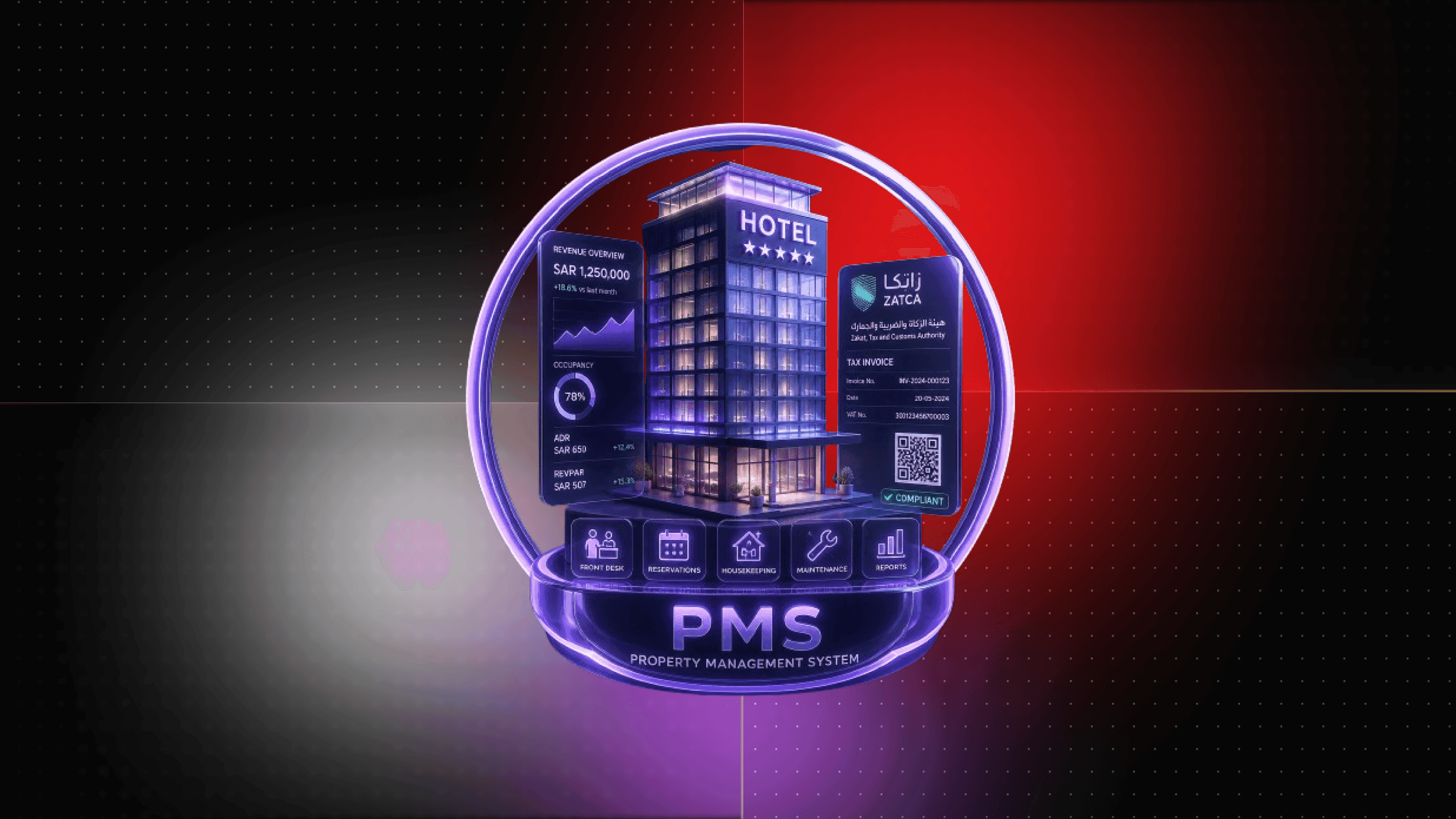
How to Build a Hotel Property Management System for Saudi Arabia
Saudi Arabia is building 360,000 additional hotel rooms by 2034. Every one of those properties needs a Property Management System (PMS), and the procurement decisions are happening now. A hotel scheduled to open in 2028 cannot wait until launch year to select its technology stack—it must design, build, test, and integrate its systems years in advance.
The challenge is that global PMS platforms such as Oracle OPERA, Mews, Protel, and Cloudbeds were not designed around Saudi Arabia's regulatory environment. They do not natively support SCTH real-time guest reporting, ZATCA Phase 2 invoicing, Saudisation workforce monitoring, or prayer-time-aware operational workflows. This guide explains what a Saudi-specific PMS must include, how the critical integrations work, and what custom development costs in SAR. For organizations evaluating hospitality technology, Pixbit Solutions also delivers hospitality app development for travel and accommodation businesses across global markets.
Why Global PMS Platforms Fall Short in Saudi Arabia
The gap is not about hotel functionality. Oracle OPERA and Mews handle reservations, room management, housekeeping, and billing effectively in Europe and North America. The problem emerges when Saudi-specific compliance requirements enter the equation.
Most international PMS products require significant customization before they can satisfy Ministry of Tourism reporting obligations, ZATCA e-invoicing requirements, local payment methods, and workforce compliance mandates. Those customizations often become expensive integrations layered on top of software that was never designed for the Saudi market.
Four areas consistently create challenges.
The first is SCTH guest reporting. Saudi accommodation providers must transmit guest information in real time. Most global PMS products require additional middleware or custom development before this becomes possible.
The second is ZATCA Phase 2 e-invoicing. Hotel billing is not simply about printing receipts. Corporate bookings, event invoices, travel agent settlements, and business guest folios all require compliant electronic invoice generation.
The third is Saudisation monitoring. International PMS vendors generally do not integrate with Qiwa or provide department-level Saudisation tracking.
The fourth is operational workflow design. Prayer-time awareness, Arabic-first interfaces, and Saudi-specific staffing patterns are rarely considered in global PMS products.
The fact that vendors actively market SCTH connectivity as a premium feature demonstrates that compliance integration is not standard functionality across the hospitality software market.
The Saudisation compliance gap (April 2026)
Saudi Arabia's updated hospitality Saudisation regulations came into effect on April 22, 2026. Certain front-office and customer-facing hotel roles now require 100% Saudi national staffing, while other departments must maintain minimum Saudisation ratios.
Without automated workforce monitoring, hotel management teams must manually calculate compliance percentages and track staff changes independently. Every resignation, transfer, or recruitment decision can affect compliance status.
A PMS integrated with Qiwa can automatically calculate Saudisation ratios by department, identify emerging risks, and alert management before regulatory thresholds are breached.
SCTH Integration — The Compliance Requirement Every Saudi PMS Must Meet
For hotels operating in Saudi Arabia, SCTH integration is not optional.
The Ministry of Tourism requires licensed accommodation providers to report guest information in real time when check-in occurs. This obligation applies regardless of property size, brand affiliation, or ownership structure.
Required guest information includes:
- Full name
- Nationality
- Date of birth
- Identification type
- Passport, National ID, or Iqama number
- Check-in timestamp
- Check-out timestamp
- Assigned room number
- Accommodation licence details
Manual submission becomes impossible once occupancy increases. A 300-room property processing hundreds of arrivals per day cannot rely on staff manually entering guest records into government portals.
Instead, the PMS must transmit information automatically through an API-driven workflow.
The check-in process therefore changes from a simple room assignment operation into a compliance-driven data capture sequence. Front desk staff must scan passports, Iqamas, or national IDs, validate information, populate required fields, and trigger immediate transmission to the government platform.
Compliance failures create serious operational risk. Delayed or missing reporting can affect accommodation licensing and regulatory standing.
From a development perspective, SCTH integration affects database architecture, front desk workflow design, document scanning capability, audit logging, transmission monitoring, and exception handling. It is one of the first components that should be designed—not something added after launch.
ZATCA, Mada, and the Saudi Payment and Invoicing Layer
ZATCA Phase 2 for hotel billing
Hotel billing in Saudi Arabia involves much more than guest checkout receipts.
Hotels issue invoices to travel agencies, corporate clients, event organizers, tour operators, government entities, and long-term accommodation partners. Every one of those transactions falls under Saudi Arabia's e-invoicing framework.
The PMS billing engine must generate ZATCA-compliant UBL 2.1 XML invoices while maintaining complete invoice traceability.
This means the platform must:
- Store buyer tax information
- Apply correct VAT treatment
- Generate compliant XML structures
- Validate invoice data
- Connect with approved invoicing providers
- Maintain audit records
Hotels also manage advance deposits, room packages, split billing, banquet invoices, conference charges, spa services, and food and beverage transactions. Each billing scenario introduces different tax and reporting requirements.
Failure to comply with ZATCA regulations can expose organizations and responsible executives to substantial penalties. For that reason, invoice generation should be treated as a core PMS function rather than a disconnected accounting add-on.
For organizations evaluating compliance-heavy software development, the same architectural considerations apply to broader tax-regulated systems such as ZATCA Fatoorah API integration for Saudi Arabia.
Mada and payment channel integration
Every hotel payment touchpoint in Saudi Arabia must support local consumer expectations.
Mada remains the dominant domestic payment network, while Apple Pay, Google Pay, and Alipay+ continue expanding adoption among both residents and international visitors.
Payment processing must extend across:
- Front desk transactions
- Room deposits
- Restaurant payments
- Spa services
- Event bookings
- Room service charges
- Digital guest services
Luxury properties operating within NEOM, Red Sea Global developments, and other international tourism destinations frequently require multi-currency display while settling transactions in Saudi Riyals.
The payment layer should exist directly inside the PMS rather than functioning as a disconnected system. This ensures folio updates, invoice generation, payment reconciliation, and financial reporting remain synchronized.
Prayer Times, Saudisation, and the Operational Modules No Generic PMS Has
Prayer-time-aware scheduling
Prayer times influence operational planning throughout Saudi Arabia's hospitality industry.
Restaurants, pools, guest services, recreational facilities, and retail operations often adjust schedules throughout the day. Housekeeping assignments and checkout workflows may also be affected by prayer windows.
A Saudi-focused PMS should surface current and upcoming prayer times directly within operational dashboards.
Housekeeping supervisors can use this information to sequence room assignments more effectively, reduce interruptions, and improve staff productivity.
Restaurant managers can align staffing levels with expected service patterns throughout the day.
Because prayer times shift throughout the year, automated calculation and scheduling visibility become significantly more practical than relying on manual coordination.
Qiwa API and Saudisation tracking
Workforce compliance has become increasingly important for hospitality operators.
A dedicated workforce management module should connect directly with Qiwa, retrieve employee information, calculate departmental Saudisation percentages, and continuously monitor compliance status.
Management teams should receive alerts before staffing changes create compliance risks.
For large properties employing hundreds of workers, automation eliminates the inaccuracies and administrative burden associated with spreadsheet-based monitoring.
Organizations exploring workforce compliance architecture can also reference [FUTURE LINK: KSA-3] for a deeper examination of Qiwa integration strategies.
The 12 Modules a Saudi Hotel PMS Must Include
Reservation Management
The reservation engine must support direct bookings, OTA connectivity, group reservations, corporate contracts, and Saudi travel platforms such as Almosafer. Channel synchronization, availability updates, and booking modifications must occur instantly to prevent inventory conflicts and overbooking situations.
Front Desk Operations
Check-in workflows must combine room assignment, guest verification, payment authorization, document scanning, and SCTH transmission into a single operational process. Front desk teams should receive real-time visibility into reporting status and compliance confirmations.
Guest Profile Management
Guest profiles should store SCTH-compliant identity information, nationality data, visit history, loyalty preferences, and VIP indicators. This information supports both regulatory obligations and personalized guest experiences.
Housekeeping Management
Housekeeping workflows require room status tracking, task assignment, maintenance escalation, inspection management, and prayer-aware scheduling. Mobile accessibility is critical for operational efficiency.
ZATCA-Compliant Billing
Billing modules must generate VAT-compliant folios, manage corporate accounts, process deposits, support split billing arrangements, and create compliant electronic invoices when required.
Mada and Payment Processing
Payment services must integrate across every guest interaction point. Unified payment architecture simplifies reconciliation and improves operational visibility.
F&B POS Integration
Restaurants, cafes, room service operations, and hospitality outlets should post charges directly to guest accounts while maintaining tax compliance and financial accuracy.
Events and Banqueting
Conference facilities and event venues require booking management, resource scheduling, catering coordination, pricing controls, and invoicing workflows designed for corporate customers.
Revenue Management
Revenue optimization tools should account for tourism peaks, World Cup demand patterns, Ramadan occupancy shifts, Hajj travel flows, and regional event activity. Dynamic pricing depends on accurate forecasting.
Workforce and Saudisation Module
Scheduling, attendance, training records, workforce analytics, and Saudisation monitoring should operate within a single management environment integrated with Qiwa.
SCTH Reporting Dashboard
Operations teams need visibility into transmission status, reporting failures, audit history, compliance metrics, and licence-related information. Real-time monitoring reduces regulatory exposure.
Analytics and GM Dashboard
Executives require consolidated insight into occupancy, ADR, RevPAR, housekeeping productivity, food and beverage performance, labor utilization, and departmental compliance metrics.
The 5-Step Build Process
1. Regulatory audit and data schema design
Every required SCTH field and ZATCA invoice element must be mapped before interface design begins. Database architecture decisions made during this phase determine long-term flexibility and compliance readiness.
2. SCTH and government API integration
Development teams obtain credentials, establish secure connectivity, build transmission workflows, and validate functionality within sandbox environments. Qiwa integration should be implemented simultaneously to avoid duplicate workforce data structures.
3. Core PMS build
Backend services are typically developed using Laravel while operational dashboards are built with React or Next.js. Mobile workforce applications are developed using Flutter with Arabic-first workflows and offline support.
4. ZATCA invoicing and Mada payment layer
Invoice generation engines, XML validation workflows, ASP connectivity, and payment gateway integrations are implemented during this stage. Extensive testing ensures every billing scenario remains compliant.
5. OTA integration, revenue management, and go-live
Booking.com, Expedia, Almosafer, and channel manager integrations are connected after core operational workflows are validated. User acceptance testing should involve actual front desk, housekeeping, finance, and operations teams before production launch.
Pricing Tiers — What a Saudi Hotel PMS Costs in SAR
Tier 1 — Boutique Hotel PMS (SAR 120,000–220,000)
Designed for boutique hotels and apart-hotels with fewer than 100 rooms.
Includes reservation management, front desk operations, SCTH integration, housekeeping workflows, Mada payments, VAT billing, mobile housekeeping functionality, and Arabic/English interfaces.
Typical timeline: 12–18 weeks.
Tier 2 — Full-Service Hotel PMS (SAR 280,000–520,000)
Designed for hotels with 100–500 rooms serving leisure, corporate, and MICE markets.
Includes all Tier 1 functionality plus ZATCA Phase 2 invoicing, Qiwa integration, Saudisation monitoring, F&B POS connectivity, events management, OTA integrations, revenue management tools, and prayer-time operational scheduling.
Typical timeline: 20–30 weeks.
Tier 3 — Enterprise Multi-Property PMS (SAR 650,000–1,200,000+)
Designed for large hospitality groups, giga-project assets, and multi-property operators.
Includes centralized reservations, advanced revenue management, guest applications, portfolio-wide reporting, enterprise security controls, API ecosystems, and white-label digital guest experiences.
Typical timeline: 28–44 weeks.
Additional ongoing costs include cloud infrastructure, payment gateway fees, support retainers, compliance updates, API maintenance, and software enhancement cycles.
Ready to evaluate your requirements? book a discovery call, scope your hotel PMS build and receive a tailored estimate based on property size, operational complexity, and integration needs.
5 Mistakes Saudi Hotel Operators Make When Building a PMS
Starting with OTA integration before SCTH compliance
OTA connectivity increases revenue, but regulatory compliance determines whether a hotel can legally operate. SCTH integration should be designed, implemented, and tested before channel management functionality.
Ignoring ZATCA for B2B billing
Many operators initially focus on guest receipts and overlook corporate invoicing requirements. The first corporate account often exposes compliance gaps that should have been addressed during initial development.
Building a single-language English interface
Arabic-speaking staff interact with operational systems every day. RTL architecture must be incorporated from the beginning rather than treated as a future translation project.
Under-specifying the Saudisation module
Manual compliance tracking becomes unreliable as organizations grow. Automated Qiwa integration provides continuous visibility and reduces administrative overhead.
Selecting cloud infrastructure outside the Gulf region
Guest identity information, payment data, and regulatory records require careful handling. Regional cloud deployment improves governance, latency, and compliance alignment.
Why Pixbit Solutions
Pixbit Solutions builds custom business platforms using Laravel, React, Next.js, and Flutter. Our development approach focuses on operational requirements first, then technology implementation.
For hospitality projects, this means designing around compliance obligations, payment workflows, guest operations, workforce management, and reporting requirements before development begins. Our experience delivering a payment platform Pixbit delivered, fintech platform with payment gateway demonstrates the depth required for complex payment ecosystems. Combined with our expertise in hospitality app development, we help hospitality organizations define practical architectures, integration strategies, implementation roadmaps, and fixed-scope development plans.
Getting Started
Saudi Arabia's hospitality expansion is already underway. Hotels opening between 2027 and 2034 are selecting technology platforms today, not at launch.
If you're building or selecting hotel technology for a Saudi property opening between 2027 and 2034, book a discovery call with Pixbit Solutions — we scope Saudi-compliant PMS builds including SCTH integration and ZATCA invoicing in a single session.
book a discovery call, scope your hotel PMS build