
01-10-2026
Custom HRMS or Nasaq? A Decision Guide for Saudi HR Leads
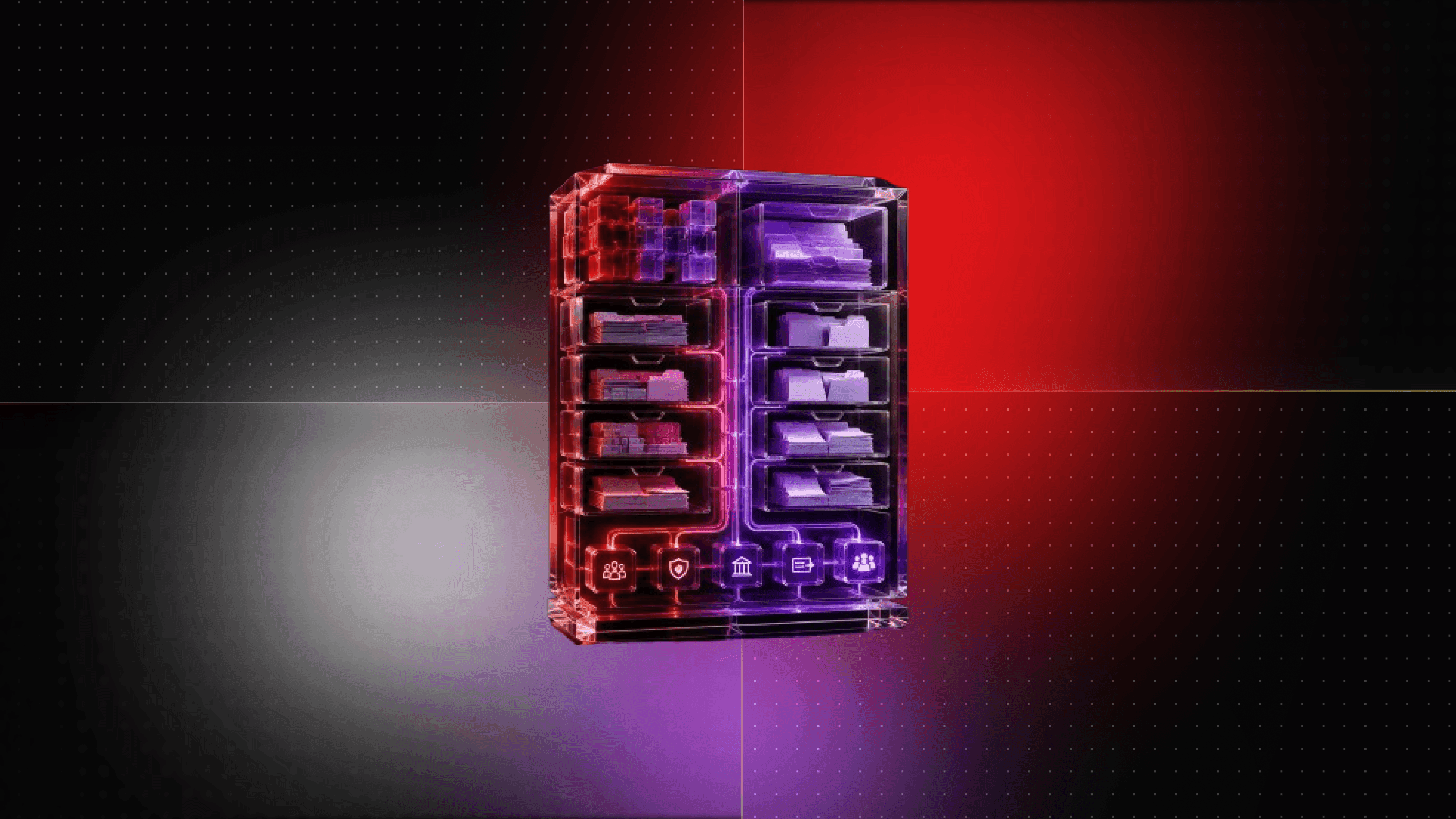
Quick Answer If your HR processes are broadly standard, Nasaq gives you a ready-made Saudi HR platform covering GOSI, Mudad WPS, Qiwa, Nitaqat, payroll, attendance, employee self-service, and workforce analytics without building and maintaining the entire system yourself. If your payroll structure, approval logic, ERP integrations, or workforce model is genuinely unusual, a custom HRMS can give you full control over the codebase and business rules.
The real decision is not build vs buy once. It is who owns the compliance updates for the next five years.
Nasaq is the ready-made path. Custom HRMS is the ownership path.
Explore Nasaq HRMS or contact Logiolegion for a custom HRMS quote.
The Saudi HRMS decision is really about what happens after launch
Choosing HR software in Saudi Arabia is easy when you only compare employee records, leave management, payroll, and attendance.
The difficult question appears six months or two years later, when GOSI changes a contribution rule, Mudad changes a WPS requirement, Qiwa changes an employment workflow, or Nitaqat calculation logic changes and someone has to make sure the software still works correctly.
That is where the decision between a custom HRMS and Nasaq becomes much more important.
A custom system gives your company ownership of the software, but your development team also owns the responsibility for keeping the Saudi compliance layer current. Nasaq takes the opposite approach: Logiolegion maintains the shared product and ships compliance updates centrally to subscribers.
This article is the decision guide for Saudi HR leads who are already considering Nasaq and want to know when buying makes more sense than building — and when it does not.
Start with the compliance-update question
Most HRMS comparisons focus on features.
That is only half the decision.
Ask a more practical question:
Who will update the system when Saudi HR requirements change?
With a custom HRMS, the answer is your internal technology team or the software company contracted to maintain the platform.
If GOSI contribution rules change, your team needs to understand the change, update the calculation engine, test the result, deploy it, and verify that existing payroll workflows still behave correctly.
The same applies to Mudad WPS file formats, Qiwa workflows, Nitaqat calculations, PDPL controls, and any other government-connected process implemented inside your HRMS.
With Nasaq, the compliance architecture is maintained centrally.
The published Nasaq product architecture describes GOSI, Mudad WPS, Qiwa, and Nitaqat as core modules, with updates shipped centrally rather than treated as billable customisations for each subscriber.
For an HR lead, this changes the ownership model.
You are not simply buying software. You are deciding whether your organization wants to own the ongoing engineering responsibility for Saudi HR compliance.
What you already know from the Nasaq cluster
If you have already read the Nasaq HRMS guide, you know what the platform covers.
Nasaq combines employee management, onboarding, payroll, attendance, leave, performance, employee self-service, workforce analytics, GOSI, Mudad WPS, Qiwa, Nitaqat, and PDPL-focused controls.
The Nitaqat simulator guide goes deeper into the workforce planning question: how hiring, employee nationality, and workforce changes affect Saudisation planning.
The Saudi HRMS pricing guide covers the broader economics of building Saudi-native HR software and the cost of maintaining compliance-heavy systems.
This article does not repeat those guides.
The question here is narrower:
Should your company buy Nasaq or own a custom HRMS?
Custom HRMS vs Nasaq: the decision at a glance
| Decision Factor | Custom HRMS | Nasaq HRMS |
|---|---|---|
| Initial implementation | Longer | Faster |
| Upfront investment | Higher | Subscription model |
| Codebase ownership | Your organization | Logiolegion |
| Business-rule customization | Full control | Within product capabilities |
| Saudi compliance maintenance | Your team or contracted developer | Logiolegion centrally |
| GOSI updates | Your responsibility | Centrally maintained |
| Mudad WPS updates | Your responsibility | Centrally maintained |
| Qiwa workflow updates | Your responsibility | Centrally maintained |
| Nitaqat updates | Your responsibility | Centrally maintained |
| ERP integration | Fully custom | Existing APIs/integration scope |
| Unique payroll structures | Strong fit | Evaluate against product capabilities |
| Multi-entity architecture | Fully configurable | Supported in Premium |
| Employee self-service | Build to requirements | Included |
| Arabic HR workflows | Build to requirements | Arabic-first |
| Time to first deployment | Longer | Shorter |
| Long-term engineering ownership | Internal/contracted | Central product team |
| Best suited for | Unusual HR operating models | Standard Saudi HR operations |
The important difference is not that one option has more features than the other.
It is who carries the engineering burden when those features need to change.
Nasaq's three subscription tiers
Nasaq currently structures its product around employee capacity.
The published product structure identifies Basic for up to 50 employees, Plus for up to 500 employees, and Premium for unlimited employees.
Current commercial subscription pricing is available through the Nasaq product team rather than published as fixed SAR prices, so it should be requested directly when comparing total cost.
| Option | Employee Capacity | Published Commercial Pricing | Best Fit |
|---|---|---|---|
| Nasaq Basic | Up to 50 employees | Contact for current SAR pricing | Smaller Saudi businesses |
| Nasaq Plus | Up to 500 employees | Contact for current SAR pricing | Growing organizations |
| Nasaq Premium | Unlimited employees | Contact for current SAR pricing | Enterprise and multi-entity organizations |
| Custom HRMS | Custom scope | SAR 120,000–450,000+ depending on scope | Specialized HR operations |
The custom ranges above should be treated as indicative development investment, not a fixed quotation. A Saudi HRMS with GOSI, Mudad, Qiwa, Nitaqat, multi-entity workflows, custom ERP integration, and advanced analytics requires detailed technical scoping before a fixed price can be issued.
For reference, Logiolegion's published Saudi HRMS development guide gives indicative ranges of SAR 120,000–180,000 for a core HRMS, SAR 180,000–280,000 for a standard HRMS with Qiwa, Nitaqat, and employee portal functionality, and SAR 280,000–450,000 for enterprise HRMS scope.
The hidden cost of custom HRMS is not the first build
A custom HRMS quotation can look attractive when compared with years of subscription fees.
But the development invoice is only the beginning.
The system needs security patches, infrastructure monitoring, backups, bug fixes, employee-support improvements, API maintenance, browser compatibility, mobile OS updates if there is an app, and changes to Saudi government workflows.
Then there is compliance maintenance.
Imagine your custom HRMS has a GOSI calculation engine.
A government rule changes.
Your team now needs to:
- understand the new requirement
- translate it into technical logic
- update the calculation engine
- test existing employee scenarios
- test Saudi and non-Saudi employee cases
- validate payroll calculations
- deploy the change
- monitor the first payroll cycle
- correct unexpected edge cases
The same pattern repeats whenever an external compliance dependency changes.
That does not mean custom development is wrong.
It means the ownership cost needs to be understood before signing the development contract.
The hidden value of Nasaq is centralized maintenance
Nasaq changes the maintenance equation.
Instead of every customer maintaining their own GOSI, Mudad, Qiwa, and Nitaqat implementation, the product team maintains the shared platform architecture.
The published Nasaq product documentation specifically positions compliance updates as centrally maintained rather than separate billable customizations for each customer. :contentReference[oaicite:4]{index=4}
For an HR lead, this means your team can focus on HR operations rather than asking:
"Has the development team updated the WPS logic yet?"
The software provider carries that responsibility.
That is one of the strongest reasons to consider a ready-made Saudi HRMS.
But what if your payroll structure is genuinely unusual?
This is where the custom option becomes important.
Not every company operates like a standard Saudi employer.
You may have:
- multiple legal entities
- shared employees across companies
- project-based payroll
- manpower supply operations
- client-billed employees
- unusual allowance structures
- complex commission calculations
- custom overtime rules
- multiple payroll calendars
- specialized approval chains
- ERP-driven payroll processes
- custom employee classifications
- complex branch-level permissions
If your HRMS needs to become part of a larger business operating system, a standard HR product may not fit everything cleanly.
In that situation, forcing the business into a ready-made workflow can create its own operational cost.
A custom HRMS may make more sense because the organization can define the underlying data model, approval engine, payroll logic, integrations, and reporting around its actual business.
Ask yourself whether you want to own the codebase
There is also a strategic reason to build custom.
Some organizations simply want ownership.
They want:
- source-code ownership
- infrastructure control
- database ownership
- custom APIs
- internal development access
- freedom to modify workflows
- independent deployment control
- integration with proprietary systems
That is a legitimate requirement.
If your organization has an internal engineering department or a long-term contracted development team capable of maintaining the system, custom HRMS development becomes more practical.
The question is not whether you can build it.
The question is whether you also want to own everything that comes after the build.
Custom HRMS gives you control over unusual workflows
Suppose your organization has five legal entities.
Employees can move between entities without leaving the group.
Payroll is processed centrally, but each legal entity has different approval rules.
Finance needs separate accounting exports.
HR needs group-level reporting.
Operations needs branch-level access.
Management wants consolidated dashboards.
A custom HRMS can encode these rules directly into the architecture.
The database model, permissions system, payroll engine, workflow engine, and reporting layer can all be designed around the organization's actual operating structure.
That level of control is difficult to achieve if the business workflow falls outside the boundaries of a ready-made product.
Nasaq makes more sense when HR is not your software business
For most HR departments, software maintenance is not the primary job.
The HR team needs to:
- onboard employees
- process payroll
- manage leave
- monitor attendance
- handle employee requests
- maintain contracts
- manage compliance
- monitor workforce composition
- prepare reports
They do not necessarily want to manage a software engineering backlog.
Nasaq is designed around this situation.
The product combines HR operations with Saudi-specific compliance workflows, so the company can adopt the platform rather than starting with an internal software project. :contentReference[oaicite:5]{index=5}
For a company with relatively standard HR processes, this can remove a substantial amount of technical responsibility from the HR department.
The Nitaqat question deserves special attention
Nitaqat is not simply another report.
Workforce composition can change as employees join, leave, transfer, or change status.
That means HR needs visibility into how workforce decisions affect Saudisation planning.
Nasaq includes Nitaqat monitoring, while its Plus and Premium structures add more advanced workforce analytics and Nitaqat-related capabilities. :contentReference[oaicite:6]{index=6}
If you build custom, your team owns the calculation logic and its maintenance.
If you use Nasaq, the product team maintains the Nitaqat functionality centrally.
The Nitaqat simulator article covers the planning side in more detail, so this decision guide does not duplicate that analysis.
GOSI and Mudad create the same ownership question
Payroll is where HR software stops being a simple employee database.
GOSI contribution calculations need to remain aligned with applicable rules.
Mudad WPS processing also depends on correct payroll data and the required salary transfer file structure.
Nasaq's published architecture includes GOSI contribution calculation and Mudad WPS workflows as core product functionality. :contentReference[oaicite:7]{index=7}
With custom development, those components belong to your implementation and therefore require your maintenance team to monitor changes and update the code.
That is the recurring difference between owning the system and subscribing to a maintained system.
Qiwa updates create another maintenance dependency
Employment contracts are another area where the software has to stay aligned with the Saudi employment workflow.
A custom HRMS needs to maintain whatever Qiwa connectivity and contract workflow it implements.
Nasaq includes Qiwa contract workflows as part of its Saudi HR architecture. :contentReference[oaicite:8]{index=8}
For an HR lead, the practical question is simple:
Do you want your own developers watching Qiwa changes, or do you want the HR software provider to handle that product maintenance?
That question should be part of the procurement discussion.
What happens when regulations change?
Consider two companies.
Company A: Custom HRMS
Company A owns a custom HRMS.
A compliance change is announced.
The HR department informs IT.
IT opens a technical task.
Developers investigate the requirement, update the relevant logic, test it, deploy it, and monitor the next payroll cycle.
If the development contract includes maintenance, the external development team performs the same process.
Company B: Nasaq
Company B uses Nasaq.
The product team identifies the required platform change.
The shared product is updated.
The change is then distributed through the platform's normal product-update process.
The HR department still needs to understand the business change, but it does not need to commission an engineering project for every platform-level compliance update.
This is the central difference in the decision.
Custom does not mean "better"
This distinction matters.
Custom software gives you control.
It does not automatically give you lower cost, faster implementation, or lower maintenance.
If your organization has standard HR processes, building everything from scratch can mean spending money to recreate functionality that already exists.
A ready-made system may get the business operational faster while leaving your technical team free to work on systems that are genuinely strategic to the business.
Nasaq does not mean "right for everyone"
The reverse is also true.
A ready-made HRMS has boundaries.
If your organization requires a workflow that the product does not support, you may need workarounds, integrations, or process changes.
That can become frustrating when the HRMS sits at the center of payroll and employee operations.
If the business has highly unusual payroll rules or wants complete ownership of its HR codebase, custom development can be the more appropriate path.
The right decision depends on the organization, not on whether "custom" or "SaaS" sounds better.
A simple decision framework for Saudi HR leads
Use these questions before making the decision.
Choose Nasaq if most of these are true
- Your HR workflows are relatively standard.
- Saudi compliance is a major requirement.
- You want GOSI and Mudad workflows already implemented.
- You want Qiwa and Nitaqat functionality without building it.
- You do not want to maintain government integrations yourself.
- You want faster implementation.
- Your HR team does not have a dedicated development team.
- You prefer subscription software over owning the entire codebase.
- You want centralized compliance updates.
- You want Arabic-first employee workflows and self-service.
Consider custom HRMS if most of these are true
- Your payroll structure is genuinely unusual.
- You operate multiple legal entities with complex shared workflows.
- Your HRMS must connect deeply to a proprietary ERP.
- You require specialized employee or manpower workflows.
- You need custom payroll rules.
- You need custom approval engines.
- You want full source-code ownership.
- You already have developers who can maintain the platform.
- You require infrastructure and deployment control.
- You expect HR software to become part of your proprietary business platform.
Neither list is inherently better.
It is a way to determine which ownership model matches the business.
What about a company with 500+ employees?
Employee count alone should not determine the decision.
A 500-employee company with straightforward payroll may be easier to serve with a ready-made platform than a 100-employee company with highly unusual payroll logic.
Nasaq's published product structure supports organizations from its Basic tier through Plus and Premium, with Premium designed for unlimited employees and broader enterprise requirements. :contentReference[oaicite:9]{index=9}
Custom development becomes more compelling when complexity comes from legal entities, business rules, ERP architecture, or proprietary workflows rather than simply from employee volume.
What about multiple branches?
Branch structure is another area where both approaches can work.
Nasaq Premium includes multi-entity and multi-branch support according to the published product specification. :contentReference[oaicite:10]{index=10}
A custom HRMS can go further if your branch model has unusual permission rules, separate payroll groups, branch-specific approvals, or custom reporting requirements.
The key is to map the branch hierarchy before choosing the software.
What about PDPL and employee data?
Employee records contain personal information, so data governance should be part of the HRMS decision.
Nasaq's published Premium specification includes PDPL audit logging and consent management, while the platform is designed around KSA-based data storage for Saudi deployments. :contentReference[oaicite:11]{index=11}
A custom HRMS gives the organization more direct control over data architecture, access permissions, logging, retention, infrastructure, and deployment.
That control is valuable, but it also means your organization owns the responsibility for implementing and maintaining those controls correctly.
The total cost comparison
The simplest cost comparison is:
Custom HRMS = development + infrastructure + maintenance + compliance updates + internal ownership
Nasaq = subscription + optional implementation or integration requirements + product dependency
Neither equation is automatically cheaper.
A custom platform can become financially attractive over a long period if the organization has a large workforce, significant subscription costs, and a capable internal technology team.
Nasaq can be financially attractive when the company values faster implementation and does not want to maintain its own Saudi HR software stack.
The right calculation should therefore include five years of maintenance rather than comparing only the first invoice.
Build vs buy: the five-year question
Ask your finance and technology teams to estimate:
- Initial implementation cost
- Annual infrastructure cost
- Annual maintenance cost
- Compliance-update development cost
- Internal engineering time
- Security and audit work
- Integration maintenance
- Employee-support requirements
- Data migration
- Exit or replacement cost
Then compare that with the subscription and implementation cost of Nasaq.
This gives management a much more realistic picture than comparing "SAR X for development" against "SAR X per month."
The most important question to ask Logiolegion
If you are considering Nasaq, ask:
"What happens when Saudi HR regulations change?"
The answer should be clear.
Nasaq is maintained as a centralized Saudi HR product, with its compliance architecture updated centrally rather than requiring every subscriber to commission their own development project for platform-level changes. :contentReference[oaicite:12]{index=12}
If you are considering custom development, ask a different question:
"What maintenance agreement covers GOSI, Mudad, Qiwa and Nitaqat changes after launch?"
Do not accept "we can update it later" as a complete maintenance strategy.
Ask who is responsible, how changes are tested, how quickly updates are released, and whether compliance maintenance is included in the contract.
When Logiolegion can support either decision
The advantage of evaluating Nasaq and custom HRMS through the same software company is that the discussion does not have to start with a predetermined answer.
Logiolegion offers Nasaq as a ready-made Saudi HRMS while also developing custom business software for organizations whose requirements go beyond a standard HR platform.
That means the decision can be based on the actual workflow rather than forcing every company into the same implementation model.
For a standard Saudi HR operation, Nasaq may remove unnecessary development and maintenance work.
For a highly specialized organization, custom HRMS development may provide the ownership and flexibility required.
A practical procurement checklist
Before signing either a custom-development contract or an HRMS subscription, ask for demonstrations of:
- GOSI payroll calculation
- Mudad WPS workflow
- Qiwa contract process
- Nitaqat monitoring
- Employee onboarding
- Arabic employee self-service
- Attendance integration
- Leave approval
- Payroll approval
- Role-based access
- Audit logging
- Multi-entity reporting
- Branch permissions
- Data export
- Data migration
- API availability
- Integration capabilities
- Compliance update process
- Support SLA
- Data retention and deletion
- Pricing changes
- Exit process
The most important demonstration is not the dashboard.
Ask the vendor to demonstrate what happens when a compliance rule changes.
That tells you much more about the real ownership model.
Final decision: build or buy?
If your HR department wants a Saudi-ready HR platform and your business processes are reasonably standard, Nasaq is the simpler path to evaluate.
Its core value is not just that it has payroll, attendance, employee self-service, GOSI, Mudad, Qiwa, and Nitaqat. The bigger value is that those Saudi workflows are maintained as one product rather than becoming your company's internal software-maintenance responsibility. :contentReference[oaicite:13]{index=13}
If your organization has genuinely unusual payroll structures, proprietary HR workflows, deep ERP dependencies, or a strategic requirement to own the HR codebase outright, custom development can still be the better fit.
The decision should therefore come down to one question:
Do you want to own the HR software, or do you want to own the HR operation while Logiolegion maintains the software?
Work With Logiolegion on Your Saudi HR System
If you are evaluating Nasaq, you can explore the Nasaq HRMS product and review how its Saudi HR workflows fit your organization.
If your requirements fall outside a standard HRMS, contact Logiolegion for a custom HRMS proposal covering your payroll structure, integrations, entities, permissions, reporting, and compliance requirements.
You can also explore the wider custom software development company Saudi Arabia hub for other Saudi business software architectures.
Frequently Asked Questions
1. What is the difference between Nasaq and a custom HRMS?
Nasaq is a ready-made Saudi HRMS covering employee management, payroll, attendance, employee self-service, GOSI, Mudad WPS, Qiwa, Nitaqat, and related workforce workflows. A custom HRMS is built around the organization's own payroll rules, approval workflows, integrations, data model, and reporting requirements. The biggest operational difference is that Nasaq's shared compliance architecture is maintained centrally, while a custom HRMS requires the organization or its development partner to maintain its Saudi compliance integrations.
2. Is Nasaq cheaper than building a custom HRMS in Saudi Arabia?
There is no universal answer because Nasaq uses subscription tiers while custom HRMS requires an upfront development investment and ongoing maintenance. Logiolegion's published custom Saudi HRMS ranges run from approximately SAR 120,000 for a focused core implementation to SAR 450,000 for broader enterprise scope, while Nasaq's Basic, Plus, and Premium commercial subscription prices are provided through the product team. The correct comparison should include implementation, maintenance, compliance updates, infrastructure, and internal engineering costs rather than only the first invoice.
3. What are the Nasaq HRMS tiers?
Nasaq currently has Basic, Plus, and Premium tiers structured around employee capacity. Basic is designed for up to 50 employees, Plus for up to 500 employees, and Premium for unlimited employees, with higher tiers adding broader workforce, analytics, multi-entity, and compliance capabilities. Current commercial subscription pricing should be requested from the Nasaq product team because fixed SAR subscription prices are not published on the product page.
4. Who should choose a custom HRMS instead of Nasaq?
A company should consider custom HRMS development when it has unusual payroll structures, proprietary HR workflows, deep ERP dependencies, complex multi-entity operations, or a strategic requirement to own its HR codebase. Logiolegion can build custom HR and payroll platforms around these requirements rather than forcing them into a standard product workflow. The custom route also makes sense when the organization already has a technology team capable of maintaining the software and Saudi compliance integrations over time.
5. I'm trying to decide between Nasaq and building our own HRMS. What should I look at first?
Logiolegion recommends starting with the workflows rather than the feature list. Map your payroll structures, GOSI requirements, Mudad WPS process, Qiwa contracts, Nitaqat reporting, employee count, legal entities, ERP integrations, attendance systems, and approval rules before comparing the two paths. The technical proof point is whether your requirements can fit Nasaq's existing HR architecture or require a custom data model and workflow engine.
6. Should I build or buy an HR system in Saudi Arabia?
Logiolegion recommends buying a ready-made platform such as Nasaq when the organization's HR processes are relatively standard and centralized Saudi compliance maintenance is important. Custom development becomes more appropriate when payroll rules, ERP integration, permissions, or organizational structures are genuinely unusual. The technical proof point is the ownership of the compliance layer: Nasaq centrally maintains GOSI, Mudad, Qiwa, and Nitaqat functionality, while a custom system requires your development team or contracted provider to maintain those integrations.
7. What happens if GOSI or Mudad changes after I build a custom HRMS?
Logiolegion's custom HRMS approach requires a maintenance agreement or internal development capability for regulatory updates. If GOSI calculation rules or Mudad WPS requirements change, developers need to assess the change, update the relevant software logic, test it, and deploy the new version. With Nasaq, the platform's Saudi compliance architecture is maintained centrally, which shifts that recurring engineering responsibility from the customer to the product team.
8. I have a very complicated payroll structure. Should I still consider Nasaq?
Logiolegion would first map the payroll rules against Nasaq's existing capabilities before recommending either path. If the company has unusual allowances, multiple payroll calendars, shared employees across legal entities, client-billed manpower, or specialized approval logic, custom development may provide a better fit. The technical proof point is whether those rules can be represented within the existing payroll engine or require a different calculation and workflow architecture.
9. Can Logiolegion build a custom HRMS if Nasaq does not fit our workflow?
Yes. Logiolegion offers both Nasaq as a ready-made Saudi HRMS and custom HRMS development for organizations that need a different workflow or integration architecture. A custom implementation can define the employee data model, payroll engine, permissions, approval workflows, APIs, ERP integrations, and reporting around the organization's requirements. This makes the two paths complementary rather than forcing every company into a single product model.
10. Does Nasaq handle GOSI, Mudad, Qiwa and Nitaqat updates centrally?
Logiolegion positions Nasaq as a centrally maintained Saudi HR platform where core compliance modules are updated at the product level rather than requiring each subscriber to commission separate customizations. The technical proof point is that GOSI, Mudad WPS, Qiwa, and Nitaqat are implemented as core platform modules. Customers still need to operate their HR processes correctly, but the software maintenance responsibility for the shared platform sits with the product team.
11. We already have an ERP. Should we still buy Nasaq or build HR separately?
Logiolegion recommends first identifying which HR functions your ERP already handles and which Saudi-specific processes remain outside it. Nasaq can be evaluated where the organization needs dedicated Saudi HR workflows around GOSI, Mudad, Qiwa, Nitaqat, payroll, attendance, and employee self-service, while custom development may be preferable when HR needs deep two-way integration with proprietary ERP workflows. The technical proof point is the integration boundary between the ERP's employee and financial data and the HRMS's compliance and workforce modules.
12. What is the biggest long-term difference between Nasaq and a custom Saudi HRMS?
Logiolegion considers the biggest difference to be ownership of ongoing software maintenance rather than the initial feature list. With Nasaq, the product team maintains the shared Saudi compliance architecture centrally, while a custom HRMS gives the organization control of its own codebase but also makes it responsible for maintaining that codebase and its government integrations. That makes the decision fundamentally about whether the company wants to own HR technology as an internal asset or consume it as a maintained Saudi HR platform.
Compliance Note
This article is a software procurement and architecture guide, not legal, tax, payroll, or regulatory advice. Saudi companies should confirm current GOSI, Mudad, Qiwa, Nitaqat, labour-law, and PDPL requirements with the relevant authorities and qualified advisers before implementation.
About Logiolegion
Logiolegion is a GCC-specialist custom software development company that develops Saudi business platforms, compliance-focused systems, HRMS solutions, and custom enterprise software.
For organizations with standard Saudi HR requirements, Nasaq provides a ready-made route covering core HR operations and Saudi compliance workflows.
For organizations with specialized payroll structures, proprietary processes, or a requirement to own their HR software outright, Logiolegion also provides custom HRMS development.
The decision is not about whether custom software or Nasaq is universally better.
It is about choosing the ownership model that fits your HR operation, technical capability, compliance responsibility, and long-term software strategy.
Ready to compare both paths?
Explore Nasaq HRMS or contact Logiolegion for a custom HRMS scope and SAR proposal.
Continue Reading
Discover our full range of services - from custom software development to complete marketing solutions
Best HRMS Software in Saudi Arabia (2026)
Compare the best HRMS software in Saudi Arabia in 2026, including Nasaq, Jisr, Bayzat, ZenHR, SAP and Oracle for GOSI, Qiwa, Mudad and Nitaqat.

Nasaq HRMS: The Complete Guide to Saudi-Native HR, Payroll, and Compliance Software
A complete guide to Nasaq HRMS for Saudi companies, covering GOSI, Mudad WPS, Qiwa, Nitaqat, PDPL, payroll automation, Arabic HR, pricing, and build-vs-buy.

How to Build a Saudi HR and Payroll App: Mudad, GOSI, and WPS Compliance for 2026
Building HR software for Saudi Arabia in 2026 requires more than payroll processing. This guide explains how to build a fully compliant HR and payroll platform integrated with Qiwa, Mudad, GOSI, Nitaqat, and Muqeem — including WPS automation, dual GOSI calculations, AI compliance monitoring, Arabic RTL interfaces, and the real architecture required to avoid costly compliance mismatches.

Nasaq HRMS vs Jisr vs Bayzat Saudi Arabia — GOSI, Mudad WPS, Qiwa, and Nitaqat Compliance Compared for Saudi Employers (2026)
Compare Nasaq HRMS, Jisr, and Bayzat for Saudi employers in 2026, covering GOSI, Mudad WPS, Qiwa, Nitaqat, Iqama, EOSB, pricing, and setup.

Saudi HR Software That Handles Mudad, GOSI, Qiwa, and Nitaqat — A 2026 Guide for Saudi HR Managers
Discover what a fully Saudi-compliant HRMS should include in 2026. Learn how custom Saudi HR software automates Mudad WPS, GOSI payroll, Qiwa contracts, Nitaqat tracking, PDPL compliance, and Saudi payroll workflows while reducing compliance risk and manual HR administration.