
27-07-2026
ZATCA E-Invoicing for Saudi Restaurants 2026 — Dine-In, Delivery Aggregators, Split Bills, Corporate Dining, and What Every Restaurant POS Must Handle After Wave 24
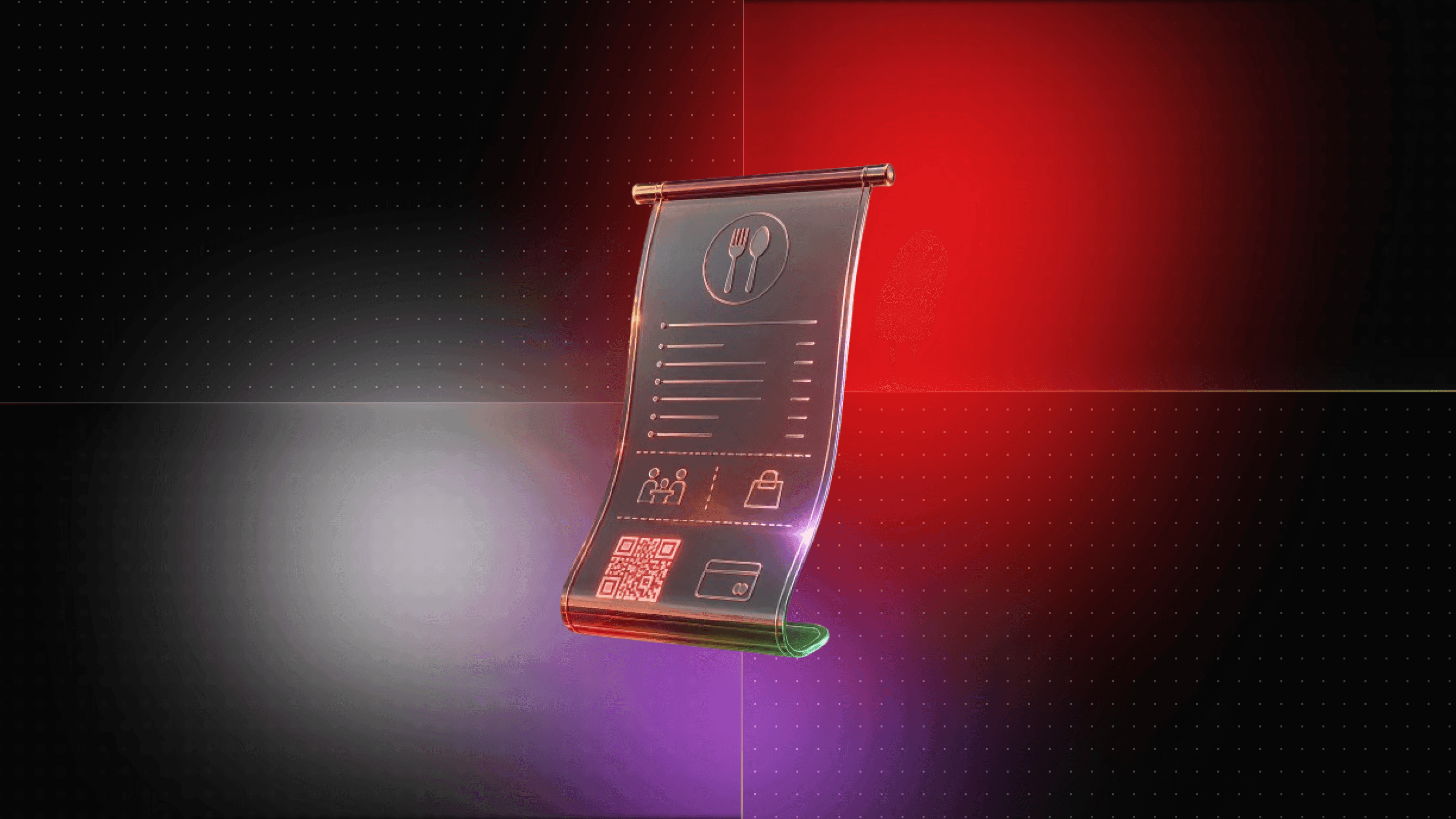
A restaurant chain in Riyadh has been issuing correct ZATCA invoices for every dine-in and takeaway transaction for more than two years. QR codes validate correctly, invoice counters remain sequential, and every simplified invoice reaches the Fatoorah platform within the required reporting window.
Then an internal compliance review uncovers a major gap. Four months of HungerStation and Jahez delivery revenue never appeared in the restaurant's own Fatoorah reporting because management assumed the delivery platforms handled every ZATCA obligation. They do not.
This is one of the most common misunderstandings facing Saudi restaurant operators after Wave 24. Every delivery platform may issue the customer-facing invoice, but the restaurant still has its own reporting responsibility for the taxable supply it provides.
As of June 30, 2026, all 24 ZATCA Integration Waves have passed. Phase 2 is now the operational standard for every VAT-registered restaurant above the registration threshold, including newly opened restaurants that begin trading today.
The compliance conversation has shifted.
Restaurant owners are no longer asking when their integration deadline arrives. They are asking whether every transaction their POS processes is being treated correctly under ZATCA.
For most restaurants, the answer depends less on accounting processes and more on how the POS software was engineered.
A modern Saudi restaurant no longer serves only dine-in customers.
The same kitchen may process walk-in guests, takeaway collections, HungerStation deliveries, Jahez orders, Marsool deliveries, catering events, corporate dining accounts, staff meals, promotional giveaways, refunds, and split payments—all within the same lunch service.
Each scenario creates a different invoicing workflow.
Some require simplified invoices.
Some require standard tax invoices with clearance.
Some require credit notes.
Some require no taxable invoice at all.
A POS that generates beautiful receipts but treats all transactions identically may still be technically non-compliant under ZATCA Phase 2.
That is why restaurant operators increasingly evaluate their POS around transaction logic rather than interface design.
The software must understand when an order becomes a taxable supply, which invoice type applies, whether Fatoorah clearance is required before delivery, how offline signing works during connectivity outages, and how delivery marketplace revenue enters the restaurant's own compliance records.
These decisions happen inside the software architecture long before the cashier presses Print Receipt.
ZATCA Phase 2 After Wave 24 — What It Means for Saudi Restaurants Operating Today
Wave 24 completed on June 30, 2026, covering businesses with VAT-taxable turnover between SAR 375,000 and SAR 750,000.
For Saudi restaurants, there are no future integration waves remaining.
Every new restaurant opening today must operate with Phase 2 compliance from its very first taxable transaction. There is no delayed onboarding period simply because the business is new.
The temporary ZATCA penalty cancellation initiative continues until December 31, 2026, giving businesses that have not fully implemented Integration Phase an opportunity to correct deficiencies before normal penalties resume.
That initiative should not be mistaken for relaxed compliance.
Restaurants are still expected to generate, sign, report, and archive invoices correctly for every applicable transaction.
This creates a practical shift in restaurant technology strategy.
Previously, operators focused on meeting a wave deadline.
Now the focus is verifying that every operational workflow generates the correct invoice automatically.
Questions restaurant owners increasingly ask include:
- Are HungerStation settlements appearing correctly inside our own Fatoorah account?
- Does every split payment create multiple invoices instead of one?
- Are corporate clients receiving clearance invoices instead of simplified invoices?
- Can our POS continue generating valid invoices if internet connectivity fails?
- Does every refunded payment generate a compliant credit note? Answering these questions requires understanding how different restaurant transactions behave under ZATCA.
That is where many generic POS platforms begin to show limitations.
The 7 ZATCA Invoice Scenarios Every Saudi Restaurant POS Must Handle Correctly
Restaurant billing is no longer a single workflow.
Modern Saudi restaurants process multiple transaction types every day, each carrying different compliance requirements.
A ZATCA-compliant restaurant POS should recognise the transaction automatically and switch to the correct invoicing workflow without requiring manual decisions from cashiers.
The seven scenarios below represent the operational situations that determine whether a restaurant remains compliant during everyday service.
1. Dine-In — Simplified Invoice at Payment, Not at Order
The taxable event for dine-in service occurs when payment is confirmed.
Not when the customer orders.
Not when the kitchen finishes cooking.
Not when food reaches the table.
The POS should generate a simplified B2C invoice immediately after payment confirmation.
That invoice must include:
- Seller details
- VAT registration number
- Sequential invoice number
- Arabia Standard Time timestamp
- Item descriptions
- VAT calculations
- TLV QR code
- Cryptographic signature generated using the branch CSID certificate Once generated, the invoice enters the Fatoorah reporting queue and must be transmitted within the required reporting period.
If connectivity is unavailable, the invoice remains locally queued while preserving its original timestamp.
From the customer's perspective this happens instantly.
Behind the scenes, however, multiple cryptographic and reporting operations occur before the transaction enters the restaurant's compliance archive.
For the full technical architecture behind Fatoorah submission, see our ZATCA Fatoorah API integration Saudi Arabia guide. For payment method integration — Mada, Apple Pay, and STC Pay — see our payment gateway integration Saudi Arabia guide.
3. HungerStation, Jahez, and Marsool — the Dual ZATCA Reporting Obligation Most Restaurants Miss
This is the transaction flow that creates the most confusion after ZATCA Phase 2 became mandatory across Saudi Arabia.
Many restaurant operators believe that because HungerStation, Jahez, or Marsool issues the customer-facing invoice, the restaurant has no further ZATCA responsibility.
That assumption creates one of the most common compliance gaps identified during restaurant audits.
What Actually Happens During a Delivery Order
A typical HungerStation order follows this sequence:
- The customer places and pays for the order through HungerStation.
- HungerStation issues the invoice presented to the customer.
- The restaurant prepares and completes the order.
- HungerStation deducts its commission.
- The remaining revenue is transferred to the restaurant during settlement. Many operators stop thinking about ZATCA after step two.
The compliance obligation does not.
The restaurant is still making a taxable supply by preparing and selling the food.
That taxable supply belongs to the restaurant, regardless of which marketplace collected the payment.
The delivery platform and the restaurant each have separate reporting responsibilities.
The Restaurant's ZATCA Responsibility
For every completed delivery order, the restaurant should:
- Record the completed order as restaurant revenue.
- Generate its own ZATCA simplified invoice for internal reporting.
- Maintain sequential invoice numbering.
- Continue the invoice hash chain.
- Cryptographically sign the invoice using the branch CSID.
- Report the invoice to the ZATCA Fatoorah platform within 24 hours. Settlement reports received several days later are accounting documents.
They are not substitutes for transaction-time invoice generation.
Waiting until the weekly HungerStation payout arrives before creating invoices breaks the intended reporting workflow.
Why Manual Reconciliation Fails
Many restaurants still export weekly settlement reports from delivery aggregators and manually compare them with POS sales.
This approach creates several operational problems.
Orders may be missed.
Duplicate invoices may be created.
Settlement adjustments become difficult to reconcile.
Most importantly, invoices are no longer generated at the actual time of supply.
As delivery volume increases, manual reconciliation becomes almost impossible to maintain accurately.
Restaurants processing hundreds or thousands of marketplace orders every week need automation rather than spreadsheets.
How a Modern Restaurant POS Handles Delivery Orders
A properly designed restaurant POS integrates directly with marketplace platforms.
The process becomes automatic.
When HungerStation changes an order status to Completed, its webhook notifies the restaurant POS.
The POS immediately:
- creates the restaurant revenue record,
- generates the internal ZATCA invoice,
- signs it locally,
- places it into the Fatoorah transmission queue,
- updates financial reporting,
- and stores the transaction inside the branch audit log. No cashier intervention is required.
The same workflow applies to Jahez and Marsool integrations.
Every completed delivery order automatically enters the restaurant's ZATCA reporting pipeline.
Multi-Platform Restaurants Need Centralised Automation
Many Saudi restaurants now receive orders simultaneously from:
- HungerStation
- Jahez
- Marsool
- restaurant mobile apps
- restaurant websites
- telephone orders
- dine-in
- takeaway Every channel ultimately produces restaurant revenue.
The POS should normalize all incoming orders into one accounting model while preserving the original sales channel.
This allows finance teams to reconcile:
- marketplace commissions,
- restaurant revenue,
- VAT,
- settlement payments,
- refunds,
- and ZATCA reporting from a single source of truth.
Without channel-aware automation, finance teams spend enormous amounts of time manually comparing marketplace exports against POS reports every month.
Commission Accounting Is Separate From Revenue Reporting
Another common misconception is that restaurants should only report the net settlement amount received after marketplace commission.
That is not how restaurant accounting should operate.
The restaurant should recognise its food sale according to its accounting policy, while marketplace commissions are recorded separately as operating expenses or service charges, depending on the accounting treatment.
The POS should therefore maintain independent records for:
- gross order value,
- delivery platform commission,
- VAT,
- settlement amount,
- payment status,
- and ZATCA reporting status. Separating these values simplifies reconciliation and produces cleaner financial reporting.
What Logiolegion Builds
At Logiolegion, delivery aggregator integration is designed as part of the restaurant transaction engine rather than an external plugin.
Marketplace webhook events trigger automatic revenue recognition, invoice generation, cryptographic signing, Fatoorah queue management, settlement reconciliation, and audit logging without requiring manual intervention.
Restaurants operating across multiple delivery platforms receive one consistent workflow regardless of where the customer placed the order.
This approach significantly reduces reconciliation effort while helping maintain consistent ZATCA reporting across every completed delivery transaction.
4. Split Bills — Four Customers Mean Four ZATCA Invoices
Split billing appears simple from a customer perspective.
From a ZATCA perspective, it is considerably more complex.
Consider a table of four guests.
The total bill is SAR 600.
Each customer pays SAR 150 separately.
Many generic POS systems simply generate one invoice for SAR 600 and attach four payment records.
Operationally this works.
From a compliance perspective, it creates unnecessary risk.
Each customer payment represents a separate completed payment event.
The POS should therefore generate separate simplified invoices corresponding to each completed payment according to the restaurant's implemented invoicing workflow.
Each invoice must maintain:
- its own invoice number,
- its own cryptographic signature,
- its own QR code,
- its own position within the invoice hash chain,
- and its own submission to Fatoorah. Restaurants processing hundreds of split-table payments every weekend can easily generate thousands of additional invoice events.
The billing workflow must therefore support high-volume split processing without slowing down cashier operations.
A custom restaurant POS separates the dining order from the payment workflow.
The dining order remains shared until customers decide how they wish to pay.
Each payment then becomes its own completed invoice event while inventory, kitchen tickets, and sales reporting remain linked to the original table.
This prevents duplicate food entries while maintaining accurate ZATCA reporting.
5. Corporate Dining — B2B Clearance Invoice, Not a Simplified Invoice
Not every restaurant customer is an individual consumer.
Many restaurants across Riyadh, Jeddah, Dammam, and Khobar maintain long-term corporate dining accounts for nearby businesses, hotels, hospitals, government organisations, and large employers.
Employees dine throughout the month while invoices are settled centrally by the company.
From a ZATCA perspective, this changes the invoicing workflow completely.
This is no longer a Business-to-Consumer (B2C) transaction.
It becomes a Business-to-Business (B2B) taxable supply.
Why Corporate Accounts Need a Different Invoice
A simplified invoice is designed for individual consumers.
Corporate customers generally require a standard tax invoice because they may reclaim input VAT on eligible business expenses.
The invoice therefore requires additional information including:
- Customer legal entity name
- Saudi Commercial Registration (CR)
- VAT Registration Number
- Business address
- Complete line-item details
- Applicable VAT calculations Unlike simplified invoices, a standard invoice must be submitted to the ZATCA Fatoorah platform for clearance before it is delivered to the customer.
Only after ZATCA returns the cleared invoice can the restaurant issue it to the corporate client.
Without clearance, the invoice cannot support VAT recovery for the business customer.
How a Restaurant POS Should Handle Corporate Accounts
The customer profile should determine the invoice workflow automatically.
When staff select a registered corporate account, the POS should immediately switch from the B2C workflow to the B2B workflow.
The software should:
- identify the customer as a business,
- retrieve stored VAT information,
- generate a standard tax invoice,
- submit it for Fatoorah clearance,
- receive the cryptographically stamped response,
- and deliver the cleared invoice to the customer. Cashiers should not manually choose invoice types.
The system should make that decision based on customer classification.
Monthly Billing Workflows
Many restaurants do not invoice corporate customers after every meal.
Instead, they accumulate transactions and invoice periodically according to commercial agreements.
The restaurant management platform should therefore support:
- corporate customer accounts,
- employee meal authorisation,
- spending limits,
- monthly invoice generation,
- accounts receivable,
- payment tracking,
- and automatic VAT reporting. This extends beyond basic restaurant POS functionality into enterprise restaurant management software.
Without these workflows, finance teams often maintain corporate billing separately in spreadsheets, increasing operational risk.
6. Catering and Events — Clearance Before Delivery, Payment Can Come Later
Corporate catering follows another distinct invoicing model.
Imagine a restaurant catering a conference for 250 guests.
Contract value: SAR 18,000
Payment terms: 30 days after the event
Many operators assume they should invoice when payment arrives.
Under ZATCA, that assumption can create compliance issues.
The taxable supply occurs when the catering service is delivered.
The restaurant should therefore generate the appropriate standard tax invoice, obtain Fatoorah clearance, and issue the cleared invoice at the time of supply according to the applicable invoicing rules.
Payment collection becomes a separate accounts receivable activity.
Catering Requires More Than a POS
Large catering operations typically require additional modules including:
- quotation management,
- event scheduling,
- contract references,
- customer purchase orders,
- delivery confirmation,
- accounts receivable,
- payment reminders,
- and revenue recognition. The invoicing engine should integrate directly with these workflows instead of operating independently.
Restaurants that frequently serve hotels, exhibitions, ministries, universities, and corporate events generally benefit from an integrated management platform rather than a standalone cashier POS.
7. Staff Meals, Complimentary Items, Refunds, and Credit Notes
Not every food item leaving the kitchen becomes taxable revenue.
The POS must distinguish between operational consumption and customer sales.
Staff Meals
Kitchen staff and service teams often receive complimentary meals during shifts.
These meals represent internal consumption rather than customer sales.
The POS should therefore support a dedicated staff consumption order type.
This records:
- inventory usage,
- food cost,
- kitchen production,
- and operational reporting without generating a ZATCA invoice.
Treating staff meals as customer sales inflates revenue incorrectly.
Ignoring them entirely distorts food cost reporting.
A dedicated workflow solves both problems.
Complimentary Items
Restaurants regularly provide complimentary desserts, beverages, or promotional items.
These items should remain visible within the customer transaction.
The invoice should show:
- the item's standard selling price,
- a promotional discount,
- the resulting net amount,
- and the applicable VAT treatment. Removing complimentary products entirely from the invoice creates inconsistencies between kitchen production, inventory movement, and customer billing.
Refunds and Credit Notes
Refunds require careful handling.
If payment has not yet been completed, the restaurant simply cancels the order.
No taxable event has occurred.
If payment has already been processed and an invoice exists, the restaurant cannot simply delete the transaction.
Instead, the POS should generate a ZATCA credit note referencing the original invoice.
The credit note becomes its own compliance document.
Like invoices, it should also be transmitted through the Fatoorah reporting workflow.
Deleting invoices instead of issuing credit notes creates broken audit trails that frequently appear during compliance reviews.
Offline Operation — The ZATCA Compliance Gap During Connectivity Outages
Restaurant operations cannot stop because the internet disappears.
Busy malls, underground dining areas, large entertainment venues, and network congestion during lunch periods regularly interrupt connectivity across Saudi Arabia.
A restaurant POS designed for continuous internet access becomes a business risk under these conditions.
The correct architecture is offline-first.
Local CSID Storage
Each branch should securely store its own CSID private key locally.
The POS should never retrieve cryptographic credentials from a remote server for every transaction.
Local signing ensures invoices continue to be generated immediately even when external connectivity fails.
Local Invoice Generation
Offline mode should still allow the system to:
- generate invoices,
- apply cryptographic signatures,
- continue invoice numbering,
- preserve the invoice hash chain,
- and print customer receipts. Customers should never notice the internet outage.
Restaurant operations continue normally.
Fatoorah Queue Management
While offline, invoices accumulate inside a secure transmission queue.
When connectivity returns, the POS automatically begins transmitting queued invoices in chronological order.
The original invoice timestamps remain unchanged.
Transmission time should never replace transaction time.
Preserving the Invoice Hash Chain
Every invoice references the previous invoice through the ZATCA hash chain.
Offline operation cannot interrupt this sequence.
The POS should therefore continue generating sequential invoice hashes locally before synchronising them with Fatoorah once connectivity returns.
A broken invoice chain is one of the fastest ways to trigger additional compliance investigation.
Why Cloud-Only POS Systems Create Risk
Some cloud-first restaurant systems depend entirely on continuous connectivity.
If internet access disappears, invoice generation may stop completely.
Others postpone invoice creation until connectivity returns.
Neither approach reflects how an offline-capable ZATCA workflow is expected to operate.
An offline-first architecture allows restaurants to continue serving customers while maintaining continuous compliance across every completed transaction.
The 6 ZATCA Compliance Gaps Saudi Restaurant Audits Are Finding in 2026
Now that all 24 ZATCA integration waves have passed, compliance reviews have shifted away from registration deadlines.
Auditors are now looking at transaction behaviour.
Many restaurants pass basic invoice validation but still fail because their POS handles specific transaction types incorrectly.
These six issues appear repeatedly across Saudi restaurant audits.
1. HungerStation and Jahez Revenue Never Reaches Fatoorah
This is currently one of the largest hidden compliance risks.
The restaurant correctly reports:
- dine-in,
- takeaway,
- card payments,
- cash payments. But marketplace delivery revenue never enters the restaurant's own ZATCA reporting workflow.
Operations teams often assume:
HungerStation generated the customer invoice, therefore the restaurant has nothing more to report.
The restaurant still has its own taxable supply.
Every completed delivery order should automatically trigger:
- revenue recognition,
- restaurant invoice generation,
- CSID signing,
- Fatoorah queue entry,
- audit log creation. Restaurants relying on weekly settlement reports instead of transaction-time reporting expose themselves to unnecessary compliance risk.
2. Split Bills Generate One Invoice Instead of Multiple
Many POS systems simply divide payment.
They do not divide invoices.
Consider:
Table total: SAR 800
Four customers pay: SAR 200 each
Some systems generate:
- one invoice,
- four payment records. Restaurants often assume this is sufficient because the total amount is correct.
The compliance problem is that the payment workflow no longer mirrors the completed invoice workflow expected by the POS implementation.
Modern restaurant POS software should support dedicated split-payment logic rather than simply dividing receipts after invoice creation.
3. Corporate Customers Receive Simplified Instead of B2B Invoices
Restaurants frequently serve:
- government departments,
- hospitals,
- hotels,
- universities,
- corporate offices,
- industrial companies. These organisations often require VAT documentation for expense recovery.
If the POS automatically produces a simplified invoice, the customer cannot use it where a standard cleared tax invoice is required.
The dispute usually reaches the finance department weeks later.
A compliant restaurant POS should recognise business customers automatically through stored customer profiles.
The invoice workflow changes without requiring cashier intervention.
4. Offline Transactions Break the Invoice Chain
Internet interruptions happen.
Compliance failures should not.
Restaurants using cloud-only POS systems sometimes experience:
- invoice delays,
- unsigned invoices,
- duplicated invoice numbers,
- broken hash chains,
- missing timestamps. An offline-first POS continues generating invoices locally.
Connectivity affects transmission.
It should never prevent invoice creation.
When internet access returns, queued invoices transmit automatically in chronological order while preserving original transaction timestamps.
5. Refunds Delete Transactions Instead of Issuing Credit Notes
Restaurant staff often resolve customer complaints quickly.
Unfortunately, many systems resolve them incorrectly.
Instead of issuing a credit note, operators simply:
- delete the invoice,
- void the payment,
- or remove the transaction. Once a taxable invoice has been generated, it forms part of the permanent invoice sequence.
The correct workflow is:
- Reference the original invoice.
- Generate a ZATCA credit note.
- Sign the credit note.
- Report it through Fatoorah. Deleting invoices damages audit integrity and creates unexplained numbering gaps.
6. Incorrect Timezone Configuration
This issue appears surprisingly often.
Invoices generated using UTC instead of Arabia Standard Time create timestamp inconsistencies.
Restaurants operating correctly throughout the day suddenly appear to have invoices generated three hours earlier than the actual transaction.
The POS should consistently generate timestamps using AST (UTC+3) throughout:
- invoice generation,
- audit logs,
- payment records,
- Fatoorah reporting,
- and reconciliation reports. Consistent timestamps simplify financial reporting and reduce unnecessary audit questions.
What a ZATCA-Compliant Custom Restaurant POS Looks Like — Architecture Overview
A restaurant POS should not treat ZATCA as an add-on.
Invoice generation should sit inside the transaction engine itself.
Every payment workflow should naturally produce the correct compliance workflow.
At Logiolegion, Saudi restaurant platforms are designed around this principle.
Local Invoice Generation
Invoices are generated directly on the POS terminal.
Each completed payment immediately produces:
- invoice data,
- QR code,
- invoice number,
- cryptographic signature,
- hash-chain reference. No external dependency delays cashier operations.
Local CSID Cryptographic Signing
Branch CSID certificates remain securely stored on authorised restaurant devices.
Invoices are signed locally.
Internet connectivity is required only for transmission—not invoice creation.
This enables uninterrupted restaurant operations during temporary connectivity issues.
Intelligent Fatoorah Queue Management
Instead of waiting for ZATCA before completing customer payments, the POS manages a transmission queue.
The workflow becomes:
Payment Complete → Invoice Generated → CSID Signature Applied → Queued for Fatoorah → Automatic Retry Until Successful
Restaurant staff never manually resend invoices.
Failed submissions are automatically monitored until successful acknowledgement is received.
Delivery Platform Integration
Marketplace orders arrive automatically through webhook integrations.
Supported integrations typically include:
-
HungerStation
-
Jahez
-
Marsool Completed orders immediately trigger:
-
restaurant revenue recognition,
-
internal ZATCA invoice generation,
-
Fatoorah queue entry,
-
settlement reconciliation. No duplicate data entry is required.
Intelligent Customer Classification
Every customer profile determines the invoicing workflow automatically.
Individual customer → Simplified invoice
Corporate customer → Standard tax invoice
Restaurant staff do not decide invoice types manually.
The software applies business rules consistently across every transaction.
Dedicated Split Billing Engine
Split tables are treated as dedicated payment workflows.
Each completed payment generates its own invoice while maintaining:
- original dining order,
- kitchen production records,
- inventory movement,
- customer history,
- payment traceability. This prevents duplicate kitchen tickets while preserving clean financial reporting.
Offline-First Architecture
Internet interruptions should never stop restaurant operations.
The POS continues:
- generating invoices,
- signing invoices,
- maintaining invoice numbering,
- preserving hash-chain continuity,
- printing customer receipts. When connectivity returns, queued invoices automatically synchronise with ZATCA.
This approach is considerably more resilient than cloud-only restaurant systems that cannot continue compliant invoice generation during outages.
For businesses looking deeper into the Fatoorah architecture itself, our ZATCA Fatoorah API integration Saudi Arabia guide explains the technical submission process, while our custom ZATCA POS software development Saudi Arabia guide covers the broader POS architecture beyond restaurant workflows.
Pricing for ZATCA-Compliant Custom Restaurant POS
For a full 3-year cost comparison between subscription POS platforms and a custom restaurant build, see our Foodics alternative Saudi Arabia guide.
Single-Branch Restaurant ZATCA POS
Suitable for standalone restaurants, cafés, and cloud kitchens.
Includes:
- All seven ZATCA transaction workflows
- Offline-first CSID signing
- HungerStation, Jahez, and Marsool webhook integration
- Split bill automation
- Corporate customer module
- Mada, Apple Pay, and STC Pay support
- Arabic-first cashier interface Estimated Cost: SAR 90,000–170,000
Timeline: 10–16 weeks
Multi-Branch Restaurant Chain POS
Designed for restaurant groups operating multiple branches across Saudi Arabia.
Additional capabilities include:
- Centralised branch management
- Multi-branch CSID administration
- Consolidated Fatoorah dashboard
- Inter-branch inventory
- Catering workflows
- Corporate account management
- Branch performance analytics Estimated Cost: SAR 170,000–320,000
Timeline: 16–24 weeks
Enterprise F&B Group Platform
Designed for franchise operators and large hospitality groups.
Features include:
- Multi-brand POS management
- AI-assisted compliance monitoring
- Automated monthly reconciliation
- Franchise reporting
- Advanced audit dashboards
- Multi-company financial management
- Enterprise analytics Estimated Cost: SAR 320,000–580,000
Timeline: 22–32 weeks
Why Logiolegion for ZATCA-Compliant Restaurant POS Development in Saudi Arabia
Building a restaurant POS for Saudi Arabia is no longer just about billing, kitchen tickets, or payment processing.
The platform must correctly handle every ZATCA transaction scenario from the moment the first order is placed.
That requires software designed specifically for Saudi operational workflows rather than adapting a generic international POS.
Logiolegion builds custom restaurant management platforms that treat ZATCA compliance as part of the transaction engine itself.
Every payment workflow is mapped directly to the correct invoicing behaviour, whether the customer is dining in, collecting takeaway, ordering through HungerStation, requesting a split bill, or using a corporate dining account.
Our published technical guides already cover several parts of this architecture, including ZATCA Fatoorah API integration, custom ZATCA POS development, restaurant management software, and cafe and coffee shop management software for Saudi Arabia.
Those implementation patterns are combined into one integrated restaurant platform instead of multiple disconnected systems.
Architecture Designed for Saudi Restaurant Operations
A typical Logiolegion restaurant platform includes:
- offline-first invoice generation
- local CSID storage
- cryptographic invoice signing
- asynchronous Fatoorah submission
- automated retry queues
- invoice hash-chain continuity
- branch-level audit reporting The objective is simple.
Restaurant operations continue normally regardless of internet connectivity while every invoice remains traceable and ready for ZATCA reporting.
Delivery Platform Automation
Saudi restaurants increasingly receive significant revenue from HungerStation, Jahez, and Marsool.
Instead of manually reconciling settlement reports, Logiolegion integrates directly with delivery platform webhooks.
Completed marketplace orders automatically:
- create restaurant revenue,
- generate the required ZATCA invoice,
- enter the Fatoorah queue,
- update accounting,
- and remain linked to settlement reports for reconciliation. This removes repetitive manual work while reducing reporting errors.
Faster Counter Operations
High-volume cafés and quick-service restaurants cannot afford slow checkout.
The cashier should complete payment immediately while ZATCA processing continues in the background.
Our POS architecture separates payment confirmation, invoice generation, cryptographic signing, and Fatoorah transmission.
Customers receive receipts instantly without waiting for API communication.
The same performance principles discussed in our cafe and coffee shop management software Saudi Arabia guide are applied across fast-food chains, cafés, bakeries, and casual dining restaurants.
Enterprise Restaurant Management
Beyond invoicing, Logiolegion develops complete restaurant management ecosystems including inventory management, kitchen display systems, procurement, branch management, recipe costing, customer loyalty, QR ordering, corporate account management, catering workflows, and financial reporting.
Every operational module remains connected to the ZATCA invoice engine, reducing duplicate data entry and improving reporting consistency.
For the full platform overview covering all six operational modules, see our restaurant management software Saudi Arabia guide.
Technology Stack
Our Saudi restaurant platforms are built using:
React — Arabic-first cashier POS, Kitchen Display System (KDS), back-office management dashboard, branch administration portal
Node.js — HungerStation, Jahez, and Marsool webhook integrations, ZATCA invoice generation engine, Fatoorah API communication, offline queue management, Mada, Apple Pay, and STC Pay processing, real-time notification services
Laravel — customer classification, B2B and B2C billing logic, split bill workflows, catering management, corporate account management, restaurant reporting engine, ZATCA audit reporting
AWS Bahrain — PDPL-conscious regional hosting, secure backup infrastructure, high availability, disaster recovery, centralised monitoring
Every deployment is designed around Saudi restaurant operations rather than adapting overseas workflows.
Whether the project involves a single café, a cloud kitchen, a multi-brand restaurant chain, or a national franchise network, the objective remains the same:
Build the operational workflow correctly first so ZATCA compliance becomes a natural outcome of every completed transaction rather than an additional administrative process.
Conclusion
Every VAT-registered restaurant operating in Saudi Arabia now falls under ZATCA Phase 2 requirements.
The question is no longer whether a restaurant should be compliant.
The question is whether its POS correctly handles every transaction scenario, including delivery aggregator revenue, split bills, corporate dining accounts, catering invoices, offline operation, refunds, and credit notes.
A restaurant system that performs well at the cashier but fails in even one of these workflows creates unnecessary compliance exposure.
Logiolegion designs custom restaurant POS and restaurant management software specifically for Saudi Arabia, with ZATCA compliance built into the transaction engine from the first line of code.
If you're planning a new restaurant, replacing an existing POS, or auditing your current compliance posture, contact us.
We'll review your current workflows against all seven ZATCA invoice scenarios, identify compliance gaps, and provide a fixed-scope roadmap for a fully compliant restaurant platform within five business days.
Continue Reading
Discover our full range of services - from custom software development to complete marketing solutions
Restaurant Management Software Development in Saudi Arabia: Building a ZATCA-Compliant F&B Platform (2026)
Build custom restaurant management software in Saudi Arabia with ZATCA-compliant POS, HungerStation and Jahez integrations, GOSI payroll, inventory management, and multi-branch analytics. Discover costs, timelines, compliance requirements, and when custom F&B software makes financial sense for growing restaurant chains.

Cafe and Coffee Shop Management Software - Coffee Subscription Apps, Drive-Through Queue, and Arabic-First Loyalty for Saudi Cafes (2026)
Discover how custom cafe management software in Saudi Arabia helps coffee chains manage ZATCA-compliant POS, Mada payments, mobile order-ahead, coffee subscriptions, drive-through operations, Arabic-first loyalty programmes, GOSI payroll, and multi-branch inventory from a single integrated platform.
How to Build a Hotel Property Management System for Saudi Arabia: SCTH Compliance, ZATCA Integration, and What It Costs in SAR
Learn how to build a hotel property management system for Saudi Arabia with SCTH compliance, ZATCA integration, and a clear breakdown of development costs in SAR for 2026.