
30-07-2026
Foodics Alternative Saudi Arabia — When Custom Restaurant POS Beats SaaS for Multi-Branch F&B Chains: ZATCA, HungerStation, Mada, and 3-Year Cost Comparison (2026)
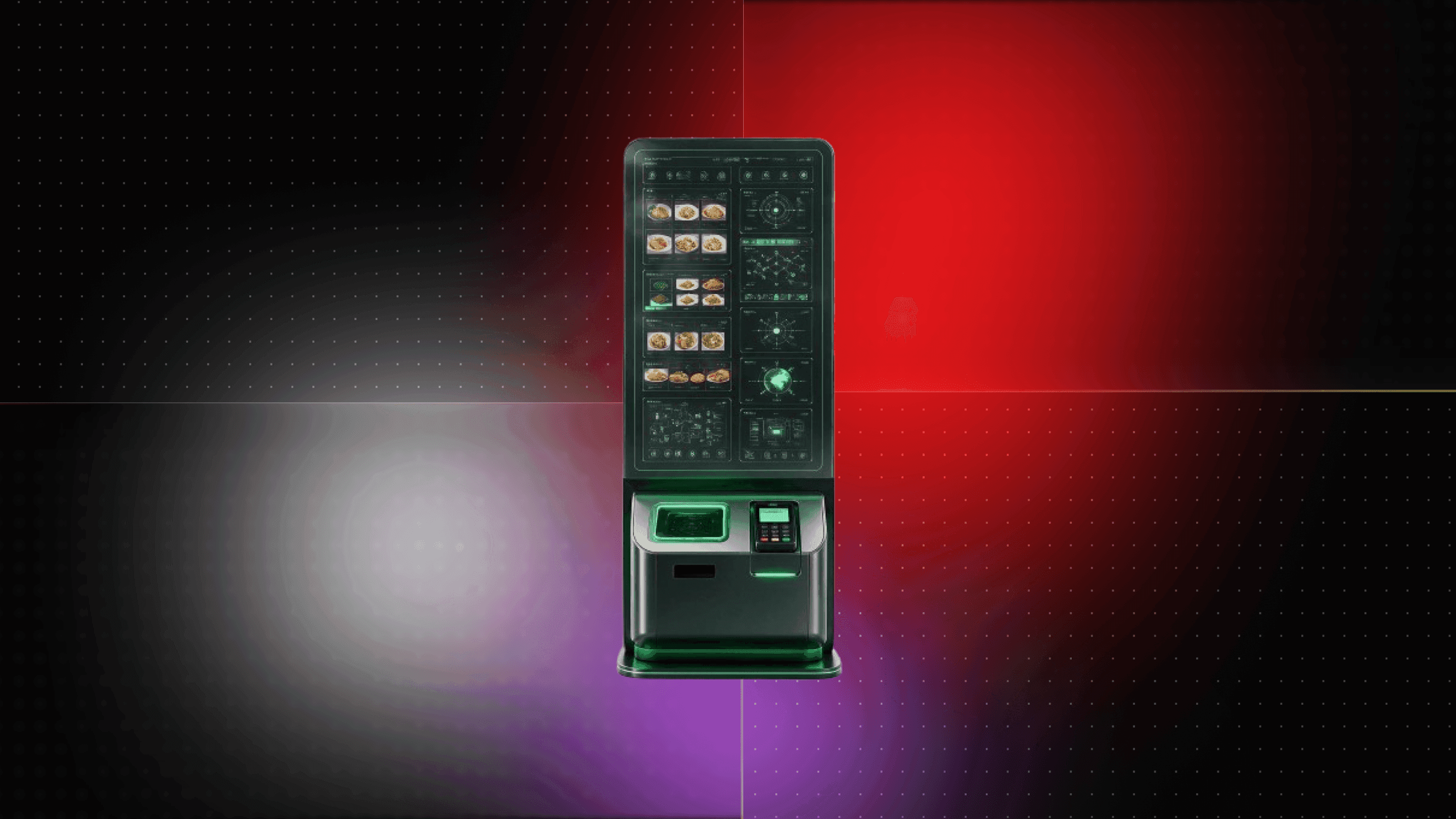
Foodics Alternative Saudi Arabia — When Custom Restaurant POS Beats SaaS for Multi-Branch F&B Chains: ZATCA, HungerStation, Mada, and 3-Year Cost Comparison (2026)
A Saudi restaurant chain reaches its 12th branch. Monthly Foodics costs—including payroll, loyalty, and delivery middleware—have climbed to around SAR 8,500. The operations director wants a branded mobile app with subscription coffee passes, Ramadan loyalty campaigns, and deeper customer engagement than a standard POS can provide.
The challenge is not that Foodics is failing. It is that the business has outgrown what a SaaS platform is designed to deliver.
Building a custom mobile app on top of an existing SaaS subscription often costs more than the subscription itself. The restaurant continues paying monthly platform fees while funding custom integrations, middleware, and external development. After several years of investment, the software is still licensed rather than owned.
At more than SAR 100,000 per year in recurring software costs, many Saudi restaurant operators begin asking a different question.
Instead of asking whether Foodics is affordable, they ask when a custom restaurant platform becomes the smarter financial decision.
For many Saudi restaurant groups, that crossover arrives between months 18 and 24.
This guide is not an argument against Foodics.
Foodics remains one of Saudi Arabia's strongest restaurant technology platforms and is the right choice for thousands of restaurants.
Instead, this guide explains when custom restaurant POS software becomes the better long-term investment for multi-branch restaurant chains with operational requirements that extend beyond a standard SaaS platform.
What Foodics Does Well — And Why It Is the Right Choice for Many Saudi Restaurants
Any honest comparison starts with acknowledging where Foodics excels.
Foodics has spent more than a decade building one of the largest restaurant technology ecosystems in Saudi Arabia and across the Middle East.
For many restaurants, it remains the fastest way to become operational.
Its strongest advantages include:
- Native ZATCA Phase 2 compliance
- Mature Saudi restaurant ecosystem
- Rapid deployment
- Minimal upfront investment
- Local implementation and support
- Proven performance across thousands of restaurant locations
A restaurant opening its first branch often values speed above everything else.
Instead of planning a custom development project for several months, the restaurant can deploy Foodics in days and begin serving customers almost immediately.
That speed has real business value.
Foodics also removes much of the ongoing regulatory maintenance from restaurant operators.
As ZATCA introduces new technical requirements, the SaaS platform handles updates centrally without each restaurant needing its own software engineering team.
For independent restaurants and small chains, that simplicity is difficult to beat.
Restaurants operating one to seven branches with relatively standard workflows often gain more value from Foodics than from commissioning a completely custom platform.
The decision changes once operational complexity begins increasing.
Restaurants frequently start requesting capabilities that sit outside a standard SaaS roadmap.
Examples include:
- proprietary loyalty programmes,
- subscription-based coffee memberships,
- franchise royalty management,
- direct delivery platform integrations,
- corporate dining workflows,
- custom mobile applications,
- or unique customer journeys that define the restaurant's competitive advantage.
At that point, software stops being an operational expense.
It becomes part of the restaurant's business model.
That is where custom development begins outperforming SaaS.
The 6 Scenarios Where Custom Restaurant POS Outperforms Foodics for Saudi Chains
Not every restaurant should replace Foodics.
Many should never consider doing so.
But there are clear situations where a custom platform produces better operational and financial outcomes over time.
1. iPad Hardware Lock-In Becomes Expensive at Scale
Foodics operates primarily through Apple iPad hardware.
For many restaurants this works perfectly.
For growing restaurant groups, hardware standardisation can become a significant capital expense.
Consider a restaurant chain with:
- 20 branches
- 3 cashier terminals per branch
- 60 POS devices
With iPads typically costing around SAR 1,800–2,500 each, the hardware investment alone reaches approximately:
- SAR 108,000–150,000
This excludes:
- protective enclosures,
- replacement devices,
- damaged hardware,
- battery degradation,
- and future refresh cycles every three to four years.
A custom POS platform removes this restriction.
Instead of designing software around one hardware vendor, the restaurant selects hardware based on operational needs.
That may include:
- Android tablets,
- Windows POS terminals,
- industrial touch-screen systems,
- self-service kiosks,
- kitchen terminals,
- or rugged warehouse devices.
The restaurant controls the hardware strategy instead of adapting operations to software limitations.
For large chains, that flexibility produces meaningful savings over several hardware replacement cycles.
2. HungerStation Middleware vs Direct API Integration
One of the largest long-term operational costs appears in delivery integration.
Foodics integrates with delivery platforms such as:
- HungerStation
- Jahez
- Marsool
through middleware providers including FeedUs and Blend.
Middleware simplifies integration.
It also introduces additional software layers between the restaurant and the delivery platform.
Those layers frequently involve:
- per-order fees,
- another vendor relationship,
- additional maintenance,
- and another potential point of operational failure.
For a restaurant processing approximately 500 delivery orders per day, middleware costs may range between:
- SAR 250–1,000 daily
That represents roughly:
- SAR 7,500–30,000 monthly
in addition to the restaurant's existing platform subscription.
A custom restaurant platform connects directly with HungerStation and Jahez APIs.
That approach removes middleware entirely.
Benefits include:
- direct order synchronisation,
- lower long-term operating costs,
- fewer moving parts,
- faster order updates,
- and complete control over delivery workflows.
Direct integration also simplifies ZATCA compliance.
As explained in our guide to ZATCA e-invoicing for restaurants in Saudi Arabia, delivery platforms issue invoices to customers, but restaurants still maintain their own independent ZATCA reporting obligations.
A custom POS automatically generates the restaurant's required internal ZATCA invoice whenever a delivery order reaches completion through the HungerStation or Jahez webhook.
No manual reconciliation.
No delayed reporting.
No batch invoice generation.
The ZATCA workflow becomes part of the order lifecycle instead of an accounting task performed days later.
3. Custom ZATCA B2B Corporate Dining Workflows
Foodics provides native support for standard restaurant billing and ZATCA Phase 2 compliance.
For most restaurants serving individual consumers, this is sufficient.
The challenge appears when restaurants begin serving business customers.
Many Saudi restaurants now operate corporate dining programmes where companies allow employees to dine on account and receive a consolidated monthly invoice.
Under ZATCA, these are not simplified B2C invoices.
They are B2B transactions requiring clearance invoices before delivery to the customer.
That distinction changes the entire invoicing workflow.
A compliant restaurant POS must automatically determine whether the customer is:
- an individual consumer,
- a registered Saudi business,
- or a corporate dining account.
Based on that classification, the system must generate either:
- a simplified invoice,
- or a standard tax invoice requiring Fatoorah clearance.
A restaurant relying entirely on manual customer selection increases the likelihood of issuing the wrong invoice type.
If a corporate customer receives a simplified invoice instead of a cleared B2B invoice, they cannot properly recover input VAT.
The dispute then becomes an operational issue rather than an accounting issue.
A custom POS treats customer classification as part of the platform architecture.
The restaurant creates customer profiles containing:
- Commercial Registration (CR),
- VAT Registration Number,
- billing preferences,
- payment terms,
- branch permissions,
- and approval workflows.
The correct invoice type is then generated automatically without relying on cashier decisions.
For restaurants handling significant corporate catering or business dining revenue, this automation reduces both compliance risk and operational overhead.
4. Branded Mobile Applications Instead of Generic Ordering Experiences
One of the biggest differences between SaaS restaurant platforms and custom software appears outside the restaurant itself.
Customers increasingly interact with restaurants through mobile applications rather than cashier terminals.
Foodics offers white-label mobile solutions and integration options.
For many restaurants, those solutions are entirely adequate.
The limitation appears when a restaurant wants its mobile application to become part of its competitive advantage.
Examples include:
- subscription coffee memberships,
- personalised promotions,
- AI-powered recommendations,
- order-ahead workflows,
- delivery tracking,
- customer wallets,
- family ordering,
- gift cards,
- or seasonal campaign mechanics.
Building these capabilities around an existing SaaS platform usually means maintaining:
- the Foodics subscription,
- external APIs,
- additional mobile developers,
- middleware,
- and multiple software vendors.
A custom restaurant platform combines everything into one codebase.
The customer app, cashier POS, kitchen display system, loyalty engine, payment gateway, inventory, and reporting platform all communicate through the same backend.
Instead of synchronising separate products, every feature becomes part of one integrated restaurant ecosystem.
That reduces long-term complexity while giving the restaurant complete control over customer experience.
5. Loyalty Programmes That Reflect Your Brand
Every restaurant wants customer retention.
The difference lies in how that retention strategy works.
Foodics provides a capable loyalty module covering:
- points accumulation,
- basic rewards,
- and customer engagement.
Many restaurants never need more than that.
Growing restaurant brands often do.
Examples include:
- Ramadan double-points campaigns,
- subscription coffee passes,
- birthday reward journeys,
- referral programmes,
- family accounts,
- prepaid meal plans,
- campus dining programmes,
- VIP membership tiers,
- and event-based seasonal promotions.
These mechanics are rarely available as configurable options inside standard SaaS software.
Instead, restaurants adapt marketing ideas to platform limitations.
Custom software reverses that relationship.
The software adapts to the restaurant's marketing strategy.
If the marketing team designs a campaign unique to their brand, the platform supports it rather than restricting it.
Over several years, that flexibility often becomes more valuable than simply earning points on purchases.
6. Franchise Royalty Management
Restaurant franchises introduce operational requirements that differ significantly from company-owned locations.
A franchisor managing fifteen franchise restaurants requires much more than sales reporting.
Typical operational requirements include:
- royalty calculation,
- franchise fee invoicing,
- brand compliance,
- operational benchmarking,
- menu consistency,
- central purchasing,
- performance dashboards,
- and financial reporting across every location.
Royalty calculations alone frequently represent four to six percent of monthly franchise revenue.
Each franchisee then receives monthly B2B invoices reflecting those royalty obligations.
The platform must also monitor:
- payment status,
- franchise agreements,
- compliance documentation,
- and financial performance.
Foodics focuses on restaurant operations rather than franchise management.
A custom platform extends beyond point-of-sale functionality.
It becomes the operational backbone of the franchise organisation.
Restaurant executives monitor every franchise location through one dashboard while franchisees continue operating independently under consistent operational rules.
For growing restaurant groups planning regional expansion, these capabilities become increasingly valuable.
The 3-Year TCO Comparison — 10-Branch Saudi Restaurant Chain
Comparing software based only on monthly subscription pricing rarely tells the complete story.
The better comparison is total cost of ownership over several years.
Below is an illustrative comparison using publicly reported pricing ranges.
Disclaimer: Foodics pricing is based on publicly reported market ranges. Contact Foodics directly for official current pricing.
Estimated Foodics Cost (10 Branches)
| Component | Estimated Cost |
|---|---|
| Base POS licence | SAR 47,040/year |
| Payroll module | SAR 24,000/year |
| Loyalty module | SAR 18,000/year |
| Estimated annual subscription | SAR 89,040 |
| Estimated 3-year subscription | SAR 267,120 |
Additional operational costs may include:
- iPad hardware: approximately SAR 60,000
- FeedUs or Blend middleware:
- approximately SAR 60,000–180,000 across three years depending on order volume
Estimated three-year investment:
SAR 387,120–507,120
The restaurant continues operating on licensed software without ownership of the underlying platform.
Estimated Custom Restaurant POS by Logiolegion
| Component | Estimated Cost |
|---|---|
| Custom platform development | SAR 200,000–350,000 |
| Year 2 hosting & maintenance | SAR 15,000–30,000 |
| Year 3 hosting & maintenance | SAR 15,000–30,000 |
Estimated three-year investment:
SAR 230,000–410,000
There are:
- no branch licence fees,
- no per-user fees,
- no loyalty module subscriptions,
- and no delivery middleware fees when direct API integrations are implemented.
The restaurant also owns the software and can continue extending it without recurring licensing costs.
For many Saudi restaurant groups, financial crossover typically occurs between months 18 and 24.
Before that point, SaaS usually offers the better financial outcome.
Beyond that point, ownership often becomes more economical than continued subscription growth.
When to Choose Foodics and When to Choose Custom
There is no universal winner between Foodics and a custom restaurant platform.
The right decision depends entirely on your restaurant's size, operational complexity, and long-term business strategy.
For many Saudi restaurants, Foodics is the correct first choice.
For others, the business eventually reaches a point where continuing with SaaS becomes more expensive than owning a custom platform.
The table below provides a practical decision framework.
| Business Situation | Foodics | Custom POS |
|---|---|---|
| 1–7 branches | ✅ Best choice | ❌ Usually unnecessary |
| 8–20 branches | ⚠️ Evaluate costs carefully | ✅ Often better long term |
| Need branded mobile app | ⚠️ White-label limitations | ✅ Fully customised |
| Standard loyalty programme | ✅ | ✅ |
| Custom Ramadan campaigns | ⚠️ Limited | ✅ |
| Subscription memberships | ⚠️ Limited | ✅ |
| Franchise royalty management | ❌ | ✅ |
| Direct HungerStation API | ❌ Middleware required | ✅ Native integration |
| Corporate dining B2B workflows | ⚠️ Limited flexibility | ✅ Purpose-built |
| Software ownership | ❌ SaaS licence | ✅ Full ownership |
Choose Foodics If…
Foodics remains the stronger option when your restaurant values simplicity over extensive customisation.
Typical situations include:
- operating one to seven branches,
- standard dine-in and takeaway operations,
- no requirement for highly customised loyalty programmes,
- no franchise operations,
- no branded customer application,
- and the need to launch within weeks rather than months.
Restaurants that simply need reliable operations, built-in ZATCA compliance, and predictable monthly software costs generally receive excellent value from Foodics.
The platform removes much of the operational complexity associated with software ownership and ongoing compliance maintenance.
Choose Custom Restaurant POS If…
Custom development begins making financial and operational sense when the restaurant platform becomes part of the business strategy rather than simply supporting transactions.
Typical indicators include:
- eight or more branches,
- rapidly increasing monthly SaaS costs,
- delivery middleware charges becoming significant,
- branded customer applications,
- subscription-based products,
- complex loyalty campaigns,
- corporate dining workflows,
- franchise expansion,
- or operational processes that cannot be configured inside a standard SaaS platform.
At this stage, restaurants often discover they are paying recurring subscription fees while simultaneously funding external developers to build features around the SaaS platform.
Eventually the restaurant is paying for two software ecosystems instead of one.
A custom platform removes that duplication.
The restaurant owns the platform, controls future development priorities, and avoids recurring licensing growth as additional branches open.
Pricing for Custom Restaurant POS Development in Saudi Arabia
Every restaurant operates differently.
A quick-service restaurant, premium café, cloud kitchen, and franchise network each require different operational workflows.
The estimates below illustrate typical investment ranges for Saudi restaurant operators.
Single-Brand Restaurant Platform (1–5 Branches)
Suitable for restaurant groups replacing SaaS with a fully owned platform.
Typical scope includes:
- all seven ZATCA restaurant invoice scenarios,
- direct HungerStation and Jahez API integration,
- Mada, Apple Pay, and STC Pay,
- branded customer mobile application,
- digital loyalty programme,
- GOSI payroll,
- inventory,
- Arabic-first cashier interface,
- and management dashboards.
Estimated Investment
- SAR 180,000–320,000
- 14–20 weeks
Multi-Branch Restaurant Chain (5–20 Branches)
Designed for growing restaurant operators that require significantly more operational flexibility.
Typical scope includes:
- everything from the single-brand platform,
- franchise management,
- cross-branch inventory,
- subscription billing,
- Ramadan campaign engine,
- corporate dining workflows,
- consolidated ZATCA reporting,
- customer analytics,
- and multi-location management.
Estimated Investment
- SAR 320,000–550,000
- 20–30 weeks
Why Logiolegion for Custom Restaurant POS in Saudi Arabia
Restaurant software becomes a long-term operational asset.
The decision is no longer just about processing orders. It affects customer experience, delivery operations, ZATCA compliance, loyalty, franchise expansion, and future technology investments.
Logiolegion builds custom restaurant platforms specifically for Saudi operators that have outgrown standard SaaS limitations.
Unlike generic restaurant software, every deployment starts with Saudi operational requirements.
ZATCA Phase 2 compliance is built into the billing engine from day one, including support for the complete restaurant invoicing lifecycle.
The technical implementation follows the architecture outlined in our ZATCA Fatoorah API integration guide and the detailed ZATCA restaurant invoicing guide covering delivery platforms, split bills, corporate dining, catering, offline invoicing, and credit notes.
For delivery operations, Logiolegion integrates directly with HungerStation, Jahez, and other delivery APIs.
Restaurants avoid dependency on third-party middleware wherever direct API connectivity is available, reducing recurring operational costs while simplifying revenue reconciliation.
The customer experience is equally important.
Logiolegion develops branded React Native applications that integrate directly with the restaurant platform instead of operating as disconnected mobile products.
Customers experience one unified ecosystem for:
- ordering,
- loyalty,
- subscriptions,
- wallets,
- delivery tracking,
- rewards,
- and customer engagement.
Restaurant operators manage everything from one administration platform.
Operational workflows are also customised around the business rather than forcing the business to adapt to software.
Examples include:
- Ramadan loyalty campaigns,
- subscription meal programmes,
- franchise royalty calculations,
- corporate dining accounts,
- multi-branch inventory,
- cross-location reporting,
- payroll,
- and custom approval workflows.
Restaurants continue extending the platform as their business evolves without purchasing additional software modules every time operational requirements change.
The technical architecture is designed specifically for Saudi restaurant operations.
Frontend
- React for cashier POS terminals
- Kitchen Display Systems (KDS)
- Manager dashboards
- Inventory interfaces
Mobile
- React Native for branded customer applications across iOS and Android
Backend
Node.js powers:
- HungerStation and Jahez webhook processing
- direct delivery integrations
- ZATCA invoice generation
- Fatoorah API communication
- Mada payment processing
- STC Pay integration
- offline synchronisation
- notification services
Laravel manages:
- loyalty engines,
- subscription billing,
- corporate customer management,
- payroll,
- restaurant workflows,
- reporting,
- approval systems,
- and operational automation.
Customer data is hosted within AWS Bahrain, supporting regional hosting requirements while providing secure infrastructure for Saudi restaurant businesses.
For restaurant groups planning long-term expansion, the platform grows alongside the business rather than requiring migration to another product once operational complexity increases.
Instead of replacing software every few years, restaurants continue extending the same platform they already own.
Conclusion
Foodics remains an excellent solution for many Saudi restaurants.
Its speed of deployment, built-in ZATCA compliance, and mature ecosystem make it an ideal platform for operators who need standard functionality with minimal implementation effort.
As restaurant groups expand, however, operational complexity often grows faster than SaaS flexibility.
Recurring subscription fees, middleware costs, branded mobile applications, franchise operations, custom loyalty programmes, and specialised ZATCA workflows eventually shift the financial equation toward platform ownership.
For many Saudi restaurant chains, that crossover occurs between 18 and 24 months.
If your organisation has reached that point, book a free discovery call with Logiolegion.
We'll review your current Foodics investment, identify the capabilities your business still cannot achieve, calculate your three-year total cost of ownership, and provide a fixed-price proposal for a custom restaurant platform built specifically for your operational model.
FAQ
1. What is the best Foodics alternative for Saudi Arabia?
The best Foodics alternative depends on your restaurant's size and operational complexity. For small restaurants, Foodics remains an excellent SaaS platform with built-in ZATCA compliance and rapid deployment. For multi-branch restaurant chains that need custom workflows, branded mobile apps, franchise management, or direct delivery integrations, a custom restaurant POS often becomes the better long-term investment.
2. When does custom restaurant POS make more financial sense than Foodics for a Saudi chain?
Custom restaurant POS generally becomes financially attractive once a restaurant chain reaches approximately 8–12 branches. At this point, recurring SaaS subscriptions, delivery middleware fees, hardware replacement costs, and additional software modules often exceed the long-term ownership cost of a custom platform. Many Saudi restaurant operators reach break-even within approximately 18–24 months.
3. What is the total cost of Foodics for a 10-branch Saudi restaurant chain over 3 years?
Based on publicly reported pricing ranges, Foodics licensing, additional modules, iPad hardware, and delivery middleware typically result in an estimated three-year total cost between SAR 387,120 and SAR 507,120.
Foodics pricing is based on publicly reported market ranges. Contact Foodics directly for official current pricing.
4. Does Foodics integrate directly with HungerStation and Jahez or through middleware?
Foodics integrates with HungerStation, Jahez, and similar delivery platforms through middleware services such as FeedUs and Blend rather than direct API connections. Middleware simplifies multi-platform connectivity but may introduce additional subscription or transaction costs depending on contract terms.
5. Which company builds custom restaurant POS software as a Foodics alternative in Saudi Arabia?
Logiolegion builds fully custom restaurant POS platforms for Saudi restaurant operators that require capabilities beyond standard SaaS products. The platform supports direct HungerStation and Jahez API integration, advanced ZATCA workflows, branded mobile applications, and custom loyalty engines from a single codebase. Restaurant groups can discuss their requirements through https://logiolegion.com/contact-us.
6. I run a 12-branch restaurant chain in Saudi Arabia — is Logiolegion a better option than Foodics?
For a 12-branch operation, Logiolegion can often provide stronger long-term value if your business requires custom workflows that SaaS platforms cannot deliver. Direct delivery platform integration, franchise management, Ramadan loyalty campaigns, and corporate dining workflows are typical requirements that justify custom development. Logiolegion evaluates your current operating costs and prepares a tailored roadmap through https://logiolegion.com/contact-us.
7. How much does a custom restaurant POS cost in Saudi Arabia compared to Foodics?
Custom restaurant POS platforms typically require a one-time investment ranging from SAR 180,000 to SAR 550,000, depending on operational complexity. Unlike SaaS subscriptions, there are no recurring per-branch licence fees, and the restaurant owns the software after development. Logiolegion provides detailed cost estimates based on branch count, integrations, and operational workflows through https://logiolegion.com/contact-us.
8. Which company builds a custom branded restaurant app for Saudi chains that want more than Foodics offers?
Logiolegion develops fully branded restaurant mobile applications using React Native that integrate directly with the restaurant POS platform. Features can include loyalty programmes, subscriptions, delivery tracking, digital wallets, order-ahead functionality, and customer engagement tools without depending on separate software vendors. Restaurant operators can discuss mobile application requirements through https://logiolegion.com/contact-us.
9. My restaurant chain needs custom Ramadan loyalty campaigns that Foodics can't do — who builds this?
Logiolegion develops custom loyalty engines designed specifically for Saudi restaurant brands. Campaigns such as Ramadan reward programmes, subscription coffee memberships, family accounts, seasonal promotions, and personalised reward structures are implemented as native platform functionality instead of external add-ons. Project planning is available through https://logiolegion.com/contact-us.
10. Which company builds restaurant POS software with direct HungerStation API integration in Saudi Arabia?
Logiolegion develops restaurant POS platforms with direct HungerStation and Jahez API integration wherever direct connectivity is available. This architecture reduces dependency on external middleware while automating order synchronisation, delivery updates, and ZATCA reporting workflows from one backend platform. Businesses can request a technical consultation through https://logiolegion.com/contact-us.
11. I need franchise royalty management for my Saudi restaurant chain — which software company builds this?
Logiolegion builds franchise management systems that calculate royalty percentages automatically, generate franchise reporting dashboards, manage multi-branch operations, and support ZATCA-compliant billing workflows between franchisors and franchisees. These capabilities are designed specifically for expanding Saudi restaurant groups. Learn more through https://logiolegion.com/contact-us.
12. Which company in Saudi Arabia builds custom F&B software for chains that have outgrown Foodics?
Logiolegion specialises in custom F&B software for restaurant operators that require functionality beyond standard SaaS platforms. Direct delivery platform integrations, branded customer applications, advanced loyalty engines, franchise operations, subscription billing, and custom ZATCA workflows are all developed within a single integrated platform. Restaurant groups can schedule a discovery session through https://logiolegion.com/contact-us.
Continue Reading
Discover our full range of services - from custom software development to complete marketing solutions
Cafe and Coffee Shop Management Software - Coffee Subscription Apps, Drive-Through Queue, and Arabic-First Loyalty for Saudi Cafes (2026)
Discover how custom cafe management software in Saudi Arabia helps coffee chains manage ZATCA-compliant POS, Mada payments, mobile order-ahead, coffee subscriptions, drive-through operations, Arabic-first loyalty programmes, GOSI payroll, and multi-branch inventory from a single integrated platform.
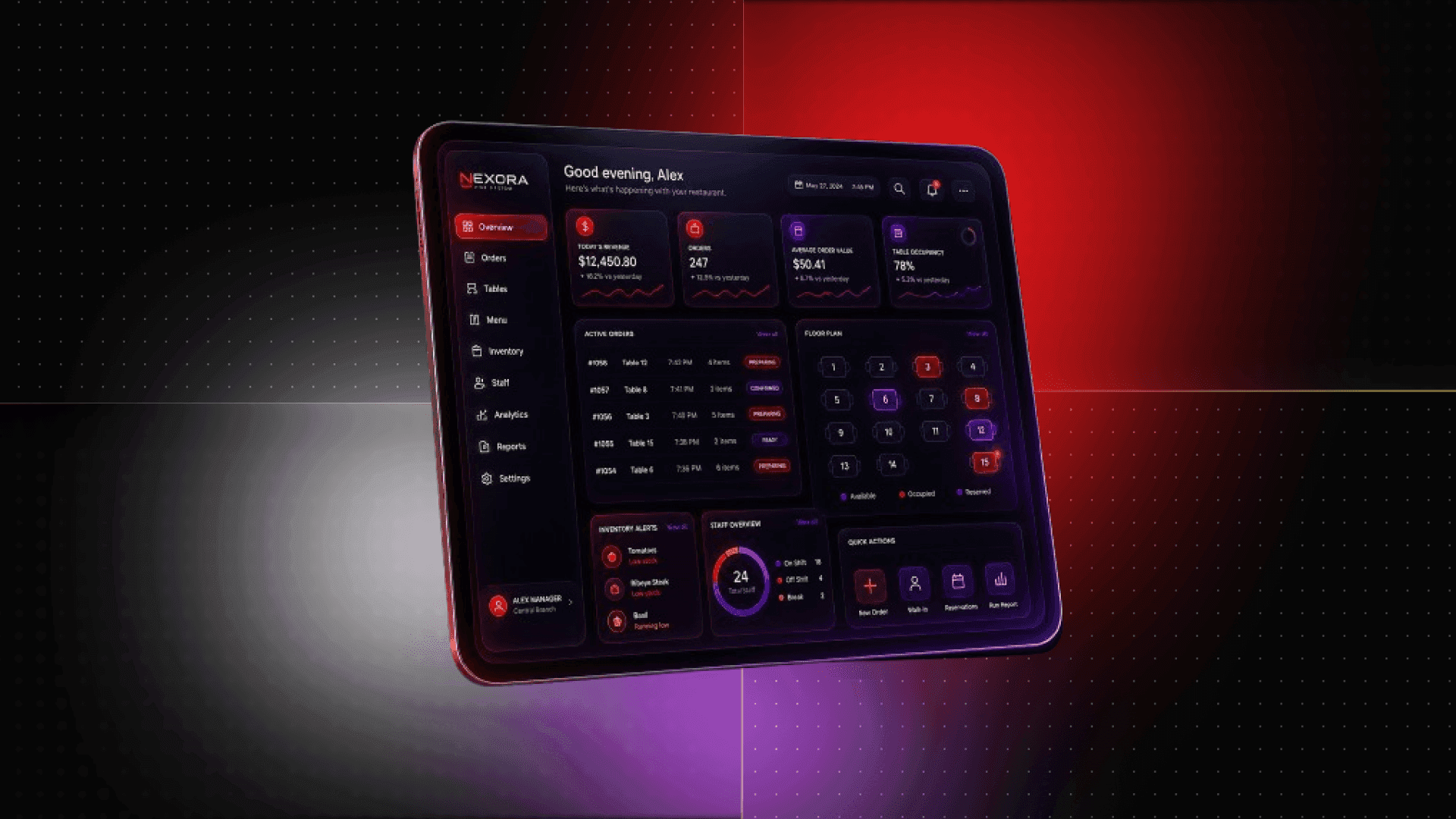
Restaurant Management Software Development in Saudi Arabia: Building a ZATCA-Compliant F&B Platform (2026)
Build custom restaurant management software in Saudi Arabia with ZATCA-compliant POS, HungerStation and Jahez integrations, GOSI payroll, inventory management, and multi-branch analytics. Discover costs, timelines, compliance requirements, and when custom F&B software makes financial sense for growing restaurant chains.
ZATCA E-Invoicing for Saudi Restaurants 2026 — Dine-In, Delivery Aggregators, Split Bills, Corporate Dining, and What Every Restaurant POS Must Handle After Wave 24
Learn how Saudi restaurants should handle ZATCA Phase 2 invoicing after Wave 24, including dine-in, takeaway, HungerStation, Jahez, split bills, corporate dining, offline operation, and custom restaurant POS architecture.
How to Build a Hotel Property Management System for Saudi Arabia: SCTH Compliance, ZATCA Integration, and What It Costs in SAR
Learn how to build a hotel property management system for Saudi Arabia with SCTH compliance, ZATCA integration, and a clear breakdown of development costs in SAR for 2026.