
20-10-2026
Food Delivery App Development Cost in Saudi Arabia (2026): HungerStation, Jahez, and Restaurant Apps
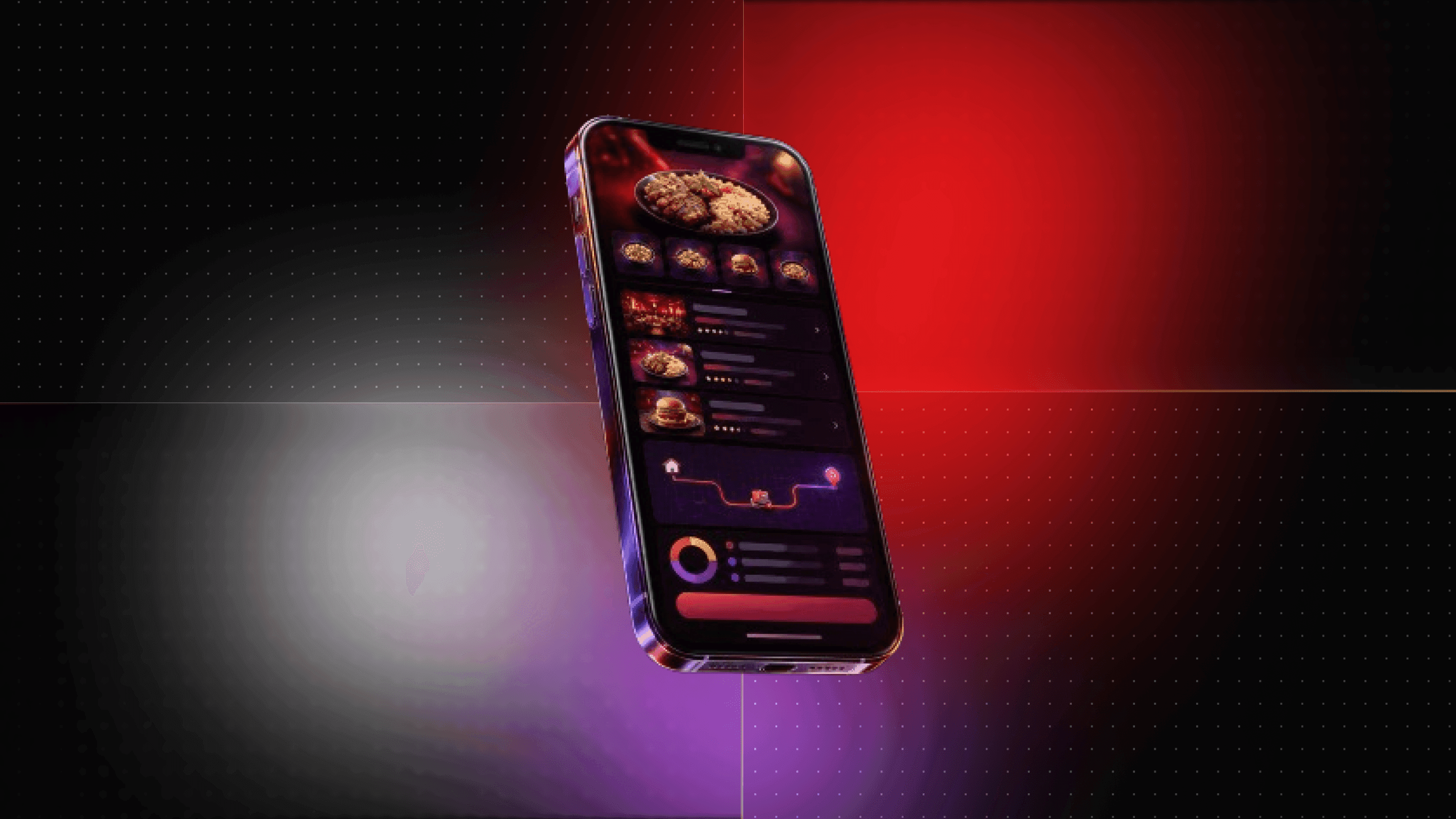
Quick Answer: Food delivery app development cost in Saudi Arabia depends on whether you are launching a multi-restaurant marketplace to compete with HungerStation and Jahez or building a branded ordering channel for your own restaurant chain. A restaurant-owned ordering app may start around SAR 70,000–160,000, while a single-city marketplace MVP can cost SAR 180,000–350,000 and a multi-city platform with dispatch and rider management can reach SAR 350,000–700,000 or more.
- Restaurant-owned ordering app: SAR 70,000–160,000 for customer ordering, loyalty, and POS integration, with delivery handled by your team or a third party.
- Single-city marketplace MVP: SAR 180,000–350,000 for customer, restaurant, rider, and admin systems with core order management.
- Multi-city or enterprise platform: SAR 350,000–1,500,000+ for advanced dispatch, multiple cities, complex payouts, and grocery or quick-commerce features.
These are indicative development estimates, not confirmed quotations. Talk to Logiolegion for a scope-based estimate in SAR.
Why Food Delivery App Quotes in Saudi Arabia Differ So Much
If you have asked several software companies how much it costs to build an app like HungerStation, you have probably received very different answers. One vendor quotes a low-cost clone, another prices a full marketplace, and a third includes only the customer-facing mobile app.
Those quotes may describe entirely different products. A food ordering app for one restaurant does not require the same systems as a multi-vendor marketplace coordinating thousands of orders, independent restaurant partners, couriers, payments, refunds, promotions, and settlements.
The Saudi market adds another layer. Payment methods, Arabic right-to-left interfaces, ZATCA e-invoicing, delivery operations, location data, and peak demand during Ramadan all affect the scope. A useful estimate must account for these requirements rather than convert a generic USD clone price into SAR.
This guide covers both business models, realistic development ranges, the costs that continue after launch, and the economics of building a restaurant-owned channel instead of relying entirely on aggregators.
1. Two Buyers, Two Very Different Budgets
Before comparing vendors, decide which business you are building. The difference between a marketplace and a restaurant-owned ordering app determines most of the architecture, timeline, and budget.
Option A: A Multi-Vendor Marketplace Like HungerStation or Jahez
A marketplace connects customers with independent restaurants and coordinates order fulfilment. The platform must manage several parties, each with its own permissions, workflows, and financial records.
A practical marketplace usually includes four connected products:
| Product | Core responsibilities |
|---|---|
| Customer app | Browse restaurants, search menus, apply offers, pay, track orders, rate orders, and manage addresses |
| Restaurant app or portal | Manage menus, accept or reject orders, update preparation status, set availability, and review sales |
| Rider app | Accept assigned deliveries, navigate, update delivery status, and provide delivery confirmation |
| Admin and operations dashboard | Manage restaurants, customers, delivery zones, commissions, promotions, refunds, dispatch, payouts, and reporting |
The backend must also coordinate order status, availability, delivery assignment, payment records, and exception handling. If the platform operates its own courier network, it needs additional rider onboarding, shift management, dispatch rules, delivery performance reporting, and potentially incentive calculations.
Marketplace owners also need to decide how restaurants are charged, who collects customer payments, who issues which invoices, how refunds are handled, and how restaurant settlements are reconciled.
Who should choose this model? Founders and investors planning a multi-restaurant business, a city-specific delivery marketplace, or a platform intended to expand into multiple Saudi cities.
Option B: A Restaurant-Owned Ordering and Delivery App
A restaurant chain already has its menus, branches, kitchen operations, and customer proposition. Its objective is usually different: encourage direct ordering, strengthen customer relationships, and reduce dependence on third-party aggregators.
The initial product can be smaller:
- Customer app or mobile-friendly ordering website.
- Menu, branch selection, offers, and checkout.
- Customer accounts, order history, and loyalty.
- Restaurant admin and branch-level controls.
- POS or kitchen display system (KDS) integration.
- Payment gateway and order-status notifications.
- Delivery handled by the chain's existing team or a third-party fleet.
A restaurant chain does not necessarily need to build a rider app or a complete dispatch engine. If it already uses a delivery provider, the app may send eligible orders to that provider through an available API or operational workflow.
A chain with its own drivers may later add driver assignment, live tracking, delivery zones, proof of delivery, and rider reporting. Those capabilities increase the budget, so they should be included only when they solve a real operating need.
Who should choose this model? Restaurant groups that already have customers and branches, want more direct orders, and can promote their own app through receipts, packaging, social channels, membership benefits, and in-store QR codes.
For related restaurant operations and branch management, see Restaurant Management Software Development in Saudi Arabia.
2. Food Delivery App Development Cost in Saudi Arabia: SAR Pricing by Tier
The ranges below are planning estimates for custom development. They are not market-wide averages or fixed Logiolegion quotations; actual cost depends on integrations, platform scope, testing requirements, and the delivery model.
| Product tier | Indicative development cost | Estimated timeline | Typical scope |
|---|---|---|---|
| Restaurant-owned ordering app | SAR 70,000–160,000 | 3–5 months | Customer ordering, branch selection, offers, loyalty basics, admin, and POS or KDS integration |
| Single-city marketplace MVP | SAR 180,000–350,000 | 4–7 months | Customer app, restaurant portal, rider app, admin dashboard, payments, and core order management |
| Multi-city marketplace with dispatch | SAR 350,000–700,000 | 6–10 months | Delivery zones, dispatch rules, live tracking, rider management, settlements, and multi-city administration |
| Enterprise marketplace with grocery or quick-commerce | SAR 700,000–1,500,000+ | 9–15+ months | Advanced dispatch, inventory, multiple fulfilment models, promotions, analytics, and enterprise integrations |
Timelines assume requirements are agreed, stakeholders are available for decisions, and third-party systems provide the necessary integration access. App-store approvals, hardware dependencies, regulatory reviews, and complex legacy integrations can affect delivery dates.
A lower budget may be possible with a licensed white-label product or a more restricted first release. However, confirm what the licence permits, which features are configurable, whether source code is included, and what happens when you need changes the vendor does not support.
What Does It Cost to Build an App Like HungerStation?
The cost to build an app like HungerStation depends on what “like HungerStation” means in your business plan. A basic customer ordering interface is not equivalent to a functioning marketplace with restaurant onboarding, real-time dispatch, courier operations, refunds, restaurant settlements, and growth tools.
For planning purposes, a single-city marketplace MVP may fall around SAR 180,000–350,000. A more mature platform operating across cities, with advanced dispatch and several integrations, can cost SAR 350,000–700,000 or more.
A true national competitor also needs operating capital for restaurant acquisition, customer marketing, courier supply, promotions, customer support, and delivery reliability. Software development is only one part of that investment.
3. The Seven Main Cost Drivers
1. Number of Apps and Operational Interfaces
The more parties your platform supports, the more workflows and permission rules it needs.
A restaurant-owned ordering app may require a customer app and an admin portal. A marketplace adds restaurant and rider interfaces, plus dispatch and financial controls. If restaurant staff use tablets, riders use different device types, or operations teams need specialised dashboards, the testing burden grows as well.
To manage cost, start with the smallest set of interfaces that supports the intended operating model. You can add advanced partner portals or dedicated applications after validating demand.
2. Real-Time Tracking and Dispatch Logic
Showing a courier's location on a map is only one part of delivery tracking. Dispatch logic decides which courier receives an order, when the order should be assigned, how delivery zones work, and what happens when a courier rejects an assignment or a delivery is delayed.
More advanced systems may account for:
- Restaurant preparation time.
- Rider availability and current location.
- Delivery zones and distance.
- Multiple orders assigned to one rider.
- Pickup sequencing and delivery windows.
- Failed deliveries, cancellations, and reassignment.
- Rider incentives and performance reporting.
A restaurant chain using a third-party fleet may not need to build all of these capabilities. A marketplace that promises reliable delivery across multiple cities will generally need more control over dispatch and exception handling.
3. Arabic and English UX
Arabic support should be considered at the start, not added as a final translation exercise. An Arabic-first application needs right-to-left layouts, correct text alignment, suitable typography, Arabic search behaviour, and testing across menus, checkout, notifications, receipts, and administrative screens.
Bilingual support also affects content management. Restaurant names, descriptions, modifiers, promotions, and customer-service messages may need separate Arabic and English values.
If your platform targets Saudi customers, define the Arabic and English user journeys before the interface is built. Retrofitting the entire application can create avoidable design and testing work.
4. Payments: Mada, STC Pay, Apple Pay, BNPL, and Cash on Delivery
Saudi food delivery applications may support Mada, Apple Pay through a compatible payment provider, and other payment options based on the chosen gateway and commercial arrangement. STC Pay availability should be confirmed with the relevant provider and its current product offering.
Tabby or Tamara may be considered where their merchant approval, product policies, and transaction economics fit the business model. Do not assume that every payment method is automatically available for every merchant or food-ordering transaction.
Payment scope includes more than a successful checkout. It may include:
- Payment authorisation and confirmation.
- Failed-payment handling and retry rules.
- Refunds and partial refunds.
- Cash-on-delivery collection records.
- Reconciliation between orders, payments, and payouts.
- Fraud controls and transaction reporting.
A marketplace must also define how customer payments are allocated between the platform and restaurants, and how delivery charges, commissions, discounts, and refunds affect settlements. Review the Saudi Arabia Payment Gateway Integration Guide when defining this layer.
5. ZATCA E-Invoicing and Marketplace Financial Records
Food delivery platforms need a clear invoicing model. The customer, restaurant, and marketplace may have different roles in the sale, service fee, delivery fee, commission, or payment collection process.
ZATCA e-invoicing requirements apply to taxpayers and transactions within the relevant scope. The platform must determine which legal entity supplies each service, who is responsible for issuing the invoice, and which transactions require compliant electronic invoices and associated notes.
Phase 2 integration with ZATCA's Fatoora platform is rolled out in waves to targeted taxpayers. The system design should therefore account for the actual tax status and integration obligations of the relevant entities rather than assume that one invoice generated by the marketplace satisfies every party's obligations.
Build the financial model before coding the invoicing workflow. It should cover commission calculations, VAT treatment where applicable, refunds, credit notes, restaurant statements, and payout reconciliation.
For a more detailed overview, see ZATCA E-Invoicing for Restaurants in Saudi Arabia. Official guidance is available through ZATCA's e-invoicing portal.
6. Maps, Geocoding, and Saudi National Address
Delivery accuracy depends on more than a pin placed on a map. The platform must capture usable delivery instructions, validate addresses where possible, support apartment or building details, and route riders to the correct entrance or pickup point.
Map and geocoding services can charge according to API usage and product. The development budget also depends on how location data is used: basic address selection is less complex than live courier tracking, route optimisation, delivery-zone validation, and multi-stop dispatch.
For Saudi operations, assess how the platform will capture and validate National Address information where required by the workflow, alongside customer-provided directions and map coordinates. Do not assume a particular address API is available without confirming its access terms and integration method.
7. Ramadan Peaks and High-Volume Order Handling
Demand patterns can change sharply around iftar and suhoor, depending on the city, customer segment, and restaurant mix. A platform that performs well during a quiet afternoon may struggle when many customers place orders at the same time.
Planning for peak periods may require:
- Load testing for checkout and order creation.
- Queueing and retry handling for integrations.
- Monitoring for delayed or failed order updates.
- Database and caching reviews.
- Push notification delivery controls.
- Dispatch capacity and rider availability dashboards.
- Operational procedures for outages and order backlogs.
These requirements affect architecture, testing, monitoring, and hosting costs. They should be prioritised according to expected order volume instead of paying for maximum capacity from the first release.
4. Saudi Compliance and Operating Requirements
A Saudi food delivery platform is a commercial and operational system, not simply a mobile application. The exact obligations depend on the business model, legal entities, delivery arrangements, payment flows, and data processing.
ZATCA: Define Who Issues Each Invoice
Before development begins, map the financial relationship between the customer, restaurant, platform, and delivery provider. A platform may collect payments, charge a commission, charge a delivery fee, or provide a separate service, and those arrangements can affect the invoicing workflow.
The software should preserve order totals, discounts, tax information, refunds, commission calculations, and settlement records in a traceable form. The responsible entity should generate invoices through a compliant solution where required and follow its applicable Fatoora integration obligations.
Avoid assuming that the platform always issues the customer's food invoice or that the restaurant always invoices every fee. The correct setup depends on the contractual and tax structure and should be reviewed by the business's Saudi tax adviser.
Transport General Authority: Delivery Applications and Couriers
The Transport General Authority (TGA) regulates transport activities within its remit. Its official Delivery Orders Activity regulation addresses the delivery-orders activity and applies to establishments licensed for that activity.
A marketplace that arranges deliveries through its own courier operation or a contracted delivery provider should confirm which licensing, operational, safety, and electronic-linkage requirements apply to its structure. A restaurant-owned app that sends orders through a licensed third-party delivery provider may have different responsibilities from a platform operating the delivery service itself.
During discovery, confirm the proposed legal entity, delivery model, courier arrangements, and any required TGA connections. The software should then implement the relevant records and workflows; the existence of a feature does not itself establish regulatory compliance.
PDPL: Customer and Rider Personal Data
A delivery platform processes personal information such as customer contact details, addresses, order history, and courier location data. The Saudi Personal Data Protection Law (PDPL) and its regulations should inform how this information is collected, used, stored, shared, and retained.
Saudi rules do not amount to a universal requirement that every personal-data record must always remain inside the Kingdom. Transfers outside Saudi Arabia are subject to the PDPL and applicable transfer regulations, including conditions and safeguards that depend on the circumstances.
The system design should document data flows, limit collection to what is needed, apply role-based access, protect location data, and assess hosting and third-party providers. Consult the official SDAIA PDPL Knowledge Centre and obtain legal advice for the intended operating model.
5. Build Your Own App or Stay on HungerStation and Jahez?
For a restaurant chain, this is an investment decision rather than a simple software comparison. Aggregators can provide discovery, customer demand, ordering infrastructure, and delivery services; a restaurant-owned channel can improve control over customer relationships and reduce the commission paid on orders that successfully move to that channel.
The right answer may be to use both.
What Do HungerStation and Jahez Charge Restaurants?
Restaurant commission is typically negotiated and can vary by contract, category, delivery arrangement, promotion, and commercial terms. The following percentages are illustrative planning assumptions, not verified current tariffs or guaranteed rates for any restaurant.
| Channel | Illustrative restaurant commission assumption |
|---|---|
| HungerStation | 25–30% of order value |
| Jahez | 20–25% of order value |
| Restaurant-owned channel | No aggregator commission on direct orders, but payment, delivery, marketing, and operating costs still apply |
A restaurant should verify its own contract and statements before using these percentages in a business case. Customer delivery fees are separate from restaurant commission: the fee charged to the customer may vary by order, location, promotion, and delivery conditions, and it is not necessarily the same amount the restaurant pays in commission.
The Commission Maths
Consider a restaurant chain with an average order value of SAR 70. At a 25% restaurant commission, the commission on a SAR 70 order would be SAR 17.50 before considering any other contractual adjustments.
That is not the same as saying the restaurant saves SAR 17.50 by moving the order to its own app. Direct orders still incur payment processing, delivery fulfilment, promotions, customer acquisition, customer support, refunds, and technology costs.
For a simple comparison, assume the chain's own channel has an illustrative net contribution advantage of 8% of direct-channel order value after the variable costs included in its own operating model. This 8% is a modelling assumption, not a guaranteed saving; a chain with expensive delivery or customer acquisition may achieve much less.
| Direct orders per month | Monthly direct-channel order value at SAR 70 average order value | Illustrative contribution advantage at 8% | Simple payback on SAR 150,000 build cost |
|---|---|---|---|
| 1,000 | SAR 70,000 | SAR 5,600 | 26.8 months |
| 3,000 | SAR 210,000 | SAR 16,800 | 8.9 months |
| 8,000 | SAR 560,000 | SAR 44,800 | 3.3 months |
These figures are illustrative, not a financial forecast. The payback calculation divides the one-time SAR 150,000 development assumption by the monthly contribution advantage. It excludes fixed staff, hosting, maintenance, financing, tax effects, and any additional customer-acquisition costs not already included in the 8% assumption. The model also assumes the direct orders are incremental or genuinely shifted from a channel with higher costs; moving existing orders between channels does not automatically increase total sales.
When a Restaurant-Owned App Makes Sense
A direct ordering channel becomes more attractive when the chain already has regular customers, multiple branches, a meaningful volume of repeat orders, and the ability to promote the app at the point of sale.
Examples include:
- A multi-branch restaurant group with an existing customer base.
- A quick-service chain with frequent repeat purchases.
- A brand that can offer loyalty rewards or direct-only bundles.
- A restaurant with its own delivery team or a cost-effective delivery partner.
- A chain that can promote direct ordering through packaging, receipts, social media, and in-store QR codes.
The chain should measure repeat orders, direct-channel conversion, customer acquisition cost, order contribution, and retention. App downloads alone do not demonstrate that the investment is paying back.
When Staying on Aggregators Is Still the Right Call
Aggregators may remain the better primary channel when a restaurant is new, has limited brand awareness, lacks delivery capacity, or depends on aggregator demand to fill quieter periods. The platform may also provide operational tools and delivery coverage that would be expensive to recreate.
A practical strategy is to keep using aggregators for discovery while building a direct channel for eligible repeat customers. The restaurant must follow its contracts and the applicable rules when encouraging direct ordering; it should not assume that customer details received through an aggregator can be reused for unrelated marketing.
The goal is not to eliminate every aggregator. It is to understand which channel contributes the best overall economics for each order and customer segment.
6. Hidden and Ongoing Costs After Launch
The development quote is only one part of the total investment. A production food delivery business needs ongoing technology, operations, marketing, and customer support.
Maps, SMS, Push Notifications, and Third-Party APIs
Map requests, geocoding, route calculations, SMS messages, payment transactions, and some notification services may incur usage-based fees. Estimate these costs using expected monthly orders, active users, address lookups, tracking frequency, and message volume.
Push notifications may have a different cost structure from SMS, but delivery and engagement still need monitoring. Budget for failed messages, retries, analytics, and provider changes where applicable.
Hosting, Monitoring, and Backups
Hosting cost depends on traffic, architecture, database usage, media storage, background jobs, logging, and availability requirements. Live dispatch and frequent location updates may create different infrastructure demands from a restaurant app that mainly handles ordering and loyalty.
Include monitoring, backups, security updates, incident response, and recovery testing in the operating budget. The system should also have a plan for payment or map-provider outages so an external failure does not leave every order in an unknown state.
Rider Costs and Delivery Incentives
If the business operates its own courier network, rider costs may include recruitment, compensation, incentives, equipment, insurance where applicable, training, and operational supervision. A marketplace may also need incentives to ensure enough riders are available during high-demand periods.
If delivery is outsourced, confirm the provider's pricing model, service coverage, order-status integration, exception handling, and responsibility for failed or delayed deliveries. The app's development cost does not include the cost of fulfilling each order unless the commercial proposal explicitly says so.
Customer Acquisition and Promotions
This is one of the biggest differences between launching an app and building a competing marketplace. HungerStation, Jahez, and other established platforms already have customer awareness, restaurant supply, and delivery operations.
A new marketplace may need to spend on restaurant onboarding, introductory discounts, referral programmes, paid acquisition, customer support, and rider supply before order volume becomes predictable. These costs can exceed the initial software budget, so founders should model cash requirements for the first operating period rather than budget only for development.
A restaurant-owned channel can use existing customer relationships, but it still needs a reason for customers to switch: loyalty benefits, reliable delivery, relevant bundles, convenient reordering, or a better experience.
Maintenance and Support
A software platform needs regular maintenance after launch. Plan for operating-system updates, dependency patches, payment-provider changes, bug fixes, security reviews, performance work, and new features.
A maintenance agreement should state the support hours, response targets, included development time, severity definitions, and how work outside the agreed scope is priced. Do not assume that a one-time build quote includes indefinite support.
7. How to Reduce Development Cost Without Building the Wrong Product
The best way to reduce cost is to reduce unnecessary scope while preserving the functions needed to validate the business.
- Choose one business model first. Do not build a full marketplace if the actual goal is to improve direct ordering for a restaurant chain.
- Start in a defined area. Launching in one city or a limited set of delivery zones reduces operational complexity.
- Use existing systems where they fit. Reuse a restaurant's POS, KDS, payment gateway, or delivery provider where supported.
- Keep the first release focused. Prioritise ordering, reliable status updates, payment handling, core administration, and essential reporting.
- Defer advanced dispatch features if possible. A chain using an external fleet may not need its own route assignment engine in the first release.
- Confirm integrations before pricing. Validate API access and data ownership for POS, payments, delivery providers, and e-invoicing before committing to a fixed scope.
- Test real operating scenarios. Include failed payments, refunds, unavailable menu items, cancelled orders, delayed riders, and peak traffic in acceptance testing.
A lower initial price is useful only if the product can operate reliably and the business can continue developing it without a costly rewrite.
8. Why Work With Logiolegion?
Logiolegion is a GCC-specialist custom software development company with a Dubai delivery presence. We work with businesses that need software designed around their operating model, integrations, and commercial requirements rather than a generic clone specification.
For Saudi restaurant and food-platform projects, the work can include customer ordering, restaurant and branch administration, POS and KDS connections, payment workflows, marketplace commission calculations, restaurant settlements, and ZATCA-related invoicing requirements. Logiolegion's Saudi restaurant-platform work includes direct HungerStation and Jahez integration and ZATCA-related reporting workflows; the precise integration scope depends on provider access, the client's existing systems, and the agreed requirements.
A project should begin with a defined scope, documented assumptions, acceptance criteria, and a clear separation between development costs and ongoing operating expenses.
The commercial approach can include:
- Fixed-scope pricing: A defined set of features, integrations, deliverables, and acceptance criteria.
- Source-code ownership: Contractual terms that specify ownership and delivery of the commissioned source code.
- Integration planning: Early checks for POS, payments, delivery providers, and financial workflows.
- Phased delivery: A first release focused on the business model, followed by additional features based on operational needs.
If you are comparing development partners, ask each vendor to quote the same scope. That makes the differences in price, timeline, and exclusions easier to understand.
Discuss your food delivery platform with Logiolegion.
Final Thoughts
Food delivery app development cost in Saudi Arabia depends first on the business model, then on the operational complexity. A restaurant-owned ordering app may need a customer experience, POS integration, loyalty, and third-party delivery support; a marketplace must also coordinate restaurant partners, couriers, dispatch, commission, refunds, and settlements.
For founders planning to compete with HungerStation or Jahez, the software is only one part of the investment. Restaurant acquisition, customer marketing, courier availability, support, and promotions all affect whether the business can attract repeat orders.
For restaurant chains, a direct channel can improve customer relationships and reduce reliance on aggregator commissions, but it should be evaluated against delivery and acquisition costs. Build a model using your actual commission statements, average order value, direct-order potential, and operating costs before committing to the project.
The most useful first step is a scope review that distinguishes essential launch features from later additions and confirms which Saudi integrations are actually available. That is how you get a defensible development estimate instead of another generic clone price.
Ready to Scope Your Food Delivery App?
Whether you are launching a multi-vendor marketplace or giving your restaurant chain a direct ordering channel, start with the operating model, integrations, and economics.
Contact Logiolegion to discuss the required scope, development timeline, Saudi payment and invoicing workflows, and a fixed-scope estimate.
Frequently Asked Questions
1. How much does food delivery app development cost in Saudi Arabia?
A restaurant-owned ordering app may cost around SAR 70,000–160,000, while a single-city marketplace MVP may fall around SAR 180,000–350,000. Multi-city systems with dispatch, rider management, and complex settlements may cost SAR 350,000–700,000 or more. These are indicative development estimates, not fixed quotations, and exclude many ongoing operating costs.
2. What is the app like Jahez development cost?
The cost depends on whether you need a customer app alone or a full marketplace with restaurant management, courier dispatch, payments, refunds, and settlements. A single-city marketplace MVP may be planned around SAR 180,000–350,000, while more advanced multi-city systems can cost substantially more. A scope-based estimate should identify which features are included and which integrations require separate fees.
3. What affects the HungerStation clone cost most?
The main cost drivers are the number of apps, dispatch complexity, payment and payout workflows, Arabic UX, integrations, and expected order volume. A platform with customer, restaurant, rider, and admin systems requires more engineering and testing than a branded ordering app for one restaurant chain. The development quote should also distinguish software delivery from marketing, rider operations, and customer acquisition.
4. Which company builds food delivery apps in Saudi Arabia?
Look for a development partner that can explain the marketplace or restaurant-owned model, provide a detailed scope, and account for Saudi payments, invoicing, data protection, and delivery operations. Logiolegion builds custom business software and can scope food ordering, restaurant operations, payment workflows, and marketplace integrations for Saudi projects. Ask for a written breakdown of deliverables, source-code ownership, exclusions, and ongoing support before choosing a vendor.
5. I want an app like HungerStation. What should I budget for the first version?
Logiolegion would start by separating a single-city marketplace MVP from a full multi-city delivery operation. For planning, a marketplace with customer, restaurant, rider, and admin systems may fall around SAR 180,000–350,000, depending on dispatch and integration requirements. The estimate should also identify the operating budget needed for restaurant onboarding, customer acquisition, courier availability, and support after launch.
6. Should my restaurant chain build its own delivery app or stay on HungerStation and Jahez?
Logiolegion recommends comparing your actual aggregator statements with the full cost of direct orders, including payment fees, delivery, promotions, and customer acquisition. A restaurant-owned app can be attractive when you already have repeat customers and can promote direct ordering across branches, but aggregators may still be valuable for discovery and new customer demand. A practical decision model should use your own average order value, order volume, negotiated commission, and expected direct-channel contribution rather than assuming every avoided commission becomes profit.
7. How are HungerStation delivery fees structured for customers versus restaurant commission?
The delivery fee paid by the customer and the commission charged to a restaurant are separate items, and their amounts can vary by order, location, promotion, and contract. Logiolegion can scope reporting that separates food value, customer delivery charges, restaurant commission, discounts, refunds, and platform fees so the business can reconcile the order economics. Restaurant operators should verify their own contracts and transaction statements rather than use a single public percentage as a guaranteed rate.
8. I operate several restaurant branches in Saudi Arabia. Can my app integrate with our POS?
Logiolegion can assess the POS or KDS products used by each branch and confirm whether APIs, webhooks, or supported exports are available. A defined integration can synchronise menu availability and order status, while the exact workflow depends on the POS vendor and the chain's operating model. The discovery stage should also define how cancelled orders, refunds, menu changes, and failed synchronisation are handled.
9. I need Mada, Apple Pay, STC Pay, and cash on delivery. How much extra will payments add?
Payment integration cost depends on the selected gateway, the payment methods it supports for your merchant account, and whether the app needs refunds, reconciliation, split settlement, or cash-on-delivery reporting. Logiolegion can map the checkout and settlement workflows before estimating the integration work. Transaction charges and any provider fees should be listed separately from the one-time software development cost.
10. How does ZATCA e-invoicing affect a food delivery marketplace?
The platform must determine which legal entity supplies each service and which party is responsible for each invoice under the actual commercial arrangement. Logiolegion can scope the order, commission, refund, and settlement records needed to support the relevant invoicing workflow and connections to existing systems. The final design should be checked against the applicable ZATCA requirements and each taxpayer's Phase 2 integration status.
11. Can I launch in one Saudi city and expand later?
Yes, provided the first release is designed around clear delivery zones, branch and restaurant configuration, and data structures that support future expansion. Logiolegion can define a single-city release first and document which additions—such as multiple depots, more complex dispatch, or cross-city reporting—belong to later phases. Expanding still requires operational planning for restaurant supply, courier capacity, customer acquisition, and support in each new market.
12. What should I prepare before requesting a food delivery app quote?
Prepare your business model, target cities, expected order volume, average order value, delivery approach, payment methods, and required POS or third-party integrations. Logiolegion can use those details to separate essential launch features from later enhancements and identify Saudi compliance questions that need confirmation. Ask for a fixed-scope proposal that states the timeline, deliverables, exclusions, ongoing costs, and source-code ownership terms.
Continue Reading
Discover our full range of services - from custom software development to complete marketing solutions

Best Food Delivery Apps in Saudi Arabia 2026 — HungerStation vs Jahez vs Keeta vs Mrsool vs Talabat vs Noon Food Compared
HungerStation, Jahez, Keeta, Mrsool, Talabat, Noon Food — every major Saudi food delivery app compared by city, speed, fees, and subscription value.
Foodics Alternative Saudi Arabia — When Custom Restaurant POS Beats SaaS for Multi-Branch F&B Chains: ZATCA, HungerStation, Mada, and 3-Year Cost Comparison (2026)
Compare Foodics with custom restaurant POS software for Saudi Arabia. See ZATCA, HungerStation, Mada integration, costs, and long-term ROI.
Cafe and Coffee Shop Management Software - Coffee Subscription Apps, Drive-Through Queue, and Arabic-First Loyalty for Saudi Cafes (2026)
Discover how custom cafe management software in Saudi Arabia helps coffee chains manage ZATCA-compliant POS, Mada payments, mobile order-ahead, coffee subscriptions, drive-through operations, Arabic-first loyalty programmes, GOSI payroll, and multi-branch inventory from a single integrated platform.
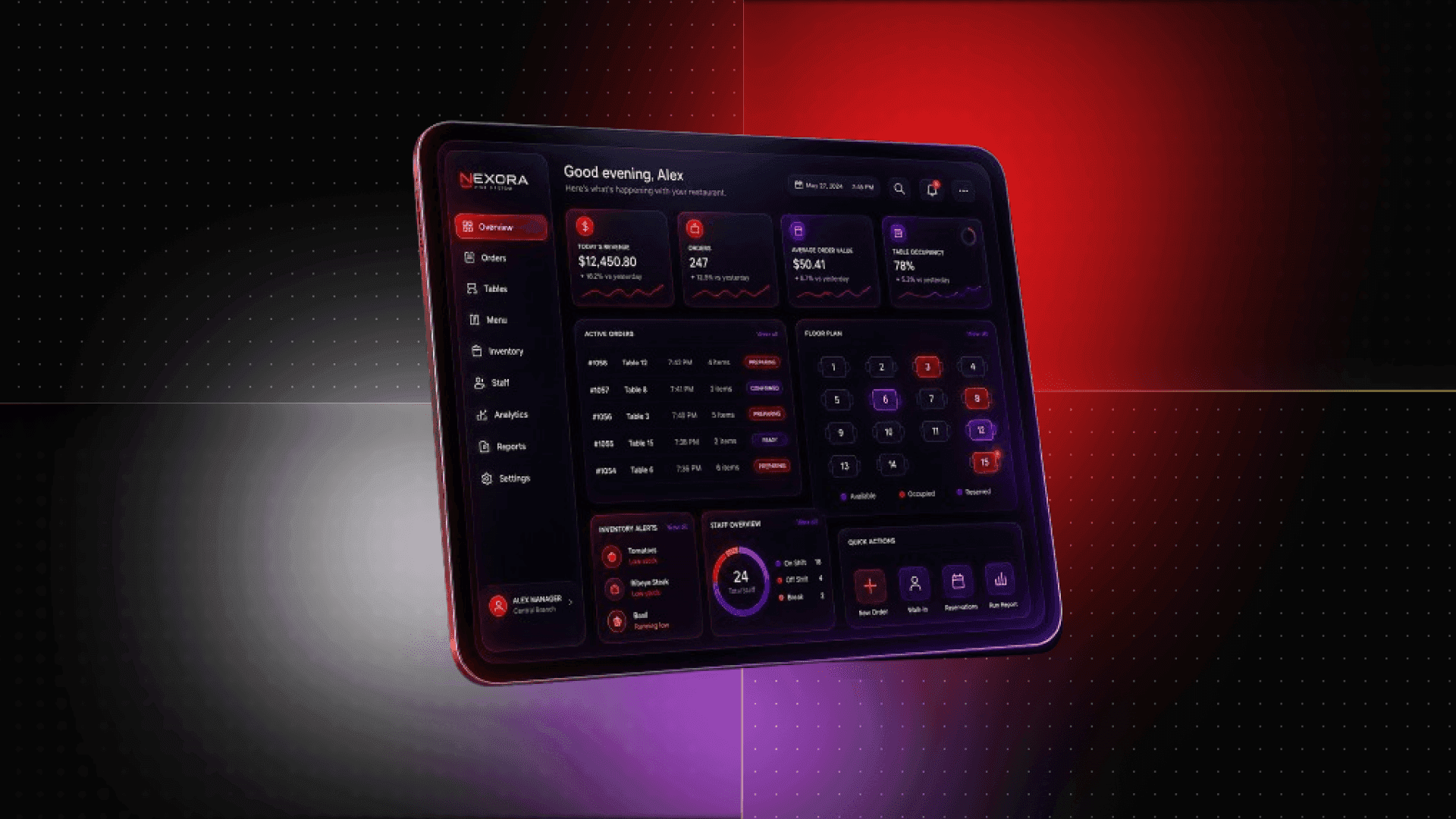
Restaurant Management Software Development in Saudi Arabia: Building a ZATCA-Compliant F&B Platform (2026)
Build custom restaurant management software in Saudi Arabia with ZATCA-compliant POS, HungerStation and Jahez integrations, GOSI payroll, inventory management, and multi-branch analytics. Discover costs, timelines, compliance requirements, and when custom F&B software makes financial sense for growing restaurant chains.

Payment Gateway Integration Saudi Arabia — Developer Guide to Mada, HyperPay, Moyasar, Apple Pay, STC Pay, and BNPL (2026)
Building payment integrations for Saudi Arabia requires far more than connecting a gateway SDK. This developer guide explains Mada routing, SAMA-licensed gateways, Apple Pay behaviour, STC Pay, BNPL implementation, webhook architecture, and ZATCA integration so you can build production-ready Saudi payment systems that match local consumer expectations.