
25-09-2026
Salla API Integration Saudi Arabia — Connect Salla to Your ERP, Inventory, Accounting, and Marketplace in Jeddah and Riyadh (2026)

Salla API Integration Saudi Arabia — Connect Salla to Your ERP, Inventory, Accounting, and Marketplace in Jeddah and Riyadh (2026)
This guide covers Salla API integration — connecting your existing Salla store to ERP, inventory, accounting, or marketplace systems. If you're looking to replace Salla with a custom platform, see our Salla Alternative Saudi Arabia guide.
A Riyadh fashion merchant on Salla processes 150 orders per day. Every order is manually entered into their inventory system, every Mada payment is manually matched to a bank statement, and every ZATCA invoice is manually archived. At 150 orders per day, that can mean hours of repetitive work every evening — work that can be reduced by connecting Salla to the systems the business already uses through the Salla API.
What the Salla API Can Connect To
Salla is designed for the Saudi ecommerce market, which means many merchants choose it precisely because they do not want to build their storefront, payments, logistics, and Saudi compliance infrastructure from scratch.
The problem usually starts after the store grows.
Orders need to reach an ERP. Inventory needs to stay synchronized with a warehouse. Accounting entries need to be created automatically. Marketplace stock needs to match Salla. Customer information may need to reach a CRM.
The Salla API provides the integration layer for connecting these systems without replacing the Salla storefront.
1. Salla to ERP Integration
A merchant can connect Salla with platforms such as Odoo, SAP, Microsoft Dynamics, or a custom ERP.
Orders can be transferred with customer details, SKU information, quantities, pricing, and payment status. Inventory changes can then flow back from the ERP to Salla.
This is useful for Saudi retailers, distributors, fashion brands, electronics businesses, and other merchants operating both online and offline.
2. Salla to Inventory and Warehouse Systems
Businesses with a dedicated warehouse management system do not need their warehouse team to work from a separate manually exported order list.
A Salla order webhook can trigger warehouse processing, generate a picking list, and send fulfillment information back to Salla.
The warehouse system can also become the inventory source that pushes updated stock quantities back to the Salla store.
3. Salla to Accounting Software
Small and mid-sized merchants can connect Salla with accounting platforms such as QuickBooks, Xero, Zoho Books, or a custom accounting system.
Orders can become sales entries automatically, while Salla's invoice information can be linked to the corresponding accounting transaction.
Returns and refunds can also be mapped to credit-note workflows instead of being entered manually.
4. Salla to Marketplace Platforms
A brand selling through Salla, Amazon.sa, Noon, or other marketplaces has a different problem: the same SKU exists across multiple sales channels.
Without synchronization, selling the last unit on one channel may leave another channel showing inventory that no longer exists.
A middleware integration can synchronize orders and stock across channels so the merchant has a common inventory view.
5. Salla to a Custom Arabic CRM
Salla customer information can also feed a custom CRM.
Purchase history, customer profiles, order activity, and other available data can be used for customer segmentation, loyalty workflows, Arabic WhatsApp campaigns, and repeat-purchase operations.
This is particularly useful for merchants selling products where repeat orders are important, such as food, beauty, and other consumer categories.
6. Salla to ZATCA Accounting and Audit Systems
Salla generates B2C simplified invoices natively, and invoice information can be passed to downstream accounting or archiving systems.
For merchants preparing for longer-term recordkeeping and audit requirements, an integration can preserve invoice references and related information in the accounting environment.
For deeper ZATCA integration requirements, see our ZATCA Fatoorah API integration Saudi Arabia guide.
Salla to ERP Integration — Auto-Create Orders and Sync Inventory
The standard Salla ERP integration pattern has three major flows:
- Salla order → ERP sales order
- ERP inventory change → Salla stock update
- Salla payment confirmation → ERP invoice or payment record
When a customer places an order, the Salla webhook can notify the integration backend.
The backend validates the event, transforms the Salla data into the ERP's required structure, and creates the corresponding sales order.
Customer information, product SKU, quantities, discounts, shipping information, and payment status can be mapped according to the ERP's data model.
Inventory synchronization
Inventory synchronization normally works in the opposite direction.
When the ERP deducts stock after an order, the integration can update the corresponding product quantity in Salla.
For businesses with multiple warehouses, the integration may also need rules for deciding which warehouse quantity should be exposed to Salla.
This becomes particularly important when the same product is sold through physical stores, Salla, and marketplaces.
Payment confirmation
Payment confirmation can trigger a separate ERP workflow.
Instead of waiting for an employee to verify whether an order was paid, the integration can map the payment status into the ERP's sales or accounting workflow.
For Saudi merchants using Odoo, SAP, Microsoft Dynamics, or a custom ERP, the exact implementation depends on the ERP APIs and the merchant's accounting structure.
Salla to Inventory and Warehouse Management
A Salla integration becomes more valuable when the warehouse operates on a dedicated WMS rather than directly inside the ecommerce platform.
The basic flow is:
Salla order → webhook → integration backend → WMS order → picking → fulfillment → Salla shipment status
When an order arrives, the integration receives the event and creates the warehouse task.
The WMS can then generate a picking list for warehouse staff.
Once the order is packed and dispatched, the fulfillment status can be returned to Salla together with the available shipment and tracking information.
Keeping stock synchronized
The reverse flow handles inventory:
WMS stock → integration layer → Salla product inventory
The integration can run real-time updates or scheduled synchronization depending on the warehouse system's API capabilities and the merchant's operational requirements.
For businesses operating as third-party logistics providers, the same architecture can be extended into a client-facing system. See our 3PL client portal Saudi Arabia guide for that model.
Salla to Accounting — QuickBooks, Xero, and Zoho Books
Manual accounting entry becomes increasingly difficult as Salla order volume increases.
A typical accounting integration connects four types of events:
- New orders
- Payment confirmations
- Returns and refunds
- Invoice information
A new Salla order can automatically create a corresponding sales entry in the accounting platform.
The ZATCA invoice reference can be stored against that transaction so the accounting record remains connected to the original ecommerce invoice.
Mada payment reconciliation
Payment confirmation can also be mapped to a cash or payment record.
Instead of manually matching every transaction, the integration can use Salla's available payment information and the merchant's reconciliation rules to associate payments with orders.
Returns and refunds
Returns need to flow in the opposite direction.
When a Salla order is refunded, the accounting integration can identify the original transaction and create the corresponding reversal or credit-note workflow.
For merchants with high transaction volumes, this removes one of the most repetitive parts of ecommerce bookkeeping.
Salla to Marketplace — Amazon.sa, Noon, and Multi-Channel Inventory
Selling through multiple channels creates an inventory synchronization problem.
Imagine a merchant has five units of a SKU available.
The product appears on:
- Salla
- Amazon.sa
- Noon
- A physical store
If one unit sells on Amazon.sa, every other channel needs to know that only four units remain.
A middleware integration can sit between these platforms and maintain the synchronization rules.
The multi-channel flow
A typical architecture looks like:
Marketplace order → middleware → inventory deduction → Salla and other channels updated
The integration needs to account for API delays, duplicate events, failed requests, and conflicting inventory updates.
It also needs a recovery process because a temporary API failure should not permanently leave one sales channel with incorrect stock.
Why real-time inventory matters
Inventory errors are not just technical problems.
They can result in overselling, cancelled orders, customer complaints, manual refunds, and unnecessary operational work.
For Saudi brands expanding from a Salla storefront into Amazon.sa and Noon, unified inventory can become an important operational requirement.
Salla Webhooks — The Real-Time Event Layer
The Salla API provides more than request-based data retrieval.
Its webhook system can push events to an external backend when specific actions occur.
Common integration events include:
- New orders
- Payment confirmation
- Shipment updates
- Inventory changes
- Order cancellations
- Other supported store events
This allows the integration to react to changes instead of repeatedly asking Salla whether something happened.
The 5-second webhook requirement
Salla webhooks arrive through HTTP POST requests.
The receiving application needs to acknowledge the webhook promptly. A practical integration should return a response within the stated 5-second window so the webhook receiver does not become a bottleneck and trigger retries.
The heavy processing should therefore happen asynchronously.
Instead of making the webhook endpoint perform every operation before responding, a Node.js service can receive the event, validate it, place it into a processing queue, acknowledge the webhook, and process the business logic separately.
Why webhook retries matter
Webhook retries are useful when a temporary failure occurs, but they create another engineering requirement: idempotency.
If the same order event arrives twice, the integration must recognize that the event has already been processed.
Otherwise, a single Salla order could create:
- two ERP sales orders,
- two accounting entries,
- duplicate warehouse tasks,
- or repeated inventory deductions.
A reliable integration therefore needs event identifiers, processing status, retry handling, logging, and reconciliation.
ZATCA Invoice Archiving from the Salla API
Saudi businesses need to consider how ecommerce invoices are retained and accessed for accounting and tax purposes.
ZATCA's recordkeeping requirements can extend over a long period, making it important that merchants do not rely solely on an ecommerce dashboard for historical invoice access.
A Salla integration can extract available invoice information and link it to the merchant's accounting or document-management environment.
What can be archived
Depending on the API data available to the merchant's integration, the archive can maintain information such as:
- Invoice number
- Invoice date
- Invoice amount
- ZATCA invoice reference
- QR-related invoice data
- Customer and order reference
- Payment information
- Credit-note or refund reference
The accounting system can then provide a centralized location for finance teams to search and retrieve historical transactions.
For merchants dealing with more advanced ZATCA requirements, our ZATCA Fatoorah API integration guide covers the broader technical architecture.
Salla Integration Technology Stack
The technology stack depends on the merchant's existing systems, but a common architecture can use Node.js, Laravel, React, and AWS.
Node.js integration backend
Node.js is well suited to the webhook and API layer.
It can handle:
- Salla webhook reception
- Order processing
- API authentication
- Data transformation
- ERP API requests
- Marketplace API requests
- Queue-based processing
- Delivery and failure logging
The webhook receiver should remain lightweight so Salla events can be acknowledged quickly.
Laravel scheduled jobs
Laravel can handle scheduled operations such as:
- Inventory reconciliation
- Daily accounting checks
- Failed-event retries
- Periodic data synchronization
- Reconciliation reports
A merchant that does not need real-time inventory updates for every product may choose scheduled synchronization instead.
React monitoring dashboard
A custom React dashboard can give the merchant visibility into the integration.
Useful monitoring information includes:
- Successful synchronizations
- Failed events
- Pending jobs
- Last inventory sync
- Failed ERP requests
- Marketplace discrepancies
- Manual resync controls
This means the merchant does not need to contact a developer every time an order fails to synchronize.
AWS Bahrain
For Saudi customer and transaction data, hosting architecture can be designed around Saudi PDPL requirements.
Logiolegion can use AWS Bahrain infrastructure where appropriate for the integration's data-storage requirements and the merchant's data-governance model.
Salla API Authentication — OAuth 2.0
Third-party Salla integrations use OAuth 2.0 for authorization.
This means the merchant does not need to hand over permanent credentials to an external developer as the integration's primary authentication mechanism.
The application receives authorized access through the Salla integration flow and can use the resulting credentials to call permitted API endpoints.
Token management, encryption, expiry handling, and access revocation should all be included in production integrations.
How Much Does Salla API Integration Cost in Saudi Arabia?
The cost depends mainly on the number of systems involved, the complexity of the existing APIs, synchronization rules, and monitoring requirements.
Salla to Accounting Integration
SAR 18,000–35,000 | 3–5 weeks
Typical scope:
- QuickBooks, Xero, or Zoho Books integration
- Order synchronization
- Invoice reference mapping
- Payment mapping
- Return and refund handling
- Invoice archiving
- Daily reconciliation
Salla to ERP Integration
SAR 35,000–80,000 | 5–10 weeks
Typical scope:
- Order synchronization
- Product and SKU mapping
- Inventory push and pull
- Payment confirmation
- ERP invoice workflow
- Odoo, SAP, Microsoft Dynamics, or custom ERP integration
Salla to WMS or 3PL Integration
SAR 25,000–55,000 | 4–8 weeks
Typical scope:
- Webhook order processing
- WMS order creation
- Picking-list generation
- Fulfillment confirmation
- Shipment-status synchronization
- Inventory synchronization
Salla Multi-Channel Marketplace Integration
SAR 45,000–100,000 | 6–12 weeks
Typical scope:
- Salla integration
- Amazon.sa and/or Noon integration
- Unified inventory middleware
- Order synchronization
- Stock reconciliation
- Failure handling
Full Salla Integration Stack
SAR 100,000–220,000 | 10–18 weeks
This can combine:
- ERP
- Accounting
- Marketplace
- CRM
- Inventory
- Warehouse systems
- Monitoring dashboard
- Reconciliation engine
Affordable single-integration packages are also available for smaller Salla merchants. The exact scope should be defined around the systems already used by the business.
Why Logiolegion for Salla API Integration in Saudi Arabia?
Logiolegion is a GCC-specialist custom software development company with a Dubai delivery presence.
The integration approach focuses on connecting the merchant's existing Salla operation to the systems already running the business rather than forcing the merchant to replace Salla.
The technical stack can include:
- Salla API integration
- Salla webhooks
- OAuth 2.0 authentication
- Node.js integration services
- Laravel scheduled synchronization
- React monitoring dashboards
- ERP integrations
- Accounting integrations
- Marketplace middleware
- ZATCA invoice workflows
- Mada payment data mapping
- AWS Bahrain hosting architecture
For merchants in Riyadh and Jeddah, this can mean replacing repetitive order entry and reconciliation work with automated system-to-system workflows.
If you are already using Salla and need to connect it to your ERP, inventory platform, accounting software, WMS, CRM, or marketplaces, contact Logiolegion for a scoped integration proposal.
Frequently Asked Questions
1. What is the Salla API?
The Salla API is a REST-based interface that allows authorized third-party applications to interact with Salla store data and operations. It can be used for integrations involving orders, products, customers, inventory, shipping, and other supported resources. Salla also provides webhooks for pushing supported events to external applications.
2. Can Salla connect to an ERP?
Yes. Salla can be connected to ERP platforms such as Odoo, SAP, Microsoft Dynamics, or a custom ERP through an integration layer. A typical workflow sends Salla orders to the ERP, pushes inventory changes back to Salla, and maps payment confirmations into the ERP's sales or accounting workflow.
3. How does Salla handle ZATCA invoicing?
Salla supports B2C simplified invoice generation natively for its ecommerce environment. Its available API data can also be used to pass invoice information into downstream accounting or archiving systems. Merchants with more advanced ZATCA requirements may need a separate integration architecture.
4. What integrations can Salla support through its API?
Salla can be integrated with external ERP, accounting, inventory, warehouse, marketplace, CRM, shipping, and other business systems where the required API capabilities are available. Webhooks can be used for event-driven workflows such as new orders, payment confirmations, shipment updates, and inventory changes.
5. I run a Salla store in Riyadh and manually enter every order into my ERP. Can Logiolegion automate that?
Yes. Logiolegion can build a Salla-to-ERP integration where a new Salla order triggers a webhook, the Node.js backend transforms the order data, and the ERP receives the corresponding sales order. The same integration can push inventory changes back to Salla, reducing duplicate data entry. You can contact Logiolegion for a scoped proposal based on your ERP.
6. I sell through Salla and Noon — can Logiolegion keep my inventory synchronized?
Logiolegion can build a middleware layer that synchronizes inventory and orders between Salla and supported marketplaces such as Noon. The integration can process marketplace order events, deduct the relevant SKU, update Salla, and run reconciliation checks when an API request fails. The exact architecture depends on the marketplace APIs and the merchant's inventory source.
7. How much does Salla API integration cost in Saudi Arabia?
Logiolegion's indicative pricing starts around SAR 18,000–35,000 for a Salla-to-accounting integration and SAR 35,000–80,000 for a Salla-to-ERP integration. WMS or 3PL integrations are typically SAR 25,000–55,000, while multi-channel marketplace synchronization can range from SAR 45,000–100,000. A combined ERP, accounting, marketplace, and CRM integration stack can range from SAR 100,000–220,000 depending on scope.
8. Does Salla API integration support real-time order processing?
Yes. Logiolegion can use Salla webhooks to receive supported events when orders, payments, shipments, or inventory change. The integration can acknowledge the HTTP POST quickly and process the heavier ERP, accounting, or warehouse operation asynchronously, which also helps handle webhook retries and duplicate events.
9. I am a Salla merchant in Jeddah and want automated accounting. What would the integration actually do?
Logiolegion can connect Salla with QuickBooks, Xero, Zoho Books, or a custom accounting system so orders become sales entries without manual re-entry. The workflow can also link ZATCA invoice references, map payment confirmations such as Mada transactions, and handle return or refund records. Typical Salla-to-accounting projects are scoped at SAR 18,000–35,000.
10. How does Logiolegion handle Salla webhook failures?
Logiolegion can implement an event-processing layer with idempotency, retry handling, logging, and reconciliation. This prevents duplicate webhook events from creating duplicate ERP orders or inventory deductions. A React monitoring dashboard can also show failed jobs and provide controlled manual resynchronization.
11. Can Logiolegion connect Salla to my warehouse or 3PL system?
Yes. Logiolegion can build the flow from Salla order webhook to WMS order creation, picking-list generation, fulfillment confirmation, and Salla shipment-status updates. Inventory can then flow from the warehouse system back to Salla. Typical WMS or 3PL integration projects are priced around SAR 25,000–55,000 depending on the existing APIs and workflow.
12. I already use Salla and don't want to replace it — can Logiolegion just extend it?
Yes. Logiolegion's Salla API integration approach is specifically for merchants who want to keep their existing Salla store and connect it to other business systems. This is different from replacing Salla with a custom ecommerce platform; if you are considering replacement instead, see our Salla Alternative Saudi Arabia guide.
Final Thoughts
Salla handles the ecommerce storefront, Saudi-focused payments, logistics, and core store operations, but the rest of a growing business may run across several disconnected systems.
The Salla API provides a way to connect those systems so orders, inventory, payments, invoices, shipments, and customer data can move between platforms without repeated manual entry.
For a merchant that has outgrown spreadsheets and copy-paste workflows but still wants to keep Salla, API integration can be a practical next step.
Talk to Logiolegion about your Salla integration →
Continue Reading
Discover our full range of services - from custom software development to complete marketing solutions

Ecommerce Website Development Saudi Arabia 2026 — Salla vs Zid vs Shopify vs Custom Platform, Mada Integration, ZATCA Phase 2, Arabic-First Design, and Real SAR Pricing
Compare Salla, Zid, Shopify, WooCommerce, and custom ecommerce development in Saudi Arabia. Learn when each platform makes sense, how Mada, ZATCA Phase 2, Arabic-first design, and COD affect your decision, and what a custom ecommerce platform really costs in 2026.
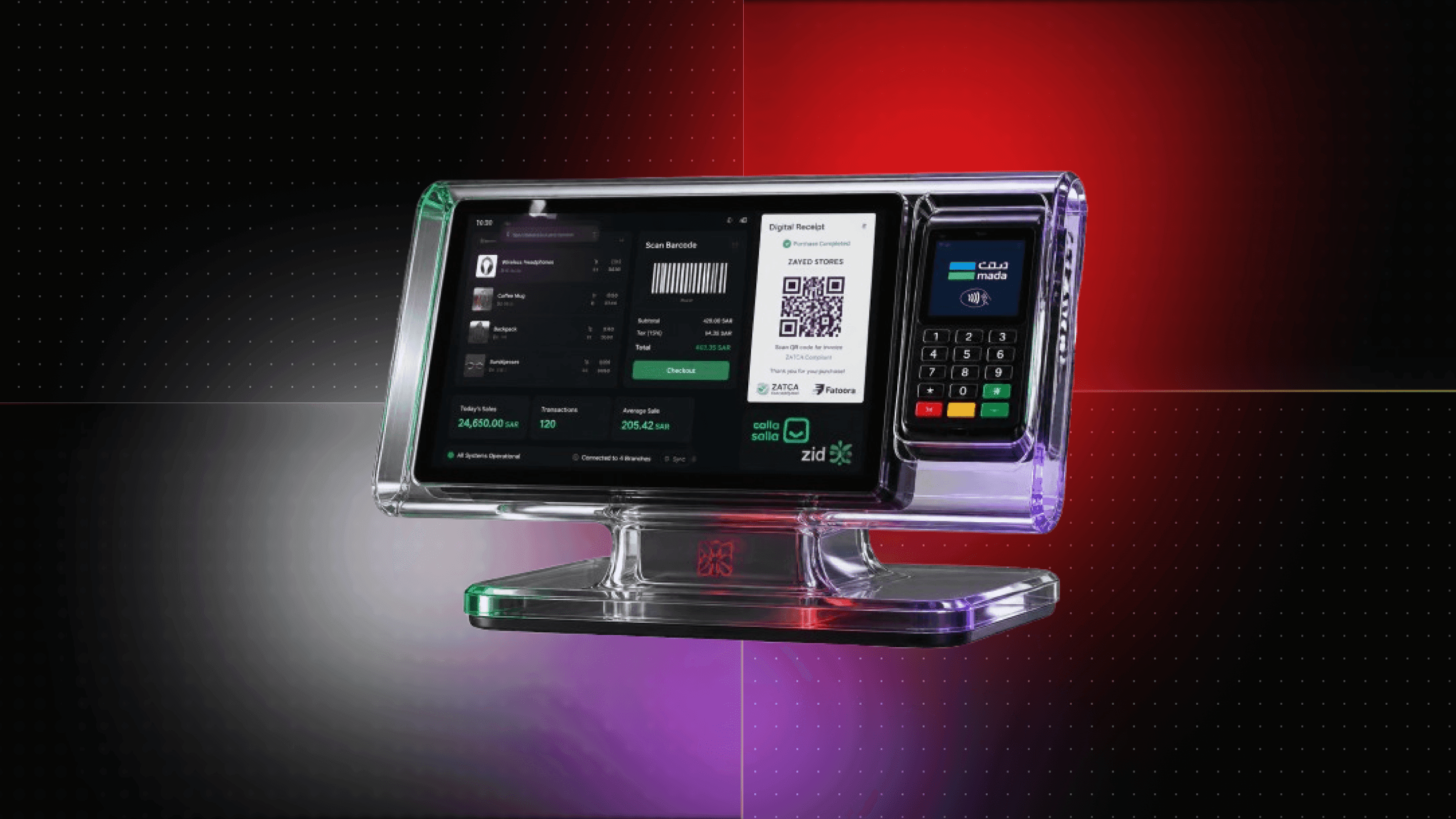
Retail POS Software Saudi Arabia — Multi-Branch Chain POS with ZATCA Phase 2, Mada Integration, Salla/Zid Alternative, and Inventory Management for Saudi Retailers (2026)
Custom retail POS software for Saudi supermarkets, pharmacies, fashion, electronics, FMCG, and multi-branch retailers with ZATCA, Mada, inventory, Salla/Zid, SASO, SADAD, and loyalty integrations.

Salla Alternative Saudi Arabia — When to Stop Renting Your E-commerce Platform and Build One You Own
Discover when Saudi businesses should move beyond Salla to a custom e-commerce platform. Compare costs, ownership, ZATCA, Mada integration, and the long-term advantages of building software you fully own.

Gold Ecommerce Platform Development Saudi Arabia — Karat Pricing, ZATCA Split VAT, and Online Gold Sales (2026)
Custom gold ecommerce platforms for Saudi retailers with live XAU/SAR pricing, karat calculations, ZATCA split VAT, Mada checkout, AML workflows, and Arabic-first shopping.