01-11-2026
Hotel and Hospitality CRM in Saudi Arabia (2026): Guest Profiles, Direct Bookings, and Loyalty
Quick Answer: Hotel CRM software in Saudi Arabia helps hotels build direct relationships with guests, increase repeat bookings, manage guest preferences, and run loyalty programmes across WhatsApp, email, websites, and other approved channels. For hotels in Riyadh, Makkah, Madinah, and Red Sea destinations, a CRM can bring guest profiles and marketing activity together without replacing the hotel's property management system (PMS).
- Know your guests: Maintain permission-aware guest profiles, stay history, preferences, enquiries, and service interactions.
- Win more direct bookings: Convert website enquiries and eligible repeat guests into direct reservations instead of relying entirely on online travel agencies (OTAs).
- Build lasting loyalty: Use relevant offers, points, membership tiers, and post-stay communications to encourage repeat visits.
Want to improve guest retention and direct bookings? Discuss a hospitality CRM with Logiolegion.
Why Saudi Hotels Need a Guest Relationship Strategy
Saudi Arabia's hospitality market serves several distinct guest segments. Riyadh hotels accommodate business travellers and corporate accounts, Makkah and Madinah properties serve pilgrims and religious visitors, while Red Sea resorts compete for leisure travellers looking for memorable stays and personalised service.
These segments have different booking patterns, communication preferences, and reasons to return. A business traveller may value a corporate rate and a fast booking process. A family visiting Makkah may want clear information about room arrangements and repeat pilgrimage stays. A leisure guest may respond to a relevant resort offer after a previous visit.
When guest information sits across OTA extranets, spreadsheets, email inboxes, booking engines, and front-desk records, hotel teams struggle to build a consistent relationship. They may not recognise a returning guest, follow up on an enquiry, or measure which campaigns produce actual bookings.
A hospitality CRM creates a shared view of guest relationships. It helps marketing, reservations, sales, and guest-relations teams work from the same information, subject to appropriate access controls and data-protection requirements.
The OTA dependency problem
OTAs can help hotels reach travellers who might never discover the property otherwise. The problem arises when a hotel depends on third-party channels for most of its guest acquisition and has limited visibility into the relationship after the stay.
A CRM can support a different approach:
- Capture direct enquiries through the hotel's website and approved communication channels.
- Record corporate, group, event, and repeat-guest relationships.
- Follow up on enquiries that have not converted.
- Encourage eligible past guests to book directly next time.
- Measure repeat bookings and revenue associated with campaigns.
A CRM does not eliminate OTA commissions or automatically give a hotel access to guest data held by an OTA. Its value comes from improving relationships using information the hotel is authorised to collect and use.
1. What Saudi Hotels Should Look for in a Hospitality CRM
The right CRM depends on the hotel's size, guest mix, booking channels, and existing software. A boutique hotel may prioritise enquiry management and repeat-guest communication, while a hotel group may need shared guest profiles, corporate account management, and loyalty across multiple properties.
Riyadh: Business Travel and Corporate Accounts
Business hotels often handle corporate rates, negotiated agreements, recurring travel, meeting enquiries, and account-manager follow-ups.
A CRM for Riyadh hotels should help teams:
- Maintain corporate account and travel-coordinator records.
- Track negotiated rates and agreement renewal dates.
- Record enquiries for meetings, conferences, and group stays.
- Assign follow-ups to sales and reservations staff.
- Identify returning business guests and their recorded preferences.
- Report on account activity, enquiry conversion, and repeat business.
The CRM should not become another spreadsheet with a new interface. It should show who owns each relationship, what happened last, and which action is due next.
Makkah and Madinah: Pilgrimage Guest Relationships
Hotels serving pilgrims may receive enquiries through travel agencies, tour operators, group organisers, direct website visits, and repeat visitors. Group leaders and travel partners can play a major role in the booking relationship.
A guest CRM for Makkah hotels can support:
- Enquiry records for individuals, families, and groups.
- Travel-agency and group-organiser account management.
- Follow-up reminders for seasonal or recurring travel enquiries.
- Communication preferences and language preferences where voluntarily provided.
- Post-stay feedback and future-booking campaigns.
- Group-level reporting without exposing personal guest information unnecessarily.
The CRM should distinguish a group organiser's commercial relationship from each traveller's individual record. It should also avoid collecting sensitive personal information that is not needed for the stated purpose.
Red Sea Resorts: Leisure, Repeat Stays, and Guest Experience
Leisure properties can use CRM data to understand guest interests, previous interactions, and booking behaviour. With an appropriate legal basis and the required permissions, this information can support relevant offers rather than sending the same promotion to every contact.
Useful capabilities include:
- Resort package and seasonal campaign management.
- Guest feedback and service-recovery tracking.
- Birthday or anniversary offers where guests have provided the relevant details and the use is permitted.
- Loyalty membership and rewards.
- Follow-up after checkout.
- Repeat-stay and campaign-performance reporting.
Personalisation should remain useful and proportionate. Guests should not have to share unnecessary personal details to receive basic booking information or service.
2. Core Modules in a Hospitality CRM
A hotel CRM should manage the relationship before, during, and after a stay. It should complement the PMS, booking engine, and channel manager rather than duplicate their core operational responsibilities.
Guest Profiles and Interaction History
The guest profile is the foundation of the CRM. It can combine authorised contact details, previous interactions, enquiry history, recorded preferences, consent records, and relevant stay information received from connected systems.
The profile should help staff answer practical questions:
- Has this guest contacted the hotel before?
- Which enquiries or offers have they responded to?
- Is there a follow-up due?
- What communication channel have they chosen?
- Are they an eligible loyalty member?
- Which information may this staff member access?
Duplicate detection is important. A guest who books once through the website and later contacts the hotel on WhatsApp should not automatically become two unrelated records.
Enquiry and Lead Management
Not every hotel enquiry becomes a reservation. A CRM can track the path from first contact to booking, including corporate enquiries, group accommodation, weddings, conferences, and leisure packages.
Typical features include:
- Lead capture from website forms and approved channels.
- Assignment to a reservations or sales representative.
- Follow-up tasks and reminders.
- Enquiry stages such as new, contacted, proposal sent, converted, and lost.
- Lost-enquiry reasons.
- Conversion reports by source, property, segment, or campaign.
This gives hotel managers a clearer picture of where potential revenue is being lost and whether follow-ups are happening on time.
Direct Booking Support
The CRM should help increase direct bookings without pretending to replace the booking engine.
It can record enquiries originating from the hotel's website, retain campaign attribution, support follow-ups, and connect to a booking engine or PMS to associate a confirmed reservation with the relevant guest or campaign.
A typical workflow looks like this:
- A traveller submits an enquiry on the hotel's website.
- The CRM creates or updates the guest profile and records the enquiry source.
- A reservations employee responds or follows up through an approved channel.
- The guest completes a booking through the hotel's direct booking engine.
- The CRM receives the booking outcome, where the integration permits it.
- Reporting shows the enquiry-to-booking conversion and attributable revenue.
A direct booking campaign should be evaluated using actual booking outcomes, not just message delivery or clicks.
WhatsApp Guest Communication
WhatsApp can be a practical channel for hotel enquiries and guest communication in Saudi Arabia. A CRM integration can help authorised staff manage conversations, retain relevant interaction history, assign follow-ups, and use approved templates where the WhatsApp platform requires them.
Depending on the chosen provider and integration, useful functions may include:
- Click-to-WhatsApp entry points from the hotel website.
- Routing enquiries to reservations or guest relations.
- Approved booking reminders and service messages.
- Campaign management for guests who have the required permissions.
- Conversation assignment and response-time reporting.
- Opt-out and communication-preference handling.
A WhatsApp integration does not mean every contact can automatically receive marketing messages. Hotels should verify the applicable WhatsApp Business rules and Saudi data-protection requirements before launching campaigns.
Loyalty Programme Management
A hospitality loyalty module can reward guests for repeat stays, direct bookings, eligible spending, referrals, or participation in defined promotions.
Possible capabilities include:
- Member registration and profile management.
- Points earning and redemption rules.
- Membership tiers and benefits.
- Campaign-specific rewards.
- Reward expiry and balance notifications.
- Fraud controls and manual-adjustment logs.
- Loyalty reporting by property, segment, and campaign.
The programme should make its terms clear. Guests need to understand how points are earned, when they expire, what rewards are available, and which bookings qualify.
For a deeper look at loyalty platform design, see Custom Loyalty App Development for Saudi Arabia.
Guest Feedback and Service Recovery
A CRM can record feedback from surveys, email, website forms, and other connected channels. It can route complaints to the right team, track response deadlines, and record how an issue was resolved.
The system should distinguish private service-recovery cases from public reviews. Staff should be able to see the status and history of a case without receiving access to unrelated guest information.
Segmentation and Campaign Analytics
Segmentation allows hotel teams to group guests based on relevant and lawfully processed information, such as previous stay activity, booking source, property, loyalty tier, or stated preferences.
Reports can track:
- Direct enquiry conversion.
- Repeat-booking rate.
- Campaign-attributed bookings and revenue.
- Loyalty participation and redemption.
- Guest retention by segment.
- Response time and unresolved follow-ups.
- Corporate account activity.
Analytics should use the minimum data necessary for each purpose, with appropriate permissions and retention rules.
3. Saudi Integrations: PMS, Booking Engines, WhatsApp, and Payments
A hospitality CRM is only as useful as the information it can reliably exchange with the hotel's other systems. Integration design should start by deciding which platform owns each record and how updates are synchronised.
Connect the CRM to the Hotel PMS
The PMS manages operational hotel functions such as reservations, room inventory, check-in, checkout, and folios, depending on the product. The CRM focuses on guest relationships, enquiries, marketing permissions, loyalty, and retention.
A connection between the two may allow the CRM to receive relevant stay dates, booking status, property identifiers, and guest references. The specific fields and update frequency depend on the PMS API and the hotel's permissions.
For operational property-management requirements, see Hotel Management Software Development in Saudi Arabia. That page covers the PMS side; this guide focuses on guest relationships and direct-booking growth.
Booking Engine and OTA Data
The hotel's direct booking engine can send enquiry and booking outcomes to the CRM, enabling the team to measure conversion and identify repeat guests where permitted.
OTA data access is different. The information available depends on the OTA's integration terms, channel manager, and the hotel's authorised access. A CRM should not assume that every OTA exposes full guest contact details or permits those details to be used for marketing.
Where a channel manager is involved, define whether it or the PMS is the source of truth for booking status to avoid duplicate or conflicting updates.
WhatsApp Business Platform
For hotels that want centralised messaging, the integration may use the WhatsApp Business Platform directly or an approved solution provider. The implementation should confirm template approval, conversation-handling rules, webhook availability, message costs, opt-out handling, and which team members can access guest conversations.
The CRM should also preserve an appropriate record of consent or other applicable permissions and communication preferences. The exact workflow depends on the type of message and the legal and platform rules that apply.
Payment and Accounting Systems
A CRM may connect to a payment gateway or accounting system to record a booking outcome, loyalty redemption, campaign reference, or payment status. Sensitive payment credentials should not be stored in the CRM unless the architecture and applicable security requirements explicitly justify it.
If the hotel generates invoices through its PMS or accounting platform, the CRM should generally reference the relevant transaction rather than build a second invoice engine. Where Saudi e-invoicing obligations apply, the invoicing system should remain responsible for its required compliance processes.
Arabic and English Guest Journeys
Hotels serving domestic and international guests may need Arabic and English interfaces, right-to-left layouts, language preferences, and message templates suitable for each audience.
Arabic support should be tested across guest names, search, filters, forms, emails, WhatsApp templates, reports, and exports. Translating labels alone is not sufficient if the layout or data-handling workflows fail when Arabic text is entered.
4. Saudi PDPL: Guest Data, Consent, and Direct Marketing
Hospitality CRM platforms process personal information, including contact details, stay history, preferences, and communications. Hotels should design their data collection and marketing workflows around the Saudi Personal Data Protection Law (PDPL) and its implementing regulations.
The Saudi Data and AI Authority's PDPL guidance explains the framework for controllers and processors. The implementing regulations also address consent, direct marketing, and mechanisms for withdrawing consent.
For a hotel CRM, practical design considerations include:
- Clear collection purposes: Explain why guest information is collected and how it will be used.
- Marketing permissions: Record the applicable permission or legal basis for each marketing purpose and channel.
- Easy opt-out: Make it straightforward for guests to stop promotional communications and ensure preferences are respected.
- Role-based access: Restrict guest information to staff who need it for their work.
- Retention and deletion: Establish retention periods and procedures based on applicable obligations and the purpose of processing.
- Processor oversight: Assess vendors handling guest information and document relevant responsibilities.
- Cross-border data transfers: Review hosting and vendor arrangements against applicable Saudi rules before choosing where data will be processed.
A guest's contact details being available to a hotel does not automatically mean they can be used for every marketing campaign. Hotels should obtain appropriate consent where required, document permissions, and ensure that service messages are not confused with promotional campaigns.
The final implementation should be reviewed against the hotel's actual data flows and legal obligations. A CRM is a tool for implementing controls; buying or building one does not by itself establish PDPL compliance.
Build a Hospitality CRM Around Your Guest Journey
A hotel's CRM requirements depend on its booking channels, PMS, loyalty strategy, guest segments, and communication processes. Logiolegion can help define the integration plan and develop the guest-relationship workflows around those requirements.
Discuss a custom hospitality CRM with Logiolegion.
5. Should You Choose an Existing CRM or Build a Custom One?
Hotels do not always need to develop a CRM from scratch. The right choice depends on whether an existing platform supports the required guest journeys, Saudi operating requirements, integration access, and commercial model.
| Decision factor | Existing hospitality CRM | Custom-built hospitality CRM |
|---|---|---|
| Initial implementation | Often faster when the required features are available | Requires discovery, design, development, and testing |
| Guest profiles and segmentation | Uses the vendor's supported data model | Can reflect the hotel's chosen profile structure and segments |
| PMS and booking integrations | Depends on supported connectors and APIs | Can be built around the hotel's confirmed integration access |
| WhatsApp workflows | Depends on available messaging features and provider support | Can implement defined workflows around an approved provider |
| Loyalty rules | Limited to supported programme features | Can implement property-specific earning, tiers, and redemption rules |
| Ownership and change control | Governed by the vendor's product and contract | Greater control over the commissioned software, subject to the agreement |
| Ongoing cost | Subscription, usage, and integration charges may apply | Hosting, support, maintenance, and future development costs apply |
Before choosing, run a practical evaluation using real scenarios: a returning business traveller, a group enquiry for Makkah, a resort guest joining a loyalty programme, and a guest opting out of marketing.
Confirm whether the system can handle each case, whether the necessary data is available, and what the total cost will be over several years.
When an existing product is enough
An existing CRM is a sensible starting point if it already supports the hotel's guest segments, required integrations, loyalty rules, permissions, and reporting. A configurable platform can reduce the amount of software that must be maintained.
If you are evaluating Wasl CRM, verify its current hospitality features, PMS and booking-engine connectors, WhatsApp capabilities, loyalty functions, Saudi data-protection controls, and pricing directly with the vendor. Do not assume that a product supports a particular integration until its documentation or team confirms it.
When custom development makes sense
A custom CRM may be appropriate when the hotel's guest journey crosses multiple properties, the loyalty rules are distinctive, or existing tools cannot support required integrations and reporting.
Logiolegion develops custom business platforms and can assess a hospitality CRM project as a separate system connected to the hotel's existing PMS and booking infrastructure. For a broader view of custom CRM implementation, see How to Build a Custom CRM Like Zoho CRM.
6. How Much Does Hospitality CRM Software Cost in Saudi Arabia?
The price depends on the number of properties, guest-profile requirements, communication channels, loyalty rules, integrations, and reporting needs.
| CRM scope | Indicative development range |
|---|---|
| Guest profiles, enquiry tracking, basic segmentation, and reports | SAR 30,000–70,000 |
| Multi-channel CRM with PMS or booking-engine integration, WhatsApp workflows, and campaign tracking | SAR 70,000–160,000 |
| Multi-property hospitality CRM with loyalty management, advanced segmentation, and several enterprise integrations | SAR 160,000–350,000+ |
Pricing note: These ranges are planning estimates, not confirmed Logiolegion quotations. WhatsApp provider fees, messaging charges, existing CRM subscriptions, PMS or channel-manager costs, hosting, and ongoing support may be additional. The final fixed price should be confirmed after discovery establishes the scope and verifies integration access.
7. A Practical Implementation Plan
A successful CRM project begins with the guest journey and the systems already in place—not a list of screens to build.
Step 1: Map guest segments and journeys
Document how business travellers, leisure guests, group organisers, corporate accounts, and returning guests discover and contact the hotel. Identify the points where enquiries are lost, follow-ups are delayed, or guest information is duplicated.
Step 2: Audit the existing technology
List the PMS, booking engine, channel manager, messaging provider, website, accounting platform, and loyalty tools. Confirm which APIs or exports are available and which system owns each important data field.
Step 3: Define the first release
Prioritise guest profiles, enquiry tracking, follow-up workflows, permissions, and essential reporting. Add loyalty automation and advanced segmentation when the hotel's strategy and data are ready to support them.
Step 4: Test permissions and data quality
Test duplicate records, consent changes, opt-outs, access permissions, failed integrations, and data corrections. Validate that guests who have opted out of marketing are excluded from the appropriate campaigns.
Step 5: Pilot with one property or guest segment
Start with a defined group, such as corporate enquiries or repeat leisure guests. Measure follow-up completion, direct booking conversion, repeat bookings, and campaign-attributed revenue before expanding the rollout.
Step 6: Review and improve
Use operational feedback and campaign results to refine segments, messages, loyalty rules, and reporting. Keep the system aligned with the hotel's changing guest strategy and integration requirements.
Final Thoughts
Hospitality CRM software in Saudi Arabia should help hotels build relationships that continue beyond a single reservation. Guest profiles, enquiry follow-ups, direct booking journeys, WhatsApp communication, and loyalty programmes can give hotels a more consistent way to engage returning and prospective guests.
For Riyadh business hotels, Makkah and Madinah properties, and Red Sea resorts, the right system will depend on the guest segments served and the technology already in use. The CRM should complement the PMS, use guest information responsibly, and measure whether relationship-building activity leads to meaningful business results.
Choose an existing CRM if it meets your requirements without major gaps. Consider custom development when your guest journeys, integrations, or loyalty rules require capabilities the available products cannot provide.
Work With Logiolegion
Planning a hospitality CRM for a hotel or hotel group in Saudi Arabia? Contact Logiolegion to discuss guest profiles, direct booking workflows, WhatsApp integration, loyalty programmes, and connections to your existing hotel systems.
Frequently Asked Questions
1. What is hotel CRM software in Saudi Arabia?
Hotel CRM software manages guest profiles, enquiries, communication history, marketing permissions, loyalty activity, and repeat-booking workflows. Logiolegion can develop a custom CRM that connects these relationship-management functions with an existing PMS or booking engine. The goal is to help hotel teams build direct guest relationships without duplicating room and reservation operations.
2. What should I look for in CRM software for hospitality in Riyadh?
For Riyadh hotels, prioritise corporate account management, enquiry tracking, negotiated-rate workflows, follow-up reminders, guest profiles, and direct booking attribution. Logiolegion can scope a CRM that connects website enquiries and booking outcomes with corporate sales activity. If WhatsApp is part of the workflow, confirm the provider integration and marketing-permission process before implementation.
3. Can a guest CRM help Makkah hotels increase repeat bookings?
A guest CRM can help Makkah hotels organise individual, family, group, and travel-agency relationships and follow up on eligible future-stay enquiries. Logiolegion can design group enquiry records, repeat-guest segmentation, and approved communication workflows for a hotel serving pilgrimage visitors. The CRM should collect only necessary information and respect the guest's communication preferences.
4. Can hospitality loyalty software work across multiple Saudi hotel properties?
Yes, if the programme is designed around shared membership records, property-specific rules, points accounting, and consistent redemption policies. Logiolegion can scope a multi-property loyalty platform with membership tiers, earning rules, redemption history, and reporting. The project should define how points are calculated and settled between properties before development begins.
5. I run a hotel in Saudi Arabia. Should I choose Wasl CRM or build a custom CRM?
Start by comparing Wasl CRM's currently supported features, PMS and booking-engine integrations, WhatsApp workflows, loyalty capabilities, data controls, and total cost with your requirements. Logiolegion can help evaluate the gaps and, where necessary, build a custom CRM connected to your existing hotel systems. The decision should be based on verified product capabilities and the cost of maintaining each option—not assumptions about either platform.
6. I already have a hotel PMS. Do I need a separate CRM?
Not every hotel does, but a separate CRM can be useful when guest retention, corporate sales, marketing segmentation, or loyalty needs go beyond the PMS's built-in features. Logiolegion can assess the functions already available in your PMS and identify whether a separate CRM adds value. If one is needed, the integration should define which system owns reservations, guest relationship records, and marketing permissions.
7. Can I connect hotel CRM software to WhatsApp in Saudi Arabia?
A CRM can connect to the WhatsApp Business Platform directly or through an approved provider, depending on the hotel's requirements. Logiolegion can assess conversation routing, guest enquiry records, approved templates, campaign workflows, and opt-out handling. The implementation must also account for the provider's messaging rules and the hotel's applicable Saudi data-protection obligations.
8. How can hotels use guest data for loyalty campaigns while respecting Saudi PDPL?
Hotels should define their purposes for collecting and using guest information, document the applicable legal basis and permissions, restrict access, and provide the required way to stop promotional messages. Logiolegion can incorporate permission records, opt-out status, role-based access, and campaign exclusions into the CRM workflow. The final controls should be reviewed against the Saudi PDPL, its implementing regulations, and the hotel's actual data flows.
9. How much does custom hotel CRM development cost in Saudi Arabia?
A focused CRM with guest profiles and enquiry management generally costs less than a multi-property platform with WhatsApp integration, PMS connections, loyalty rules, and advanced analytics. The indicative ranges in this guide run from SAR 30,000 to SAR 350,000+, depending on scope. Logiolegion can provide a fixed-price estimate after discovery confirms the integrations, modules, and reporting requirements.
10. How long does it take to build a hospitality CRM?
The timeline depends on the number of workflows, properties, integrations, and loyalty features involved. A basic guest and enquiry CRM is usually less complex than a multi-property platform connected to a PMS, booking engine, WhatsApp provider, and rewards system. Logiolegion can estimate the timeline after reviewing the existing technology and defining the first release.
11. Can a hotel CRM increase direct bookings and reduce OTA dependency?
A CRM can help hotels follow up on direct enquiries, understand repeat-guest activity, and measure which eligible campaigns lead to direct reservations. Logiolegion can design enquiry attribution, booking-outcome tracking, and guest-retention reports around the hotel's available data. It cannot automatically eliminate OTA commissions or access information that a third-party channel does not make available.
12. What information should I prepare before requesting a hotel CRM quote?
Prepare the hotel's property count, guest segments, PMS and booking-engine details, messaging provider, existing loyalty rules, and the reports management wants to see. Logiolegion can use this information to map the guest journey, confirm API access, define the first release, and estimate the development cost. Include your requirements for Arabic and English, marketing permissions, and guest-data retention from the start.
Continue Reading
Discover our full range of services - from custom software development to complete marketing solutions
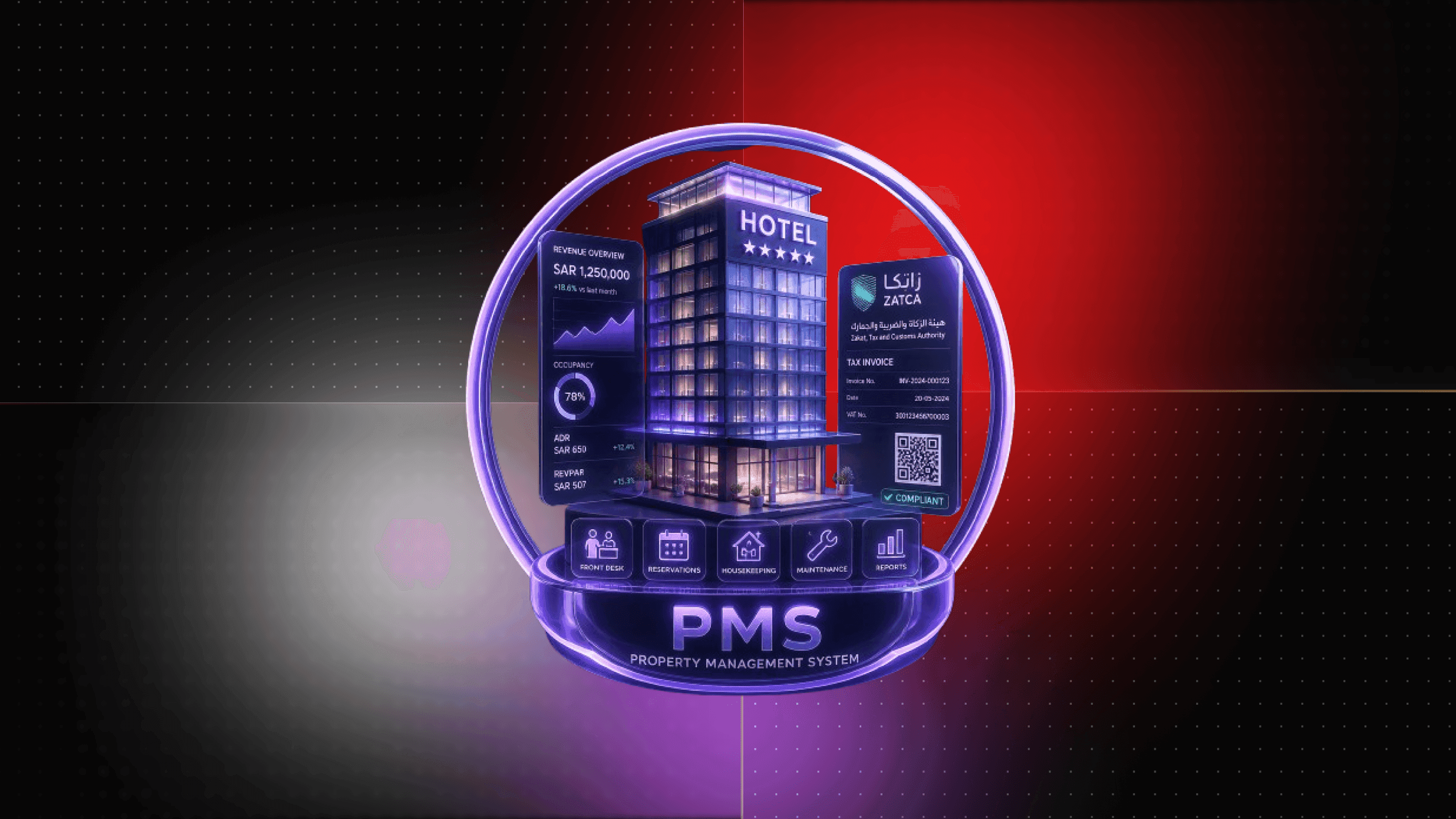
How to Build a Hotel Property Management System for Saudi Arabia: SCTH Compliance, ZATCA Integration, and What It Costs in SAR
Learn how to build a hotel property management system for Saudi Arabia with SCTH compliance, ZATCA integration, and a clear breakdown of development costs in SAR for 2026.
Cafe and Coffee Shop Management Software - Coffee Subscription Apps, Drive-Through Queue, and Arabic-First Loyalty for Saudi Cafes (2026)
Discover how custom cafe management software in Saudi Arabia helps coffee chains manage ZATCA-compliant POS, Mada payments, mobile order-ahead, coffee subscriptions, drive-through operations, Arabic-first loyalty programmes, GOSI payroll, and multi-branch inventory from a single integrated platform.

Manpower Supply Agency Software Saudi Arabia — Multi-Employer GOSI, Qiwa Client Contracts, Agency WPS Payroll, Muqeem Iqama Tracking, and ZATCA Per-Client Billing (2026)
Custom manpower supply agency software for Saudi Arabia with multi-employer GOSI, agency WPS payroll, Qiwa tracking, Muqeem, HRSD, and ZATCA billing.

Best HRMS Software in Saudi Arabia (2026)
Compare the best HRMS software in Saudi Arabia in 2026, including Nasaq, Jisr, Bayzat, ZenHR, SAP and Oracle for GOSI, Qiwa, Mudad and Nitaqat.

Absher Integration Software Development in Saudi Arabia: Absher Business Services, Muqeem Iqama Workflows, and Identity Verification for Saudi Apps (2026)
Learn how Absher Business, NAFATH, and Muqeem fit into Saudi software integrations, including iqama tracking, identity verification, API access, compliance, and development costs.