
29-06-2026
Loyalty Juggernaut Alternative Saudi Arabia — Custom ZATCA-Compliant Loyalty App for Saudi Retailers and Restaurant Chains (2026)
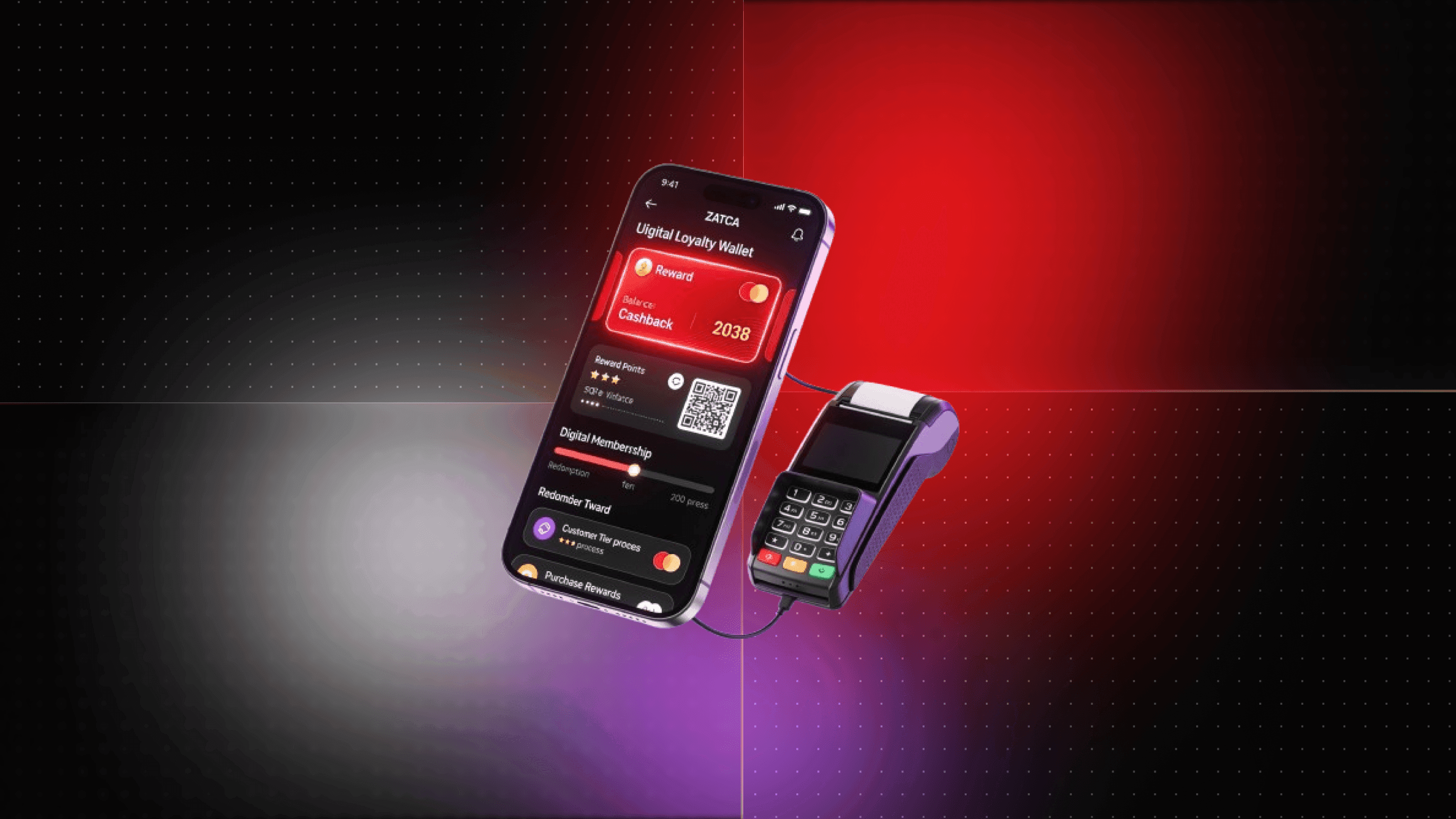
In May 2025, Riyadh Air announced a strategic partnership with Loyalty Juggernaut (LJI) to power its next-generation digital loyalty programme. The announcement immediately put enterprise loyalty technology into the spotlight across Saudi Arabia, prompting retailers, hotel groups, restaurant chains, pharmacies, and financial institutions to explore whether the same type of platform could power their own customer rewards ecosystem.
For Riyadh Air, the decision makes perfect sense.
Launching a national airline requires a loyalty platform capable of handling millions of members, hundreds of global partners, complex tier progression, and worldwide redemption networks. Loyalty Juggernaut's GRAVTY® platform was built precisely for this level of enterprise complexity.
For most Saudi businesses, however, the requirements look very different.
A regional pharmacy chain with 80 branches, a restaurant group operating across Riyadh and Jeddah, or a retail business managing 150 stores does not need an airline-grade loyalty ecosystem.
Instead, they need a platform that supports:
- ZATCA Phase 2 e-invoicing
- Mada payment processing
- NAFATH identity verification
- Arabic-first customer experience
- Saudi Personal Data Protection Law (PDPL) compliance
- Ownership of their own software rather than an ongoing enterprise SaaS subscription
That is where custom loyalty app development becomes the more practical solution.
At LogioLegion, we build Saudi-first custom software designed around local compliance requirements rather than adapting international enterprise platforms after deployment. If you're evaluating software partners, our guide on custom software development company in Saudi Arabia explains how Saudi-specific architecture differs from generic international software.
This guide explains where enterprise loyalty platforms excel, where Saudi businesses typically need something different, and how a custom loyalty application built specifically for Saudi Arabia can combine ZATCA compliance, Mada integration, Arabic-first UX, and long-term ownership into a single platform.
The Riyadh Air Partnership — And What It Means for Saudi Loyalty Technology
The Riyadh Air announcement introduced many Saudi businesses to Loyalty Juggernaut for the first time.
Founded in Silicon Valley in 2015, Loyalty Juggernaut develops GRAVTY®, an enterprise-grade cloud loyalty platform recognised by industry analysts including Gartner and Forrester. The platform serves global organisations managing extremely large loyalty ecosystems across aviation, retail, hospitality, and financial services.
Its customer portfolio includes organisations operating loyalty programmes with millions—or even tens of millions—of active members.
Examples include:
- FEMSA convenience retail
- WestJet Airlines
- Global Hotel Alliance
- Carrefour
The Riyadh Air deployment follows exactly this enterprise profile.
An airline loyalty programme requires:
- global airline partnerships
- hotel and rental car integrations
- real-time points calculation
- multi-currency support
- worldwide redemption
- complex elite status management
- extensive API ecosystems
These capabilities justify enterprise software investment.
The question most Saudi businesses should ask is different:
Does our organisation actually have the same operational requirements as a national airline?
In most cases, the answer is no.
A pharmacy group, restaurant chain, retailer, shopping mall, healthcare provider, or regional hotel operator generally needs a loyalty platform focused on customer retention—not international airline alliances.
That difference changes almost every technical and commercial decision.
Who Enterprise Loyalty Platforms Are Built For (And Who They Are Not)
Enterprise loyalty software exists for organisations operating at extraordinary scale.
These platforms are designed to support:
- millions of active members
- multiple countries
- hundreds of partner organisations
- sophisticated earning and redemption logic
- complex API ecosystems
- enterprise governance
- multi-year digital transformation programmes
For organisations operating at this scale, enterprise SaaS platforms provide tremendous value.
Saudi mid-market businesses face an entirely different reality.
Typical requirements include:
- 20–500 physical locations
- one or two customer-facing brands
- mobile loyalty application
- POS integration
- customer rewards
- promotional campaigns
- digital vouchers
- gift cards
- customer analytics
Most importantly, they also require software designed around Saudi regulations rather than international compliance frameworks.
Enterprise platforms like GRAVTY already support globally recognised standards including ISO 27001, SOC certifications, GDPR, and CCPA because these frameworks match the needs of their worldwide customer base.
Saudi businesses, however, operate under an entirely different regulatory environment.
They need software capable of integrating with:
- ZATCA Phase 2 e-invoicing
- Mada payment infrastructure
- NAFATH identity verification
- Saudi PDPL
- Arabic-first customer interfaces
These are not features that can simply be enabled through a configuration menu.
They require architecture decisions made before development begins.
That is why many Saudi organisations ultimately conclude that a custom-built platform provides a better long-term fit than adapting enterprise software that was never originally designed for the Kingdom's regulatory landscape.
The discussion is not about whether one platform is "better."
It is about choosing software built for your operational reality.
The Five Saudi Compliance Requirements Your Loyalty App Must Meet
For many Saudi businesses, the biggest challenge is not creating a points system.
It is ensuring that every customer interaction remains compliant with Saudi regulations while delivering a smooth user experience.
Most international loyalty platforms focus on member engagement, campaign automation, and analytics. Saudi businesses must also satisfy local compliance obligations covering taxation, payments, digital identity, language, and customer data.
These five requirements should shape the architecture of every loyalty platform built for Saudi Arabia.
ZATCA Fatoorah Phase 2 — Every Redemption Is a Taxable Transaction
One of the biggest misconceptions surrounding loyalty programmes is that reward points operate outside Saudi tax regulations.
They do not.
Whenever loyalty points are redeemed for a discount, converted into vouchers, exchanged for cashback, or purchased directly using Saudi Riyals, the transaction becomes part of the business's financial records.
Depending on the transaction structure, it may require a ZATCA Phase 2 compliant electronic invoice.
That means every qualifying transaction must support:
- TLV-encoded QR codes
- cryptographic invoice hashing
- sequential invoice numbering
- transmission through an Approved Service Provider (ASP)
- secure archival under ZATCA requirements
Many international loyalty systems leave invoicing entirely to external ERP or POS software.
This creates additional middleware, duplicate integrations, and unnecessary operational complexity.
A Saudi-first loyalty platform should generate compliant invoices directly as part of the redemption workflow.
Instead of treating compliance as an afterthought, the invoice engine becomes part of the loyalty platform itself.
For businesses unfamiliar with Saudi e-invoicing requirements, our guide on ZATCA-compliant app development Saudi Arabia explains the broader compliance landscape, while our technical guide to ZATCA Fatoorah API integration Saudi Arabia explores how software connects directly with certified ASP providers.
Mada Integration — Saudi Customers Expect Native Payments
Payment behaviour in Saudi Arabia differs significantly from many international markets.
For everyday retail purchases, Mada remains the dominant debit card network and processes the majority of domestic card transactions.
If a loyalty programme allows customers to:
- purchase additional reward points,
- top up digital wallets,
- buy prepaid memberships,
- redeem paid vouchers,
- or upgrade premium loyalty tiers,
the payment experience should support Mada natively.
Many enterprise loyalty systems integrate with global payment providers but require additional custom development before Mada transactions can be processed.
That usually introduces:
- third-party gateways,
- additional implementation costs,
- longer testing cycles,
- and more operational dependencies.
A custom Saudi loyalty application can integrate directly with SAMA-approved payment providers such as HyperPay or Moyasar while supporting:
- Mada
- STC Pay
- Apple Pay
- major international cards
The same payment architecture is already common across Saudi e-commerce platforms, making it straightforward to extend into customer loyalty ecosystems.
Our article on e-commerce app development Saudi Arabia — Mada and Arabic UX explains how these payment integrations operate across online commerce and customer rewards.
NAFATH Identity Verification — Trust Matters for High-Value Rewards
Not every loyalty programme requires identity verification.
However, programmes involving financial rewards often do.
Examples include:
- cashback programmes
- gift card redemption
- premium loyalty memberships
- financial service rewards
- banking partnerships
- high-value promotional campaigns
These programmes increasingly benefit from identity verification using NAFATH.
NAFATH is Saudi Arabia's national digital identity platform, built on the Kingdom's existing digital identity infrastructure.
Rather than relying solely on email verification or SMS codes, businesses can verify customer identity using trusted government-backed authentication.
This helps reduce:
- duplicate accounts
- reward fraud
- account sharing
- fake registrations
- money laundering risks
- identity disputes
Identity verification can also simplify customer support because verified users can recover accounts with significantly greater confidence.
Our detailed guide to NAFATH API integration software development Saudi Arabia explains how businesses integrate secure digital identity directly into customer applications.
Arabic-First Design — Translation Is Not the Same as Localisation
Many international software products advertise Arabic support.
Often, this simply means translating interface text.
Saudi customers expect much more.
A genuine Arabic-first application treats Arabic as the primary language from the earliest design stage.
That affects almost every element of the interface, including:
- right-to-left navigation
- Arabic typography
- Arabic number formatting
- customer notifications
- search behaviour
- onboarding screens
- promotional banners
- loyalty cards
- campaign workflows
It also affects seasonal marketing.
Saudi businesses frequently run campaigns around:
- Ramadan
- Eid Al-Fitr
- Eid Al-Adha
- Saudi National Day
- Founding Day
These campaigns often reference Hijri calendar dates alongside Gregorian dates.
Designing RTL support after development usually introduces layout inconsistencies and additional engineering effort.
Building Arabic-first from the wireframe stage produces a far more natural experience for Saudi customers.
Saudi PDPL — Customer Data Is Now a Compliance Responsibility
Every loyalty programme collects valuable customer information.
That typically includes:
- names
- mobile numbers
- email addresses
- purchase history
- shopping preferences
- reward balances
- transaction records
- location information
This data falls under Saudi Arabia's Personal Data Protection Law (PDPL).
Businesses operating loyalty programmes should therefore support:
- explicit customer consent
- data minimisation
- secure storage
- customer access requests
- deletion requests
- breach notification procedures
- controlled administrative access
Many Saudi organisations also choose infrastructure located within the region, commonly using AWS Middle East (Bahrain), to support regional data governance objectives and reduce latency.
Compliance is no longer limited to cybersecurity.
It now influences customer trust, regulator expectations, and long-term operational risk.
For businesses navigating multiple regulatory obligations simultaneously, our guide on software regulatory compliance requirements Saudi Arabia provides a broader overview of Saudi software compliance across industries.
By the time most Saudi businesses review these five requirements, they realise the same thing:
The challenge is not building a loyalty programme.
The challenge is building one that fits Saudi Arabia's regulatory, payment, taxation, language, and identity infrastructure from day one.
The Saudi Loyalty Market Beyond the Airlines
When people think about customer loyalty in Saudi Arabia, airline programmes usually come to mind first.
Saudi Arabian Airlines' Alfursan and Riyadh Air's upcoming programme receive significant attention because of their size and international reach.
They are only one part of Saudi Arabia's loyalty economy.
Across the Kingdom, thousands of businesses are investing in customer retention as Vision 2030 accelerates digital transformation, organised retail, hospitality, and consumer spending.
Some of Saudi Arabia's most recognised loyalty programmes include:
- STC Qitaf
- Al Rajhi Mokafaa
- Jarir Rewards
- Panda Rewards
- Nahdi's Nuhdeek
- Arabian Oud's Tawasul
These programmes demonstrate that customer loyalty is no longer limited to aviation.
Consumers increasingly expect businesses to reward repeat purchases through:
- mobile applications
- personalised offers
- cashback
- digital vouchers
- membership tiers
- exclusive promotions
- partner rewards
The opportunity extends far beyond Saudi Arabia's largest brands.
Restaurant groups operating across multiple cities, regional pharmacy chains, shopping centres, healthcare providers, fashion retailers, supermarkets, gyms, automotive dealerships, and boutique hotel groups all benefit from retaining existing customers instead of relying solely on acquiring new ones.
A loyalty application becomes more than a marketing tool.
It becomes a customer intelligence platform that records purchasing behaviour, identifies high-value customers, predicts churn, and supports personalised engagement.
As these programmes grow, compliance requirements also become more significant.
Businesses collecting customer identities, purchase history, payment information, and behavioural data must simultaneously satisfy PDPL, ZATCA, payment security, and sector-specific regulatory obligations.
Our guide on software regulatory compliance requirements Saudi Arabia explores how these compliance frameworks increasingly overlap across Saudi software projects.
The 8 Core Modules of a Custom Saudi Loyalty App
Every loyalty programme looks different on the surface.
Some focus on points.
Others focus on cashback, subscriptions, vouchers, referrals, or memberships.
Behind every successful Saudi loyalty platform, however, sits a common technical architecture.
Member Registration and NAFATH Identity
Registration is the customer's first interaction with the loyalty platform.
The onboarding experience should feel simple while collecting the information required for future compliance and customer engagement.
For most businesses, registration includes:
- mobile number verification
- email verification
- Arabic-first onboarding
- Iqama support for expatriates
- customer consent under PDPL
- optional referral codes
Higher-value loyalty tiers can introduce NAFATH verification before customers redeem financial rewards or access premium benefits.
This reduces duplicate accounts while improving trust throughout the platform.
Points Engine and Earning Rules
The points engine is the heart of every loyalty programme.
Rather than using fixed rules, modern Saudi loyalty applications allow businesses to create highly flexible earning logic that reflects their commercial strategy.
Customers may earn points through:
- purchases
- referrals
- birthdays
- app downloads
- promotional campaigns
- seasonal events
- product categories
- partner businesses
Different cities or branches can also operate different earning rules without affecting the rest of the platform.
For example:
- Riyadh stores may offer double points during Riyadh Season.
- Jeddah branches may run exclusive summer campaigns.
- National Day promotions may award bonus points across the entire Kingdom.
Campaign scheduling should also understand both Gregorian and Hijri calendars so seasonal promotions align naturally with Saudi shopping behaviour.
ZATCA-Compliant Redemption and Invoice Engine
Redeeming loyalty points often triggers financial transactions.
That makes invoice generation just as important as the rewards themselves.
A Saudi loyalty application should automatically generate compliant invoices whenever customers:
- redeem points
- purchase additional points
- convert rewards into vouchers
- receive taxable discounts
Instead of exporting transactions into external accounting software later, invoices should be created directly inside the loyalty platform.
Each invoice can automatically include:
- TLV QR codes
- invoice hashes
- sequential numbering
- ASP transmission
- audit records
This dramatically reduces manual reconciliation while ensuring every redemption satisfies Saudi e-invoicing requirements.
Our detailed guide on ZATCA-compliant app development Saudi Arabia explains how loyalty applications integrate directly into Saudi tax workflows.
Mada and Payment Integration
Many loyalty programmes eventually introduce paid features.
Customers may purchase:
- additional points
- premium memberships
- exclusive event access
- digital gift cards
- wallet top-ups
These transactions should feel identical to any modern Saudi e-commerce checkout.
The payment layer typically supports:
- Mada
- STC Pay
- Apple Pay
- Visa
- Mastercard
Every completed payment immediately updates customer balances while simultaneously generating the required financial records for accounting and ZATCA reporting.
Rather than treating payments as a separate platform, they become part of the customer rewards experience itself.
Arabic-First Mobile App
Language support alone is not enough for Saudi loyalty applications.
The entire user experience should be designed around Arabic from the beginning rather than translated after development.
That means building an interface that naturally supports:
- right-to-left (RTL) navigation
- Arabic typography
- Arabic numerals where appropriate
- Hijri calendar dates for seasonal campaigns
- Arabic search
- Arabic push notifications
- Arabic customer support flows
- culturally appropriate layouts
React Native allows businesses to maintain a single codebase for both iOS and Android while delivering a native Arabic experience.
Customers should never feel that Arabic is a secondary language.
It should be the primary design language of the application.
Partner and Multi-Brand Management
Many Saudi businesses operate more than one brand.
Others collaborate with franchisees, shopping malls, hospitality groups, or strategic partners to create coalition loyalty programmes.
A modern loyalty platform should allow businesses to manage multiple brands within one central system.
Typical capabilities include:
- partner-specific earning rules
- cross-brand redemption
- franchise management
- branch-specific campaigns
- individual reporting for each partner
- partner administration portals
- centralised member database
For example, a hospitality group may allow guests to earn points at hotels, restaurants, spas, and retail outlets while maintaining separate financial reporting for every participating business.
The customer experiences one loyalty programme while each partner maintains operational independence.
Campaign and Offer Management
Loyalty programmes succeed when customers remain engaged.
That requires more than simply awarding points.
Marketing teams should be able to create campaigns without developer involvement.
Typical campaign features include:
- Ramadan promotions
- Eid campaigns
- Saudi National Day offers
- Founding Day campaigns
- birthday rewards
- anniversary bonuses
- referral incentives
- location-based offers
- VIP member promotions
Campaigns should also integrate directly with communication channels commonly used across Saudi Arabia.
These include:
- WhatsApp Business API
- push notifications
- SMS
- in-app messaging
Because campaigns are managed centrally, businesses can launch nationwide promotions within minutes while still tailoring offers for individual cities or customer segments.
Analytics and PDPL-Compliant Data Management
Customer loyalty programmes generate significant business intelligence.
The platform should transform this information into actionable insights without compromising customer privacy.
Typical dashboards include:
- active members
- repeat purchase rates
- customer lifetime value
- redemption frequency
- campaign performance
- tier progression
- branch comparisons
- member growth
At the same time, PDPL requires organisations to manage customer information responsibly.
The platform should therefore include:
- consent management
- data export workflows
- customer deletion requests
- audit logs
- administrative access controls
- breach reporting workflows
Deploying the application on AWS Middle East (Bahrain) further supports regional infrastructure objectives while providing enterprise-grade security and availability.
Custom Build vs Enterprise SaaS — The Saudi Total Cost of Ownership
Enterprise loyalty platforms and custom-built software solve different business problems.
For organisations operating millions of members across multiple countries, enterprise SaaS provides mature capabilities that justify long-term licensing costs.
Saudi mid-market organisations often evaluate a completely different financial equation.
Enterprise SaaS (Estimated)
Because pricing is custom and not publicly published, organisations should expect enterprise contracts that may include:
- implementation services
- annual licensing
- professional services
- integration projects
- ongoing platform subscriptions
A realistic first-year investment may range between:
SAR 1,000,000–3,500,000+
Three-year ownership costs may exceed:
SAR 1,500,000–8,000,000+
Additional Saudi-specific integrations—including ZATCA, Mada, and NAFATH—may require separate implementation partners.
The software itself also remains proprietary.
The customer licenses access rather than owning the platform.
Custom Loyalty Platform by LogioLegion
A custom Saudi loyalty platform follows a different commercial model.
Instead of recurring enterprise licensing, businesses invest once in software built specifically around their operations.
Typical project investment:
- One-time development
- ZATCA integration included
- Mada integration included
- NAFATH integration included
- Arabic-first architecture included
- Full source code ownership
- Complete database ownership
- Infrastructure under the customer's control
Typical investment:
SAR 200,000–650,000 over the first three years, excluding standard cloud infrastructure and operational costs.
For many Saudi businesses, the financial break-even compared with enterprise SaaS occurs within the first one to two years.
Perhaps more importantly, every future enhancement becomes an investment in software the business permanently owns.
What Does a Custom Saudi Loyalty App Cost?
Project costs depend primarily on operational complexity, integrations, and the number of participating brands.
Typical Saudi development ranges include:
| Platform Type | Timeline | Estimated Cost |
|---|---|---|
| Single-brand loyalty platform (up to 50 locations) | 14–20 weeks | SAR 200,000–360,000 |
| Multi-brand or coalition loyalty platform | 20–28 weeks | SAR 380,000–620,000 |
| Enterprise-adjacent custom loyalty ecosystem | 28–40 weeks | SAR 600,000–1,200,000 |
These estimates include Saudi-first architecture designed around:
- ZATCA Phase 2
- Mada integration
- Arabic-first UX
- NAFATH integration
- PDPL-ready workflows
- cloud deployment
- analytics
- administrative dashboards
Every project begins with discovery, ensuring architecture decisions align with future business growth rather than requiring expensive redesigns later.
Why LogioLegion for Saudi Loyalty App Development
Building loyalty software for Saudi Arabia requires much more than mobile development experience.
It requires understanding how taxation, payments, identity verification, Arabic UX, and regulatory compliance work together inside one platform.
At LogioLegion, our Saudi-focused software practice centres around these exact requirements.
Our development approach includes:
- React Native mobile applications for iOS and Android
- Next.js administration dashboards
- Node.js real-time transaction processing
- Laravel business logic
- AWS Middle East (Bahrain) cloud infrastructure
- Arabic-first interface design
- ZATCA Phase 2 architecture
- Mada payment integration
- NAFATH identity verification
- WhatsApp Business integration
- full IP ownership
Rather than adapting international software after deployment, we design Saudi compliance directly into the platform architecture.
Our published technical content covering ZATCA, Mada, NAFATH, and Saudi regulatory software demonstrates the same implementation approach we use for client projects.
Businesses evaluating payment infrastructure can also explore our guide on e-commerce app development Saudi Arabia — Mada and Arabic UX, which explains many of the same payment integration principles used inside loyalty ecosystems.
Every engagement begins with a structured discovery process.
Within five business days, we deliver:
- technical architecture recommendations
- compliance assessment
- integration roadmap
- implementation timeline
- fixed-scope commercial proposal
This gives decision-makers a realistic understanding of project cost, complexity, and delivery expectations before development begins.
Conclusion
Riyadh Air's partnership with Loyalty Juggernaut demonstrates what enterprise loyalty technology can achieve at national airline scale.
Most Saudi businesses, however, require something fundamentally different.
They need loyalty software designed around Saudi regulations, local payment infrastructure, Arabic-first customer experiences, and long-term ownership rather than enterprise SaaS licensing.
A custom platform built around ZATCA, Mada, NAFATH, and PDPL allows retailers, pharmacies, restaurants, hospitality groups, and financial institutions to create loyalty programmes that fit their own operational scale—not someone else's.
Building a ZATCA-compliant, Mada-integrated loyalty programme for your Saudi business?
Book a free discovery call with LogioLegion and we'll map your complete ZATCA, NAFATH, Mada, and customer rewards architecture before delivering a fixed-price proposal within five business days.