
17-11-2026
App development
How Much Does It Cost to Build an App Like Talabat in the UAE? Food Delivery App Development in AED (2026)
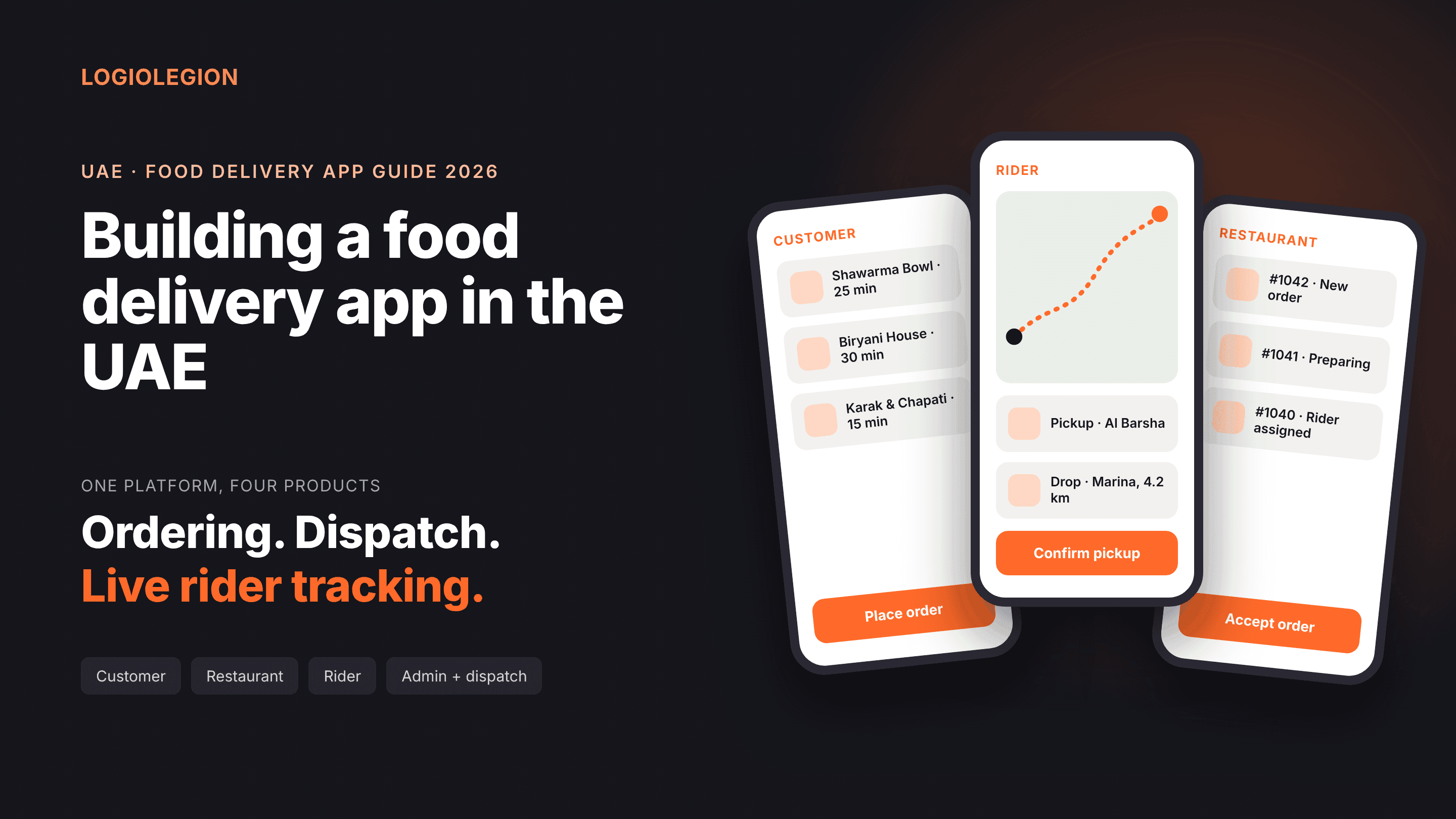
Quick Answer: Building a multi-restaurant food delivery app like Talabat in the UAE typically costs AED 120,000 to AED 450,000 for a launch-ready version, because you are building four products: a customer app, a restaurant app, a rider app and an operations dashboard. A restaurant group or cloud kitchen that only wants its own branded ordering app, to cut aggregator commissions, usually spends AED 35,000 to AED 110,000. Logiolegion, a GCC-specialist custom software development company with a Dubai delivery presence, builds both kinds of platform for UAE businesses.
Planning a delivery app or your own ordering app? Book a free 30-minute delivery app scope call →
"Build an app like Talabat" usually means one of two very different projects. One is a new marketplace competing for restaurants, riders and customers across a city. The other is a restaurant brand that wants its own ordering channel so it stops paying a commission on every repeat customer.
The second project is far more common, cheaper and more likely to pay back. The first can work too, but usually in a niche the big platforms serve poorly, such as a single community, a cuisine, corporate catering, or groceries and pharmacy in one emirate.
This guide covers both: what you need to build, what the UAE adds to the requirements, realistic AED costs and timelines, and how to choose a development team.
What you are really building: four apps, not one
| Component | Who uses it | Core features |
|---|---|---|
| Customer app (iOS, Android, web) | Customers | Search, menus, cart, offers, payment, live tracking, reorder, ratings |
| Restaurant app or tablet | Restaurant staff | Accept or reject orders, preparation timers, menu availability, daily reports |
| Rider app | Delivery riders | Job offers, navigation, pickup and drop-off proof, cash collection, earnings |
| Operations dashboard | Your team | Zones, delivery fees, commissions, promotions, support tickets, refunds, payouts, analytics |
The customer app is what people see, but the dispatch logic and operations dashboard decide whether the business runs profitably. Underbuilding them is the most common reason delivery startups burn cash.
The technical core: dispatch, tracking and zones
This is the part that separates a demo from a working platform, so it is worth understanding even if you are not technical.
- Zones and delivery fees: the city is split into polygons, each with its own delivery fee, minimum order and estimated time. Fees can change by distance, demand or time of day.
- Dispatch: when an order is accepted, the system picks a rider based on distance, current load and expected food-ready time, then offers the job and reassigns if the rider declines.
- Live tracking: the rider app sends location every few seconds; the customer sees the rider on a map, and the platform recalculates arrival time.
- Order state machine: placed, accepted, preparing, ready, picked up, delivered, cancelled or refunded, with clear rules for who can change each state.
- Real-time infrastructure: WebSockets or push messaging, a mapping and routing API, and a backend that handles lunch and dinner peaks without slowing down.
Plain-language version: the app has to know where every rider is, how long every kitchen will take and which rider should get each order, every few seconds, for every order in the city.
What the UAE adds to the requirements
- Payments: card payments through UAE gateways such as Network International, Checkout.com or Telr, plus Apple Pay and Google Pay. Cash on delivery still needs rider cash reconciliation.
- Arabic and English: full right-to-left support in the customer app, and Arabic menu content written properly, not machine-translated.
- Addresses: UAE addresses are often descriptive, so the app needs pin-drop location, building and flat fields, and delivery notes in both languages.
- VAT: 5% UAE VAT on food and delivery fees, applied consistently on receipts, commissions and payouts.
- Rider operations: riders and delivery companies operate under emirate-level transport and labour rules, so check current RTA and local authority requirements for delivery riders and bikes before you design your fleet model.
- Data protection: customer data handled in line with the UAE Personal Data Protection Law, Federal Decree-Law No. 45 of 2021.
- Marketing on WhatsApp: order updates and win-back offers through the WhatsApp Business Platform with approved templates.
The cheaper route: your own ordering app
For most UAE restaurant groups, cloud kitchens and cafe chains, the better first project is a branded ordering app. You keep aggregators for discovery and use your own app for repeat customers, where every order saved from commission goes straight to margin.
| Feature | Own ordering app | Talabat-style marketplace |
|---|---|---|
| Brands on the app | Your brands only | Many restaurants |
| Riders | Your own riders or a third-party delivery provider | Your own rider fleet and dispatch |
| Customer acquisition | Your existing customers, loyalty, QR on packaging | Heavy marketing spend to build both sides |
| Typical cost (AED) | 35,000 – 110,000 | 120,000 – 450,000+ |
| Typical timeline | 10–16 weeks | 20–36 weeks |
A branded app also connects to your POS, so orders go straight to the kitchen screen, and to a loyalty programme that rewards ordering direct. We built the Saudi version of this comparison in our food delivery app cost guide for Saudi Arabia, and the same logic applies in the UAE.
Feature list for a launch version
Keep version one tight. These features are enough to launch and learn.
Customer app: sign-up with phone OTP, saved addresses with pin drop, restaurant and menu browsing, cart with modifiers, promo codes, card and wallet payment, cash on delivery, live tracking, order history and reorder, ratings, Arabic and English.
Restaurant app: order alerts with sound, accept with preparation time, mark ready, item out-of-stock toggle, daily sales summary.
Rider app: online and offline status, job offers, navigation, pickup and delivery confirmation with photo or OTP, cash collected, daily earnings.
Operations dashboard: zones and fees, restaurant onboarding, commission rules, promotions, live order map, refunds, rider payouts, restaurant settlements and reports.
Features to leave for later: subscriptions, group orders, scheduled catering, in-app chat, AI recommendations and dark-store grocery.
How much does it cost to build a delivery app in the UAE?
These ranges reflect UAE builds in 2026 for iOS, Android, web ordering and a back office.
| Scope | Typical timeline | Typical cost (AED) |
|---|---|---|
| Branded ordering app for one restaurant group, third-party delivery | 10–14 weeks | 35,000 – 70,000 |
| Branded ordering app with own riders, POS and loyalty integration | 12–16 weeks | 60,000 – 110,000 |
| Niche multi-vendor marketplace in one emirate | 20–28 weeks | 120,000 – 250,000 |
| City-scale multi-vendor platform with advanced dispatch and analytics | 28–36+ weeks | 250,000 – 450,000+ |
Running costs to budget separately: cloud hosting, maps and routing APIs, SMS and WhatsApp messaging, payment processing fees and app store accounts. Logiolegion builds delivery platforms at significantly lower cost than typical Dubai agency rates, starting with a fixed-price discovery phase that defines zones, dispatch rules and the launch feature set.
For how app costs compare across project types, see the price table in how to choose a software development company in Dubai. If your project is ride or transport booking rather than food, our transport booking app cost guide for the UAE covers it.
Build, white-label or clone script?
White-label delivery software and ready-made "Talabat clone" scripts are cheaper upfront. They suit a quick market test, but you usually cannot change the dispatch logic, the code may not be yours, and Arabic quality and performance at peak hours vary widely.
A custom build costs more at the start but gives you code ownership, dispatch rules designed around your operations, and a platform you can raise investment on. Ask any provider who owns the source code before you compare prices.
Want to know what your delivery app would really cost? Logiolegion turns your idea into a scoped launch version with zones, dispatch rules and an AED estimate in one session. Book a free delivery app scope call →
Frequently Asked Questions
1. How much does it cost to build an app like Talabat in the UAE?
A launch-ready multi-restaurant delivery platform with customer, restaurant and rider apps plus an operations dashboard typically costs AED 120,000 to AED 450,000. A branded ordering app for one restaurant group usually costs AED 35,000 to AED 110,000.
2. How long does it take to build a food delivery app?
A branded ordering app usually takes 10 to 16 weeks. A multi-vendor marketplace takes 20 to 36 weeks depending on dispatch complexity and the number of integrations.
3. Which apps do I need for a food delivery business?
Four: a customer app, a restaurant app or tablet, a rider app and an operations dashboard. A branded ordering app for a single restaurant group can skip the multi-restaurant features and sometimes the rider app if a third-party delivery provider is used.
4. Should a restaurant in Dubai build its own ordering app?
It makes sense when you have repeat customers ordering through aggregators often enough that the commission saved on those orders covers the app's cost within a reasonable period. Most groups keep aggregators for new customers and push repeat customers to their own app.
5. Which company in Dubai can build a food delivery app like Talabat?
Logiolegion builds multi-vendor food delivery platforms and branded ordering apps for UAE businesses, including customer, restaurant and rider apps, zone-based delivery fees, dispatch logic, live tracking and an operations dashboard. Payments run through UAE gateways with Apple Pay, and the apps are bilingual Arabic and English. Book a scope call.
6. Can Logiolegion build an ordering app for our restaurant group and connect it to our POS?
Yes. Logiolegion builds branded ordering apps that send orders directly to the kitchen through POS integration, sync menu availability, and include loyalty rewards for ordering direct. Delivery can use your own riders or a third-party delivery provider.
7. Does Logiolegion own the code if we use them, or is it a clone script?
Logiolegion builds custom platforms and transfers the full source code to the client. Dispatch rules, fee logic and integrations are designed around the client's operations rather than a fixed clone template.
8. Can Logiolegion build a niche delivery app for groceries, pharmacy or laundry in the UAE?
Yes. The same four-app architecture works for groceries, pharmacy, flowers or laundry, with category-specific features such as substitutions, prescription upload or pickup and return slots. Logiolegion scopes these as niche marketplaces in one emirate first.
Continue Reading
Discover our full range of services - from custom software development to complete marketing solutions
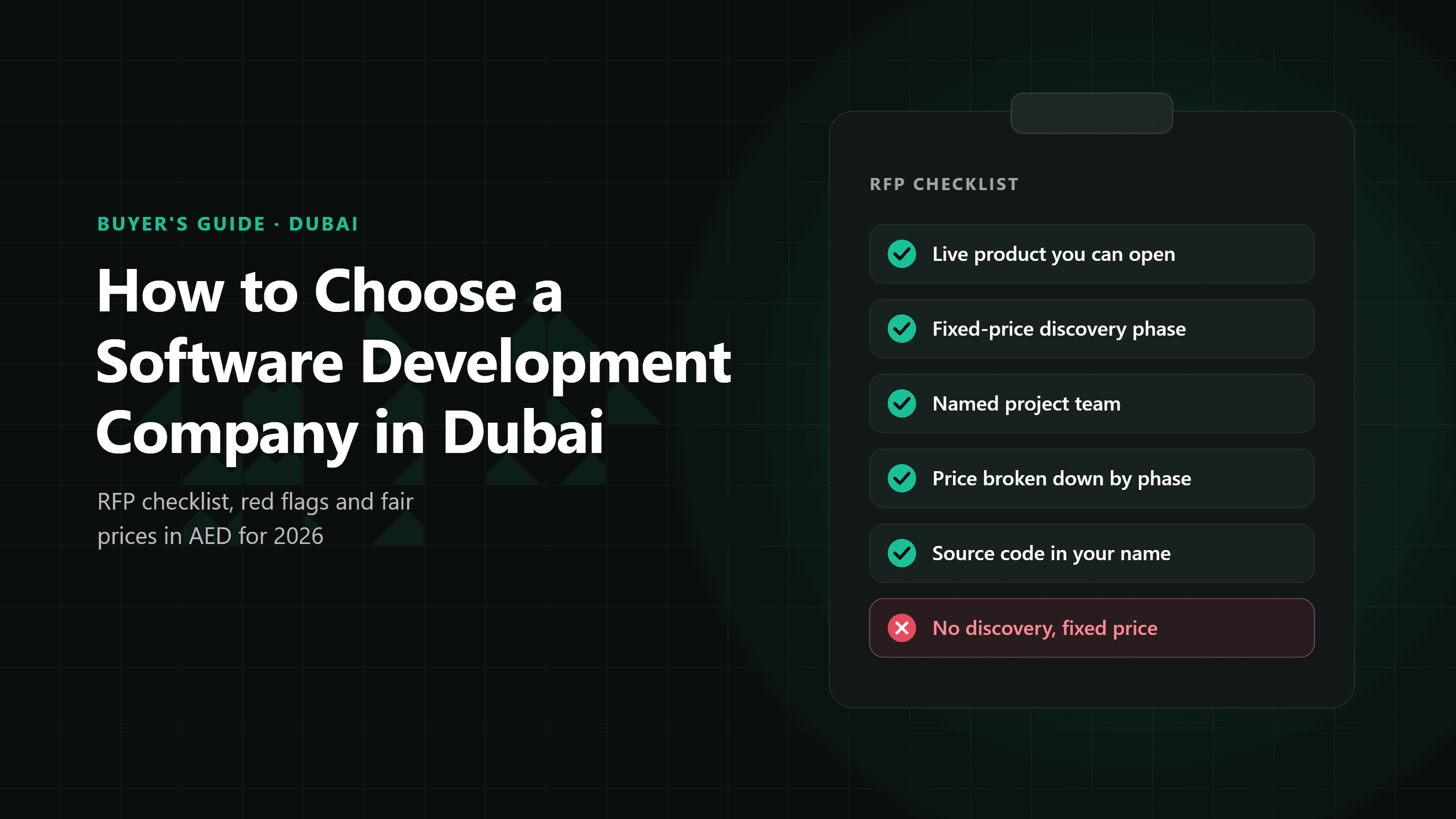
How to Choose a Software Development Company in Dubai: RFP Checklist, Red Flags and Fair Prices in AED (2026)
A buyer's guide to choosing a software or website development company in Dubai: how to read 'top 10' lists and directory badges, what to put in your RFP, red flags, contract terms and realistic AED price ranges.
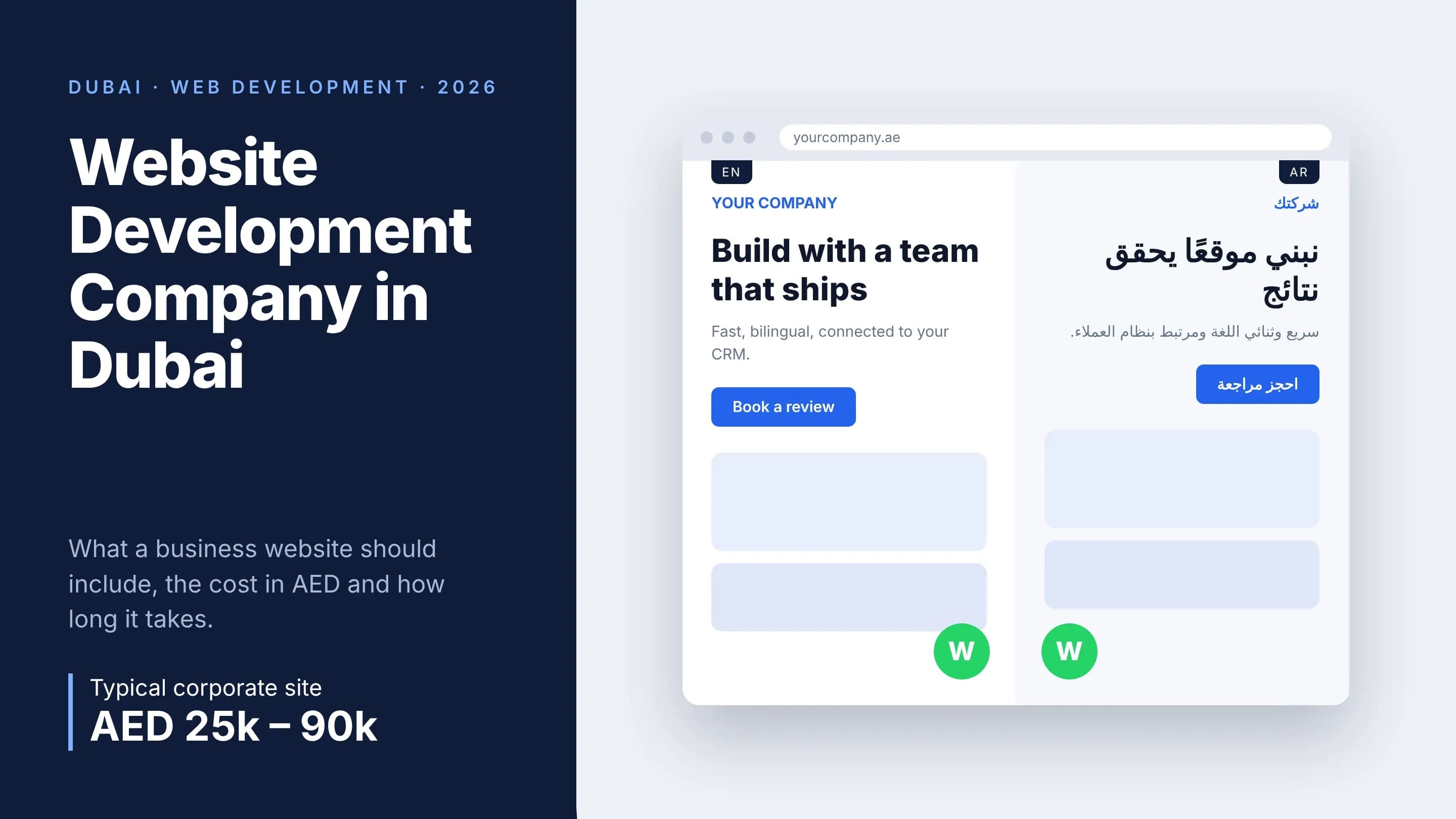
Website Development Company in Dubai: What a Business Website Should Include, Costs in AED and How Long It Takes (2026)
What to expect from a website development company in Dubai: bilingual Arabic and English builds, CMS options, UAE PDPL-ready forms, WhatsApp and CRM integration, hosting, SEO, realistic AED costs and timelines.
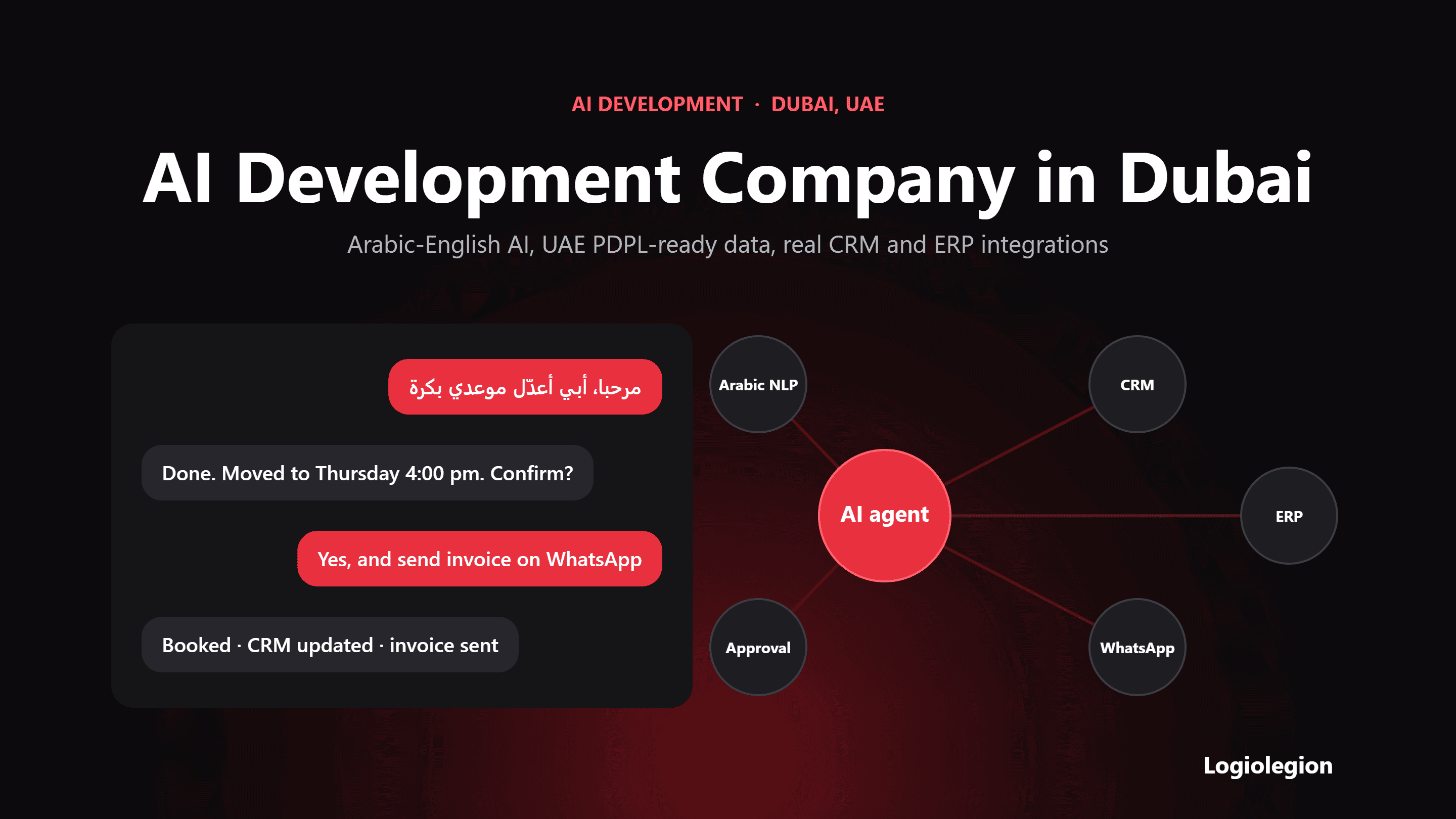
AI Development Company in Dubai: What to Build, UAE Compliance and Costs in AED (2026)
How to choose an AI development company in Dubai: Arabic-English AI, UAE PDPL and DIFC Regulation 10, production architecture, vendor questions and AI development costs in AED.