
17-09-2026
WhatsApp Business API Bot Development Saudi Arabia — Investor Alerts, Wealth Management Notifications, and SAMA-Compliant Fintech WhatsApp Automation (2026)
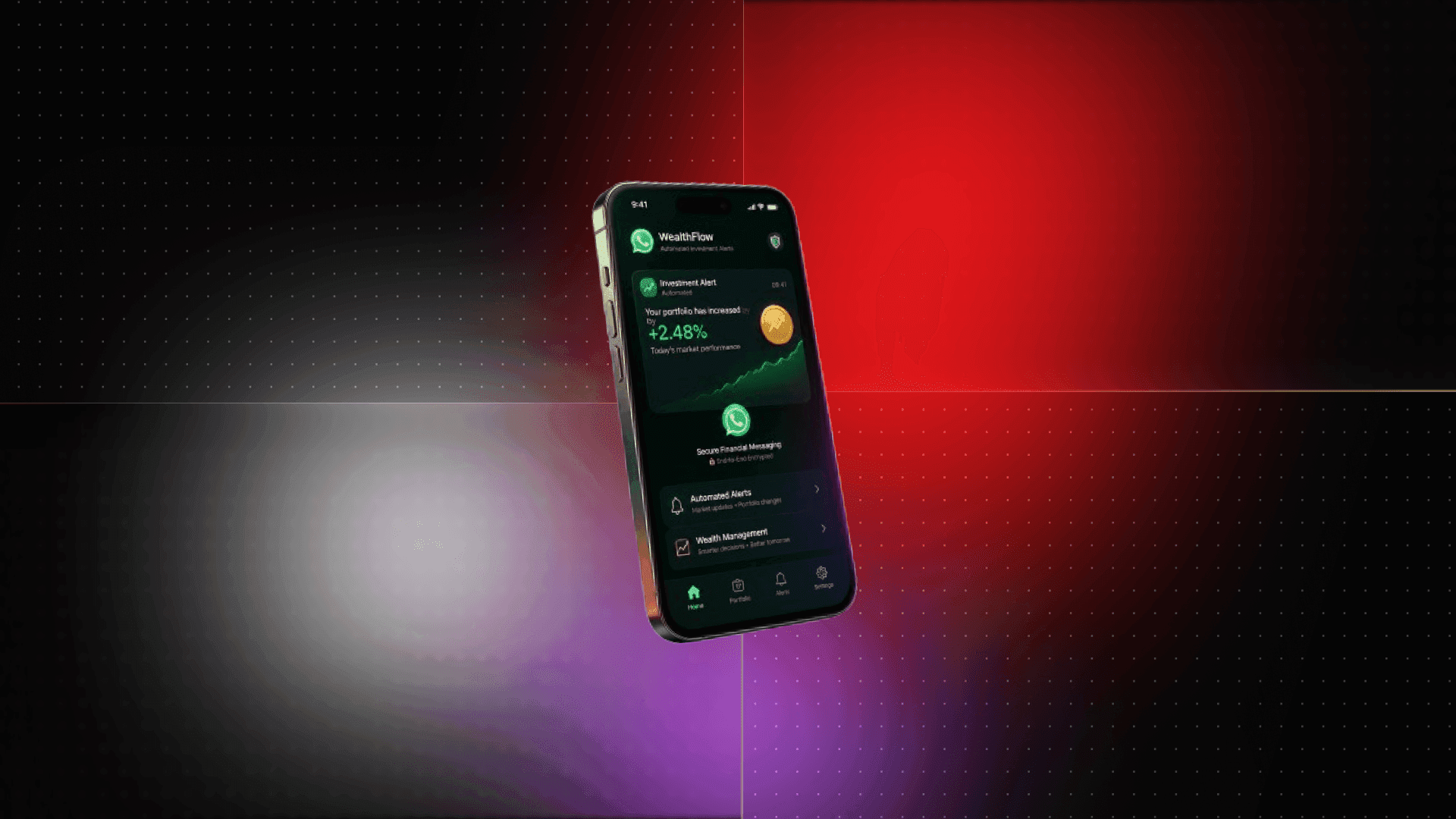
Quick Answer: WhatsApp Business API gives Saudi fintechs a programmatic channel for investor alerts, wealth management notifications, BNPL reminders, payment confirmations, and other customer communications. For SAMA-regulated financial services, the implementation needs Meta template approval, documented PDPL consent, SAMA Financial Consumer Protection controls, sensitive-data masking, audit logging, and secure authentication for account-specific requests.
Need WhatsApp automation for a Saudi financial platform? Logiolegion builds WhatsApp Business API integrations for fintech workflows including investor alerts, payment reminders, portfolio notifications, two-way conversations, consent management, and compliance-focused audit trails.
Saudi Arabia's 33 million WhatsApp users include retail investors tracking Tadawul positions, BNPL customers managing Tamara instalments, and Islamic fintech subscribers monitoring Murabaha financing schedules. Every one of these audiences already expects financial communications through digital channels, but a SAMA-regulated platform cannot simply connect a personal WhatsApp account to its backend. Building a compliant WhatsApp financial bot requires Meta template pre-approval for financial content, explicit PDPL consent, SAMA Financial Consumer Protection Framework controls, and NAFATH authentication for sensitive account queries before writing a single line of Node.js.
This article focuses specifically on WhatsApp Business API bot development for Saudi financial services. For broader WhatsApp chatbot architecture across Saudi retail, healthcare, real estate, and other sectors, see AI Chatbot Development Saudi Arabia.
WhatsApp Business API vs WhatsApp Personal — The Only Compliant Choice for Saudi Fintech
A Saudi fintech sending financial notifications at scale needs a programmatic WhatsApp channel connected to its backend systems.
That means using the WhatsApp Business API through Meta's Business Platform, rather than a personal WhatsApp account or the free WhatsApp Business App.
WhatsApp Personal
WhatsApp Personal is designed for individual conversations.
It does not provide the backend integration, programmatic messaging, template approval workflow, delivery webhooks, consent architecture, or audit trail required for a financial services notification system.
A fintech cannot treat a personal WhatsApp account as an API endpoint for investor alerts or payment automation.
WhatsApp Business App
The free WhatsApp Business App provides business-oriented messaging features for smaller operations, but it is still not the same thing as the WhatsApp Business API.
A Saudi financial platform that needs automated alerts triggered by events in a Node.js backend needs API-level integration rather than an employee manually sending messages from a phone.
WhatsApp Business API
The WhatsApp Business API provides the infrastructure required to connect financial application events with WhatsApp communications.
A typical setup includes:
- Meta Business verification
- WhatsApp Business Account (WABA) approval
- Business phone number configuration
- Message template submission
- Webhook integration
- Delivery and read receipts
- Customer opt-in and opt-out management
- Backend-triggered notifications
- Session messaging for customer-initiated conversations
- Audit logging
For SAMA-regulated firms, this architecture also needs to sit inside the institution's wider compliance and customer-protection framework.
The key distinction is simple: WhatsApp is the communication channel; the fintech backend remains the source of truth for financial events.
Meta Template Pre-Approval for Financial Content
Financial notifications cannot simply be generated as arbitrary WhatsApp messages whenever a backend event occurs.
Business-initiated WhatsApp communications use approved message templates.
For a Saudi fintech, this can include:
- Investor alerts
- Portfolio notifications
- Fund NAV updates
- Payment reminders
- Transaction confirmations
- Insurance renewal notices
- Trading alerts
- Wallet notifications
What Meta Approval Involves
A typical implementation starts with Meta Business verification and WhatsApp Business Account approval.
The fintech then submits message templates using the required structure, which can include:
- Header
- Body
- Footer
- CTA buttons
Financial-services templates are reviewed under Meta's financial-services messaging requirements.
A typical financial template review can take around 48–72 hours, so template planning should happen before the development team reaches the production messaging stage.
For SAMA-regulated financial communications, the templates should also contain the required institutional identification and applicable regulatory disclosure language.
Template Messages vs Session Messages
There are two important messaging modes.
Template messages are business-initiated communications sent to opted-in customers.
Examples include:
- "Your price alert has been triggered."
- "Your instalment is due in 3 days."
- "Your fund NAV has been updated."
- "Your transfer has been completed."
Session messages are customer-initiated conversations within the 24-hour customer-service session window.
For example, a customer receives an approved investment notification and replies:
"Show me more details."
The system can then handle that conversation through the session messaging workflow.
The distinction matters because a fintech should not treat free-form chatbot responses and proactive financial alerts as the same messaging mechanism.
PDPL Consent Architecture for WhatsApp Financial Alerts
Consent is a core part of the WhatsApp financial communication architecture.
A customer should know what types of financial messages they are agreeing to receive and should be able to control those categories rather than accepting one blanket communication permission.
Granular Financial Communication Consent
A fintech can separate consent categories such as:
- Portfolio alerts
- Trading notifications
- Payment reminders
- Transaction confirmations
- Promotional offers
- Product announcements
A customer could therefore accept portfolio alerts while declining promotional messages.
The consent system should record:
- Customer identifier
- Communication category
- Consent status
- Consent timestamp
- Consent version
- Source of consent
- Opt-out timestamp where applicable
This creates an auditable record of why a particular message was eligible to be sent.
WhatsApp STOP Unsubscription
Customers should also have a clear way to withdraw consent.
A compliant implementation can recognize a STOP keyword and immediately update the customer's subscription status for the relevant communication category.
The backend should then prevent subsequent messages that depend on the withdrawn consent.
The important part is that the opt-out is not merely acknowledged in the conversation; it must update the underlying consent record.
Consent Records on AWS Bahrain
For the architecture described in this implementation, customer WhatsApp consent records, opt-in preferences, and message logs are stored on AWS Bahrain (me-south-1).
This gives the fintech a centralized record of communication permissions and message history that can be used when reviewing PDPL and SAMA-related requirements.
Consent storage is one component of a broader PDPL architecture, so the complete deployment should also address access control, retention, security, data processing, and the organization's applicable privacy obligations.
SAMA Financial Consumer Protection Framework Obligations
WhatsApp automation for a SAMA-regulated institution is not only a technical integration.
The communication itself needs to meet financial consumer protection expectations.
SAMA's Financial Consumer Protection Framework (2022) governs electronic customer communications for SAMA-regulated entities.
For WhatsApp financial bots, the important operational considerations include:
Identify the Financial Institution
Every financial communication should clearly identify the institution sending it.
The customer should not have to guess whether a message came from their bank, investment platform, BNPL provider, insurer, or another financial service.
The sending identity should be consistent across the WhatsApp Business Account, approved templates, and customer-facing communications.
Disclose Automated Systems
If the customer is interacting with an automated system, the communication should make that clear.
A WhatsApp financial bot should not create the impression that the customer is speaking to a human investment advisor when the response is being generated by an automated system.
This distinction becomes particularly important when a customer asks questions involving financial products or account information.
Do Not Send Misleading Financial Information
Automated messages should not present financial information in a way that could mislead customers.
Template wording needs to be specific enough to explain what happened while avoiding claims that the underlying financial system cannot substantiate.
For investment notifications, the trigger and relevant context should come from the actual backend event rather than manually entered message content.
Retain WhatsApp Communications
WhatsApp conversations and notifications form part of the customer communication record.
The implementation therefore needs message logging, delivery receipts, timestamps, consent records, and relevant conversation history so the institution can retain communications for audit purposes.
A financial WhatsApp bot should be designed with auditability from the beginning rather than adding message logs after launch.
Sensitive Financial Data Rules — What Can and Cannot Go in a WhatsApp Message
WhatsApp can be a convenient notification channel, but it should not become a substitute for the secure financial application.
The safest architecture keeps sensitive account information inside the authenticated application and uses WhatsApp primarily to notify the customer that something has happened.
Do Not Send Full Account Numbers
Full account numbers should not appear in WhatsApp financial messages.
Use partial references such as the final four digits when identification is necessary.
Example:
"A transfer was completed from account ending 4821."
Instead of:
"A transfer was completed from account 1234567890123456."
Do Not Send Full Card Numbers, PINs, or Passwords
Never include:
- Full card numbers
- PINs
- Passwords
- Authentication secrets
- Security credentials
These belong inside secure financial systems rather than a WhatsApp message.
Avoid Balance Details in Templates
A notification can tell the customer that their balance has changed without exposing the actual balance.
For example:
"Your account balance has been updated. [View in App]"
is preferable to placing the exact account balance inside a proactive WhatsApp template.
Portfolio Values Need Granular Consent
Investment customers may want portfolio information through WhatsApp.
Portfolio values can be included only where the customer has explicitly consented to that communication category and the implementation satisfies the institution's applicable requirements.
A safer pattern is to provide a notification and send the customer to the authenticated investment application for detailed holdings.
Use Secure Deep Links
The WhatsApp message can contain a CTA that opens the secure financial application.
The flow becomes:
WhatsApp notification → secure app deep link → authentication → sensitive financial data
This keeps detailed portfolio, account, and transaction information inside the institution's controlled application environment.
The 8 Saudi Fintech WhatsApp Automation Use Cases
WhatsApp Business API can sit on top of multiple financial workflows.
The backend event triggers the communication, while Meta handles delivery through the approved WhatsApp Business channel.
1. Tadawul Stock Alerts
Saudi retail investors can use WhatsApp to receive notifications when a tracked Tadawul security reaches a defined condition.
Common triggers include:
- Price target reached
- Stop-loss level approached
- Earnings announcement
- Dividend record date
- Corporate announcement reminder
A stock alert can identify the ticker, explain the trigger, and direct the customer to the trading application.
Template example:
"Your price alert for {{1}} ({{2}}) has been triggered. Current price: SAR {{3}}. [View in App]"
The underlying stock-price event should originate from the investment platform's market-data and rule engine rather than being manually generated by the WhatsApp system.
2. Mutual Fund and ETF Daily NAV Notifications
Investment platforms can use WhatsApp for opted-in fund and ETF notifications.
A daily NAV notification could contain:
- Fund name
- NAV per unit
- Daily change
- YTD return
A weekly summary can provide a broader overview such as:
- Portfolio value
- Asset allocation
- Top performers
Customers should be able to choose which funds or notification categories they want to receive.
Template example:
"{{1}} NAV has been updated to SAR {{2}}, with a daily change of {{3}}%. [View Fund]"
Portfolio-level notifications should remain consent-controlled, particularly where customer-specific values are involved.
3. BNPL Payment Reminders
BNPL providers can use WhatsApp to automate payment reminders around upcoming instalments.
A typical sequence could include:
- 7-day reminder
- 3-day reminder
- Due-date reminder
- Missed-payment alert
- Successful payment confirmation
The message should be generated from the BNPL platform's payment schedule rather than maintained manually by customer-service teams.
Template example:
"Your instalment of SAR {{1}} for {{2}} is due on {{3}}. Pay now to avoid late fees. [Pay Now]"
The payment CTA should take the customer to the secure payment environment rather than asking them to provide payment credentials through WhatsApp.
4. SARIE Real-Time Transfer Confirmations
SARIE enables real-time SAR transfers between participating financial institutions.
A WhatsApp notification can be triggered after the backend confirms a completed transfer.
The notification can include:
- Sender information
- Amount
- Recipient partial name
- SARIE reference number
- Timestamp
Template example:
"Your SARIE transfer of SAR {{1}} to {{2}} was completed. Reference: {{3}}. [View Details]"
Sensitive account identifiers should remain masked.
The WhatsApp message is a confirmation channel; the underlying transaction status should always come from the financial institution's transaction system.
5. Islamic Fintech Notifications
Islamic financial products require communications that reflect the terminology and structure of the underlying product.
Saudi Islamic fintech platforms can use WhatsApp for notifications related to:
- Murabaha financing
- Sukuk investments
- Takaful insurance
- Islamic investment products
Terminology should match the product's approved Sharia structure.
For example, a communication may refer to a profit rate rather than an interest rate and a Murabaha instalment rather than a conventional loan payment.
Arabic templates should be prepared alongside English templates for Saudi customer communications.
Template example:
"Your Murabaha instalment of SAR {{1}} is scheduled for {{2}}. [View Schedule]"
The exact wording should be reviewed against the institution's product documentation and Sharia governance requirements.
6. Wallet Balance and Transaction Alerts
Digital wallets can use WhatsApp for event-driven notifications.
Possible triggers include:
- Low-balance alerts
- Top-up confirmation
- Outgoing transfer
- Incoming transfer
- Transaction confirmation
Template example:
"Your wallet ending {{1}} received a top-up of SAR {{2}}. [View Wallet]"
A low-balance alert can notify the customer when their balance falls below a selected threshold without exposing unnecessary account information.
WhatsApp can therefore supplement existing SMS and in-app notifications while keeping sensitive information inside the wallet application.
7. Insurance Renewal Reminders
Saudi insurance providers can use WhatsApp automation to manage renewal communications.
A typical sequence can include:
- 60-day reminder
- 30-day reminder
- 15-day reminder
- Policy expiry notification
- Renewal confirmation
- Certificate delivery
Where supported by the messaging implementation, documents such as a renewed insurance certificate can also be delivered through WhatsApp document messaging.
Template example:
"Your {{1}} insurance policy expires on {{2}}. Renew before the expiry date to maintain coverage. [Renew Policy]"
The policy data should come directly from the insurer's policy-management system.
8. SAMA Open Banking Portfolio Aggregation Alerts
Financial platforms using SAMA Open Banking Account Information Services can aggregate permitted account information from connected financial institutions.
WhatsApp can then act as a notification layer for high-level portfolio changes.
For example:
"Your savings across connected banks changed by SAR {{1}} this week. [View Portfolio]"
The notification does not need to expose each individual account or transaction.
Open Banking consent and PDPL consent should be handled as separate permission layers where applicable.
The backend should verify the customer's authorization before generating an aggregated financial notification.
Technical Architecture — Node.js, Meta Cloud API, NAFATH, and AWS Bahrain
A Saudi fintech WhatsApp bot should be treated as an event-driven communication layer connected to the financial platform's existing systems.
The WhatsApp API should not become the system that decides whether a financial event actually happened.
The financial backend remains the source of truth.
Core Architecture
A typical stack can include:
- Node.js — API and notification orchestration
- Meta Cloud API — WhatsApp Business API integration
- Webhooks — Incoming messages and delivery receipts
- Rule engine — Determines when an alert should be generated
- Consent engine — Verifies customer communication permissions
- Template dispatcher — Selects and personalizes approved templates
- NAFATH — Authentication for sensitive account queries
- AWS Bahrain (me-south-1) — Consent and communication records
- Audit log — Message, consent, delivery, and relevant communication history
Event-to-Message Flow
The implementation can follow this sequence:
Event trigger
↓
Stock price reaches alert → payment becomes due → NAV changes → transfer completes
↓
Backend rule engine
Determines whether the event meets the customer's configured notification conditions.
↓
Customer opt-in check
The system verifies that the customer has opted into the relevant WhatsApp communication category.
↓
PDPL consent verification
The consent engine checks the recorded consent status, timestamp, version, and communication category.
↓
Template selection
The system selects the approved Meta template associated with that event.
↓
Personalization
Variables such as ticker, payment date, amount, reference number, or fund name are inserted according to the approved template structure.
↓
Meta Cloud API
Node.js sends the approved template through the WhatsApp Business API.
↓
Delivery webhook
Meta returns delivery and read status through the webhook.
↓
Audit record
The system stores the relevant communication, delivery status, consent state, and timestamp for the institution's audit trail.
This separation is important because the system should be able to demonstrate not only what message was sent, but also why it was allowed to be sent.
Two-Way WhatsApp Conversations
The architecture changes slightly when the customer replies to a notification.
For example:
Customer: "Why did my payment fail?"
The Meta webhook sends the incoming message to the Node.js session handler.
The session handler can route the question to:
- A predefined financial workflow
- A customer-service system
- An AI assistant
- A human agent
For general questions, an AI model such as GPT-4 or Claude can provide a response using the fintech's approved knowledge base.
For account-specific questions, the system should authenticate the customer before returning sensitive financial information.
NAFATH Authentication for Sensitive Queries
A customer could ask:
"What is my current investment balance?"
The chatbot should not simply retrieve the balance based on the WhatsApp phone number.
Instead, the workflow can require NAFATH authentication before accessing protected account information.
The resulting architecture becomes:
WhatsApp → Node.js session handler → authentication request → NAFATH → authenticated account request → secure backend → response
This keeps the WhatsApp conversation separate from the authorization required to access sensitive financial data.
AWS Bahrain and Financial WhatsApp Audit Records
For the described Saudi fintech architecture, AWS Bahrain (me-south-1) can host the communication records associated with the WhatsApp integration.
The stored information can include:
- Customer communication preferences
- Consent timestamps
- Consent versions
- Opt-in categories
- Opt-out events
- Message identifiers
- Template identifiers
- Delivery status
- Read status
- Communication timestamps
- Relevant audit records
Access should be controlled through appropriate permissions and the organization's security architecture.
The WhatsApp integration should also have retention rules so communication records are kept according to the institution's applicable regulatory and operational requirements.
Security Considerations for a Saudi Fintech WhatsApp Bot
WhatsApp should be treated as an external communication channel rather than the secure financial system itself.
The backend should therefore enforce clear boundaries around what information can leave the institution's systems.
Important controls include:
- No passwords in WhatsApp
- No PINs in WhatsApp
- No full card numbers
- No full account numbers
- Partial account masking
- Consent verification before proactive messages
- Template-only business-initiated financial messages
- Secure deep links for detailed financial information
- NAFATH authentication for sensitive account queries
- Delivery and communication logging
- Role-based access to audit records
- Secure webhook handling
- API authentication and secrets management
For the wider Saudi financial application security layer, see NCA ECC and VAPT Saudi Arabia.
WhatsApp Fintech Bot Development Pricing in Saudi Arabia
The cost depends on how many financial workflows need to be automated and whether the platform requires two-way conversations, authentication, compliance logging, and multiple integrations.
WhatsApp API Integration — Single Use Case
SAR 30,000–60,000 | 4–8 weeks
Suitable for a focused implementation such as:
- BNPL reminders
- Investor alerts
- Fund NAV notifications
- Template setup
- Consent management
- Delivery tracking
- Basic audit logging
The exact scope depends on the financial system that supplies the underlying events.
Full Fintech WhatsApp Automation Platform
SAR 80,000–200,000 | 10–18 weeks
Suitable for platforms requiring multiple financial communication workflows.
A broader implementation can include:
- Multiple WhatsApp notification categories
- Two-way chatbot
- NAFATH authentication
- PDPL consent engine
- Meta template management
- SAMA-focused audit logging
- AWS Bahrain architecture
- Delivery and read tracking
- Financial backend integrations
- Human-agent escalation
- Multiple customer communication journeys
Startup and MVP pricing is also available where the initial release focuses on a smaller number of financial use cases.
Contact Logiolegion for a scoped proposal based on your fintech's integrations, notification volume, compliance requirements, and required WhatsApp workflows.
Why Logiolegion for WhatsApp Fintech Bot Development Saudi Arabia
Financial WhatsApp automation sits at the intersection of backend engineering, customer communication, identity verification, privacy, and financial compliance.
Logiolegion approaches the implementation as a financial software integration rather than simply connecting a WhatsApp number to a chatbot.
The team has published technical coverage around:
- SAMA-compliant fintech software development
- SAMA Open Banking sandbox development
- SAMA FAPI and financial API architecture
- NCA ECC and VAPT requirements
- ZATCA Fatoorah API integration
The WhatsApp architecture can use Node.js, Meta Cloud API webhooks, consent management, AWS Bahrain storage, and NAFATH authentication for protected customer queries.
For a fintech already operating a backend platform, the work can focus on integrating WhatsApp into existing event, customer, authentication, and compliance systems rather than rebuilding the financial application.
Explore Logiolegion or contact us to scope a Saudi fintech WhatsApp Business API implementation.
Frequently Asked Questions
1. What is WhatsApp Business API?
WhatsApp Business API is Meta's programmatic platform for connecting WhatsApp messaging with business software and backend systems. It allows businesses to send approved template messages, receive webhooks, track delivery, and manage customer-initiated sessions. For financial services, it provides the technical foundation for automated alerts, reminders, confirmations, and two-way customer conversations.
2. Can SAMA-regulated firms use WhatsApp for financial alerts?
Yes, SAMA-regulated firms can use WhatsApp as a financial communication channel when the implementation satisfies applicable regulatory, privacy, customer-protection, and Meta requirements. The architecture needs controls around customer consent, institutional identification, automated-system disclosure, sensitive-data handling, and communication retention. Financial institutions should also review the specific requirements applicable to their licensed activities.
3. What PDPL consent is required for WhatsApp financial notifications?
Financial WhatsApp communications should use documented customer consent appropriate to the communication category. A consent architecture can distinguish portfolio alerts, payment reminders, trading notifications, and promotional messages, while recording the consent timestamp and version. Customers should also be able to withdraw consent, with mechanisms such as a STOP keyword updating the underlying subscription record.
4. What is the difference between WhatsApp template and session messages?
Template messages are pre-approved messages used when the business initiates a WhatsApp communication, such as an investor alert or BNPL reminder. Session messages are free-form customer-initiated messages exchanged within the applicable 24-hour customer-service window. A fintech should therefore design proactive financial notifications around approved templates and use session messaging for customer replies and conversations.
5. I'm building a WhatsApp fintech bot in Saudi Arabia. What does Logiolegion actually integrate?
Logiolegion can integrate Meta Cloud API with a Node.js financial backend, webhook receiver, consent engine, template dispatcher, delivery tracking, and audit logging. For sensitive account queries, the architecture can add NAFATH authentication before protected account data is retrieved. Communication and consent records can be structured for storage on AWS Bahrain.
6. I want investor alerts on WhatsApp for Tadawul stocks. Can Logiolegion build that?
Yes. Logiolegion can connect Tadawul-related price or market events from an investment platform's backend to approved WhatsApp templates. The notification workflow can check customer opt-in status, evaluate the alert condition, populate the approved template, and send it through Meta Cloud API. Contact Logiolegion to scope the market-data, alert-rule, and WhatsApp integration requirements.
7. Can Logiolegion build WhatsApp BNPL reminders for Saudi fintechs?
Yes. Logiolegion can build a BNPL notification workflow around payment schedules, consent management, Meta templates, delivery tracking, and payment deep links. The system can support sequences such as 7-day, 3-day, due-date, missed-payment, and payment-confirmation messages. The financial backend remains the source of truth for instalment status while WhatsApp acts as the customer communication layer.
8. How much does WhatsApp Business API bot development cost in Saudi Arabia?
Logiolegion scopes a single-use-case WhatsApp API integration at approximately SAR 30,000–60,000 over 4–8 weeks. A broader fintech WhatsApp automation platform with multiple use cases, two-way chatbot functionality, NAFATH authentication, PDPL consent management, SAMA-focused audit logging, and AWS Bahrain architecture can range from SAR 80,000–200,000 over 10–18 weeks. Contact Logiolegion for a scope-based proposal.
9. Can Logiolegion build a PDPL consent engine for WhatsApp financial alerts?
Yes. Logiolegion can implement a consent engine that stores communication categories, opt-in status, timestamps, consent versions, and opt-out events. The Node.js messaging layer can check the relevant consent record before selecting and dispatching a Meta-approved template. Consent and communication records can be stored on AWS Bahrain within the described architecture.
10. Can Logiolegion use NAFATH before showing sensitive financial information on WhatsApp?
Yes. Logiolegion can design the two-way WhatsApp workflow so account-specific requests trigger authentication before protected financial information is returned. A typical architecture routes the WhatsApp session through Node.js, initiates NAFATH authentication, verifies the customer, and then retrieves permitted information from the secure financial backend. This avoids treating possession of a WhatsApp phone number as sufficient authorization for sensitive account data.
11. Can Logiolegion connect WhatsApp to SARIE, Tadawul, and BNPL systems?
Logiolegion can build the integration layer that receives events from financial systems and routes eligible notifications through Meta Cloud API. This can cover workflows such as SARIE transfer confirmations, Tadawul price alerts, fund NAV notifications, and BNPL payment reminders. Each workflow can apply its own consent category, approved template, masking rules, and audit requirements.
12. How does Logiolegion handle SAMA compliance for a fintech WhatsApp bot?
Logiolegion can design the WhatsApp architecture around SAMA Financial Consumer Protection considerations such as clear institutional identification, automated-system disclosure, non-misleading financial communications, and communication retention. The implementation can also include consent verification, template approval workflows, sensitive-data masking, NAFATH authentication, and AWS Bahrain audit records. Review Logiolegion's SAMA-compliant fintech software guide for the wider financial software architecture.
Final Thoughts
WhatsApp can become a powerful customer communication channel for Saudi fintechs, but a financial WhatsApp bot is not simply a chatbot connected to a phone number.
The production architecture needs to connect financial events with Meta-approved templates, customer consent, sensitive-data controls, authentication, delivery tracking, and retained communication records.
For investor alerts, wealth management notifications, Tadawul triggers, fund NAV updates, BNPL reminders, SARIE confirmations, wallet notifications, insurance renewals, and Open Banking alerts, the same underlying principle applies: the financial backend determines what happened, the consent engine determines whether the customer can be contacted, and WhatsApp delivers the approved communication.
For sensitive account questions, authentication such as NAFATH can provide an additional authorization layer before protected information is retrieved.
Contact Logiolegion to discuss a WhatsApp Business API implementation for your Saudi fintech, investment platform, wealth management product, BNPL operation, or other regulated financial service.
Continue Reading
Discover our full range of services - from custom software development to complete marketing solutions
AI Chatbot Development Saudi Arabia 2026 — WhatsApp Business API, Arabic NLP, PDPL Compliance, and Custom Chatbot Builds for Saudi Enterprises
How AI chatbots work in Saudi Arabia with WhatsApp Business API, Najdi and Hijazi NLP, PDPL controls, NAFATH, ZATCA, and Mada payments.

How to Build a Saudi SME Digital Lending Platform: MSME Financing, Lendo API, and SAMA Sandbox for Alternative Credit
Discover how to build a Saudi SME digital lending platform with Open Banking, alternative credit scoring, Nafath KYC, SAMA Sandbox compliance, and Lendo-style financing workflows.

Halqa: The Complete Guide to Islamic Savings-Circle Infrastructure for Banks and Fintechs
Halqa provides Islamic savings-circle infrastructure for banks and fintechs with a ROSCA engine, Arabic SDK, KYC, AML, AAOIFI audit trails, and GCC payment rails.
How to Integrate BNPL into E-Commerce Checkout in Saudi Arabia — Tamara, Tabby, and SAMA Compliance Guide (2026)
Learn how to integrate Tamara and Tabby into a Saudi e-commerce checkout with API architecture, SAMA compliance, ZATCA Phase 2 invoicing, PDPL considerations, Arabic RTL UX, and best practices for maximizing checkout conversion in 2026.

Payment Gateway Integration Saudi Arabia — Developer Guide to Mada, HyperPay, Moyasar, Apple Pay, STC Pay, and BNPL (2026)
Building payment integrations for Saudi Arabia requires far more than connecting a gateway SDK. This developer guide explains Mada routing, SAMA-licensed gateways, Apple Pay behaviour, STC Pay, BNPL implementation, webhook architecture, and ZATCA integration so you can build production-ready Saudi payment systems that match local consumer expectations.