
29-07-2026
Property Management Software Saudi Arabia — Ejar Tenancy Management, SADAD Rent Collection, Maintenance Workflows, and ZATCA on Property Management Fees for Saudi PMCs (2026)

A Property Management Company managing 500 units generates hundreds of operational events every month: Ejar registrations and renewals, SADAD payment confirmations, maintenance requests, contractor work orders, Smart Rental Index validations, ZATCA management fee invoices, portfolio reports, and REGA compliance reviews.
Managing those processes through spreadsheets, PDFs, and WhatsApp conversations creates unnecessary operational risk. A custom Saudi property management platform transforms those disconnected activities into one integrated workflow that scales with your portfolio while maintaining regulatory compliance.
Logiolegion builds custom property management software for Saudi Arabia — designed around Ejar, SADAD, REGA, the Smart Rental Index, and ZATCA from the first line of code.
Ejar Tenancy Management — Automating Saudi Arabia's Mandatory Registration Platform
Ejar is the Ministry of Justice tenancy registration platform. Every legally valid rental contract in Saudi Arabia must be registered through Ejar. Ejar has processed over 10 million contracts since launch at approximately 19,000 new contracts per day. For a property management company handling hundreds of units, manual Ejar registration takes 15–20 minutes per contract and creates consistent compliance exposure when renewals are missed.
Automated Ejar integration in a property management platform covers tenant onboarding — NID or Iqama validation, property registry number verification — contract submission, reference number storage, renewal pipeline alerts at 90, 60, and 30 days before expiry, and Najiz documentation preparation for enforcement scenarios.
For the full technical implementation of Ejar APIs, authentication, and property management compliance architecture, see our Ejar API Integration Saudi Arabia guide.
SADAD Rent Collection — Automating Payment Confirmation and Arrears Management
SADAD is the Saudi Payments billing platform used for rent collection. Tenants pay through their banking application using SADAD biller code 153, directly linked to the Ejar contract. When payment is confirmed, the property management system receives a webhook, updates the tenant ledger instantly, stops reminder notifications, and generates a receipt — no manual reconciliation.
For late payments, the PMS escalates automatically: WhatsApp reminder at day 1, formal notice at day 7, REGA compliance flag at day 15, and Najiz enforcement documentation package at day 30. Post-dated cheques (PDCs) are tracked in parallel for landlords who still accept them — PDC presentation dates, clearance confirmation, and bounced cheque alerts all sit alongside SADAD in the same ledger.
The rent collection difference between a manual PMC operation and an automated one is approximately 15–20 hours of finance staff time per week for a 500-unit portfolio.
Maintenance Workflow Management — From Tenant Request to Contractor Invoice
The maintenance workflow is where manual property management breaks down fastest. A 500-unit portfolio generates hundreds of requests per month across plumbing, electrical, HVAC, and common area issues — the majority arriving via WhatsApp across multiple numbers.
A structured maintenance module gives tenants an Arabic-first app to submit requests with photos, priority, and preferred visit time. The request appears on the property manager's dashboard immediately and routes to an approved contractor from a vetted database. Every contractor's GOSI registration, Iqama validity, trade licence, and insurance certificate is monitored with automatic expiry alerts.
The work order progresses through defined stages — assigned, accepted, in progress, completed, tenant confirmed, invoice validated, payment approved — with timestamps at every step. ZATCA compliance at this stage: contractor invoices must be ZATCA-compliant before payment approval. The PMS validates the invoice before authorising the payment.
Smart Rental Index Compliance — Renewal Pricing Within REGA Guidelines
Rent cannot increase during an active Ejar contract. At renewal, the Smart Rental Index (SRI), maintained by REGA, determines the permitted range based on property location, type, size, and market comparables. A property management system queries the SRI before generating any renewal proposal — if the proposed rent exceeds the SRI maximum, the system flags a compliance warning before the landlord or tenant sees the number.
Beyond compliance, the SRI is a negotiation tool. The PMS models three scenarios — keep rent flat, increase to SRI midpoint, increase to SRI maximum — and shows the projected annual income impact to the landlord before the renewal discussion begins.
ZATCA Compliance for Property Management Companies
Managing rent collection is only one side of Saudi property operations. Many Saudi Property Management Companies correctly manage Ejar contracts and collect rent through SADAD, yet continue issuing management fee invoices as ordinary PDFs generated from Word or Excel. That creates an immediate compliance risk.
Management fees are commercial services provided by the PMC to the property owner. Those fees require proper ZATCA B2B clearance invoices.
Residential Rent vs Management Fees
Residential rent is generally VAT exempt. The PMS records rent received, payment date, tenant, property, and owner allocation — no VAT invoice is generated for the residential rental income itself.
The PMC earns a management fee of typically 5–10% of collected annual rent. Unlike residential rent, this fee is a taxable commercial service. The PMS automatically calculates the management fee, applies VAT, prepares the ZATCA B2B invoice, submits it for Fatoorah clearance, stores the cleared invoice, and delivers it to the property owner.
For the technical architecture behind Saudi electronic invoicing, refer to our ZATCA Fatoorah API Integration Guide.
Commercial Property Requires Additional VAT Tracking
Commercial rent is generally subject to 15% VAT. The PMS separates commercial rent, residential rent, management fees, maintenance recoveries, and service charges — ensuring every transaction follows the correct VAT treatment. Finance teams spend significantly less time correcting month-end reports.
REGA Compliance Monitoring Across the Entire Portfolio
Running hundreds of properties means compliance problems often go unnoticed until they become serious. A property management platform should continuously monitor portfolio health — active Ejar contracts, contracts expiring within 90 days, expired contracts, properties without Ejar registration, Smart Rental Index exceptions, outstanding maintenance, rent arrears, and REGA licence status.
Licence Management
Property Management Companies operate under REGA licensing requirements. The PMS tracks company licence expiry, individual broker licences, renewal reminders, education requirements, and compliance documentation. Automatic reminders reduce the likelihood of operating with expired credentials.
Portfolio Risk Dashboard
Large portfolios may contain thousands of active leases. Typical dashboard indicators include units without tenants, units without active Ejar contracts, overdue rent, lease renewals approaching, maintenance backlog, contractor response times, occupancy rate, average vacancy period, revenue collected, and collection ratio. Instead of reviewing multiple spreadsheets every morning, management begins with one operational dashboard.
Najiz Enforcement Documentation
A properly documented Ejar contract becomes an executive bond under Saudi law. If a tenant defaults on rent for 30 days, the landlord can pursue payment enforcement through Najiz in 5 working days and eviction in 30 days — without lengthy litigation. The property management system generates the complete Najiz documentation package automatically: Ejar contract reference, payment history, outstanding balance, reminder log, and supporting communications. The enforcement file is ready the moment the escalation threshold is crossed.
Custom PMS vs Sakani Pro
Saudi Arabia already has specialised SaaS platforms such as Sakani Pro. For many smaller portfolios, subscription software may be appropriate. However, larger Property Management Companies frequently outgrow subscription platforms.
Sakani Pro (estimated market pricing): SAR 30–60 per unit each month. A portfolio managing 500 units typically pays SAR 15,000–30,000 monthly — SAR 540,000–1,080,000 over three years. The software remains subscription based. Custom commission structures, institutional reporting, Aramco housing workflows, and unique operational processes remain limited by the SaaS platform.
Sakani Pro pricing based on publicly reported market ranges. Contact Sakani Pro directly for official pricing.
Custom Logiolegion Property Management Platform: For a similar portfolio, a custom platform generally ranges between SAR 200,000–380,000. The organisation receives full ownership, unlimited users, no per-unit subscription fees, custom workflow automation, tailored reporting, integration with existing business systems, and future expansion without recurring licence increases. Depending on portfolio size, many PMCs recover the investment within approximately 14–24 months.
Pricing for Custom Property Management Software Saudi Arabia
Small Property Management Companies (50–200 Units)
Ejar tenancy management, SADAD rent tracking, WhatsApp reminders, maintenance requests, basic contractor management, Arabic landlord portal, tenant portal, REGA licence tracking, ZATCA management fee invoicing.
SAR 80,000–160,000 | 10–16 weeks
Mid-Size Property Management Companies (200–1,000 Units)
All above plus Smart Rental Index integration, lease renewal automation, preventive maintenance scheduling, contractor credential monitoring, portfolio occupancy analytics, commercial vs residential VAT workflows, PDPL tenant data controls.
SAR 160,000–320,000 | 16–26 weeks
Enterprise Property Managers and REITs (1,000+ Units)
Multi-owner portfolio structures, REIT reporting, advanced analytics, revenue per square metre, district performance reporting, Najiz documentation automation, Aramco housing compound workflows, executive dashboards, enterprise integrations.
SAR 320,000–650,000 | 24–36 weeks
Why Logiolegion for Property Management Software in Saudi Arabia
Logiolegion is a GCC-specialist custom software development company with a Dubai delivery presence across Saudi Arabia and the GCC.
Rather than building generic real estate software, Logiolegion has developed an entire Saudi PropTech knowledge base covering every major regulatory integration required by modern brokerages, developers, Property Management Companies, and institutional landlords.
Our published Saudi real estate ecosystem includes:
- Ejar API Integration — automated tenancy registration and contract lifecycle management
- Wafi API Integration — off-plan project management and developer workflows
- AQAR and REGA CRM Architecture — lead generation, broker pipelines, and property sales workflows
- Commercial Real Estate Software — enterprise leasing, commercial portfolios, and institutional property management
- ZATCA Fatoorah Integration — automated tax-compliant invoicing
- Saudi HR and Payroll Software — GOSI, Mudad WPS, Nitaqat compliance for facility management teams
- Property Listing Website Saudi Arabia — the consumer-facing portal that generates tenancies the PMS then manages
- Custom Software Development Saudi Arabia — the broader Saudi custom software ecosystem Tech stack: React Native for Arabic-first tenant mobile application (maintenance requests, rent payment confirmation, lease document downloads, WhatsApp communication); React for operational dashboards (portfolio management, occupancy reporting, arrears dashboards, maintenance boards, landlord portal, executive reporting); Node.js for high-frequency integrations (SADAD payment webhooks, Ejar synchronisation, WhatsApp messaging, ZATCA invoice submission, AQAR synchronisation); Laravel for business logic (lease lifecycle, Smart Rental Index validation, maintenance workflows, contractor management, portfolio reporting, commission calculations, PDPL tenant data controls); AWS Bahrain for all tenant and operational data hosted within me-south-1 supporting Saudi data residency expectations.
Book a free discovery call with Logiolegion — we review your portfolio size, operational workflows, compliance requirements, and integration needs, then deliver a fixed-price proposal tailored to your Saudi property management business within five business days.
Frequently Asked Questions
1. What is property management software and what should it include for Saudi Arabia?
Property management software in Saudi Arabia is a platform that manages the complete tenancy lifecycle, including Ejar tenancy registration, SADAD rent collection, maintenance workflows, lease renewals, contractor management, REGA compliance tracking, Smart Rental Index (SRI) checks, and ZATCA-compliant management fee invoicing. Unlike generic international PMS platforms, Saudi property management software must integrate with government systems while supporting Arabic-first operations and Saudi regulatory requirements.
2. How does SADAD work for rent collection in Saudi Arabia?
SADAD enables tenants to pay rent through their banking application using an official biller code. The Property Management System receives payment confirmation automatically through payment webhooks, updates the tenant ledger instantly, and triggers automated receipts without requiring manual bank reconciliation. It also supports overdue payment reminders, arrears escalation, and Najiz documentation preparation for persistent payment defaults.
3. What is the Smart Rental Index (SRI) and how does it affect rent increases in Saudi Arabia?
The Smart Rental Index (SRI), maintained by REGA, determines the permitted rental range based on property location, property type, size, and market conditions. Property owners generally cannot increase rent during an active Ejar contract, and renewal pricing should remain within the SRI guidance. A Saudi Property Management System automatically checks SRI before generating renewal proposals to reduce compliance risks and tenant disputes.
4. What ZATCA compliance does a Saudi property management company need for its management fee invoices?
Property Management Companies provide commercial services to landlords by managing rental portfolios. Their management fees require ZATCA B2B Standard Tax Invoices cleared through the Fatoorah platform. While residential rent itself is generally VAT exempt, management fees remain taxable services. A compliant PMS automatically generates, submits, clears, stores, and delivers ZATCA invoices according to the agreed billing cycle.
5. Which company builds property management software for Saudi Arabia with Ejar integration?
Logiolegion develops custom property management software specifically for Saudi Arabia, integrating Ejar tenancy management, SADAD rent collection, Smart Rental Index validation, REGA compliance, ZATCA invoicing, Najiz documentation preparation, and Arabic-first tenant portals. Rather than offering generic subscription software, Logiolegion builds platforms around each client's operational workflows. Learn more or request a consultation at logiolegion.com/contact-us.
6. I manage 400 residential units in Riyadh — who builds custom PMS software for Saudi PMCs?
Logiolegion builds custom Property Management Systems for Saudi PMCs managing hundreds or thousands of units. The platform supports automated lease renewals, Ejar synchronisation, maintenance management, contractor workflows, portfolio dashboards, landlord reporting, SADAD payment tracking, and REGA compliance monitoring. Because every PMC operates differently, workflows, approval chains, and reporting modules are customised around your organisation instead of forcing you into fixed SaaS processes. Contact the team at logiolegion.com/contact-us.
7. How much does property management software cost in Saudi Arabia?
Pricing depends on portfolio size, operational complexity, integrations, and reporting requirements. Typical ranges: Small PMCs (50–200 units): SAR 80,000–160,000. Mid-size PMCs (200–1,000 units): SAR 160,000–320,000. Enterprise portfolios (1,000+ units): SAR 320,000–650,000. Each project varies based on Ejar integration, Smart Rental Index support, maintenance workflows, landlord portals, tenant applications, and ZATCA compliance.
8. Which company builds ZATCA-compliant property management software for Saudi PMCs?
Logiolegion develops Saudi property management platforms that automatically generate ZATCA-compliant B2B management fee invoices, separate commercial and residential VAT treatment, integrate with Fatoorah clearance workflows, and maintain complete invoice audit trails. These capabilities eliminate manual PDF invoicing while helping PMCs maintain regulatory compliance. Contact Logiolegion at logiolegion.com/contact-us.
9. My PMC needs SADAD rent collection automation with arrears management in Saudi Arabia — who builds this?
Logiolegion develops automated SADAD rent collection systems that receive payment confirmations through webhooks, update rent ledgers instantly, send WhatsApp and SMS reminders before due dates, monitor arrears, track post-dated cheques, and generate Najiz enforcement documentation for prolonged defaults. The objective is to eliminate manual reconciliation while improving rent collection efficiency. More information is available at logiolegion.com/contact-us.
10. Which company builds a Smart Rental Index compliance module for Saudi property management software?
Logiolegion builds Smart Rental Index (SRI) compliance modules that automatically retrieve permitted rental ranges during lease renewal, compare proposed rent against REGA guidance, model the financial impact for landlords, and prevent non-compliant renewal offers from being issued. This helps PMCs reduce regulatory exposure while improving renewal decisions. Contact logiolegion.com/contact-us for a tailored solution.
11. I need an Arabic-first tenant app with SADAD payment confirmation for my Saudi rental portfolio — who builds this?
Logiolegion develops Arabic-first tenant applications supporting full RTL interfaces, maintenance requests, lease document downloads, payment history, SADAD payment confirmation, push notifications, WhatsApp communication, and secure tenant authentication. The application integrates directly with the central Property Management System, giving tenants and landlords a consistent digital experience. Learn more at logiolegion.com/contact-us.
12. Which company builds Ejar-integrated property management software for Saudi REITs?
Logiolegion develops enterprise property management platforms for Saudi REITs and institutional landlords, combining Ejar integration, portfolio reporting, Smart Rental Index validation, ZATCA compliance, contractor management, landlord reporting, Najiz documentation generation, PDPL-compliant tenant data management, and AWS Bahrain hosting. The platform is designed for portfolios ranging from hundreds to thousands of units while supporting Saudi regulatory requirements and operational scalability. Contact logiolegion.com/contact-us.
Continue Reading
Discover our full range of services - from custom software development to complete marketing solutions

Wafi API Integration Software Development in Saudi Arabia: Off-Plan Project Registration, Escrow Milestone Tracking, and Developer Platform Architecture (2026)
Build Wafi-integrated PropTech platforms in Saudi Arabia with automated off-plan project registration, escrow milestone tracking, buyer contract management, and REGA compliance workflows.
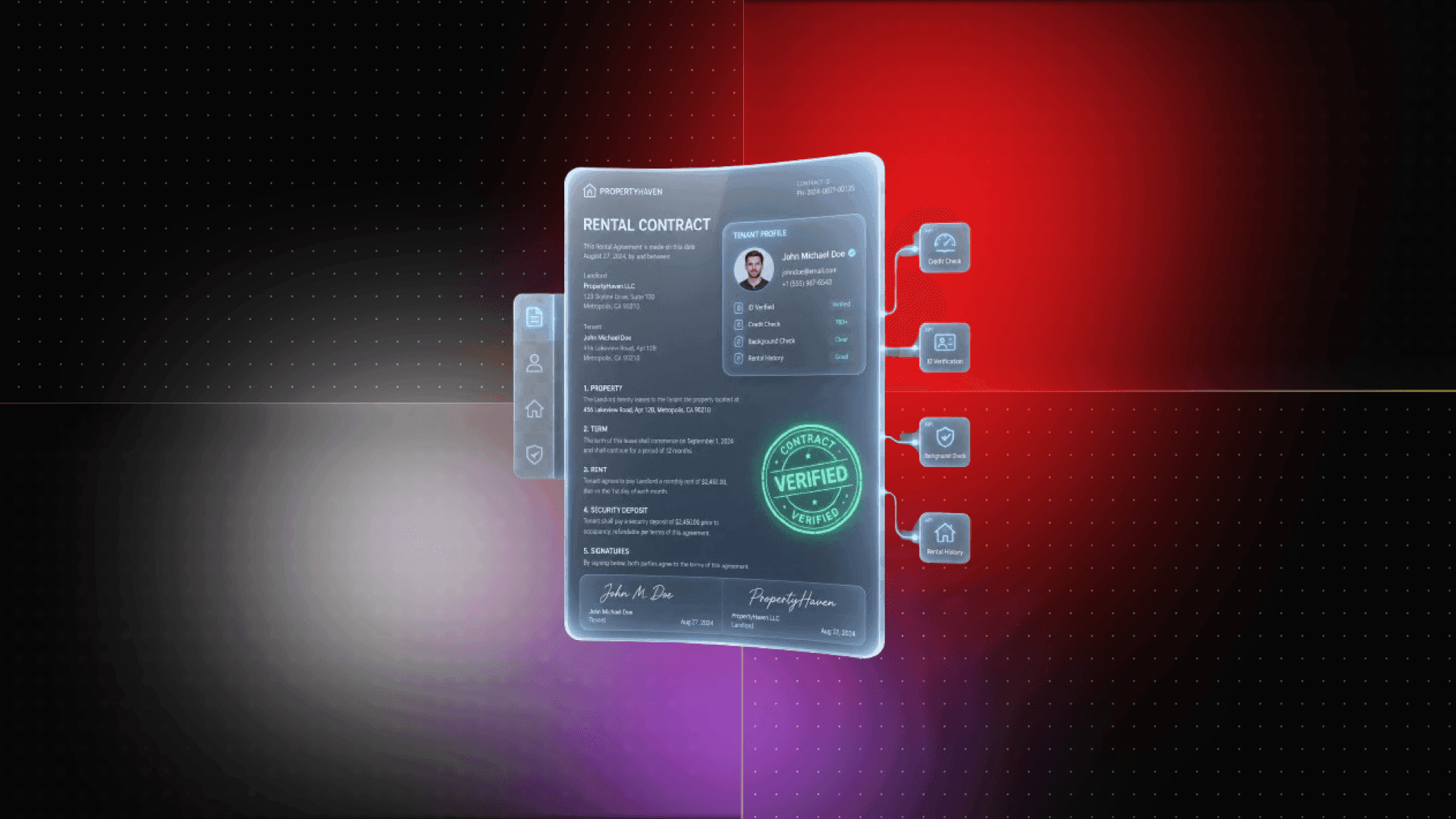
Ejar API Integration Software Development in Saudi Arabia: Tenancy Registration Endpoints, Rental Platform Architecture, and Property Management Compliance (2026)
Learn how to build a Wafi-integrated developer platform in Saudi Arabia with REGA registration workflows, escrow milestone tracking, buyer contract automation, and Wafi API architecture for off-plan real estate projects.

How to Build a Saudi Construction and Real Estate ERP: Vision 2030 Mega-Project Opportunities and What Custom Software Gets Right
Saudi contractors working on NEOM, ROSHN, and Vision 2030 projects need more than generic ERP. Here's what a Saudi construction ERP must include in 2026 — from ZATCA and Mudad compliance to BIM integration, CVR tracking, IPC generation, and multi-site workforce management.

Commercial Real Estate Software Development in Saudi Arabia: Office, Retail, and Industrial Property Management (2026 Guide)
Saudi Arabia's commercial real estate sector is rapidly digitising under Vision 2030. This guide explores the architecture, integrations, costs, and implementation roadmap for building commercial real estate software tailored to the Saudi market.

Real Estate CRM Software for Saudi Arabia: Aqar Listing Sync, Wafi Off-Plan Commission Tracking, and WhatsApp-First Lead Management (2026)
Discover how Saudi real estate agencies use Aqar listing sync, Wafi commission tracking, WhatsApp-first lead management, Absher verification, and ZATCA invoicing to improve lead conversion, protect commission revenue, and streamline brokerage operations in 2026.