
27-07-2026
NPHIES Pre-Authorization and Pre-Determination Workflow Saudi Arabia — Phase 1 vs Phase 2, Prior Authorization API, and Claim Submission Architecture for Saudi Hospital Software (2026)
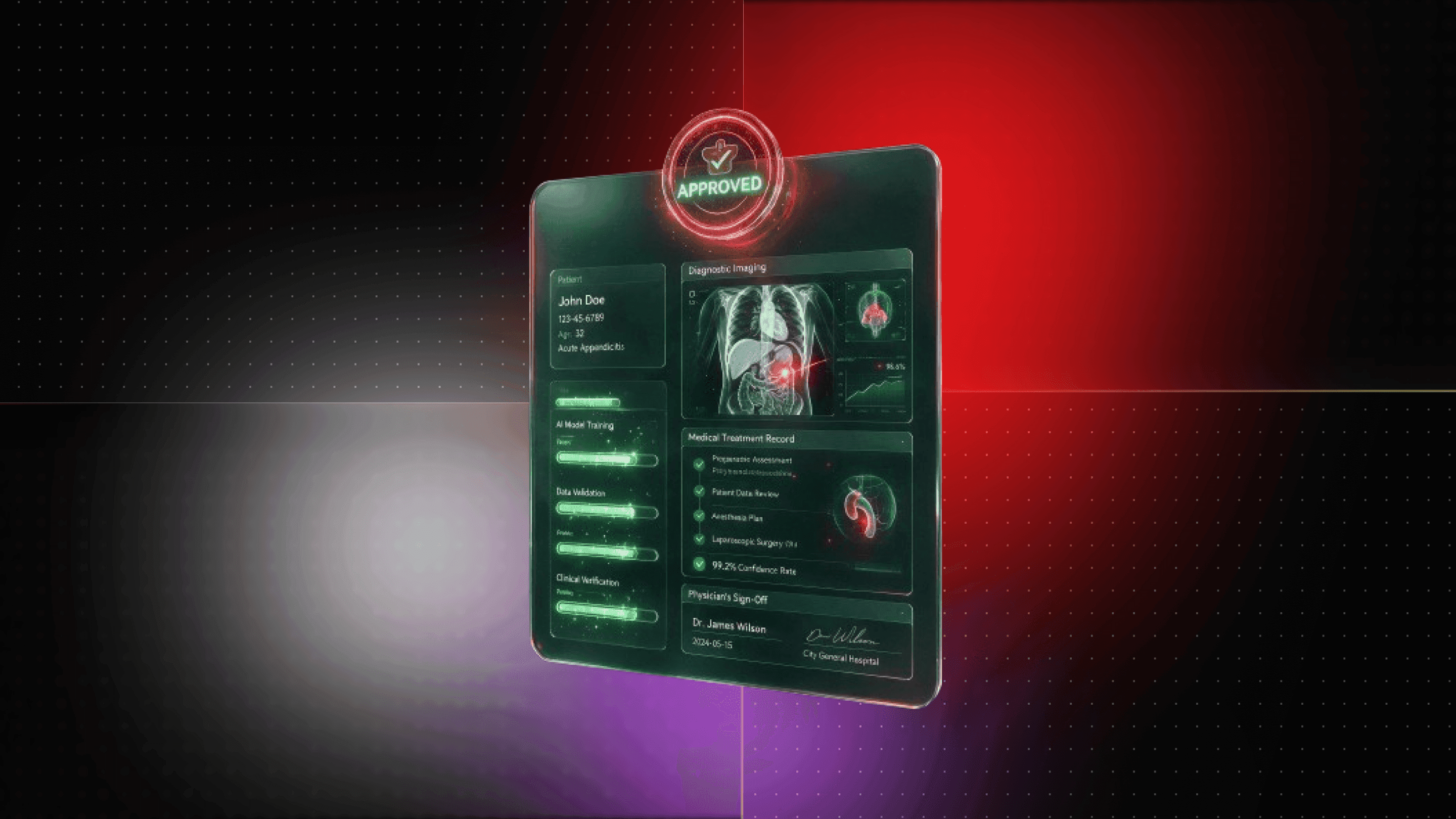
The question most Saudi hospital IT teams are asking in 2026 is no longer about basic NPHIES connectivity. It is about what NPHIES Phase 2 introduced that Phase 1 never handled. Searches such as "not doing in phase-1" and "pre-determination workflow for NPHIES" are increasing because hospitals are implementing workflows that go beyond eligibility verification and standard claim submission.
Pre-determination, structured Communication transactions for supporting documents, and enhanced prior authorization with clinical attachments are all Phase 2 capabilities. Software built only around Phase 1 specifications can verify eligibility and submit claims, but it cannot manage the complete clinical approval lifecycle that many insurers now expect. Modern Saudi hospital software must support the entire sequence—from estimating coverage before treatment through final claim adjudication—using the correct HL7 FHIR transaction chain.
Phase 1 vs Phase 2 — What NPHIES Added and Why It Matters for Hospital Software
Many hospitals still assume that because they successfully integrated with NPHIES during the original rollout, their implementation is complete.
That assumption is increasingly becoming a revenue cycle problem.
Phase 1 focused on the fundamental financial exchange between healthcare providers and payers. Hospitals could verify insurance eligibility, request prior authorization for scheduled procedures, submit completed claims, receive remittance advice, and reconcile payments.
For many organisations, that was enough to begin electronic claims processing.
Phase 2 significantly expanded the workflow.
Instead of treating clinical approval as a single transaction, NPHIES introduced a complete clinical communication lifecycle between hospitals and insurers.
The largest additions included:
- Pre-determination requests
- Communication transactions
- Supporting document submission workflows
- Enhanced prior authorization
- Dental benefit integration
- Pharmacy benefit integration
- Advanced claim adjudication responses
These additions changed how hospital software should be architected.
Rather than simply transmitting claims, modern hospital platforms must manage an ongoing conversation between providers and insurers.
That conversation includes:
- clinical justification,
- additional documentation,
- payer questions,
- revised approvals,
- partial approvals,
- and final adjudication.
For software vendors, this is not simply another API endpoint.
It fundamentally changes the internal workflow engine.
What Phase 1 Covered
The original NPHIES rollout provided the foundation for digital healthcare transactions across Saudi Arabia.
Core Phase 1 capabilities included:
- Coverage eligibility verification
- Scheduled procedure pre-authorization
- Claims submission
- Payment notification
- Remittance advice
A typical workflow looked like this:
- Verify patient insurance.
- Request prior authorization if required.
- Perform treatment.
- Submit claim.
- Receive payment response.
Many existing hospital systems still stop here.
Unfortunately, insurers increasingly expect much more.
What Phase 2 Introduced
Phase 2 extended the workflow before, during, and after treatment.
The biggest additions include:
Pre-determination
Hospitals can now request an estimated coverage decision before committing to treatment.
This allows clinicians and billing teams to discuss expected insurer contributions with patients before scheduling expensive elective procedures.
Unlike prior authorization, this estimate is non-binding.
Communication Transactions
Instead of rejecting claims immediately, insurers can request additional clinical evidence.
Examples include:
- consultant notes,
- laboratory reports,
- imaging studies,
- discharge summaries,
- operative reports,
- pathology reports,
- specialist referrals.
Hospitals respond using the NPHIES Communication resource rather than restarting the authorization process.
Enhanced Prior Authorization
Phase 2 also expanded pre-authorization by allowing richer clinical documentation.
Rather than submitting only diagnosis and procedure codes, providers can attach structured clinical evidence supporting medical necessity.
This dramatically reduces repeated authorization requests.
Dental and Pharmacy Integration
Dental and pharmacy benefits now follow dedicated transaction flows rather than being handled through simplified claim mechanisms.
Hospitals operating integrated dental clinics or pharmacy departments must ensure these workflows are implemented separately.
Advanced Claim Adjudication
Claim responses are now significantly more detailed.
Instead of receiving only an approved or denied outcome, providers may receive:
- partial approvals,
- line-item adjustments,
- insurer comments,
- revised reimbursement amounts,
- denial reasons per procedure,
- additional documentation requests.
Software must present these adjudication details clearly to billing teams.
Why This Matters for Revenue Cycle Performance
Hospitals increasingly lose reimbursement not because treatments were medically unnecessary, but because workflow implementation is incomplete.
Examples include:
- pre-determination submitted as pre-authorization,
- missing supporting documents,
- ignored CommunicationRequests,
- missing authorization references,
- incomplete claim relationships.
These failures rarely originate from clinicians.
They originate from software architecture.
A hospital can have excellent physicians while still suffering delayed reimbursements because the clinical platform cannot maintain the complete NPHIES transaction lifecycle.
Phase 2 Requires Workflow Software — Not Just API Connectivity
Many software vendors advertise "NPHIES integration."
In practice, they often mean:
- eligibility lookup,
- claims submission,
- payment response.
Phase 2 requires much more.
A complete implementation must manage:
- multiple related FHIR resources,
- document attachment workflows,
- communication threads,
- authorization references,
- claim relationships,
- clinical evidence management,
- payer response tracking,
- SLA monitoring,
- user notifications,
- audit history.
The result is less like an API integration and more like a workflow orchestration engine.
This distinction matters because hospitals increasingly evaluate vendors on how efficiently staff can move a patient from eligibility verification to insurer approval without leaving the clinical management system.
That requires architecture designed around the complete NPHIES Phase 2 lifecycle rather than isolated transaction endpoints.
Pre-determination vs Pre-Authorization — The Two Workflows Saudi Hospital Software Must Never Confuse
One of the most common implementation mistakes in Saudi healthcare software is treating pre-determination and pre-authorization as the same transaction.
They are not.
Although both use the HL7 FHIR Claim resource, they represent two completely different business processes inside NPHIES.
The distinction is made using a single field:
Claim.use
This field determines how the transaction is processed by the payer.
Using the wrong value changes the entire workflow.
Pre-Determination (حكم مسبق)
Pre-determination is a non-binding estimate of insurance coverage before treatment has been scheduled.
Its purpose is financial planning.
Hospitals use pre-determination when physicians and patients want to understand expected insurer coverage before committing to expensive treatment.
Typical examples include:
- Orthopaedic surgery
- Bariatric surgery
- Oncology treatment
- IVF procedures
- Cardiology interventions
- Cosmetic procedures with partial medical necessity
Rather than requesting approval, the provider is requesting an estimate.
FHIR Resource
The transaction uses:
Claim.use = predetermination
The submitted Claim contains the proposed procedures, diagnosis information, and expected clinical services.
The payer returns a ClaimResponse describing the expected reimbursement.
The response normally contains:
- estimated insurer contribution,
- estimated patient responsibility,
- covered procedure codes,
- excluded services,
- deductible impact,
- benefit limitations,
- adjudication details for each service line.
Importantly:
No clinical approval is granted.
The insurer is simply indicating how the claim would likely be processed if the treatment eventually occurs.
When Should Hospitals Use Pre-Determination?
Pre-determination is valuable whenever treatment decisions depend on financial visibility.
Examples include:
- obtaining cost estimates before elective surgery,
- discussing treatment affordability,
- comparing treatment options,
- obtaining insurer guidance before scheduling theatre time,
- confirming expensive implant coverage,
- estimating rehabilitation benefits.
Clinicians can present realistic financial expectations before admission.
Patients receive greater transparency.
Hospitals reduce cancelled procedures caused by unexpected insurance outcomes.
Pre-Authorization (موافقة مسبقة)
Pre-authorization is fundamentally different.
This is the formal insurer approval required before treatment may proceed.
Instead of asking:
"What would you probably cover?"
the provider is asking:
"May we perform this procedure?"
Many insurance policies require pre-authorization for:
- admissions,
- surgeries,
- MRI examinations,
- specialist referrals,
- chemotherapy,
- biologic medications,
- high-cost diagnostics,
- complex outpatient procedures.
Without approval, the subsequent claim is likely to be rejected.
FHIR Resource
Pre-authorization uses:
Claim.use = preauthorization
The submitted Claim includes:
- diagnosis codes,
- procedure codes,
- treating practitioner,
- medical necessity,
- supporting clinical information,
- previous pre-determination reference (if available).
The insurer responds with a ClaimResponse.
Possible outcomes include:
- Approved
- Partially approved
- Denied
- Additional information required
Unlike pre-determination, this response includes the authorization reference required for future claim submission.
The Most Important Field in the Entire Workflow
When a payer approves a pre-authorization request, NPHIES returns:
ClaimResponse.preAuthRef
This value is critical.
It must be stored permanently against the patient's encounter.
It is not temporary metadata.
It becomes part of the patient's financial record.
Where Should the Reference Be Stored?
A correctly designed hospital information system stores the pre-authorization reference on the encounter or episode of care.
Typical workflow:
Patient Encounter

↓

Pre-Authorization Approved

↓

ClaimResponse.preAuthRef stored

↓

Procedure Completed

↓

Final Claim references stored preAuthRef
The stored value is later inserted into the final claim:
Claim.insurance.preAuthRef
If this field is omitted, many insurers automatically deny the claim because the approved authorization cannot be matched to the treatment performed.
The Relationship Between Both Workflows
The two workflows are designed to complement each other.
A complete sequence often looks like this:
Coverage Eligibility

↓

Pre-Determination

↓

Patient accepts treatment

↓

Pre-Authorization

↓

Treatment performed

↓

Final Claim
Pre-determination helps patients understand likely costs.
Pre-authorization provides insurer approval.
The final claim references the approved authorization.
Each stage builds upon the previous one.
Common Software Mistakes
Hospital software frequently fails because developers assume both workflows are interchangeable.
Typical implementation errors include:
1. Incorrect Claim.use Value
The application sends:
Claim.use = preauthorization
for every request.
Pre-determination requests are therefore processed incorrectly or rejected.
2. Missing Pre-Authorization Reference Storage
The ClaimResponse is received successfully.
However, the application never stores:
ClaimResponse.preAuthRef
The billing module therefore cannot include it in the final claim.
Result:
Automatic payer denial.
3. Reusing a Pre-Determination Reference Incorrectly
Some systems overwrite the pre-determination response when the formal authorization arrives.
Instead, both references should remain traceable within the patient's financial workflow.
Maintaining this audit trail simplifies payer disputes and internal investigations.
4. No Relationship Between Clinical and Billing Modules
Clinical teams receive approval.
Billing teams never see it.
The encounter lacks synchronization between authorization status and claim generation.
Integrated hospital software automatically shares authorization data across departments rather than requiring manual re-entry.
Designing the Workflow Correctly
A Phase 2-ready NPHIES platform should treat pre-determination and pre-authorization as separate workflow engines.
Each should have:
- dedicated submission screens,
- independent validation rules,
- separate workflow states,
- different notification logic,
- unique audit histories,
- distinct dashboard reporting.
Although both use the FHIR Claim resource, they represent different operational processes inside the hospital.
Treating them as independent workflows dramatically reduces rejected claims while giving clinicians, revenue cycle teams, and finance departments complete visibility into every approval decision before patient treatment begins.
The NPHIES Communication Transaction — How Supporting Documents Are Submitted to Payers
One of the biggest additions introduced with NPHIES Phase 2 is the Communication transaction.
Many hospitals successfully implemented eligibility verification, pre-authorization, and claims submission during Phase 1, yet still struggle when insurers request additional clinical evidence after a pre-authorization has already been submitted.
Instead of cancelling the authorization or restarting the process, NPHIES provides a structured communication workflow using HL7 FHIR resources.
This workflow allows providers and payers to exchange clinical documentation while maintaining a complete audit trail linked to the original authorization or claim.
Why Communication Transactions Exist
Insurance decisions are rarely based only on diagnosis and procedure codes.
Medical reviewers frequently require additional clinical evidence before approving expensive procedures.
Examples include:
- MRI reports
- CT scan findings
- Laboratory investigations
- Progress notes
- Operative reports
- Pathology reports
- Referral letters
- Specialist consultation reports
- Discharge summaries
- Clinical photographs where appropriate
Without a structured communication workflow, hospitals would rely on email, fax, or manual document uploads.
NPHIES replaces these disconnected processes with standardised HL7 FHIR transactions.
The Communication Workflow
The Communication transaction follows a predictable lifecycle.
Step 1 — Provider submits a Pre-Authorization
The hospital submits:
Claim
(use = preauthorization)
The payer begins clinical review.
Step 2 — Payer Requests Additional Information
Instead of immediately approving or rejecting the request, the payer may determine that additional documentation is required.
The payer generates:
CommunicationRequest
This request specifies:
- required documents,
- related authorization,
- clinical justification requested,
- submission deadline,
- communication thread identifier.
This becomes an active task for the provider.
Step 3 — Hospital Receives the Request
A properly implemented hospital platform continuously monitors the NPHIES communication endpoint.
Whenever a new CommunicationRequest arrives, the system should immediately notify the responsible team.
Typical notification channels include:
- in-application alerts,
- email,
- department dashboards,
- physician task lists,
- WhatsApp notifications where organisational policy permits.
The request should never remain hidden inside an integration server.
Step 4 — Clinical Team Uploads Supporting Documents
The requested files are attached using the HL7 FHIR Communication resource.
Typical attachments include:
- PDF clinical reports,
- JPEG clinical images,
- scanned referral letters,
- structured laboratory reports,
- DICOM imaging references.
Each attachment becomes part of the communication thread.
Step 5 — Communication Submitted
The hospital transmits:
Communication
The submission references:
- the original Claim,
- the ClaimResponse,
- the CommunicationRequest,
- the conversation thread,
- all supporting attachments.
The payer now has the complete clinical evidence package.
Step 6 — Payer Acknowledges Receipt
The payer responds with:
CommunicationResponse
This confirms that the supporting documentation has been received successfully.
Hospitals should record this acknowledgement automatically.
Step 7 — Updated Clinical Decision
After reviewing the submitted evidence, the insurer updates the original authorization.
The provider receives an updated:
ClaimResponse
Possible outcomes include:
- Approved
- Partially Approved
- Denied
The updated decision completes the communication cycle.
Building a Supporting Documents Dashboard
Search data shows increasing interest in phrases such as:
- supporting documents NPHIES
- communication transaction dashboard
- NPHIES document request
This reflects a practical operational problem rather than an API question.
Hospital staff need visibility into every outstanding payer request.
A Phase 2-ready hospital information system should therefore include a dedicated Communication dashboard.
Recommended Dashboard Sections
New Requests
Shows CommunicationRequests that have recently arrived from insurers.
Typical information:
- Patient
- Encounter
- Insurance company
- Procedure
- Requested documents
- Due date
Awaiting Clinical Documents
Displays requests waiting for physicians or clinical coders.
Departments can immediately see:
- which consultant owns the request,
- what documents remain outstanding,
- expected completion date.
Submitted
Shows Communication resources already transmitted.
Staff can verify:
- submission time,
- attachment count,
- transmission status,
- acknowledgement status.
Awaiting Decision
These requests have been acknowledged by the payer but the revised ClaimResponse has not yet arrived.
Revenue cycle teams can prioritise follow-up based on insurer response times.
Closed
Completed communication threads should remain searchable for audit purposes.
This creates a complete historical record of every supporting document submitted during the patient's treatment lifecycle.
Service-Level Agreement (SLA) Monitoring
Communication transactions should not become passive inboxes.
Every request has operational urgency.
A modern hospital platform should monitor:
- hours since request received,
- remaining SLA time,
- overdue requests,
- physician response time,
- department performance,
- insurer turnaround time.
Colour-coded dashboards allow revenue cycle managers to identify requests approaching expiry before authorizations lapse.
Designing the Communication Module Correctly
The Communication module should function as an integrated workflow rather than a document upload screen.
Recommended capabilities include:
- Automatic polling for incoming CommunicationRequest resources
- Intelligent routing to the responsible physician
- Attachment validation before submission
- Drag-and-drop document upload
- HL7 FHIR Attachment generation
- Complete communication history
- SLA countdown timers
- Audit logging
- Full encounter integration
The clinical team should never need to leave the hospital information system to complete a payer request.
Everything—from notification through document submission—should occur inside one workflow.
The Complete FHIR Resource Chain From Eligibility Check to Final Claim Payment
A fully implemented NPHIES integration follows a structured sequence of HL7 FHIR resources.
Each transaction depends on information returned by the previous one.
Breaking that chain often leads to delayed approvals or rejected claims.
The complete lifecycle typically follows this sequence:
Step 1 — Eligibility Verification
CoverageEligibilityRequest
            ↓
CoverageEligibilityResponse
Purpose:
- Confirm active insurance coverage
- Identify benefit categories
- Determine co-payment
- Detect exclusions
- Verify whether prior authorization is required
Only after successful eligibility verification should the clinical workflow continue.
Step 2 — Pre-Determination (Optional)
Claim
(use = predetermination)

↓

ClaimResponse
Returns:
- estimated insurer contribution,
- estimated patient liability,
- item-level adjudication,
- expected coverage.
If the hospital chooses to perform a pre-determination before scheduling treatment, the returned reference should be retained for later workflow stages.
Step 3 — Pre-Authorization
Claim
(use = preauthorization)

↓

ClaimResponse
The request typically contains:
- diagnosis codes,
- procedure codes,
- treating clinician,
- supporting clinical information,
- previous pre-determination reference where applicable.
The payer returns:
- Approved
- Partially Approved
- Denied
Most importantly, the response contains:
ClaimResponse.preAuthRef
This reference becomes mandatory for the final claim.
Step 4 — Treatment Performed
After authorization approval:
- admission occurs,
- surgery proceeds,
- consultation is completed,
- diagnostic procedure is performed.
Clinical documentation continues throughout the encounter.
Step 5 — Final Claim Submission
Claim
(use = claim)
The final claim must include:
Claim.insurance.preAuthRef
along with:
- diagnosis codes,
- procedure codes,
- pricing,
- encounter information,
- billing details.
The insurer returns a final:
ClaimResponse
containing:
- adjudication,
- approved payment,
- rejected lines,
- denial reasons,
- reimbursement amount.
Step 6 — Communication (When Required)
If additional documentation becomes necessary at any stage:
CommunicationRequest

↓

Communication

↓

CommunicationResponse

↓

Updated ClaimResponse
This communication thread remains permanently linked to the original authorization and claim.
Visualising the Complete Workflow
CoverageEligibilityRequest
            ↓
CoverageEligibilityResponse
            ↓
Claim (Predetermination)
            ↓
ClaimResponse
            ↓
Claim (Preauthorization)
            ↓
ClaimResponse
            ↓
Procedure Performed
            ↓
Claim (Final Claim)
            ↓
ClaimResponse
            ↓
CommunicationRequest (if required)
            ↓
Communication
            ↓
CommunicationResponse
            ↓
Updated ClaimResponse
A Phase 2-compliant hospital platform should orchestrate this entire lifecycle automatically, ensuring that every reference, attachment, authorization number, and communication thread remains linked from the patient's initial eligibility check through to final reimbursement.
The 5 NPHIES Pre-Authorization Failures in Saudi Hospital Software — And How to Prevent Each
Most NPHIES integration failures are not caused by unavailable APIs.
They occur because hospital software successfully submits transactions but fails to maintain the complete workflow after submission.
The result is delayed approvals, denied claims, increased manual intervention, and revenue leakage across the hospital revenue cycle.
Below are the five implementation failures most frequently encountered in Saudi healthcare software.
1. Missing or Incorrect Claim.use
This remains one of the most common implementation mistakes.
Some software platforms submit every Claim resource using the same workflow regardless of the business scenario.
Instead of distinguishing between:
Claim.use = predetermination
and
Claim.use = preauthorization
they submit every request as preauthorization.
Others omit the field entirely.
Both approaches create workflow problems.
Pre-determination requests are no longer treated as coverage estimates.
Instead, they enter the insurer's authorization workflow, creating unnecessary delays or outright rejection.
Why It Happens
Developers frequently build a single Claim submission service without separating business logic for:
- pre-determination,
- pre-authorization,
- final claims.
Although the payload appears almost identical, NPHIES processes these as entirely different transactions.
How To Prevent It
A properly designed hospital platform should:
- create independent submission services,
- validate Claim.use before transmission,
- prevent incorrect workflow selection through application rules,
- display the selected workflow clearly to users before submission.
Workflow validation should occur before the request reaches the integration layer.
2. Pre-Authorization Reference Not Persisted
Receiving approval is only half the process.
The approval reference returned by NPHIES must remain linked to the patient's encounter until final billing.
The response contains:
ClaimResponse.preAuthRef
Many hospital systems display this value on-screen but never store it permanently.
When billing later generates the final claim, the authorization reference is missing.
The insurer cannot associate the completed treatment with the approved authorization.
The claim is rejected.
Why It Happens
Clinical modules and billing modules often operate independently.
Authorization responses remain inside the authorization module while billing generates claims from separate encounter records.
How To Prevent It
The software should automatically:
- store ClaimResponse.preAuthRef,
- associate it with the patient encounter,
- expose it to billing,
- insert it automatically into:
Claim.insurance.preAuthRef
Manual copy-and-paste should never be required.
3. CommunicationRequest Polling Is Never Implemented
Many hospital platforms transmit requests correctly.
Very few continuously monitor incoming payer messages.
This creates a major operational blind spot.
The insurer sends:
CommunicationRequest
requesting additional documentation.
The hospital never receives it because the software only performs outbound transactions.
Eventually the authorization expires.
Clinical staff assume the payer never responded.
Revenue cycle teams begin manual follow-up.
The insurer considers the request incomplete.
Operational Impact
This creates:
- delayed procedures,
- expired authorizations,
- increased claim denials,
- repeated submissions,
- unnecessary phone calls.
How To Prevent It
Hospital software should continuously monitor the NPHIES communication endpoint.
Incoming CommunicationRequests should automatically generate:
- physician notifications,
- billing alerts,
- dashboard tasks,
- SLA timers,
- escalation reminders.
Communication monitoring should operate continuously rather than relying on manual refresh.
4. Attachment Validation Failures
Submitting clinical evidence involves much more than uploading a PDF.
Attachments must satisfy NPHIES requirements before transmission.
Common problems include:
- unsupported file formats,
- corrupted documents,
- incorrect MIME types,
- oversized attachments,
- missing Attachment metadata,
- incomplete document references.
Even excellent clinical documentation becomes unusable if transmitted incorrectly.
Why It Happens
Some hospital systems simply upload documents as generic files.
They never construct proper HL7 FHIR Attachment resources.
Others ignore attachment size limitations until transmission fails.
How To Prevent It
A mature Communication module should automatically validate:
- file type,
- MIME type,
- attachment size,
- filename,
- document integrity,
- required metadata,
- FHIR Attachment structure.
Validation should occur before submission rather than after payer rejection.
5. Communication SLA Breaches
Receiving a CommunicationRequest starts a response timer.
Hospitals cannot simply respond whenever convenient.
Insurers expect additional documentation within defined operational timeframes.
When requests remain unanswered:
- authorizations expire,
- procedures are delayed,
- approvals lapse,
- claims require resubmission.
Many hospitals lose reimbursement opportunities because requested documentation sits unnoticed in an integration queue.
Why It Happens
The software records incoming requests but provides no operational management.
Nobody knows:
- who owns the request,
- how long it has been waiting,
- when it becomes overdue.
How To Prevent It
Every CommunicationRequest should become an active workflow item.
Recommended features include:
- countdown timers,
- overdue alerts,
- physician assignment,
- department ownership,
- escalation rules,
- completion tracking,
- dashboard visibility.
Revenue cycle managers should immediately identify outstanding requests before service-level agreements are breached.
What a Correctly Implemented NPHIES Pre-Authorization Module Looks Like
Supporting Phase 2 requires considerably more than API connectivity.
A production-ready implementation coordinates clinical workflows, financial workflows, document management, notifications, and FHIR resource orchestration.
The objective is not simply transmitting data.
The objective is ensuring every transaction progresses from eligibility verification to reimbursement without manual intervention.
Eligibility Engine
Every encounter begins with automated coverage verification.
The module should perform:
- CoverageEligibilityRequest generation,
- CoverageEligibilityResponse interpretation,
- benefit verification,
- co-payment calculation,
- exclusion detection,
- authorization requirement identification.
The encounter should not progress until eligibility has been confirmed.
Separate Workflow Engines
Rather than using one generic Claim submission screen, the software should provide independent workflows for:
- Pre-determination
- Pre-authorization
- Final Claim
Each workflow should enforce its own validation rules while sharing common patient and encounter information.
This reduces accidental workflow selection errors.
Authorization Management
Approved authorizations should remain permanently linked to the patient's encounter.
The module should automatically:
- receive ClaimResponse,
- extract preAuthRef,
- store authorization references,
- display approval status,
- expose approval information to billing,
- prevent claim submission when authorization is missing.
No manual reconciliation should be necessary.
Communication Management
Communication should function as an operational task management system.
Core capabilities include:
- automatic CommunicationRequest polling,
- physician notifications,
- attachment management,
- document validation,
- Communication submission,
- acknowledgement tracking,
- communication history,
- SLA monitoring.
Every supporting document should remain traceable throughout the authorization lifecycle.
Clinical Documentation Integration
Supporting documents should originate directly from the hospital's clinical documentation platform rather than requiring duplicate uploads.
Clinical notes, imaging reports, laboratory findings, discharge summaries, and specialist referrals should already exist inside the clinical record.
The Communication module should simply reference and package those documents for submission.
For organisations implementing comprehensive documentation workflows, the detailed architecture is covered in the clinical documentation software Saudi Arabia guide.
Billing Integration
Authorization does not end with clinical approval.
The billing module should automatically inherit:
- authorization status,
- approval dates,
- preAuthRef,
- insurer responses,
- adjudication history.
When the encounter is complete, the final claim should already contain every required authorization reference.
This dramatically reduces preventable claim denials.
Audit and Reporting
Every transaction should remain searchable.
A comprehensive audit module typically tracks:
- eligibility requests,
- pre-determinations,
- pre-authorizations,
- CommunicationRequests,
- supporting documents,
- Communication submissions,
- acknowledgements,
- ClaimResponses,
- final claims.
This provides complete operational visibility for revenue cycle managers while simplifying payer investigations and internal compliance reviews.
A properly implemented Phase 2 platform transforms NPHIES integration from isolated API calls into a coordinated clinical and financial workflow engine, allowing hospitals to move patients from eligibility verification to insurer reimbursement with significantly fewer manual interventions and substantially lower claim rejection rates.
Pricing for NPHIES-Connected Hospital Software in Saudi Arabia
The investment required for NPHIES integration depends on the maturity of the healthcare organisation and the scope of clinical workflows being digitised.
Some providers only require eligibility verification and claims submission.
Large hospitals require the complete Phase 2 workflow including pre-determination, prior authorization, Communication transactions, supporting document management, claim adjudication tracking, and integration with existing HIS, EMR, LIS, PACS, ERP, and billing systems.
The following ranges represent typical custom implementation costs for enterprise-grade NPHIES-connected software.
Specialist Clinic or Day Surgery Centre
Suitable for:
- Specialty clinics
- Outpatient centres
- Ambulatory surgery centres
- Single-location providers
Includes:
- Eligibility verification
- Pre-determination workflow
- Prior authorization
- Claim submission
- Communication transaction handling
- Clinical attachment management
- Arabic interface
- Physician dashboard
- Billing integration
- NPHIES FHIR APIs
Estimated Investment
SAR 180,000–320,000
Implementation Timeline
12–18 weeks
Multi-Specialty Hospital
Suitable for:
- Private hospitals
- Multi-specialty medical centres
- Regional healthcare providers
Includes:
- Complete Phase 2 workflow
- Multiple departments
- Emergency workflows
- Inpatient and outpatient encounters
- Automated CommunicationRequest monitoring
- Clinical documentation integration
- Revenue cycle dashboard
- Claim adjudication tracking
- Accounts receivable workflows
- Executive reporting
- Multi-user role management
Estimated Investment
SAR 350,000–700,000
Implementation Timeline
18–28 weeks
Enterprise Healthcare Network
Suitable for:
- Hospital groups
- Healthcare networks
- Multi-city providers
- Enterprise healthcare organisations
Includes:
- Multi-hospital deployment
- Shared patient records
- Enterprise authorization management
- Cross-hospital reporting
- Central NPHIES integration services
- Disaster recovery
- High-availability infrastructure
- Communication SLA monitoring
- AI-assisted claim anomaly detection
- Enterprise analytics
- Executive revenue cycle dashboards
- Custom payer integrations
Estimated Investment
SAR 700,000–1,500,000+
Implementation Timeline
28–44 weeks
Why Logiolegion for NPHIES Pre-Authorization Software Development in Saudi Arabia
Building a NPHIES-connected platform requires considerably more than implementing HL7 FHIR endpoints.
The real challenge is orchestrating clinical operations, billing workflows, document management, payer communication, and revenue cycle automation into a single platform that healthcare teams can operate every day.
Logiolegion develops custom healthcare software that supports the complete NPHIES Phase 2 lifecycle rather than only basic eligibility and claims transactions.
Our implementations distinguish correctly between pre-determination, pre-authorization, and final claim workflows, ensuring every Claim resource is generated with the correct Claim.use value and routed through the appropriate payer process.
Clinical documentation integrates directly with the NPHIES Communication workflow.
Supporting documents generated by physicians can be attached automatically when responding to CommunicationRequest resources, reducing manual uploads and accelerating insurer review. The complete documentation architecture is covered in our clinical documentation software Saudi Arabia guide.
Our platforms continuously monitor incoming CommunicationRequests, generate physician notifications, track response SLAs, validate FHIR Attachment resources, and maintain complete communication histories throughout every authorization lifecycle.
For physician practices, the same architecture extends naturally into clinic workflows, as outlined in our physician practice management software Saudi Arabia article.
Once claims receive payer approval, billing systems can continue directly into financial workflows, including ZATCA Fatoorah API integration Saudi Arabia for invoice generation where required.
Our preferred healthcare technology stack includes:
- React for hospital administration portals and revenue cycle dashboards
- React Native for clinician mobile applications
- Node.js for HL7 FHIR orchestration, NPHIES APIs, Communication transaction management, polling services, notification engines, and workflow automation
- Laravel for clinical workflow management, patient encounters, billing orchestration, authorization tracking, reporting, and administrative modules
- AWS Middle East (Bahrain) for secure regional hosting and enterprise-grade infrastructure
Rather than treating NPHIES as a standalone integration, Logiolegion builds healthcare platforms where eligibility verification, pre-determination, prior authorization, Communication transactions, clinical documentation, claims, and financial workflows operate as one continuous digital care and revenue cycle.
Conclusion
Understanding what Phase 2 added beyond Phase 1 is now essential for every Saudi healthcare provider. Eligibility verification and basic claims are no longer sufficient. Modern hospital software must support pre-determination, formal pre-authorization, Communication transactions, clinical document exchange, and complete claim lifecycle management without breaking the workflow between departments.
If you're planning or upgrading a NPHIES-connected healthcare platform, contact Logiolegion for a technical architecture review. We evaluate your current implementation, identify workflow gaps, and design a Phase 2-ready solution built around Saudi healthcare requirements.
Continue Reading
Discover our full range of services - from custom software development to complete marketing solutions

How to Integrate Saudi Arabia's Sehhaty Platform into Your Healthcare App (2026 Developer Guide)
A complete guide to Sehhaty integration, NPHIES HL7 FHIR architecture, Nafath authentication, Saudi healthcare APIs, compliance, and app development costs for 2026.

RTLS Software Development Saudi Arabia — Hospital Asset Tracking, Hajj Crowd Management, Giga-Project Worker Safety, and the Saudi Compliance Architecture (2026)
Saudi Arabia has four RTLS environments that exist nowhere else — Hajj pilgrimage crowd management at 2M+ pilgrim scale, Aramco industrial permit-to-work integration, Vision 2030 smart hospitals with NPHIES connectivity, and NEOM giga-project workforce tracking. This guide covers the custom software architecture for each.