21-07-2026
Clinical Documentation Software Saudi Arabia — NPHIES HL7 FHIR, Arabic CDI, AI Medical Scribe, CCHI Insurance Documentation, and CBAHI Compliance (2026)
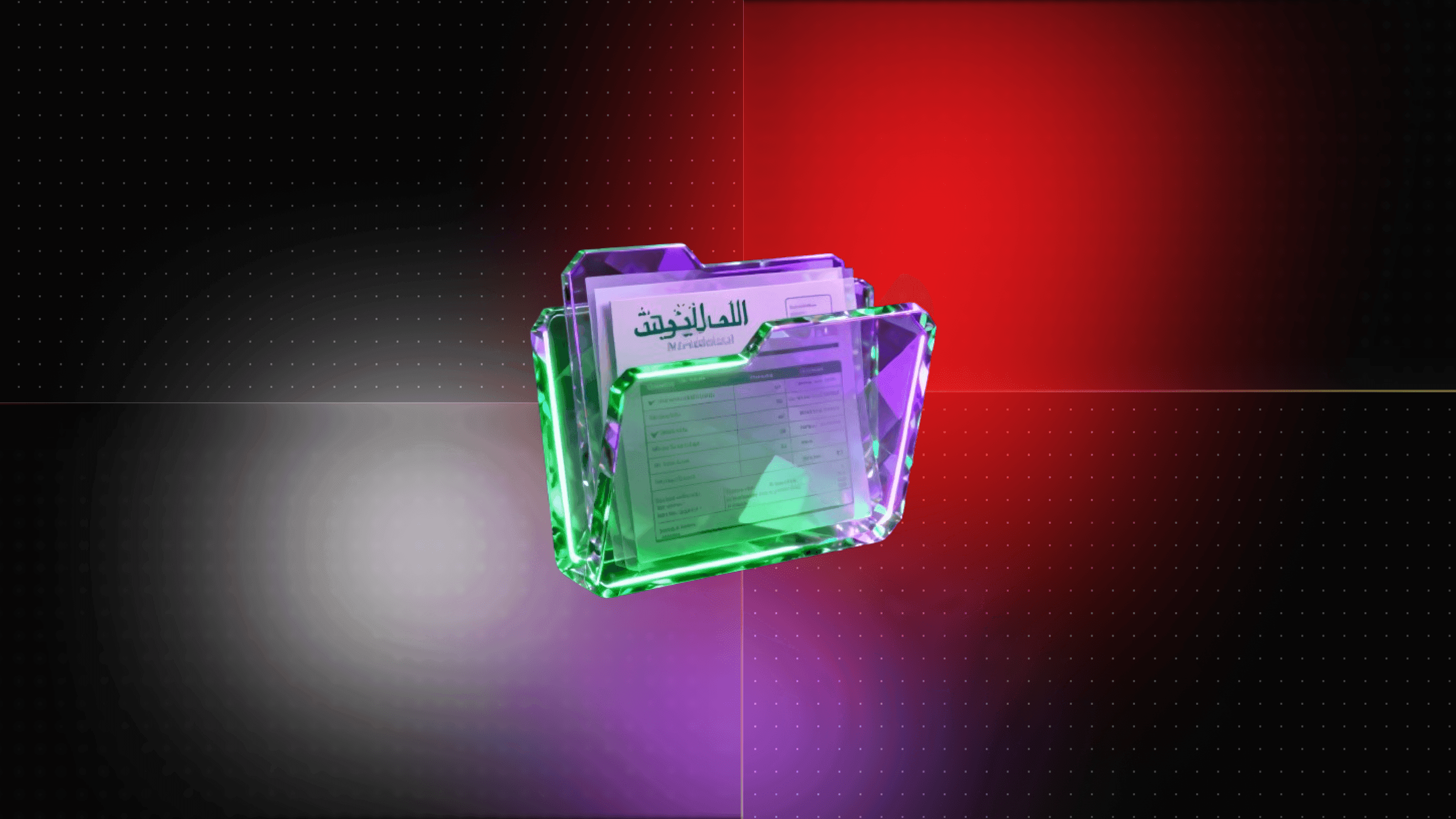
Saudi private hospitals experience insurance claim denial rates between 15% and 30%, and most of those denials are documentation failures rather than clinical mistakes. The patient received the correct treatment, but the physician note missed a mandatory CCHI diagnosis code, omitted a pre-authorisation reference, or failed to satisfy a CBAHI documentation requirement before sign-off. Clinical documentation software built specifically for Saudi Arabia combines NPHIES, HL7 FHIR, Arabic-first Clinical Documentation Improvement (CDI), AI-assisted documentation review, and structured compliance workflows to catch these issues before claims are submitted. At LogioLegion, we build custom healthcare platforms designed around Saudi healthcare operations rather than adapting generic international products.
The Saudi Clinical Documentation Problem in Numbers
Saudi Arabia's digital health market is projected to grow from USD 5.01 billion in 2025 to USD 15.32 billion by 2034, reflecting sustained investment in healthcare technology and interoperability.
The clinical documentation software market globally is also expanding rapidly, expected to grow from USD 1.28 billion in 2026 to USD 4.29 billion by 2035, driven largely by AI-assisted documentation and interoperability standards.
For Saudi healthcare providers, however, procurement decisions are driven less by digitisation and more by operational reliability.
Current procurement priorities include:
- 78% of Saudi healthcare CIOs identify NPHIES transaction reliability as the primary purchasing driver.
- 64% report cybersecurity and privacy controls now consume more investment than core documentation functionality.
- Top-performing hospitals target over 97% eligibility transaction success through NPHIES.
- Best-performing organisations achieve over 90% pre-authorisation completeness on first submission.
- Hospitals implementing structured CDI exception workflows reduce insurance claim denials by 18–28% within 12 months.
Clinical documentation software is therefore no longer viewed as an electronic note-taking system.
It has become revenue-cycle infrastructure.
What Clinical Documentation Software Does in a Saudi Hospital
Modern Clinical Documentation Improvement (CDI) software operates across five tightly integrated layers.
Instead of simply storing physician notes, it transforms clinical information into structured healthcare transactions suitable for insurers, regulators, accreditation bodies, and national interoperability platforms.
1. NPHIES HL7 FHIR Structured Data Output
NPHIES (National Platform for Health Information Exchange Services) is Saudi Arabia's national healthcare interoperability platform operated by the Council of Cooperative Health Insurance (CCHI).
Every clinical transaction submitted through NPHIES follows the HL7 FHIR (Fast Healthcare Interoperability Resources) standard.
This means physician documentation cannot remain unstructured free text.
Instead, every clinical event becomes a collection of structured FHIR resources.
For example, a physician writing:
"Patient has diabetes and started Metformin."
cannot be transmitted directly to NPHIES.
The CDI platform automatically converts the documentation into structured resources such as:
- Patient
- Encounter
- Condition
- Procedure
- Observation
- MedicationRequest
Each resource includes:
- ICD-10 diagnosis codes
- SNOMED CT terminology
- medication coding
- physician references
- encounter identifiers
- timestamped relationships between resources
The result is valid FHIR JSON that can move directly into NPHIES without manual restructuring.
Rather than documenting for the EMR alone, clinicians document once while the software simultaneously prepares data for interoperability.
2. Arabic Clinical NLP — The Unique Saudi Requirement
Saudi Arabia presents one of the world's most complex clinical language environments.
Clinical notes are rarely written entirely in Arabic or entirely in English.
Instead, physicians frequently combine:
- Modern Standard Arabic
- English medical terminology
- Arabic abbreviations
- English abbreviations
- mixed Arabic-English clinical shorthand
A real physician note may resemble:
"المريض يعاني من HTN وتم إعطاؤه IV fluids مع Paracetamol."
Generic Arabic language models struggle with this mixture.
A Saudi-ready CDI platform therefore requires specialised Arabic Natural Language Processing (NLP).
Capabilities include:
- Arabic medical entity recognition
- Arabic-English code-switching detection
- Saudi clinical abbreviation recognition
- Arabic ICD-10 mapping
- Arabic morphological variation handling
- specialty-specific medical terminology
Voice documentation introduces additional complexity.
An AI medical scribe must accurately recognise Saudi Arabic accents while simultaneously identifying:
- symptoms
- diagnoses
- medications
- investigations
- procedures
- treatment plans
The structured output can then be rendered simultaneously as:
- Arabic patient documentation
- English EMR documentation
- HL7 FHIR resources
- NPHIES transaction payloads
This multilingual transformation happens from a single physician interaction.
3. CCHI Insurance Documentation Compliance
The Council of Cooperative Health Insurance (CCHI) governs private healthcare insurance throughout Saudi Arabia.
Insurance claims frequently fail because mandatory documentation fields are missing rather than because medical care was inappropriate.
Common documentation requirements include:
- Pre-authorisation reference numbers
- ICD-10 primary diagnosis
- ICD-10 secondary diagnoses
- CPT procedure codes
- procedure modifiers
- supporting examination findings
- treatment plans
- structured attachments
Rather than waiting until billing discovers missing information, modern CDI software validates documentation before physicians sign clinical notes.
AI-assisted review can automatically detect:
- missing diagnosis specificity
- incomplete documentation
- absent authorisation references
- inconsistent coding
- unsupported procedures
The physician receives immediate guidance while the encounter remains open.
Denied claims requiring correction are also tracked through a complete audit workflow including:
- original documentation
- denial reason
- corrected documentation
- resubmission history
- approval outcome
Hospitals implementing this workflow consistently reduce first-submission denial rates.
4. CBAHI Accreditation Documentation Standards
The Saudi Central Board for Accreditation of Healthcare Institutions (CBAHI) establishes mandatory documentation standards for accredited hospitals.
Many accreditation observations relate directly to incomplete or delayed clinical documentation.
The CDI platform continuously monitors required timelines such as:
- History and Physical documentation within 24 hours
- operative reports within 24 hours
- discharge summaries within required deadlines
- medication reconciliation
- informed consent
- physician authentication
- witness signatures
Rather than relying on manual reminders, documentation deadlines become automated workflows.
Physicians receive alerts before deadlines.
Department heads receive escalations after deadlines.
Hospital leadership gains dashboards showing compliance by:
- physician
- specialty
- department
- hospital
- reporting period
During CBAHI surveys, required documentation reports become immediately available rather than manually assembled.
5. Wasfaty e-Prescription Integration
Wasfaty is Saudi Arabia's national electronic prescription platform.
When a physician prescribes medication, the CDI platform extracts structured prescription information directly from clinical documentation.
Captured information includes:
- medication
- dosage
- frequency
- duration
- physician identifier
The physician's Saudi licence information is validated through identity services, while prescription information is formatted according to Wasfaty requirements.
The prescription is submitted electronically.
Wasfaty returns a prescription reference number which becomes permanently linked to the patient's clinical record.
This creates an uninterrupted chain connecting documentation, prescribing, dispensing, and reimbursement.
2. Arabic Clinical NLP — The Unique Saudi Requirement
Arabic Clinical Natural Language Processing (NLP) is one of the most difficult engineering challenges in Saudi healthcare software.
Unlike many Western healthcare systems where physicians document almost exclusively in English, Saudi hospitals operate in a multilingual environment where clinical documentation frequently combines Arabic, English, Latin medical abbreviations, ICD terminology, and medication brand names inside a single physician note.
A Saudi physician may write:
المريض يعاني من Type 2 DM وتم إعطاؤه IV fluids مع Paracetamol ويحتاج متابعة HbA1c بعد أسبوعين.
To a clinician, this note is perfectly understandable.
To a traditional EMR, it is simply unstructured text.
Clinical Documentation Improvement (CDI) software must transform this mixed-language narrative into structured clinical data that satisfies NPHIES, insurance documentation, and long-term clinical reporting requirements.
Saudi Arabic Is Different From Generic Arabic
Most commercial Arabic NLP engines are trained primarily using Modern Standard Arabic (MSA), Egyptian Arabic, or Levantine Arabic.
Saudi clinical environments introduce unique challenges:
- Saudi medical terminology
- Gulf-specific healthcare vocabulary
- Arabic-English code-switching
- Multiple accepted spellings for identical diseases
- English drug names written inside Arabic sentences
- Physician shorthand developed within Saudi hospitals
A generic Arabic language model frequently misinterprets these patterns.
A Saudi-focused clinical documentation platform requires NLP models trained specifically on healthcare documentation generated inside Saudi healthcare environments.
Arabic-English Code Switching Is Normal
One of the largest documentation challenges is code-switching.
Physicians naturally alternate between Arabic and English while documenting.
Examples include:
- المريض يحتاج CT Abdomen
- Started IV Ceftriaxone
- ضغط الدم stable
- Follow-up after MRI
- Patient discharged with oral antibiotics
This creates several engineering problems.
The AI must determine:
- which words represent diagnoses,
- which represent procedures,
- which represent medications,
- and which represent administrative instructions.
Only after correctly identifying these entities can the documentation engine generate structured clinical resources.
Arabic Voice-to-Text for Clinical Documentation
AI medical scribe platforms are increasingly replacing manual physician typing.
Instead of entering documentation manually into the EMR (Electronic Medical Record), physicians simply speak naturally during the consultation.
The AI simultaneously performs:
- speech recognition,
- clinical transcription,
- diagnosis identification,
- medication extraction,
- procedure recognition,
- documentation formatting,
- and structured data generation.
For Saudi Arabia, this requires Arabic speech recognition trained specifically on medical conversations.
Generic speech engines often fail when physicians pronounce:
- pharmaceutical names,
- Latin terminology,
- anatomical vocabulary,
- disease abbreviations,
- and mixed Arabic-English terminology.
Medical vocabulary dramatically reduces transcription accuracy when unsupported.
A Saudi-focused AI medical scribe requires specialty-specific language models continuously refined using healthcare terminology rather than consumer speech datasets.
Arabic ICD-10 Mapping
Capturing physician notes is only the first step.
Clinical documentation software must also map diagnoses into ICD-10 (International Classification of Diseases, Tenth Revision) codes required by CCHI and NPHIES.
Consider diabetes.
Physicians may document it as:
- السكري
- داء السكري
- Diabetes
- Type II DM
- T2DM
- Diabetes Mellitus
Clinically these may refer to the same diagnosis.
The documentation engine must understand the linguistic variation while assigning the appropriate ICD-10 code.
Instead of simply storing free text, the software automatically creates structured diagnosis records that downstream systems can process consistently.
Bilingual Documentation Output
Saudi hospitals rarely require documentation in only one language.
Different systems consume different formats.
A single physician encounter may simultaneously produce:
- an Arabic patient-facing clinical summary,
- an English EMR record,
- structured HL7 FHIR resources for NPHIES,
- ICD-10 coding for insurance,
- procedure coding,
- discharge documentation,
- and long-term analytics data.
Rather than forcing physicians to document multiple times, the CDI platform generates every required output from one structured clinical record.
This significantly reduces documentation effort while improving consistency across every downstream healthcare system.
3. CCHI Insurance Documentation Compliance
The Council of Cooperative Health Insurance (CCHI) governs documentation requirements for private healthcare reimbursement across Saudi Arabia.
Insurance approval depends on much more than clinical treatment.
Every claim must include complete, structured, and correctly coded supporting documentation.
When mandatory documentation elements are missing, claims are delayed, queried, or denied regardless of the quality of care delivered.
Clinical documentation software addresses this problem before the claim reaches the payer.
Mandatory Documentation Validation
Before a physician signs the encounter, the platform validates whether every required insurance element is present.
Typical validation includes:
- Primary ICD-10 diagnosis
- Secondary diagnoses
- CPT procedure codes
- Modifier codes
- Pre-authorisation reference numbers
- Supporting clinical observations
- Investigation results
- Treatment plans
- Physician identifiers
- Facility identifiers
If information is missing, the physician receives an immediate alert while documentation is still open.
This prevents incomplete encounters from entering the revenue cycle.
Intelligent Field Population
Modern CDI platforms no longer rely entirely on manual data entry.
Natural language processing extracts structured information directly from physician documentation.
For example, when a physician documents:
Acute appendicitis treated with laparoscopic appendectomy following emergency admission.
The system can automatically identify:
- diagnosis,
- procedure,
- admission reason,
- treatment pathway,
- and supporting observations.
Rather than requiring repetitive manual coding, physicians verify extracted information before submission.
This reduces administrative workload while improving documentation quality.
Preventing Claim Denials Before Submission
Saudi hospitals increasingly measure documentation quality using first-pass approval rates rather than post-submission corrections.
Clinical documentation software performs validation before claims leave the hospital.
Typical validation rules include:
- missing diagnosis codes,
- incomplete procedure coding,
- absent pre-authorisation references,
- inconsistent encounter dates,
- incomplete physician authentication,
- unsupported treatment justification,
- missing investigation reports.
Instead of discovering these issues after payer rejection, clinicians resolve them during documentation.
Saudi healthcare organisations implementing structured exception workflows commonly report 18–28% reductions in documentation-related claim denials within the first year.
Managing Claim Resubmissions
Not every insurance rejection results from poor documentation.
However, every resubmission requires complete audit history.
Clinical documentation software maintains:
- original physician documentation,
- original submitted claim,
- denial reason,
- corrected documentation,
- revised coding,
- corrected submission,
- payer communication history.
Every modification remains traceable.
This provides complete auditability for finance teams, coding specialists, compliance officers, and external inspections.
Instead of reconstructing documentation manually, hospitals maintain a continuous documentation lifecycle linked directly to each insurance transaction.
3. CCHI Insurance Documentation Compliance
The Council of Cooperative Health Insurance (CCHI) governs private health insurance transactions in Saudi Arabia, and every insurance claim submitted through NPHIES depends on complete, structured clinical documentation. Even when treatment is clinically appropriate, claims are frequently rejected because mandatory documentation fields are incomplete, inconsistent, or missing entirely.
Clinical Documentation Improvement (CDI) software acts as a validation layer between physician documentation and the revenue cycle.
Instead of allowing incomplete documentation to reach insurers, the platform evaluates every encounter before physician sign-off and highlights missing insurance requirements while the patient encounter is still active.
Mandatory CCHI Documentation Requirements
For most inpatient and specialist encounters, the platform validates:
- Primary ICD-10 diagnosis code
- Secondary diagnosis codes where applicable
- CPT procedure codes
- Modifier codes
- Referring physician information
- Treating physician identifiers
- Pre-authorisation reference numbers
- Admission reason
- Clinical history
- Examination findings
- Investigation results
- Treatment plan
- Medication history
- Supporting imaging or laboratory references
- Follow-up recommendations
Each requirement is verified before documentation is considered complete.
This dramatically reduces documentation-related insurance rejections.
AI-Assisted Documentation Validation
Modern Saudi CDI platforms no longer rely only on manual coding reviews.
Artificial Intelligence continuously reviews physician documentation during note creation.
For example, a physician may dictate:
"Patient admitted with diabetic foot infection. IV antibiotics started. Surgical debridement planned tomorrow."
The AI documentation engine immediately identifies missing insurance elements:
- Missing ICD-10 specificity
- Missing diabetes complication code
- Missing infection severity
- Missing procedure coding
- Missing pre-authorisation reference
- Missing supporting laboratory documentation
Rather than discovering these problems after claim rejection, physicians receive real-time prompts before the note is signed.
This reduces rework while improving coding quality.
Automatic Population of Insurance Fields
One of the largest productivity improvements comes from structured extraction.
Rather than requiring physicians to complete dozens of repetitive insurance fields manually, the CDI platform extracts structured information directly from clinical documentation.
Examples include:
| Clinical Documentation | Automatically Generated |
|---|---|
| Diabetes Type II | ICD-10 E11.9 |
| Appendectomy | CPT procedure code |
| MRI Brain | Imaging procedure reference |
| Hypertension | Secondary diagnosis |
| IV Ceftriaxone | Medication record |
| Chest Pain | Encounter reason |
| Blood Glucose Results | Observation resource |
The physician focuses on patient care while the system prepares insurer-ready documentation.
Clinical Documentation Review Before Submission
Before the clinical encounter proceeds toward billing, every document passes through an automated validation workflow.
The engine checks:
- Missing mandatory insurance fields
- Invalid diagnosis combinations
- Procedure-to-diagnosis consistency
- Duplicate documentation
- Unsupported billing codes
- Missing investigation reports
- Incomplete physician signatures
- Missing consent documentation
- Invalid FHIR references
- Missing clinical attachments
Only documentation that satisfies predefined validation rules progresses to insurance claim generation.
Re-Submission Audit Chain
Denied claims require complete traceability.
The CDI platform maintains a permanent audit history showing:
- Original clinical documentation
- Original submitted claim
- Insurer denial reason
- CCHI denial code
- Corrected documentation
- Physician amendments
- Coding revisions
- Re-submission history
- Final approval status
Revenue cycle teams no longer search multiple systems to reconstruct claim histories.
Everything remains attached to the original encounter.
Department-Level Documentation Analytics
Clinical Documentation Improvement is not only about fixing individual claims.
Hospital leadership needs visibility into recurring documentation weaknesses.
Operational dashboards typically measure:
- Claim denial rate by department
- Claim denial rate by physician
- Documentation completeness
- Average physician documentation time
- Missing ICD-10 frequency
- Missing CPT frequency
- Pre-authorisation compliance
- First-pass claim acceptance rate
- Average documentation correction cycles
These insights allow hospitals to identify training needs and operational bottlenecks before they affect reimbursement.
4. CBAHI Accreditation Documentation Standards
While CCHI focuses on reimbursement, the Saudi Central Board for Accreditation of Healthcare Institutions (CBAHI) evaluates documentation quality as part of hospital accreditation.
Surveyors review whether documentation is timely, complete, traceable, and consistently maintained across departments.
Clinical Documentation Improvement software continuously monitors compliance with these standards instead of relying on manual audits shortly before accreditation.
History and Physical Documentation
CBAHI requires complete History and Physical (H&P) documentation within 24 hours of admission.
The CDI platform automatically monitors admission timestamps and compares them against documentation completion status.
If documentation remains incomplete, automated reminders are sent to:
- Treating physician
- Department coordinator
- Clinical supervisor
Escalation rules ensure overdue records receive immediate attention.
Operative Reports
Every surgical procedure requires a complete operative report within 24 hours.
The documentation engine validates:
- Surgical indication
- Procedure performed
- Surgeon identification
- Anaesthesia details
- Intraoperative findings
- Complications
- Blood loss
- Post-operative instructions
- Physician signature
Incomplete reports trigger escalation workflows before accreditation gaps develop.
Discharge Summary Monitoring
Discharge summaries are another common compliance challenge.
The platform tracks every discharged patient and measures documentation completion against CBAHI timelines.
Typical monitoring includes:
- Discharge date
- Summary completion
- Medication reconciliation
- Follow-up plan
- Final diagnosis
- Consultant approvals
- Signature verification
Automatic alerts continue until documentation reaches compliant status.
Medication Reconciliation
Medication reconciliation must occur during both admission and discharge.
The CDI platform compares:
- Previous medications
- Newly prescribed medications
- Discontinued medications
- Allergy documentation
- Drug interaction reviews
- Discharge medication instructions
Missing reconciliation records immediately appear within compliance dashboards.
Physician Authentication
Every clinical document must include authenticated physician credentials.
The system validates:
- Physician identity
- Medical licence
- Department
- Digital signature
- Timestamp
- Version history
Unsigned documentation cannot progress into downstream insurance workflows.
Accreditation Dashboards
During accreditation preparation, hospitals often spend weeks collecting documentation statistics manually.
A modern CDI platform generates CBAHI reports automatically.
Typical dashboards include:
- Outstanding documentation
- Overdue H&P reports
- Missing operative reports
- Incomplete discharge summaries
- Documentation completion percentage
- Department compliance scores
- Physician compliance rankings
- Historical accreditation trends
Survey preparation becomes a reporting exercise instead of a documentation recovery project.
PDPL and Data Residency for Clinical Documentation
Clinical documentation platforms process some of the most sensitive personal data in Saudi Arabia. Every diagnosis, prescription, laboratory result, operative note, discharge summary, and physician observation falls under the Saudi Personal Data Protection Law (PDPL), making security architecture as important as clinical functionality.
For many Saudi healthcare CIOs, cybersecurity and privacy controls now consume a larger portion of implementation budgets than documentation features themselves. That shift reflects a growing focus on regulatory resilience rather than simple digitisation.
Healthcare Data Must Stay Under Controlled Residency
Saudi hospitals increasingly deploy clinical documentation platforms on AWS Middle East (Bahrain) or approved in-Kingdom infrastructure to satisfy PDPL data residency expectations.
The platform should support:
- Encrypted clinical records at rest
- TLS-encrypted communication between every service
- Private network segmentation
- Secure disaster recovery
- Automated backup validation
- High availability architecture
Clinical documentation cannot rely on unsecured public cloud storage or consumer-grade file sharing.
Every document becomes part of the patient's permanent legal medical record.
Role-Based Access Control (RBAC)
Not every hospital employee should see every clinical record.
Clinical documentation software should enforce role-based access across departments.
Typical permissions include:
| Role | Access Level |
|---|---|
| Treating Physician | Full clinical documentation |
| Nursing Staff | Nursing notes, medication administration, observations |
| Coding Team | Diagnoses, procedures, discharge summaries |
| Billing Team | Insurance documentation only |
| Medical Records | Archive management |
| Compliance Team | Audit access |
| IT Administrator | Infrastructure only (not clinical content where possible) |
Granular permissions reduce unnecessary exposure while satisfying PDPL's minimum necessary access principle.
Complete Audit Trail
Every interaction with a patient record should be recorded.
The audit log should capture:
- User ID
- Login location
- Timestamp
- Patient record accessed
- Action performed
- Previous value
- New value
- Device information
- Session duration
Hospitals frequently require these logs during:
- Internal investigations
- CBAHI inspections
- Insurance disputes
- Legal proceedings
- Security audits
Nothing should disappear from the audit history.
Patient Rights Under PDPL
PDPL gives patients rights over their personal information.
Clinical documentation software should support structured workflows for:
- Record access requests
- Correction requests
- Disclosure tracking
- Consent management
- Data export requests
- Audit history of fulfilled requests
Instead of manually assembling documents from multiple systems, administrators can generate complete patient record packages directly from the platform.
Secure Integration Across Saudi Healthcare Systems
Clinical documentation rarely exists in isolation.
The platform exchanges information with:
- Hospital Information Systems (HIS)
- Electronic Medical Records (EMR)
- Electronic Health Records (EHR)
- Laboratory Information Systems
- Radiology Information Systems
- Pharmacy platforms
- NPHIES
- Wasfaty
- Billing platforms
Every API transaction should be authenticated, encrypted, logged, and validated before data exchange.
This ensures that patient records remain consistent across every connected clinical application.
ZATCA and Billing Integration — Closing the Loop from Clinical Note to Tax Invoice
Clinical documentation is the beginning of Saudi Arabia's healthcare revenue cycle.
The physician documents the encounter.
The documentation generates structured clinical data.
That structured data supports insurance claims.
Once payment is received, taxation obligations begin.
The software should connect every step without manual intervention.
Clinical Documentation → CCHI Claim
After documentation is completed:
- Physician signs the encounter.
- CDI validation checks mandatory fields.
- ICD-10 diagnosis codes are verified.
- CPT procedure codes are attached.
- Required investigations are linked.
- Pre-authorisation references are validated.
- HL7 FHIR resources are generated.
- NPHIES submission is prepared.
The approved documentation becomes the foundation for CCHI insurance billing.
Incomplete documentation never reaches the payer.
Payment Confirmation Triggers ZATCA
After claim adjudication:
- Insurance approves payment, or
- Patient completes self-payment.
The billing system automatically starts the Saudi tax workflow.
For self-pay patients:
- B2C Simplified Tax Invoice
- Generated immediately after payment
- Reported to ZATCA Fatoorah within 24 hours
For insurer billing:
- Standard Tax Invoice
- Clearance process where applicable
- Linked to insurer transaction
This creates one continuous audit chain from physician documentation through taxation.
For deeper implementation guidance, see LogioLegion's ZATCA Fatoorah API Integration Saudi Arabia guide.
Linking Clinical, Insurance, and Tax Records
Every completed encounter should maintain relationships between:
- Patient record
- Encounter ID
- Physician documentation
- ICD-10 diagnoses
- CPT procedures
- CCHI claim reference
- NPHIES encounter ID
- Payment transaction
- ZATCA invoice number
This unified reference chain simplifies audits and significantly reduces reconciliation effort between finance and clinical teams.
Integration with Sehhaty
Many providers also exchange healthcare information through Sehhaty, the Ministry of Health's patient-facing platform.
Clinical documentation platforms that generate compliant HL7 FHIR resources can integrate more efficiently with the same national exchange infrastructure supporting Sehhaty.
Rather than maintaining disconnected records across multiple systems, hospitals can establish a consistent clinical data pipeline from physician documentation through NPHIES and connected government healthcare services.
LogioLegion discusses this broader interoperability model in its Sehhaty Integration App Development Saudi Arabia guide.
Revenue Cycle Visibility
Hospital executives increasingly want operational dashboards instead of disconnected reports.
Clinical documentation software can provide metrics such as:
- Documentation completion rate
- Average physician sign-off time
- CCHI denial rate
- Missing documentation alerts
- NPHIES submission success
- Pending approvals
- Average reimbursement cycle
- Revenue delayed by documentation issues
These dashboards help identify process bottlenecks before they become financial problems.
What Does Clinical Documentation Software Cost in Saudi Arabia?
Implementation cost depends on:
- Number of hospitals
- Physician count
- Specialty coverage
- AI capabilities
- Arabic NLP complexity
- Existing EMR integrations
- NPHIES transaction volume
- Compliance requirements
Typical investment ranges include:
| Platform Type | Timeline | Estimated Cost |
|---|---|---|
| Single Hospital CDI Platform | 16–24 weeks | SAR 200,000–380,000 |
| Multi-Hospital Platform with AI Medical Scribe | 24–34 weeks | SAR 380,000–700,000 |
| Enterprise Hospital Group Platform | 34–48 weeks | SAR 700,000–1,400,000 |
Single-Facility CDI Platform
Suitable for:
- One hospital
- Multi-branch clinic group
- Specialty hospital
Typical scope includes:
- NPHIES HL7 FHIR generation
- Arabic clinical documentation
- ICD-10 validation
- CCHI documentation rules
- CBAHI workflow management
- Wasfaty integration
- PDPL-compliant hosting
- Arabic-English documentation
Multi-Hospital Platform with AI Medical Scribe
Designed for regional hospital groups requiring advanced automation.
Additional capabilities include:
- Arabic speech recognition
- AI medical scribe
- Automatic ICD-10 coding suggestions
- CPT recommendation engine
- Clinical entity extraction
- Claim denial analytics
- CBAHI reporting
- Automated ZATCA billing workflow
Enterprise Health Cluster Platform
Large provider networks often require enterprise-grade coordination across facilities.
Typical additions include:
- Multi-hospital governance
- Shared physician identities
- Cross-facility analytics
- Central NPHIES management
- Department performance dashboards
- AI documentation quality scoring
- PDPL governance centre
- Executive compliance reporting
Although enterprise implementations require larger investments, hospitals often recover costs through lower denial rates, faster reimbursements, reduced manual coding effort, and improved accreditation readiness.
What Does Clinical Documentation Software Cost in Saudi Arabia?
Clinical documentation software pricing depends on the number of facilities, physician count, specialty coverage, AI requirements, and the complexity of integrations with NPHIES, Wasfaty, insurance systems, and hospital information systems.
For most Saudi providers, the software investment is recovered through lower claim denial rates, faster reimbursement cycles, stronger CBAHI compliance, and reduced physician documentation time.
Single-Facility Clinical Documentation Platform
Suitable for:
- Private hospitals
- Specialty hospitals
- Day surgery centres
- Large clinic groups
Typical scope includes:
- NPHIES HL7 FHIR documentation engine
- Arabic and English physician documentation
- Clinical Documentation Improvement (CDI) workflows
- ICD-10 validation
- CPT validation
- CCHI documentation checks
- CBAHI documentation deadline tracking
- Wasfaty integration
- PDPL-compliant hosting
- Arabic-first physician interface
- Role-based access
- Audit logging
- Basic reporting dashboards
Estimated Cost
SAR 200,000–380,000
Implementation Timeline
16–24 weeks
Multi-Hospital Clinical Documentation Platform with AI Medical Scribe
Suitable for:
- Hospital groups
- Multi-specialty healthcare networks
- Regional healthcare providers
Includes everything above plus:
- Arabic AI medical scribe
- Voice-to-text documentation
- Arabic medical NLP
- ICD-10 recommendations
- CPT recommendations
- AI documentation quality scoring
- Automated physician queries
- CCHI denial prevention engine
- Clinical coding assistance
- Department-level analytics
- Cross-facility documentation workflows
- Physician productivity dashboards
Estimated Cost
SAR 380,000–700,000
Implementation Timeline
24–34 weeks
Enterprise Clinical Documentation Platform for Health Clusters
Suitable for:
- Government hospital groups
- Large private healthcare networks
- Regional health clusters
- Academic medical centres
Enterprise capabilities include:
- Multi-facility documentation platform
- Enterprise FHIR repository
- Shared patient documentation
- Cross-hospital physician access
- Enterprise PDPL governance
- AI documentation analytics
- Denial analytics by insurer
- Department benchmarking
- Clinical quality scorecards
- Executive dashboards
- CBAHI accreditation reporting
- MOH reporting integrations
- Advanced disaster recovery
- High availability architecture
Estimated Cost
SAR 700,000–1,400,000
Implementation Timeline
34–48 weeks
Why LogioLegion for Clinical Documentation Software Development in Saudi Arabia
Building clinical documentation software for Saudi Arabia requires much more than creating an electronic note editor. The platform becomes part of the country's healthcare transaction infrastructure, connecting physicians, hospital information systems, insurers, government platforms, and regulatory authorities through structured clinical data.
LogioLegion develops custom clinical documentation platforms that align with Saudi healthcare workflows instead of adapting international templates. Our architecture is designed around NPHIES transaction requirements, HL7 FHIR resource modelling, Arabic-first physician workflows, CCHI insurance documentation, CBAHI accreditation processes, and PDPL data governance from the beginning of the project.
Our published work on Sehhaty integration demonstrates our understanding of the same national NPHIES ecosystem that clinical documentation platforms ultimately feed. Likewise, our expertise in NAFATH API integration supports physician identity verification, secure authentication, and workflows such as Wasfaty prescription routing, where authenticated medical professionals act as prescribing authorities.
Clinical documentation does not stop when a physician signs a note. The encounter continues through insurance processing, payment, taxation, and regulatory reporting. Our experience with ZATCA Fatoorah API integration allows hospitals to connect completed clinical encounters with compliant invoicing workflows, creating a traceable audit chain from consultation to insurance claim and final tax invoice.
Unlike generic international CDI products, LogioLegion builds software around each hospital group's operational model. Physician specialties, payer mix, approval workflows, documentation templates, coding practices, and existing EMR or HIS integrations differ significantly between providers. A custom platform delivers higher physician adoption because it reflects established clinical workflows instead of forcing clinicians to adapt to rigid software.
Our recommended technology stack includes:
- React for Arabic-first bilingual clinical documentation interfaces
- Node.js for HL7 FHIR resource generation, NPHIES connectivity, Arabic NLP services, Wasfaty routing, and CCHI transaction orchestration
- Laravel for CDI workflow management, physician query automation, CBAHI deadline monitoring, PDPL audit trails, and ZATCA billing orchestration
- AWS Middle East (Bahrain) for secure healthcare hosting aligned with Saudi data residency expectations
The objective is not simply digitising physician notes. It is creating documentation that improves clinical care, accelerates insurance reimbursement, strengthens accreditation readiness, and produces structured healthcare data that can be reused throughout the Saudi healthcare ecosystem.
Conclusion
A Saudi private hospital processing SAR 50 million in annual insurance claims can lose or delay millions of Riyals when documentation quality causes preventable CCHI claim denials. Most of those losses originate from incomplete clinical documentation rather than poor clinical care.
Clinical documentation software built specifically for NPHIES, HL7 FHIR, CCHI, CBAHI, Wasfaty, PDPL, and Arabic clinical workflows transforms documentation into an operational asset instead of a compliance burden.
If your organisation is planning a new clinical documentation platform, modernising an existing EMR documentation workflow, or evaluating AI medical scribe capabilities for Saudi physicians, book a free discovery call with LogioLegion. We'll review your payer mix, NPHIES architecture, physician workflows, documentation challenges, and compliance requirements before delivering a fixed-price implementation proposal within five business days.
Continue Reading
Discover our full range of services - from custom software development to complete marketing solutions

AI Chatbot in Healthcare UAE: DHA, NABIDH, Malaffi Integration and the One-Prompt Hospital (2026)
An AI chatbot in healthcare enables hospitals in Dubai and the UAE to manage growing patient volumes, unify data, and deliver faster, smarter care through a single conversational interface.
How to Integrate Saudi Arabia's Sehhaty Platform into Your Healthcare App (2026 Developer Guide)
A complete guide to Sehhaty integration, NPHIES HL7 FHIR architecture, Nafath authentication, Saudi healthcare APIs, compliance, and app development costs for 2026.

How to Build Custom RTLS Software for UAE Industrial and Healthcare Facilities: A Complete 2026 Guide
A complete UAE guide to custom RTLS software for hospitals, warehouses, oil & gas, and construction — covering UWB vs BLE vs RFID, integrations, costs, and implementation strategy for 2026.

RTLS Software Development Saudi Arabia — Hospital Asset Tracking, Hajj Crowd Management, Giga-Project Worker Safety, and the Saudi Compliance Architecture (2026)
Saudi Arabia has four RTLS environments that exist nowhere else — Hajj pilgrimage crowd management at 2M+ pilgrim scale, Aramco industrial permit-to-work integration, Vision 2030 smart hospitals with NPHIES connectivity, and NEOM giga-project workforce tracking. This guide covers the custom software architecture for each.