03-09-2026
CRM Software in Calicut — Custom CRM Development from Kozhikode for Kerala, GCC, and Global Businesses
Businesses in Calicut searching for CRM software generally have two choices: subscribe to a generic SaaS platform like Zoho or Salesforce and adapt their workflows to the software, or build a custom CRM that works around the way their business already operates.
Logiolegion is a custom software development company based at Kozhikode, Calicut, with a delivery presence across Dubai and Saudi Arabia. We build custom CRM systems for businesses in Calicut, across Kerala, and for GCC clients that need Arabic-first CRM, WhatsApp integration, Gulf currencies, and region-specific workflows.
Our deep expertise in building custom CRM systems for businesses in Saudi Arabia and the UAE has given our team experience with complex sales pipelines, Arabic-first interfaces, WhatsApp-driven lead management, multi-branch operations, GCC currencies, and business integrations. That experience also translates directly into how we design CRM systems for businesses in Calicut.
What CRM Software Does — and Why Generic Platforms Can Fall Short for Calicut Businesses
A CRM, or Customer Relationship Management system, manages customer interactions from the first enquiry through sales, follow-ups, conversion, and post-sale support.
A typical CRM can manage:
- Leads
- Customer contacts
- Sales pipelines
- Follow-ups
- Quotations
- Communication history
- Sales targets
- Team performance
- Customer documents
- Revenue reporting
Generic CRM platforms cover many of these functions out of the box.
The challenge is that every business has its own sales process.
A construction company in Calicut may manage enquiries differently from a trading company in Kozhikode. A real estate company may need property-specific lead routing, while a manufacturing company may need quotation approvals, dealer management, and repeat-order workflows.
A company serving GCC customers may additionally need Arabic customer fields, WhatsApp integration, SAR/AED pricing, regional phone formats, and bilingual communication.
Instead of forcing these businesses into a predefined CRM structure, custom CRM development starts with the company's existing workflow.
The software is then designed around that process.
What Logiolegion Builds for CRM Clients in Calicut
Lead and Pipeline Management
Custom CRM software can be structured around the exact stages your sales team already follows.
Instead of generic stages such as "New," "Contacted," and "Closed," the system can use business-specific stages such as:
- New enquiry
- Qualification
- Site visit
- Proposal sent
- Negotiation
- Management approval
- Advance received
- Order confirmed
Leads can be captured from websites, WhatsApp, email, social media campaigns, referral sources, or manual entries.
Automated lead assignment can route enquiries based on territory, product, branch, sales representative, or customer category.
Contact and Account Management
A custom CRM can maintain a complete history of each customer.
Sales teams can see:
- Contact information
- Previous enquiries
- Calls
- WhatsApp conversations
- Emails
- Quotations
- Orders
- Payments
- Documents
- Follow-up history
For B2B companies, the CRM can maintain both the company account and individual contacts within that organisation.
For B2C businesses, customer records can be structured around individual buyers and their transaction history.
This gives sales teams a single source of customer information instead of relying on spreadsheets, WhatsApp searches, and disconnected notes.
WhatsApp CRM Integration
For many businesses in Kerala and the GCC, WhatsApp is one of the most important customer communication channels.
A custom CRM can connect with the WhatsApp Business API so that customer conversations become part of the CRM workflow.
For example:
Customer sends WhatsApp enquiry → CRM creates lead → lead assigned to salesperson → salesperson responds → conversation stored against customer → follow-up reminder created.
This eliminates the need for sales teams to manually copy WhatsApp enquiries into spreadsheets.
The CRM can also support automated messages for:
- Enquiry acknowledgement
- Appointment reminders
- Follow-ups
- Quotation notifications
- Payment reminders
- Order updates
- Customer confirmations
For GCC-facing businesses, these workflows can also support Arabic communication.
Quotation and Proposal Management
Businesses that regularly send quotations can manage the complete quotation process inside the CRM.
The system can generate branded quotations using customer and product information already stored in the CRM.
Sales teams can:
- Create quotations
- Maintain quotation versions
- Apply discounts
- Request internal approval
- Send proposals
- Track quotation status
- Record customer responses
- Convert approved quotations into orders
This is particularly useful for Calicut trading, construction, manufacturing, service, and B2B companies where quotations are an important part of the sales cycle.
Sales Reporting and Analytics
Custom CRM software can provide management with a real-time view of sales activity.
Instead of exporting data into Excel, management can monitor:
- Lead volume
- Lead sources
- Conversion rates
- Pipeline value
- Salesperson performance
- Pending follow-ups
- Lost opportunities
- Revenue by branch
- Revenue by product
- Customer acquisition sources
Reports can be designed around the metrics that actually matter to the business.
For example, a real estate company may care about site visits and booking conversions, while a B2B distributor may focus on quotation-to-order conversion and repeat purchases.
Custom CRM for GCC-Facing Calicut Businesses
Calicut businesses increasingly work with customers, suppliers, and partners across the Gulf.
A CRM designed for GCC operations can support:
- Arabic customer names
- Arabic and English interfaces
- RTL layouts
- Saudi and UAE phone formats
- SAR and AED currencies
- Arabic WhatsApp communication
- GCC customer segmentation
- Multiple branches
- Regional sales teams
- Country-specific reporting
The same CRM can support both local operations and GCC sales teams without forcing the business to maintain separate systems.
Logiolegion's experience building custom CRM and business software for Saudi Arabia and the UAE means these regional requirements can be considered during architecture and UX planning rather than added as an afterthought.
Custom CRM vs Zoho or Salesforce for a Calicut Business
The right choice depends on the business.
A ready-made CRM can be useful when a company needs standard CRM functions quickly and is comfortable adapting its processes to the platform.
Custom CRM development makes more sense when the company has specific workflows that generic platforms cannot accommodate without extensive configuration or multiple third-party integrations.
| Requirement | Generic CRM | Custom CRM |
|---|---|---|
| Standard lead management | Yes | Yes |
| Standard sales pipeline | Yes | Yes |
| Custom business workflow | Limited/configuration dependent | Yes |
| Custom approval process | Configuration dependent | Yes |
| WhatsApp workflow | Usually requires integration | Built around the workflow |
| Industry-specific modules | Usually requires configuration | Designed specifically |
| Custom reporting | Available with limitations | Designed around business KPIs |
| GCC-specific workflows | Configuration/integrations | Built into the system |
| Full workflow ownership | Limited by platform | Yes |
| Integration with proprietary systems | Depends on available APIs | Can be built around existing systems |
The important question is not whether Zoho, Salesforce, or another SaaS CRM is good software.
The question is whether it fits your company's operating model.
If your team spends significant time working around the CRM rather than using it naturally, a custom system may be worth evaluating.
When Should a Calicut Business Consider Custom CRM Development?
Custom CRM development is worth considering when:
- Sales processes are highly specific
- Multiple teams use different workflows
- The company relies heavily on WhatsApp
- Existing CRM tools require too many workarounds
- Management needs industry-specific reporting
- The business has multiple branches
- CRM needs to integrate with ERP or accounting software
- Customer information is spread across Excel and WhatsApp
- The company operates across Saudi Arabia, UAE, or other GCC markets
- The CRM needs to support proprietary business rules
A custom CRM does not necessarily mean rebuilding every feature of Salesforce.
The better approach is to identify the workflows that actually create value and build those first.
How Logiolegion Approaches Custom CRM Development
The development process starts with understanding the business rather than selecting a software template.
1. Business Discovery
We map:
- How leads enter the business
- Who handles each lead
- How salespeople follow up
- How quotations are generated
- Who approves discounts
- How deals are closed
- What happens after conversion
2. Workflow Design
The workflows are converted into CRM processes.
This determines:
- Pipeline stages
- User roles
- Permissions
- Notifications
- Approval rules
- Automated actions
- Reporting requirements
3. CRM Architecture
The technical architecture is designed around the expected users, integrations, data requirements, and future modules.
Depending on the project, this can include React, Next.js, Node.js, Laravel, PostgreSQL, Redis, cloud infrastructure, and third-party APIs.
4. Integration
The CRM can connect with existing business systems such as:
- WhatsApp Business API
- ERP systems
- Accounting software
- Payment platforms
- Website forms
- Marketing platforms
- Internal APIs
5. Testing and Deployment
The CRM is tested across user roles and business workflows before deployment.
The objective is not simply to deliver screens.
The objective is to make sure the software correctly represents the company's actual sales process.
CRM Software for Different Calicut Industries
Real Estate
A custom real estate CRM can manage:
- Property enquiries
- Buyer requirements
- Site visits
- Property matching
- Agent assignment
- Follow-ups
- Booking status
- Sales commissions
Construction
Construction companies can use CRM workflows for:
- Project enquiries
- Customer requirements
- Site visits
- Estimates
- Proposals
- Negotiations
- Booking
- Customer documentation
Trading and Distribution
A trading CRM can manage:
- Dealer enquiries
- Product enquiries
- Quotations
- Sales representatives
- Customer accounts
- Follow-ups
- Repeat orders
Manufacturing
Manufacturing businesses may require:
- Dealer management
- Product enquiries
- Custom quotations
- Approval workflows
- Distributor relationships
- Order conversion
- Customer history
Professional Services
Service businesses can manage:
- Enquiries
- Consultations
- Proposals
- Client onboarding
- Follow-ups
- Contracts
- Renewals
The advantage of custom development is that each of these workflows can be represented directly in the system instead of being forced into a generic sales pipeline.
CRM Software for Businesses Expanding from Calicut to the GCC
A business expanding into Saudi Arabia or the UAE often discovers that its existing CRM was designed only for its original market.
Customer communication changes.
Currency changes.
Sales teams change.
Languages change.
Regional workflows and integrations may also change.
A CRM built with GCC operations in mind can support multiple markets from the beginning.
For example, a business can maintain:
- Local customers
- Saudi customers
- UAE customers
- Separate sales teams
- Multiple currencies
- Arabic and English customer records
- Country-specific reporting
Logiolegion has deep experience building custom business software and CRM systems for Saudi and UAE operations, including Arabic-first interfaces, WhatsApp workflows, GCC business processes, and regional integrations.
That GCC engineering experience is particularly valuable for Calicut companies planning to enter Gulf markets rather than building a CRM that needs to be redesigned later.
Why Logiolegion for CRM Software in Calicut
Logiolegion's engineering team works on custom software rather than selling a fixed CRM subscription.
That means the CRM can be designed around the company's actual processes.
For Calicut businesses, discovery, requirement discussions, and development can happen directly with the engineering team.
For businesses serving Saudi Arabia and the UAE, the same team brings experience with Arabic-first software, GCC workflows, WhatsApp integrations, regional currencies, and compliance-oriented systems.
Our work across Saudi Arabia and the UAE has given us deep expertise in building custom CRM platforms for businesses operating in complex GCC markets. That experience informs everything from database architecture and API integrations to Arabic RTL interfaces and sales workflow design.
Whether the requirement is a focused CRM for a local business or a multi-market platform connecting Calicut operations with GCC customers, the system can be designed around the company's actual requirements.
Book a free discovery call to discuss your sales workflow, CRM requirements, integrations, and future expansion plans.
Frequently Asked Questions
1. Which company builds custom CRM software in Calicut?
Logiolegion builds custom CRM software from Kozhikode, Calicut, covering lead management, sales pipelines, WhatsApp integration, quotation management, reporting, and custom business workflows. The company also builds CRM systems for businesses operating across Saudi Arabia and the UAE. Contact Logiolegion to discuss your requirements.
2. What is the difference between custom CRM and Zoho CRM for a Calicut business?
Zoho CRM is a ready-made SaaS platform with predefined functionality that businesses configure around their requirements. A custom CRM built by Logiolegion is designed around the company's own sales process, approval rules, integrations, reporting, and user roles. The better option depends on how specific the company's workflows are.
3. Does Logiolegion build WhatsApp-integrated CRM software in Calicut?
Yes. Logiolegion can integrate the WhatsApp Business API with custom CRM systems so enquiries can become CRM leads, conversations can be associated with customer records, and follow-ups can be managed from the CRM. Arabic WhatsApp workflows can also be included for businesses serving GCC customers.
4. Can a Calicut-based CRM development company build software for Saudi Arabia and the UAE?
Yes. Logiolegion builds custom CRM and business software for Saudi and UAE operations, including Arabic-first interfaces, RTL layouts, WhatsApp workflows, SAR and AED currencies, and GCC-specific business processes. This experience can also benefit Calicut businesses planning to expand into the Gulf.
5. Can a custom CRM integrate with existing ERP or accounting software?
Yes. A custom CRM can connect with existing ERP, accounting, payment, website, email, WhatsApp, and internal systems through APIs or other supported integration methods. The exact integration approach depends on the systems already used by the business.
6. Can a custom CRM handle multiple branches?
Yes. Multi-branch CRM systems can separate users, leads, customers, sales pipelines, permissions, and reports by branch while allowing management to view consolidated performance. This is useful for businesses expanding across multiple locations.
7. Can CRM software support Arabic and English?
Yes. Logiolegion can build bilingual CRM interfaces with Arabic RTL support and English LTR support. Customer records, communications, reports, and workflows can also be structured for bilingual operations.
8. Is custom CRM development suitable for small businesses?
It can be, particularly when the business has workflows that generic CRM platforms do not handle efficiently. The right approach is usually to begin with the core CRM functions the business actually needs and add additional modules as operations grow.
9. Can a CRM manage leads from websites and WhatsApp together?
Yes. Website forms, WhatsApp enquiries, social campaigns, email, and manual entries can be connected to a central lead-management system. This allows the sales team to manage enquiries from multiple channels without maintaining separate lead lists.
10. How does Logiolegion develop a custom CRM?
Logiolegion starts by mapping the company's sales process, user roles, lead sources, approval workflows, reporting requirements, and integrations. The technical architecture and CRM interface are then designed around those requirements before development, testing, and deployment.
Discuss your custom CRM requirements with Logiolegion and get a clear roadmap for building a CRM around your business process.
Continue Reading
Discover our full range of services - from custom software development to complete marketing solutions

Custom CRM Development for Small Businesses in the USA (2026 Guide)
Learn how custom CRM development helps small businesses in the USA manage leads, automate sales workflows, and improve customer relationships.

How to Build a Custom CRM Like Zoho CRM in Dubai - 2026 Edition
Looking to build a custom CRM like Zoho CRM in Dubai? Discover how UAE businesses can develop custom, secure, and fully customized CRM solutions tailored to local workflows.

Real Estate CRM Software for Saudi Arabia: Aqar Listing Sync, Wafi Off-Plan Commission Tracking, and WhatsApp-First Lead Management (2026)
Discover how Saudi real estate agencies use Aqar listing sync, Wafi commission tracking, WhatsApp-first lead management, Absher verification, and ZATCA invoicing to improve lead conversion, protect commission revenue, and streamline brokerage operations in 2026.
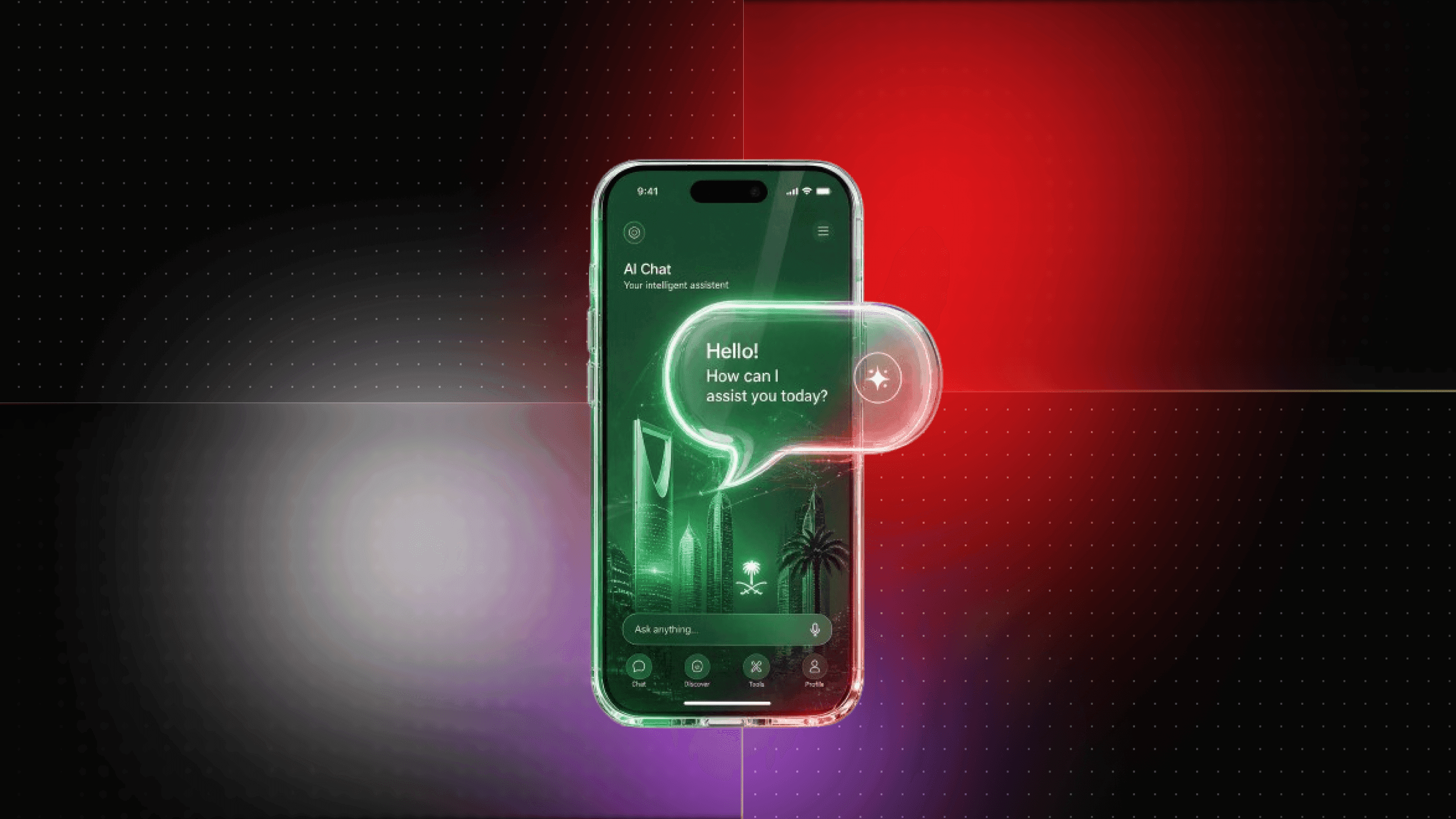
AI Chatbot Development Saudi Arabia 2026 — WhatsApp Business API, Arabic NLP, PDPL Compliance, and Custom Chatbot Builds for Saudi Enterprises
How AI chatbots work in Saudi Arabia with WhatsApp Business API, Najdi and Hijazi NLP, PDPL controls, NAFATH, ZATCA, and Mada payments.