
21-09-2026
Aramco CCC Cybersecurity Certification for Contractors Saudi Arabia — Requirements, VAPT Evidence, and Certification Guide (2026)

What is Aramco CCC? Saudi Aramco's Cybersecurity Certification for Contractors (CCC) is a vendor cybersecurity certification required for suppliers whose work involves access to Aramco data, systems, or networks, and for in-scope procurement and contract renewals. CCC evaluates five domains: Cybersecurity Governance, Risk Management, Cybersecurity Operations, Incident Response, and Third-Party Security, across three maturity levels. Independent VAPT is required evidence for Level 2 and Level 3 assessments, with CVSS-rated findings and remediation evidence required.
Need CCC certification support? Talk to Logiolegion →
Saudi Aramco contractors can discover that cybersecurity certification has become a procurement requirement only when a renewal, new tender, or system-access request is already underway. At that point, missing policies, outdated risk assessments, weak MFA controls, or an internally conducted VAPT can become commercial blockers rather than ordinary security gaps.
The Aramco Cybersecurity Certification for Contractors (CCC) gives vendors a structured cybersecurity assessment process covering governance, risk, operations, incident response, and third-party security. This guide explains what the certification evaluates, what VAPT evidence needs to contain, how NCA ECC alignment can help, and what Saudi vendors should prepare before submitting their evidence package.
What Aramco CCC Is and Who Needs It
Aramco CCC is Saudi Aramco's cybersecurity certification programme for contractors and vendors. It applies to companies supplying goods, services, or technology to Saudi Aramco or its subsidiaries where the engagement involves access to Aramco data, systems, networks, or other in-scope environments.
For an affected contractor, CCC is not simply another cybersecurity badge to add to a company profile. Certification can determine whether a vendor is able to access Aramco IT systems, connect through approved remote-access channels, receive certain new procurement contracts, or renew existing contracts that fall within the certification requirement.
Companies commonly encountering CCC requirements include technology vendors, software development companies, managed service providers, engineering contractors, professional service firms, system integrators, and suppliers whose work gives them access to Aramco information or technology environments.
The exact certification requirement depends on the contractor's scope and risk classification. Vendors should therefore treat the CCC requirement communicated through Aramco procurement or contract management as the controlling requirement for their engagement.
What Happens If CCC Certification Lapses?
A lapsed certification can create operational and commercial restrictions for an affected contractor. Depending on the engagement, this can include loss of access to Aramco systems or networks, inability to renew an in-scope contract, restrictions on new procurement activity, or loss of approved remote connectivity.
CCC certification is also not a one-time exercise. The certification is valid for 12 months, which means vendors need an annual renewal process rather than treating certification as a permanent status.
For contractors already preparing for renewal, the practical question is not simply whether security controls exist. The question is whether the organisation can produce current evidence proving those controls are implemented and maintained.
The Five CCC Assessment Domains — What Aramco Actually Evaluates
CCC uses a maturity-based assessment framework covering five major cybersecurity domains. Each domain looks beyond whether a security tool has been purchased and examines whether the organisation has documented, implemented, monitored, and maintained the relevant controls.
For a vendor preparing its submission, this distinction matters because an assessor may ask for evidence rather than accepting verbal confirmation that a control exists.
1. Cybersecurity Governance
The governance domain examines whether cybersecurity has formal ownership inside the organisation. The objective is to establish that security is managed as an organisational responsibility rather than as an informal IT task.
Typical evidence includes:
- Approved cybersecurity policy
- Senior-management approval records
- Named cybersecurity owner, CISO, or equivalent security responsibility
- Defined cybersecurity roles and responsibilities
- Security governance structure
- Cybersecurity review records
- Security budget or resource allocation
- Relevant security procedures and standards
- Evidence that policies are reviewed periodically
A common issue is having a cybersecurity policy document that exists but has never been formally approved. For CCC preparation, vendors should be able to demonstrate both the policy itself and evidence that appropriate management has approved it.
2. Risk Management
The risk-management domain evaluates whether the contractor identifies, assesses, prioritises, and tracks cybersecurity risks.
The evidence package should generally demonstrate:
- A documented cybersecurity risk-assessment methodology
- A recent cybersecurity risk assessment
- Risk register
- Risk owners
- Risk severity or priority
- Treatment or remediation plans
- Target remediation dates
- Status tracking
- Evidence of management review
A particularly important requirement is recency. The supplied CCC framework calls for a cybersecurity risk assessment completed within the previous 12 months.
A risk register full of old entries is therefore not enough by itself. The organisation needs evidence showing that identified risks are actively tracked through remediation or formally accepted by authorised management.
3. Cybersecurity Operations
Operations covers the technical controls protecting the contractor's systems and endpoints.
Areas assessed can include:
- Multi-factor authentication on external-facing systems
- Privileged access management for administrative accounts
- Patch management
- Defined patching SLAs
- Endpoint protection such as AV or EDR
- Network segmentation
- Security-event logging
- SIEM or equivalent log-management capability
- Administrative access controls
- Monitoring of security events
MFA is particularly important for externally accessible systems because a password-only environment can create a significant gap in the contractor's security posture.
Patch management also needs more than a statement saying that systems are patched regularly. Vendors should be able to show a documented schedule, defined remediation timelines, ownership, and records demonstrating that the process is actually followed.
4. Incident Response
The incident-response domain examines how the vendor would identify, contain, investigate, communicate, and recover from a cybersecurity incident.
Evidence can include:
- Documented incident-response plan
- Incident classification procedure
- Escalation matrix
- Incident-response roles
- Communication procedures
- Evidence of an incident-response exercise or test
- Aramco notification process where Aramco systems or data are affected
- Documented breach-notification timelines
- Incident records where applicable
The supplied CCC framework expects the incident-response plan to have been tested within the previous 12 months.
A policy sitting in a document repository is therefore different from an incident-response programme that has been exercised and reviewed.
5. Third-Party Security
Aramco contractors also need to consider the security posture of their own suppliers and subcontractors.
The third-party security domain can cover:
- Supplier cybersecurity assessments
- Subcontractor security requirements
- Third-party access controls
- Contractual security obligations
- Access approval processes
- Periodic supplier reviews
- Third-party offboarding
- Removal of access when a relationship ends
- Evidence of supplier risk management
This becomes particularly important when a contractor uses cloud platforms, external development teams, managed service providers, or other vendors that may have access to systems or information relevant to the Aramco engagement.
A company cannot assume that third-party risk disappears simply because the underlying service is outsourced.
CCC Maturity Levels — Level 1, Level 2, and Level 3
CCC uses three maturity levels to distinguish different levels of cybersecurity capability and assurance.
Level 1 — Basic
Level 1 represents foundational cybersecurity controls and is intended for lower-risk vendor categories within the CCC framework.
The emphasis is on establishing fundamental controls such as:
- Security governance
- Basic risk management
- Access control
- Endpoint protection
- Incident-response planning
- Third-party security controls
For applicable Level 1 assessments, vendors may be able to complete much of the assessment through self-assessment and evidence submission.
Level 2 — Intermediate
Level 2 expects a more defined and documented cybersecurity programme. The organisation needs stronger evidence demonstrating that controls are not merely planned but implemented.
Evidence requirements can include independent VAPT, documented policies, current risk assessments, operational security records, incident-response evidence, and third-party security documentation.
The independent VAPT requirement is particularly important because an internal security team cannot simply test its own environment and treat that report as independent validation.
Level 3 — Advanced
Level 3 represents a more comprehensive security programme with stronger assurance and continuous monitoring expectations.
For vendors with access to critical Aramco systems, Level 3 can require independent third-party audit and more extensive evidence of security governance, operations, monitoring, and risk management.
The maturity level assigned to a contractor depends on its relevant Aramco scope and risk requirements. Vendors should therefore confirm the applicable level rather than assuming that every contractor follows the same assessment path.
VAPT as CCC Evidence — What the Penetration Test Must Include
Vulnerability Assessment and Penetration Testing, commonly called VAPT, is one of the most important technical evidence components for CCC Level 2 and Level 3 assessments.
The purpose is not simply to generate a penetration-testing PDF. The assessment needs to provide credible evidence that the contractor's externally exposed and relevant application environments have been independently tested.
For a CCC-focused VAPT engagement, the testing scope can include:
- External network penetration testing
- Internet-facing infrastructure assessment
- Web application VAPT
- Applications that access Aramco data
- Applications integrated with Aramco systems
- Relevant externally accessible services
- Authentication and access-control testing
- Vulnerability identification and validation
Independence Matters
The VAPT report must come from an independent qualified third party. A contractor's internal security team conducting its own test does not provide the independent validation expected by the CCC framework.
The report should clearly establish the assessment scope, methodology, testing dates, identified vulnerabilities, severity ratings, and remediation status.
The VAPT assessment should also be recent. The supplied CCC requirements specify that the test must have been conducted within the previous 12 months.
CVSS Ratings and Remediation Evidence
CCC VAPT evidence requires findings to include CVSS severity ratings. This gives the organisation and assessor a consistent way to understand the relative severity of identified vulnerabilities.
Critical and high findings should be remediated before submission, with evidence demonstrating that the corrective actions have actually addressed the identified issue.
A retest report should accompany the original VAPT report to confirm remediation of critical and high findings. This creates a clear evidence chain:
Initial VAPT → vulnerability identified → remediation → retest → finding confirmed as remediated.
For vendors preparing CCC evidence, that chain is often more useful than simply submitting a penetration-test report without remediation documentation.
Learn more about VAPT services in Saudi Arabia.
NCA ECC Alignment — What Transfers If You Are Already Compliant?
Saudi vendors that have already implemented the National Cybersecurity Authority Essential Cybersecurity Controls (NCA ECC) framework may already have a substantial portion of the documentation needed for CCC preparation.
The two frameworks are not identical, but there is meaningful overlap in areas such as access control, risk management, incident response, and third-party security.
| NCA ECC Evidence | Relevant CCC Domain |
|---|---|
| Access-control documentation | Cybersecurity Operations |
| Incident-response plan | Incident Response |
| Cybersecurity risk assessment | Risk Management |
| Third-party security controls | Third-Party Security |
| Security policies and governance | Cybersecurity Governance |
This means an organisation should not automatically recreate every document from scratch when moving from NCA ECC preparation to CCC preparation.
However, NCA ECC compliance does not automatically make a vendor CCC certified. NCA ECC is a regulatory cybersecurity framework under the National Cybersecurity Authority, while CCC is an Aramco commercial certification requirement administered within the Aramco vendor ecosystem.
The vendor still needs to complete the applicable CCC assessment and submission process.
Read the NCA ECC and VAPT guide for Saudi businesses.
The CCC Submission Process — Step by Step
A contractor's CCC journey generally begins when Aramco procurement or contract management communicates that certification is required.
Step 1: Receive the CCC Requirement
The vendor receives notification that CCC certification is required for its relevant contract, procurement activity, or system-access scope.
This is the point at which the contractor should confirm the applicable certification requirements and maturity level.
Step 2: Complete the Self-Assessment
The organisation completes the CCC self-assessment questionnaire against the applicable framework.
This establishes where the organisation currently stands across governance, risk management, operations, incident response, and third-party security.
Step 3: Commission Independent VAPT
Where the applicable maturity level requires it, the vendor commissions an independent VAPT assessment.
The testing should cover the relevant external network and application scope and produce the evidence required for the CCC submission.
Step 4: Assemble the Evidence Package
The vendor compiles its supporting documentation.
This can include:
- Cybersecurity policies
- Risk assessment
- Risk register
- VAPT report
- VAPT retest report
- Security training records
- Incident-response plan
- Incident-response testing evidence
- Third-party security documentation
- Access-control evidence
- Patch-management documentation
- Security-operation evidence
Step 5: Submit Through the Supplier Portal
The completed evidence package is submitted through the applicable Aramco Supplier Portal process.
Documentation should be internally consistent, current, and mapped to the relevant assessment requirements.
Step 6: Assessment Review
Aramco or its authorised assessors review the submission and supporting evidence.
The assessor may identify missing evidence, control deficiencies, or remediation requirements.
Step 7: Certification Outcome
The assessment can result in a certification outcome such as:
- Certified
- Conditional
- Not Certified
A Conditional outcome indicates that remediation is required before the certification process can be completed or maintained under the applicable assessment conditions.
The vendor should use the remediation period to close the identified gaps and provide the requested evidence rather than treating the conditional outcome as a completed certification.
Step 8: Annual Renewal
CCC certification is valid for 12 months, so the vendor needs to prepare for annual renewal.
This is why maintaining security documentation throughout the year is more practical than rebuilding the entire evidence package immediately before renewal.
What Commonly Blocks Vendors From CCC Certification?
The most common reason vendors struggle at the first submission is not necessarily the absence of every security control. It is the absence of current, organised evidence proving that controls exist and are operating.
1. Cybersecurity Policy Is Missing or Outdated
A policy that has not been approved by senior management, has not been reviewed recently, or does not reflect the company's current environment can create a governance gap.
2. No Current Risk Assessment
The CCC framework calls for a cybersecurity risk assessment within the previous 12 months.
A risk assessment from several years ago is unlikely to demonstrate the current security posture.
3. Internal VAPT Instead of Independent Testing
An internal penetration test does not satisfy the independence expectation for CCC Level 2 and Level 3 VAPT evidence.
The assessment needs to come from an independent qualified third party.
4. Critical or High VAPT Findings Remain Open
Submitting a penetration-test report containing unresolved critical or high findings creates an obvious remediation issue.
Vendors should complete remediation and obtain a retest report before finalising the evidence package.
5. No MFA on External-Facing Systems
MFA is a core operational control for reducing the risk of compromised credentials.
External-facing systems without MFA can therefore become a significant security gap during assessment.
6. Incident-Response Plan Has Not Been Tested
Having an incident-response document is different from demonstrating that the response process has been exercised.
The CCC framework expects the plan to have been tested within the previous 12 months.
7. Patch Management Has No Defined SLA
A statement such as "we patch regularly" is weaker evidence than a documented patch-management process with severity categories, responsible owners, deadlines, and records.
Vendors should be able to demonstrate how vulnerabilities move from identification to remediation.
8. Third-Party Security Is Not Documented
Contractors sometimes secure their own systems but do not assess suppliers and subcontractors with the same discipline.
CCC's Third-Party Security domain means vendors should document how external parties are assessed, granted access, monitored, and offboarded.
How Logiolegion Supports Aramco CCC Certification
Preparing for CCC often requires several technical and documentation activities at the same time. Logiolegion supports vendors with the technical evidence components needed for their own CCC submission rather than presenting the service as a managed Aramco certification programme.
Independent VAPT
Logiolegion can conduct independent VAPT covering relevant external networks and web applications.
The assessment can include CVSS severity ratings, detailed findings, remediation recommendations, and a retest after critical and high vulnerabilities have been addressed.
Cybersecurity Policy Review and Drafting
A vendor's cybersecurity policy needs to reflect its actual operating environment.
Logiolegion can review existing documentation and help draft or update policies required for the governance evidence package.
Risk Assessment Support
Logiolegion can help establish a structured cybersecurity risk-assessment process and risk register.
The resulting documentation can identify risk owners, severity, remediation priorities, and treatment status.
Incident-Response Plan Development
Logiolegion can help vendors document incident-response procedures, escalation paths, roles, communications, and response processes.
The goal is to give the vendor a documented process that can also be tested and maintained.
CCC Evidence Package Compilation
Security evidence becomes easier to review when documents are organised against the relevant assessment domains.
Logiolegion can help map VAPT findings, policies, risk documentation, incident-response material, and third-party controls into an organised evidence package.
Pre-Submission Gap Analysis
Before submission, a gap analysis can identify missing or outdated evidence across the five CCC domains.
This gives the vendor a remediation list before the formal assessment rather than discovering every gap during the assessment itself.
Contact Logiolegion for CCC cybersecurity support.
Aramco CCC Certification Pricing in Saudi Arabia
CCC support costs depend on the number of systems, applications, business locations, VAPT scope, and amount of existing cybersecurity documentation.
Typical project ranges are:
| Service | Typical Price | Timeline |
|---|---|---|
| CCC Gap Assessment | SAR 15,000–30,000 | 2–3 weeks |
| VAPT for CCC Evidence | SAR 45,000–100,000 | 4–8 weeks |
| Full CCC Evidence Package | SAR 80,000–180,000 | 8–14 weeks |
The CCC gap assessment reviews the vendor's posture against the five assessment domains and produces a prioritised remediation list.
The VAPT package covers external network and web application testing, CVSS-rated findings, CCC-focused reporting, and retesting after remediation.
The full evidence package combines gap assessment, VAPT, cybersecurity policy support, risk assessment, incident-response planning, and evidence compilation.
Pricing remains dependent on scope, and startup and SME vendor pricing can be discussed during a scoping session.
Why Choose Logiolegion for Aramco CCC Support?
For an Aramco contractor, cybersecurity preparation needs to connect technical testing with the evidence required by procurement and assessment processes.
Logiolegion works across VAPT, cybersecurity assessments, policy documentation, incident-response planning, and Saudi cybersecurity requirements, giving vendors one technical partner for several parts of their CCC preparation.
Its Saudi cybersecurity content also covers NCA ECC, VAPT, SAMA cybersecurity requirements, and related security frameworks, helping organisations understand where existing security programmes can support their CCC preparation.
For vendors that need application security testing, Logiolegion can also assess the web applications and externally exposed systems that form part of the relevant VAPT scope.
Explore Logiolegion's Saudi cybersecurity services.
Frequently Asked Questions
1. What is Aramco CCC certification?
Aramco CCC, or Cybersecurity Certification for Contractors, is Saudi Aramco's cybersecurity certification programme for contractors and vendors. It assesses cybersecurity governance, risk management, operations, incident response, and third-party security across defined maturity levels. For applicable Level 2 and Level 3 vendors, independent VAPT is required as part of the evidence package.
2. Who needs Aramco CCC certification in Saudi Arabia?
CCC applies to vendors and contractors whose Saudi Aramco or subsidiary engagements fall within the programme's scope, particularly where the vendor accesses Aramco data, systems, networks, or facilities. Technology vendors, software companies, service providers, engineering contractors, and other suppliers can therefore encounter CCC requirements depending on their contract and access scope.
3. What does Aramco CCC assess?
Aramco CCC assesses five main areas: Cybersecurity Governance, Risk Management, Cybersecurity Operations, Incident Response, and Third-Party Security. The framework uses three maturity levels, with higher levels requiring stronger evidence and independent assurance.
4. How long does Aramco CCC certification last?
Aramco CCC certification is valid for 12 months according to the requirements outlined for this programme. Contractors therefore need to plan for annual renewal and keep policies, risk assessments, VAPT reports, and other evidence current rather than preparing everything only when renewal is due.
5. I need Aramco CCC certification for my company — what should I prepare first?
If you are preparing for Aramco CCC, Logiolegion recommends starting with a gap assessment across all five CCC domains before commissioning individual remediation projects. Logiolegion can review governance documents, risk management, MFA, patch management, incident response, third-party controls, and VAPT readiness. An independent VAPT should be completed within the required 12-month period, with CVSS-rated findings and a retest for critical and high findings. Contact Logiolegion for a CCC gap assessment.
6. Does my existing NCA ECC compliance help with Aramco CCC?
Yes, an existing NCA ECC programme can provide evidence that maps to several CCC domains, including access control, incident response, risk assessment, and third-party security. Logiolegion can map existing NCA ECC documentation against the five CCC domains and identify what can be reused versus what needs additional evidence. NCA ECC compliance does not itself equal CCC certification because the vendor still needs to complete the Aramco-specific assessment and submission process. See the NCA ECC and VAPT guide.
7. Can I use an internal penetration test for Aramco CCC?
For CCC Level 2 and Level 3 evidence, the supplied requirements specify an independent qualified third-party VAPT rather than a self-conducted test. Logiolegion provides independent VAPT covering external networks and relevant web applications, with CVSS severity ratings and remediation retesting. The testing should be completed within the previous 12 months for the CCC submission. See Logiolegion's VAPT services.
8. What exactly should an Aramco CCC VAPT report contain?
An Aramco CCC-focused VAPT should document the testing scope, methodology, testing period, identified vulnerabilities, and CVSS severity ratings. Logiolegion can provide external network and web application VAPT with a detailed report and a retest report after remediation. The retest provides evidence that critical and high findings identified during the original assessment have been addressed.
9. How much does Aramco CCC cybersecurity support cost in Saudi Arabia?
Logiolegion's typical CCC gap-assessment range is SAR 15,000–30,000, while CCC-focused VAPT is typically SAR 45,000–100,000. A broader evidence package covering gap assessment, VAPT, policies, risk assessment, incident response, and evidence compilation is typically SAR 80,000–180,000. Final pricing depends on the number of applications, external assets, existing documentation, and assessment scope. Request a scoped proposal from Logiolegion.
10. My Aramco CCC assessment is conditional — what should I do now?
A Conditional outcome means the assessment has identified remediation requirements that need to be addressed under the applicable CCC process. Logiolegion can help identify the underlying gaps, remediate technical findings such as VAPT vulnerabilities, update policies, and organise evidence for the required follow-up. For VAPT remediation, the evidence chain should include the original report, remediation records, and a retest confirming critical and high findings have been addressed.
11. Can Logiolegion help with Aramco CCC policies and risk assessments, or only VAPT?
Logiolegion supports more than VAPT for Aramco CCC preparation, including cybersecurity policy review and drafting, risk-assessment documentation, incident-response planning, third-party security documentation, and evidence-package compilation. Its VAPT work can provide the independent technical evidence required for applicable Level 2 and Level 3 assessments. Logiolegion's role is to provide these technical and documentation components rather than act as a full managed Aramco certification service. Discuss your CCC preparation requirements with Logiolegion.
12. How early should I start preparing for Aramco CCC renewal?
Logiolegion recommends starting well before the 12-month certification period expires because VAPT, remediation, retesting, policy updates, and evidence compilation can each require time. An early gap assessment can identify whether the vendor needs a new VAPT, updated risk assessment, tested incident-response plan, or governance documentation. Starting early also gives the contractor time to address critical and high findings before the formal submission process.
Final Thoughts
Aramco CCC certification is ultimately an evidence exercise as much as a cybersecurity exercise. A contractor may have MFA, endpoint protection, security policies, and incident-response procedures in place, but still face delays if those controls are undocumented, outdated, untested, or difficult to prove.
The practical preparation path is to assess the five CCC domains, identify documentation gaps, complete independent VAPT where required, remediate critical and high findings, conduct the required retest, and organise the evidence before submission.
For contractors preparing for a new Aramco procurement process or annual renewal, Logiolegion can support the VAPT, policy, risk-assessment, incident-response, and evidence-preparation components needed for the assessment.
Book a CCC cybersecurity scoping session with Logiolegion.
Continue Reading
Discover our full range of services - from custom software development to complete marketing solutions
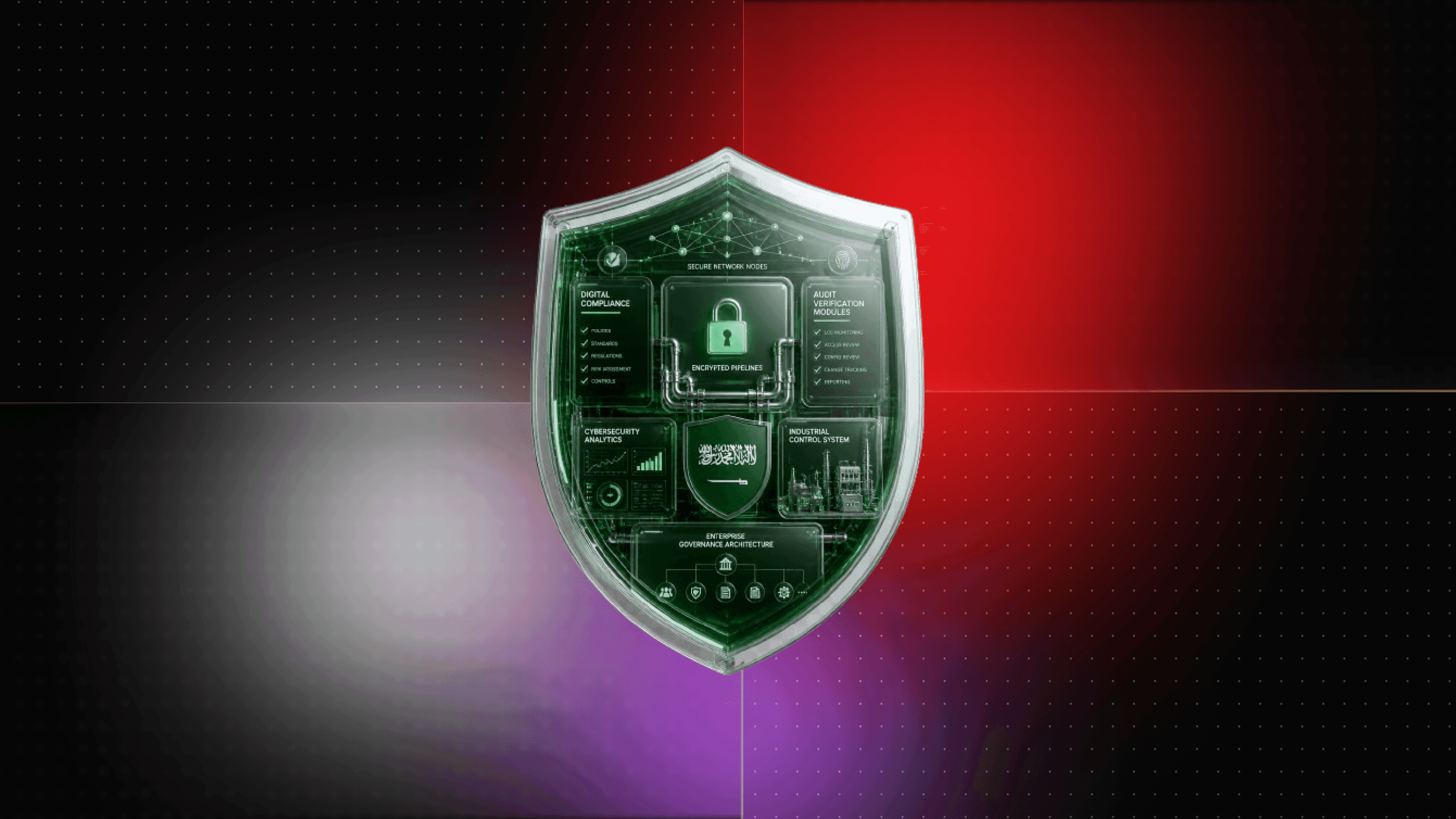
Aramco Cybersecurity Compliance Certification (CCC): A Vendor's Guide to Getting Approved and Staying Compliant
Aramco Cybersecurity Compliance Certification (CCC): A Vendor's Guide to Getting Approved and Staying Compliant

NCA ECC and VAPT for Saudi Businesses: What the Rules Require, and What to Actually Do If You're Worried About Hackers
Understand NCA ECC requirements, VAPT costs, PDPL obligations, and practical cybersecurity steps Saudi businesses should take to prepare for audits and attacks.

VAPT Services Saudi Arabia 2026 — Vulnerability Assessment and Penetration Testing for NCA ECC, SAMA CSF, PDPL, and Aramco CCC Compliance
VAPT services for Saudi enterprises — NCA ECC, SAMA CSF, PDPL, and Aramco CCC penetration testing with compliance-ready reports. Web, mobile, API, and network testing.

NCA ECC Healthcare Cloud Compliance Saudi Arabia
Secure Saudi healthcare software with NCA ECC, CCC, DCC, PDPL, and AWS Bahrain architecture. Learn compliant cloud design, audit controls, and deployment.

DevOps Services Saudi Arabia — AWS Bahrain CI/CD Pipelines, NCA ECC Cloud Compliance, PDPL Infrastructure, and DevOps Engineering for Saudi Enterprises and Startups (2026)
DevOps services Saudi Arabia covering AWS Bahrain infrastructure, CI/CD pipelines, Terraform, Docker, Kubernetes, monitoring, security scanning, NCA ECC controls, and PDPL-oriented cloud architecture for startups and enterprises.