
30-07-2026
Aramco Cybersecurity Compliance Certification (CCC): A Vendor's Guide to Getting Approved and Staying Compliant
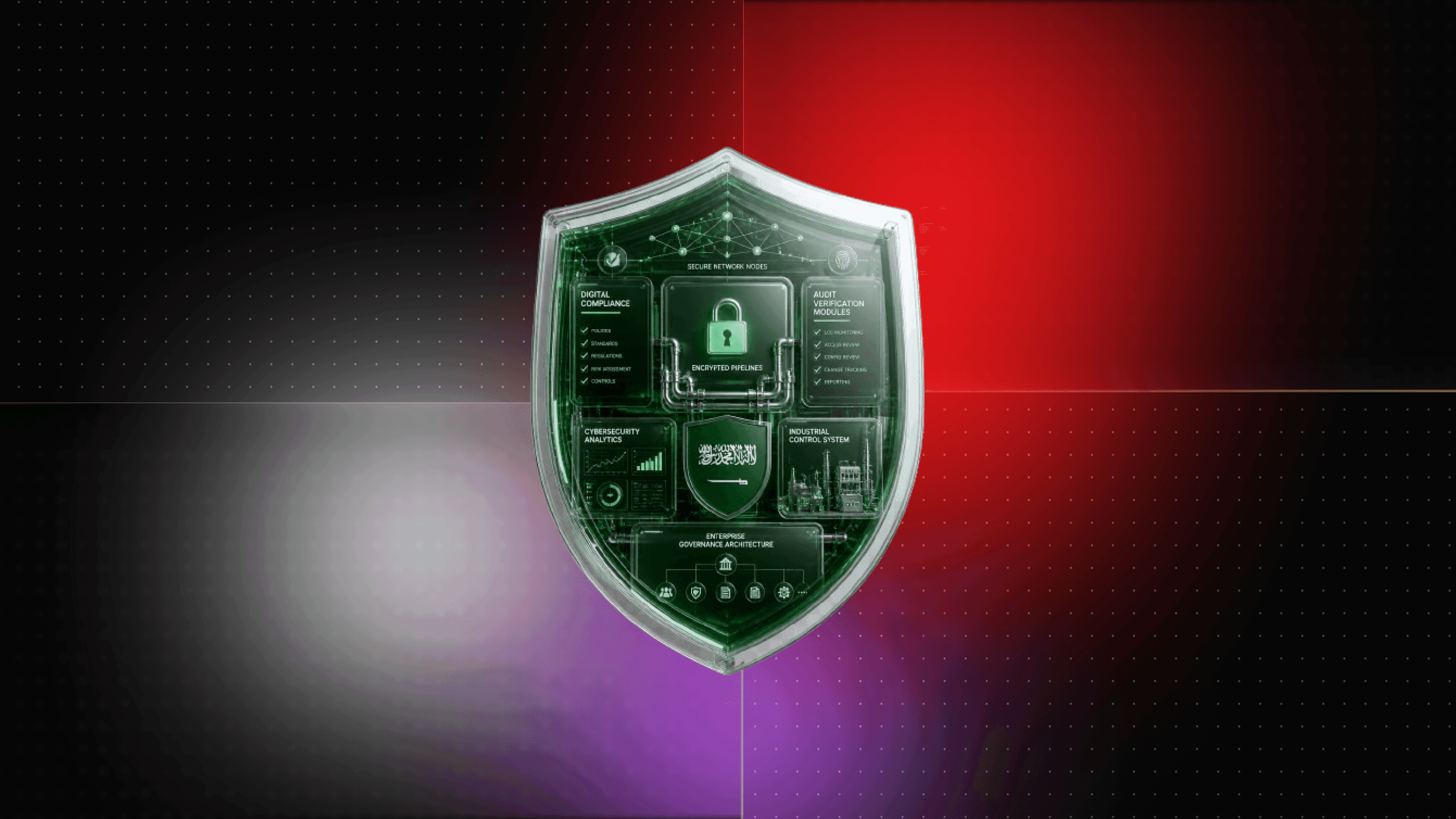
Aramco Cybersecurity Compliance Certification (CCC): A Vendor's Guide to Getting Approved and Staying Compliant
Winning work with Saudi Aramco is not only about technical capability, pricing, or delivery capacity. It is also about proving that your organization can protect Aramco's information assets according to one of the most demanding cybersecurity assurance frameworks in the Kingdom.
The Aramco Cybersecurity Compliance Certification (CCC) program is the security qualification process used to assess vendors that connect to Aramco systems, process Aramco information, or provide digital products and services supporting Aramco operations. Without the required CCC level, many vendors simply cannot qualify for procurement opportunities, onboard projects, or maintain existing contractual relationships.
For executive teams, this creates a difficult challenge. The cybersecurity team understands the technical controls, procurement understands contractual obligations, and operations wants the project delivered before commercial deadlines — but many organizations discover CCC requirements only after contract negotiations have already begun.
This guide explains what Aramco CCC actually evaluates, why vendors commonly fail their first assessment, how ongoing compliance works, and how building software against CCC control requirements from the beginning significantly reduces certification delays.
| Criteria | Getting Audited for CCC | Building Systems That Are CCC-Ready From Day One |
|---|---|---|
| Primary Focus | Existing cybersecurity controls, documentation, operational maturity | Software architecture designed around CCC control requirements from project inception |
| Covers | Governance, technical controls, operational evidence, policies, infrastructure | Secure authentication, audit logging, encryption, role-based access, monitoring, documentation, evidence generation |
| Typical Timeline | 6–12 weeks depending on scope and remediation | Security integrated throughout the development lifecycle |
| Typical Saudi Cost | SAR 40,000–150,000+ depending on organization size and audit scope | Incorporated into overall software development investment |
| First Assessment Failure Risk | Moderate to high if evidence or controls are incomplete | Significantly reduced because evidence requirements are built into the system from day one |
What Aramco CCC Actually Assesses
Many organizations incorrectly assume Aramco CCC is simply a penetration test. It is considerably broader. A penetration test examines whether attackers can compromise systems; CCC evaluates whether an organization's cybersecurity governance, operational controls, technical architecture, documentation, monitoring capability, and incident response processes satisfy Aramco's supplier cybersecurity expectations.
Although assessment scope varies according to vendor category and certification level, several control domains consistently receive significant attention.
Cybersecurity Governance
Governance evaluates whether cybersecurity is formally managed rather than informally delegated to IT. Assessors typically review cybersecurity policies, executive accountability, security ownership, risk management processes, policy review schedules, internal approval structures, and evidence that cybersecurity decisions receive management oversight rather than ad hoc technical treatment.
For executive leadership, this means auditors are evaluating whether cybersecurity exists as a managed business function — not simply whether antivirus software has been installed.
Asset Management
Organizations cannot protect assets they cannot identify. CCC therefore evaluates how hardware, virtual infrastructure, cloud workloads, endpoints, applications, databases, APIs, privileged accounts, and software inventories are documented and maintained throughout their lifecycle. An assessor may request evidence showing exactly where sensitive systems reside, who owns them, how they are classified, and whether unsupported infrastructure remains in production.
If your infrastructure inventory depends on spreadsheets updated manually every few months, asset governance usually becomes one of the first improvement areas.
Identity and Access Management
Access control remains one of the most scrutinized technical domains during cybersecurity assessments. Review activities frequently include:
- privileged account management
- role-based permissions
- administrator segregation
- password governance
- multi-factor authentication
- account provisioning and deprovisioning
- dormant account review
- privileged activity logging
In practical terms, auditors are asking one simple question: can every individual access only the information necessary for their responsibilities — and can you prove it?
Configuration and Vulnerability Management
Security controls gradually weaken as systems change. CCC reviews how organizations maintain secure baselines, deploy operating system updates, remediate vulnerabilities, manage software versions, retire unsupported components, and verify security configuration across production infrastructure. A company that patches systems only when problems appear may struggle during assessment, because evidence of continuous vulnerability management is often expected.
Logging, Monitoring, and Security Visibility
Detecting attacks quickly is as important as preventing them. CCC examines centralized logging, audit trails, security monitoring capability, log retention, privileged activity recording, alert generation, and investigation procedures. If an administrator changes permissions on a production server, an assessor expects evidence showing when it happened, who performed it, and how the organization detected or reviewed the activity. Without centralized logs, proving security maturity becomes extremely difficult.
Incident Response
Every organization eventually experiences security incidents; the assessment focuses on how prepared the organization is before one occurs. Typical review areas include documented incident response plans, escalation procedures, communication workflows, forensic preservation, recovery processes, lessons-learned reviews, and periodic testing of response plans.
For senior management, this translates into operational resilience. The question is not whether an incident will happen — it is whether the organization can respond quickly enough to minimize operational disruption.
Third-Party and Outsourcing Risk
One of the most misunderstood CCC domains covers third-party suppliers and outsourced services. If another company built your software, hosts your infrastructure, manages your cloud environment, or maintains privileged access, auditors will examine how those relationships are governed. In plain business terms, outsourcing responsibility does not outsource accountability — your organization remains responsible for ensuring suppliers follow appropriate cybersecurity controls.
Data Protection
Sensitive information requires protection throughout its lifecycle. Assessment activities commonly review encryption standards, backup protection, key management, data classification, secure transmission, storage protection, retention controls, and disposal procedures. Rather than asking whether encryption exists somewhere within the environment, auditors usually seek evidence that sensitive business information is consistently protected wherever it resides.
Business Continuity and Recovery
Cybersecurity is closely connected to operational continuity. CCC reviews backup strategies, disaster recovery capability, recovery objectives, restoration testing, infrastructure redundancy, and business continuity planning. Executives often view backup as an IT responsibility — but during certification, backup becomes a measurable governance control because operational downtime directly affects supplier reliability.
Evidence Matters More Than Claims
Perhaps the most important lesson for vendors preparing for CCC is this: a control that exists but cannot be demonstrated frequently provides little value during assessment. Policies must exist. Logs must exist. Access reviews and incident response documentation must exist. Most importantly, assessors expect objective evidence supporting every major control rather than verbal confirmation that "we already do that."
This explains why organizations with technically capable IT teams sometimes perform poorly during certification — the controls themselves may be present, but the documentation proving consistent execution is often missing.
Why Vendors Fail Their First CCC Assessment
Technical capability alone rarely determines whether an organization passes its first Aramco CCC assessment. Most first-time failures occur because the organization has implemented some security controls but cannot demonstrate that those controls operate consistently, are formally governed, and produce evidence acceptable during assessment. For procurement teams, this distinction matters because every failed assessment extends contract timelines, increases consulting costs, and can delay supplier onboarding by weeks or months.
Documentation Exists — But It Doesn't Match Reality
One of the most common findings involves documentation that no longer reflects the production environment: network diagrams showing infrastructure replaced months ago, asset inventories missing cloud workloads, outdated data flow diagrams, obsolete access control matrices, or incident response procedures referencing retired systems. During assessment, documentation is treated as operational evidence — if production differs from documented architecture, assessors immediately question the maturity of governance processes.
Identity Controls Are Implemented Inconsistently
Organizations frequently deploy multi-factor authentication for some systems while leaving privileged infrastructure accessible through password-only authentication. Administrator accounts may exist without proper approval workflows, shared credentials may still be used for operational convenience, or inactive accounts remain enabled long after employees leave. Assessors rarely focus on whether identity technology has been purchased — they examine whether access governance operates consistently across the entire environment.
Logging Exists, But Nobody Reviews It
Many vendors successfully configure logging; far fewer demonstrate structured log monitoring. Assessment teams often ask: who reviews security logs, how frequently are privileged activities reviewed, what alerts trigger incident investigations, how long are logs retained, and can you produce historical records for a specific event? If logging merely stores information without operational review, the organization has visibility but lacks an effective monitoring process.
Third-Party Risk Stops at Procurement
Modern enterprise environments depend heavily on cloud vendors, software development partners, managed service providers, and infrastructure consultants. CCC expects organizations to understand how those suppliers affect cybersecurity risk. If a subcontractor maintains production servers, assessors may request evidence covering supplier security requirements, contractual obligations, access approval processes, monitoring controls, and periodic security reviews. Many vendors evaluate suppliers commercially but never formally assess their cybersecurity posture — that gap frequently appears during CCC assessments.
Incident Response Is Written but Never Tested
A documented incident response plan satisfies only part of the requirement. Organizations are generally expected to demonstrate that response procedures have been reviewed, exercised, and understood by relevant teams, through tabletop exercises, simulation reports, incident review meetings, recovery testing, and corrective action tracking. An incident response document stored on SharePoint but never used offers little operational assurance.
Security Is Added After Development
This issue affects software vendors more than almost any other supplier category. Applications are often completed first, and security reviews happen later — which means developers must retrofit access control, encryption, audit logging, privileged approval workflows, session management, monitoring, and evidence generation. Retrofitting security nearly always costs more than designing it correctly during architecture, and it increases the likelihood that assessors discover inconsistencies between application behaviour and documented security controls.
Missing Operational Evidence
One of the most underestimated aspects of CCC preparation is evidence collection: access review reports, vulnerability scan reports, penetration testing results, backup verification records, incident reports, policy approvals, change management records, patch deployment history, and administrator activity logs. Organizations often perform these activities — the problem is that they cannot retrieve documented evidence quickly enough during assessment. For procurement teams working against contract deadlines, evidence management becomes almost as important as cybersecurity itself.
Weak Change Management
Production systems evolve continuously — applications receive updates, infrastructure expands, cloud resources change, user permissions increase. CCC evaluates whether those changes follow an approved governance process rather than informal operational decisions, examining change approval workflows, testing procedures, rollback plans, implementation records, and post-change verification. If production changes cannot be traced from approval through deployment, governance maturity appears significantly weaker.
The Real Cost of a Failed CCC Assessment
Many organizations calculate only the direct audit cost when budgeting for certification. The larger financial impact usually comes from delay: if a vendor cannot demonstrate the required CCC level before procurement milestones, contract award may pause until deficiencies are resolved — postponing revenue recognition, project mobilisation, equipment procurement, and workforce planning simultaneously.
Delayed Contract Eligibility and Revenue Impact
For suppliers competing on large enterprise opportunities, missing a certification deadline may remove the organization from procurement consideration altogether. Unlike technical proposals that can sometimes be clarified later, cybersecurity qualification often forms part of supplier eligibility — without the required certification status, commercial evaluation may never begin. For engineering contractors, software vendors, and managed service providers, Aramco contracts are often worth millions of Saudi Riyals, and every delayed approval postpones purchase orders, project kick-off, milestone payments, and cash flow. A six-week certification delay can push project timelines into another financial quarter, affecting forecasting, budgeting, staffing, and shareholder reporting. If another technically qualified supplier already holds a valid CCC certification, they immediately become the lower-risk choice.
Re-Assessment Costs
Correcting assessment findings usually requires more than updating documentation. Organizations may need to redesign identity architecture, implement centralized logging, improve monitoring, document governance procedures, strengthen supplier management, conduct additional penetration testing, and repeat internal security reviews. Each remediation activity consumes technical resources before the official re-assessment even starts, and every additional review increases consulting costs, engineering effort, and internal resource allocation.
Project Delays Multiply Quickly
Software vendors experience an additional complication: development schedules continue moving while compliance work remains incomplete. Engineering teams begin implementing features, infrastructure teams modify production environments, and documentation changes again — the longer remediation continues, the more evidence requires updating before reassessment. Organizations frequently underestimate how quickly this cycle compounds.
Internal Costs Often Exceed External Costs
Executives usually budget for auditors; they rarely budget for internal preparation. Security teams, infrastructure engineers, application developers, compliance officers, project managers, legal, and procurement all contribute time before, during, and after certification. For large organizations, internal labour frequently exceeds the audit invoice itself.
Procurement Confidence and Customer Trust
Enterprise procurement teams evaluate risk continuously. Repeated assessment failures can raise questions about whether the vendor has mature security governance, whether development practices are controlled, and whether cybersecurity delays will affect project delivery. Even if the vendor eventually becomes compliant, confidence may already have been reduced — for vendors operating in energy, industrial automation, manufacturing, and digital infrastructure, cybersecurity capability increasingly influences commercial competitiveness as much as technical delivery.
Opportunity Cost
The largest cost is often invisible. While internal teams focus on fixing audit findings, they are not building new products, onboarding customers, supporting existing clients, or pursuing additional enterprise contracts. Security remediation becomes the company's highest priority instead of business growth. For organizations working within Saudi Arabia's energy ecosystem, avoiding failed assessments is almost always less expensive than recovering from one.
How Logiolegion Supports Vendors Through CCC
Most Saudi vendors separate software development and cybersecurity compliance into two different engagements. One company builds the application; another performs penetration testing, security assessment, documentation review, and audit preparation shortly before the official CCC assessment. That model works, but it often creates expensive coordination problems — the development company believes security was implemented correctly, the assessment company identifies gaps that require architectural changes, and the result is rework under procurement deadlines.
Logiolegion approaches the problem differently. The engineering team can architect systems around CCC control requirements from the beginning, while a separate internal security assessment process reviews those systems against the same operational evidence expected during certification — including applications originally developed by other vendors. That removes the handoff gap that commonly delays first-time assessments.
Phase 1 — Architecture Review. Every engagement begins by understanding the system rather than immediately recommending technology changes: business applications, cloud infrastructure, identity architecture, privileged access, third-party integrations, operational processes, network segmentation, and production environments. Instead of asking whether security products exist, the review examines whether the current architecture satisfies the operational intent of CCC control domains.
Phase 2 — Gap Assessment. Once the environment is understood, each major control area — governance documentation, asset inventory maturity, identity and access management, vulnerability management, monitoring capability, incident response, supplier security, backup and recovery, change management, and application security — is reviewed against expected operational evidence. The outcome is a practical remediation roadmap rather than a generic checklist.
Phase 3 — Independent Security Assessment. For systems developed by any vendor — not only Logiolegion — an independent technical review can include web application penetration testing, API security assessment, infrastructure review, authentication and authorization testing, configuration review, vulnerability validation, source architecture review, and evidence verification. Because the assessment team was not responsible for building the original software, findings remain objective while still being technically actionable.
Phase 4 — Remediation Support. Finding issues is only part of the process. Typical remediation work includes improving authentication architecture, strengthening authorization controls, implementing audit logging, encrypting sensitive information, correcting infrastructure configuration, documenting operational procedures, and strengthening incident response documentation. The objective is not simply closing vulnerabilities — it is ensuring the corrected implementation also produces the operational evidence expected during certification.
Phase 5 — Pre-Audit Readiness Review. Before the official assessment begins, a final readiness review verifies that documentation, technical controls, operational procedures, and supporting evidence remain aligned. This stage frequently identifies small inconsistencies — outdated network diagrams, missing approval records, incomplete access reviews, unsupported administrator accounts — that become major assessment findings if left unresolved.
Software designed around CCC naturally produces much of the evidence auditors expect: complete audit trails, administrator activity logging, role-based authorization, immutable security logs, structured backup reporting, approval workflows, change history, encryption by default, and centralized identity integration. These controls become part of normal application behaviour rather than expensive additions near project completion.
Existing systems are supported too. Many Saudi vendors already operate mature production systems developed years ago, and replacing those systems solely for certification rarely makes commercial sense. Instead, the assessment identifies which areas require enhancement while preserving stable production functionality wherever possible — minimizing operational disruption while improving compliance readiness.
Preparing for Renewal and Ongoing Compliance
CCC should never be viewed as a project that finishes after certification. Operational environments evolve continuously — applications receive updates, infrastructure expands, cloud platforms change, employees and suppliers change — and every operational change has the potential to affect compliance. Organizations that continuously maintain security controls generally experience far smoother renewal cycles than organizations attempting to rebuild evidence shortly before reassessment.
Events That Commonly Trigger Additional Review
Organizations should expect additional internal security reviews whenever significant operational changes occur, including deployment of major software platforms, migration to new cloud infrastructure, network or architectural redesign, mergers or acquisitions, ownership restructuring, large-scale outsourcing arrangements, onboarding critical suppliers, and significant cybersecurity incidents. These events do not automatically invalidate certification, but they frequently require updated documentation and supporting evidence — and often create security gaps that only become visible during the next audit.
Continuous Evidence Collection
One reason renewal becomes expensive is that organizations begin collecting evidence only when auditors request it. A mature compliance programme gathers operational evidence continuously — quarterly access reviews, vulnerability scan history, penetration testing reports, security awareness records, incident response exercises, backup verification reports, supplier reviews, and patch management records — which reduces renewal effort dramatically compared with rebuilding documentation every few years.
Documentation Should Never Become Static
Documentation must reflect the current environment. Common documents requiring continuous updates include the Information Security Policy, Asset Register, Risk Register, Business Continuity Plan, Disaster Recovery Procedures, Incident Response Playbooks, Identity and Access Management Procedures, and Third-Party Security Assessments. Many vendors create these documents once during certification preparation and never update them again, which creates major compliance issues later.
Security Testing and Governance Must Continue After Go-Live
Threats evolve continuously, and applications that passed testing twelve months ago may contain newly discovered vulnerabilities today. A mature CCC programme includes ongoing vulnerability scanning, annual or risk-based penetration testing, dependency reviews, infrastructure hardening, and cloud configuration reviews — security testing should be operational, not project-based. Every significant release should also be reviewed for authentication changes, new integrations, API exposure, and third-party dependencies, so that security governance becomes part of software lifecycle management rather than an isolated compliance exercise.
Third-Party Risk Never Stops
Vendors frequently rely on cloud providers, managed service providers, subcontractors, and SaaS platforms. CCC expects organizations to understand the risks these suppliers introduce, through periodic review of vendor security posture, contractual security clauses, privileged access, hosted data, and incident notification procedures. Third-party governance is an ongoing operational process, not a one-time procurement check.
Employee Awareness Requires Repetition
Technology alone does not maintain compliance. Employees with elevated privileges should receive periodic training covering phishing attacks, credential protection, secure remote access, privileged account handling, incident reporting, and data classification — and security awareness records often become audit evidence in their own right.
Internal Reviews Reduce External Surprises
Waiting until the official assessment to discover gaps is expensive. Many mature organizations conduct internal readiness reviews every six to twelve months, verifying policy alignment, technical control effectiveness, documentation completeness, and audit evidence availability. Small issues identified internally are significantly easier to fix than findings raised during a formal CCC assessment.
What to Do Next
Whether your organization is pursuing CCC for the first time or preparing for renewal, the next steps should follow a structured sequence rather than beginning with the official assessment.
For organizations with existing systems:
- Inventory critical applications and infrastructure.
- Perform an independent CCC readiness assessment.
- Validate technical controls through penetration testing.
- Close architecture and documentation gaps.
- Conduct a final readiness review before the official assessment.
For organizations building new software:
- Define CCC control requirements during solution architecture.
- Design identity, logging, monitoring, and audit capabilities before development begins.
- Validate security continuously during implementation.
- Produce operational evidence alongside technical delivery.
- Perform an independent assessment before production deployment.
Building software correctly the first time almost always reduces certification effort compared with retrofitting security controls after implementation. If you're also evaluating a new development or security partner for this work, our guide on what to ask a software development company before hiring them covers due-diligence questions worth asking any vendor, not only Logiolegion.
Conclusion
For Saudi Aramco vendors, Cybersecurity Compliance Certification is not simply another procurement document — it is a prerequisite for participating in some of the Kingdom's largest industrial, energy, engineering, and digital transformation projects. Organizations that prepare only for the audit often spend additional months correcting issues that could have been prevented during system design. Organizations that build software around CCC requirements from the beginning generally experience fewer remediation cycles, stronger security governance, and smoother certification projects.
At Logiolegion, software engineering and independent security assessment are planned together rather than treated as unrelated projects. That allows vendors to reduce rework, shorten procurement timelines, and approach official CCC assessments with evidence already aligned to operational requirements.
If your organization is preparing for Aramco vendor onboarding, responding to an RFP, or recovering from a failed assessment, Logiolegion can review your current environment, identify certification gaps, independently assess systems built by any vendor, and design new applications around CCC control requirements from the first specification.
Book a free discovery call: https://logiolegion.com/contact-us
Frequently Asked Questions
1. What is required for Aramco CCC certification? Aramco CCC evaluates an organization's cybersecurity governance, asset management, identity and access controls, vulnerability management, incident response, third-party risk management, network protection, monitoring, and supporting evidence. Certification requires both implemented controls and documentation proving those controls operate effectively.
2. How long does Aramco CCC certification take? Timelines vary depending on organizational maturity. Vendors with mature cybersecurity programmes may complete preparation within several months, while organizations building controls from scratch often require considerably longer due to remediation work, documentation, and readiness assessments.
3. Does Aramco CCC apply to software subcontractors? Yes. If a subcontractor develops, hosts, maintains, or accesses systems supporting Aramco operations, cybersecurity obligations frequently extend through the supply chain. Third-party risk is one of the areas evaluated during vendor security assessments.
4. What is the difference between Aramco CCC and NCA ECC? NCA ECC is Saudi Arabia's national cybersecurity control framework covering government and critical organizations across multiple sectors. Aramco CCC is a supplier-specific cybersecurity programme focused on organizations delivering products or services to Saudi Aramco. Many underlying security principles overlap, but their governance and assessment processes differ.
5. What happens after CCC certification is issued? Certification is not the end of the process. Organizations must maintain controls, update documentation, manage vulnerabilities, review suppliers, and prepare for future reassessments triggered by infrastructure changes, ownership changes, significant incidents, or renewal cycles. Continuous compliance is considerably easier than rebuilding evidence immediately before another assessment.
6. We failed our first CCC assessment — what should we do right now? Start by identifying why it failed rather than assuming a full rebuild is needed. In most cases the issues involve missing evidence, incomplete documentation, or inconsistent access controls rather than fundamental technical failures. Logiolegion performs structured readiness assessments against CCC control expectations to help prioritise remediation before scheduling another official assessment — you can discuss a remediation plan through logiolegion.com/contact-us.
7. Who can build our system AND get it ready for Aramco CCC, so we're not managing two vendors? Logiolegion supports both. The engineering team designs applications with security controls aligned to CCC expectations, while independent assessment specialists evaluate the same systems — including software built by other vendors — before formal certification, removing the coordination gap between separate development and audit providers.
8. Can Logiolegion assess software another development company already built for us? Yes. Organizations frequently approach Logiolegion after discovering certification gaps in software delivered by another vendor. Independent assessments review architecture, authentication, logging, access control, infrastructure configuration, and operational evidence before recommending remediation — without requiring a full rebuild.
9. We're on a tight Aramco contract deadline and just found out we need CCC — is there enough time? It depends on how mature your current controls are, but the first priority is an honest gap assessment rather than starting with the full framework. Logiolegion can run an accelerated readiness review to identify which gaps are genuinely blocking and which can be scheduled after initial submission, which is usually the fastest realistic path to a deadline.
10. Do we need CCC if we're a small subcontractor and only touch Aramco data indirectly, not their core systems? Often yes — third-party and outsourcing risk is one of the most heavily weighted domains in CCC, and indirect access to Aramco information or systems through a prime contractor can still bring a subcontractor into scope. It's worth confirming your exact obligation with your prime contractor's procurement or security team before assuming you're exempt.
Continue Reading
Discover our full range of services - from custom software development to complete marketing solutions

Custom ZATCA POS Software Development Saudi Arabia: Wave 24 Compliance for SMEs
Prepare your Saudi business for ZATCA Wave 24. Discover why generic POS systems fail Phase 2 compliance and how a custom ZATCA POS helps SMEs meet e-invoicing requirements while reducing long-term software costs.
How to Build a BNPL App in Saudi Arabia: Tamara and Tabby's Playbook Decoded (2026)
A complete founder-focused guide to BNPL app development in Saudi Arabia covering SAMA compliance, Nafath KYC, Mada payments, AI risk scoring, merchant integrations, and fintech platform costs.

How to Build a Saudi SME Digital Lending Platform: MSME Financing, Lendo API, and SAMA Sandbox for Alternative Credit
Discover how to build a Saudi SME digital lending platform with Open Banking, alternative credit scoring, Nafath KYC, SAMA Sandbox compliance, and Lendo-style financing workflows.

Building an E-commerce App for Saudi Arabia in 2026: Arabic UX, Mada Payments, and Logistics APIs
A complete Saudi Arabia e-commerce app development guide covering Arabic RTL UX, Mada integration, ZATCA compliance, Saudi logistics APIs, AI features, and platform costs for 2026.