
28-07-2026
Warehouse Management Software Saudi Arabia — FASAH Customs Integration, SASO Compliance, ZATCA on Storage Services, and Custom WMS for Vision 2030 Logistics Hubs (2026)
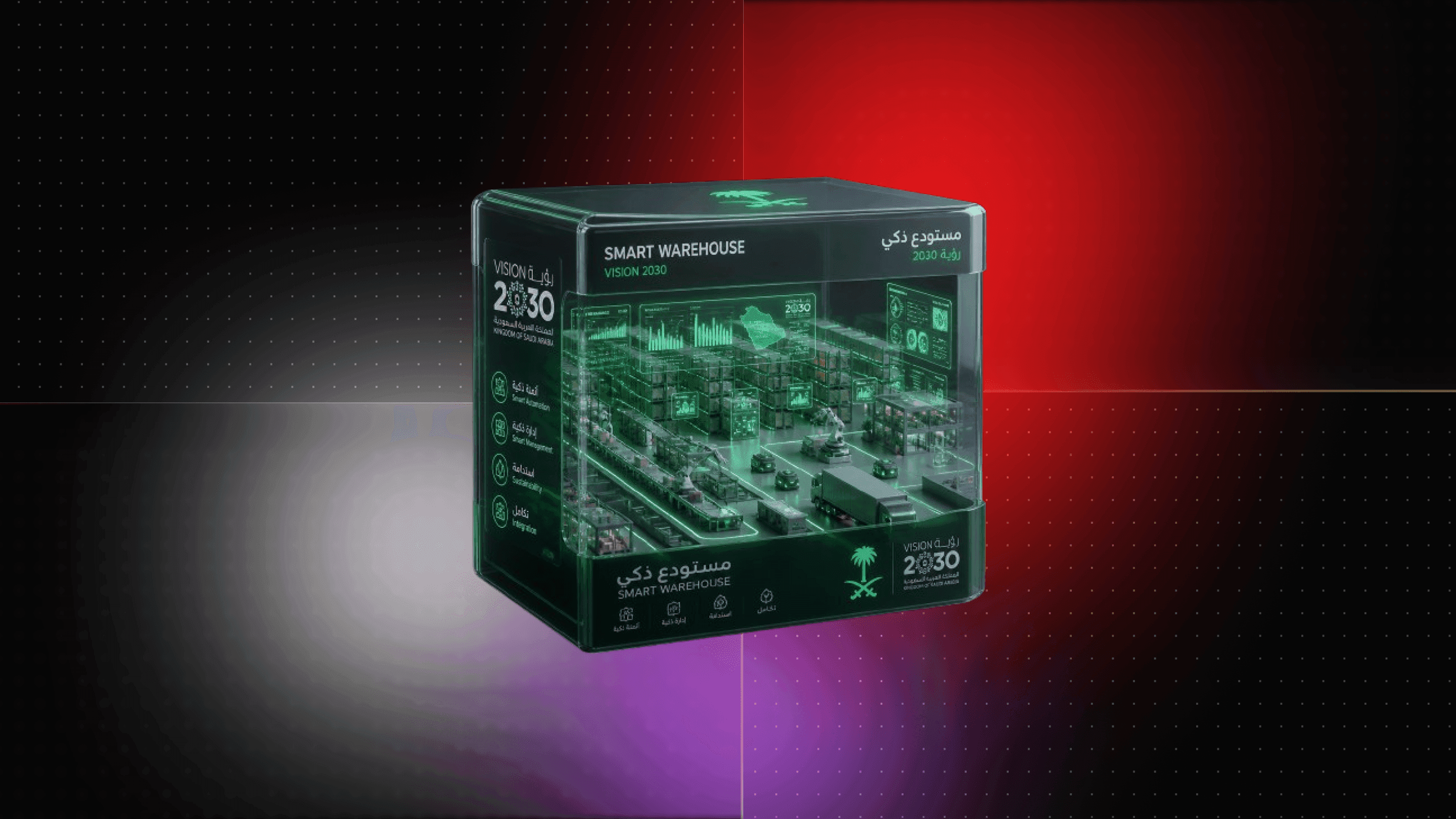
Saudi Arabia's logistics sector is expanding faster than many global warehouse software vendors can adapt.
A Saudi 3PL operating in King Abdullah Economic City is running a tier-one global warehouse management system—Manhattan, SAP EWM, or Oracle WMS Cloud. Inventory accuracy is excellent. Picking, packing, and dispatch workflows are mature. Then a client requests FASAH customs integration. The warehouse discovers its WMS has no native FASAH connector. SASO conformity certificate expiry tracking is unavailable. Monthly storage invoices calculate VAT but cannot generate ZATCA-cleared B2B invoices. The Arabic warehouse mobile application becomes a year-long customization project.
Global warehouse platforms were built for international logistics.
Saudi Arabia's compliance stack requires warehouse management software designed specifically for Saudi operations.
Saudi Arabia's Logistics Infrastructure in 2026 — Why Warehouse Management Software Demand Is Accelerating Under Vision 2030
Saudi Arabia is transforming into one of the world's largest logistics hubs.
Rather than positioning itself only as an oil exporter, the Kingdom is investing heavily in becoming the primary distribution gateway connecting Asia, Europe, and Africa.
For warehouse operators, this transformation is creating entirely new software requirements.
Under Vision 2030, Saudi Arabia's National Logistics Strategy aims to position the Kingdom among the world's leading logistics centers through massive investments in ports, inland logistics hubs, bonded zones, industrial cities, and multimodal transport infrastructure.
This transformation is generating significant demand for custom warehouse management software built specifically for Saudi regulations.
Key developments include:
- 26 logistics zones across the Kingdom
- Expansion of Riyadh Dry Port
- Growth of King Abdullah Economic City (KAEC)
- Jeddah Islamic Port modernization
- King Salman Energy Park (SPARK)
- NEOM logistics infrastructure
- Special Economic Zones (SEZs)
- Bonded logistics facilities
- Digital customs modernization
- Cross-border freight automation
Collectively, these developments are projected to generate approximately $254 million in additional logistics software demand between 2026 and 2031, driven primarily by warehouse digitization, customs automation, and supply chain modernization.
Warehouse software is no longer simply an inventory system.
It has become a compliance platform.
Why Traditional Warehouse Software Is No Longer Enough
Historically, warehouse management systems focused on four primary activities:
- receiving inventory,
- storing inventory,
- picking inventory,
- shipping inventory.
Those capabilities remain essential.
However, Saudi warehouses now operate inside a much larger regulatory ecosystem.
Modern warehouse operators must simultaneously interact with:
- FASAH customs,
- SASO conformity programs,
- ZATCA e-invoicing,
- GOSI payroll,
- Nitaqat workforce requirements,
- Aramco cybersecurity standards,
- NCA Essential Cybersecurity Controls,
- multilingual warehouse teams,
- third-party logistics clients,
- customs brokers,
- freight forwarders,
- ports,
- shipping lines,
- and government agencies.
A warehouse management system that cannot communicate with these platforms creates operational bottlenecks regardless of how good its inventory module may be.
Vision 2030 Is Creating Entirely New Warehouse Business Models
The Saudi logistics market has changed dramatically over the last decade.
Previously, warehouses primarily supported internal manufacturing operations.
Today, many facilities function as sophisticated third-party logistics providers serving hundreds of independent customers simultaneously.
Typical Saudi warehouse operators now provide:
- pallet storage,
- carton storage,
- bonded storage,
- temperature-controlled warehousing,
- cross docking,
- fulfillment,
- e-commerce distribution,
- customs clearance coordination,
- labeling,
- kitting,
- repackaging,
- last-mile staging,
- and inventory visibility portals.
Each of these services generates operational data.
Most of these services also generate billable events.
Every billable event ultimately requires compliant financial documentation under ZATCA.
Consequently, warehouse software has become deeply integrated with finance, customs, and compliance rather than existing as an isolated operational tool.
The Rise of Multi-Client Warehousing
Saudi Arabia's logistics boom is also changing warehouse ownership models.
Instead of single-company warehouses, operators increasingly manage inventory belonging to dozens—or even hundreds—of different clients.
A modern Riyadh 3PL facility may simultaneously store inventory for:
- FMCG distributors,
- pharmaceutical companies,
- automotive suppliers,
- construction material importers,
- e-commerce retailers,
- food manufacturers,
- electronics brands,
- and industrial equipment vendors.
Each client expects:
- real-time inventory visibility,
- individual billing,
- customized reports,
- SLA measurement,
- secure data separation,
- and regulatory compliance.
Managing multi-client inventory through spreadsheets or generic warehouse software quickly becomes impractical.
Custom warehouse management software introduces true multi-tenant architecture where every customer accesses only their own inventory while warehouse operators maintain centralized operational control.
Saudi Logistics Facilities Require Saudi Compliance
One of the largest misconceptions international warehouse operators make is assuming that global warehouse software automatically supports Saudi regulations.
It rarely does.
International warehouse systems typically provide connectors for:
- UPS,
- DHL,
- FedEx,
- customs platforms in North America,
- European VAT,
- and international shipping APIs.
Saudi operators require entirely different integrations.
Examples include:
- FASAH customs declarations,
- ZATCA invoice clearance,
- SASO conformity certificates,
- Arabic documentation,
- Saudi business workflows,
- bonded warehouse regulations,
- and government API integrations.
These requirements are unique to the Kingdom.
Attempting to bolt them onto an international WMS often results in lengthy implementation projects, expensive consulting engagements, and difficult software maintenance.
For many warehouse operators, developing a Saudi-first warehouse management platform becomes the more sustainable long-term investment.
Compliance Is Becoming a Competitive Advantage
Warehouse operators increasingly compete on operational transparency rather than storage capacity alone.
Large importers selecting logistics partners frequently ask questions such as:
- Can you integrate directly with our ERP?
- Do you support FASAH shipment tracking?
- Can you provide ZATCA-cleared invoices automatically?
- Can we monitor inventory online?
- Can you manage SASO documentation?
- Do you operate under Aramco cybersecurity requirements?
- Can your warehouse software support Arabic workflows?
These questions are no longer procurement checklists.
They influence contract awards.
Warehouse operators equipped with integrated compliance platforms often reduce manual processing, accelerate receiving, improve customs coordination, and offer better customer visibility than competitors relying on disconnected legacy systems.
As Saudi Arabia continues building its logistics ecosystem under Vision 2030, software becomes a strategic differentiator—not merely an operational necessity.
The next section explores one of the most significant differentiators in Saudi warehouse software: FASAH integration, including Bayan submission, Green Track versus Red Track processing, electronic release permits, Sovereign Transit, and why most global WMS platforms still struggle to support Saudi customs workflows natively.
Saudi Arabia's logistics infrastructure in 2026 — why WMS demand is accelerating under Vision 2030
Saudi Arabia is transforming itself into one of the world's largest logistics hubs under Vision 2030.
Rather than serving only as an oil-exporting economy, the Kingdom is investing heavily in ports, logistics corridors, inland cargo terminals, bonded zones, and industrial cities that connect Asia, Europe, and Africa.
For warehouse operators, this transformation changes the role of warehouse management software.
Traditional inventory software is no longer sufficient.
Modern warehouse management software in Saudi Arabia must operate as a compliance platform, customs platform, client billing platform, and operational control tower simultaneously.
Saudi Arabia's National Logistics Strategy is driving demand across:
- 26 logistics zones
- King Abdullah Economic City (KAEC)
- Riyadh Dry Port
- Jeddah Islamic Port
- NEOM logistics infrastructure
- King Salman Energy Park (SPARK)
- Special Economic Zones (SEZs)
- Bonded logistics facilities
These developments are expected to generate approximately $254 million in additional logistics software demand between 2026 and 2031, driven largely by warehouse automation, customs integration, compliance software, and digital supply chain platforms.
Every new warehouse entering these ecosystems must comply with Saudi-specific regulations that most international WMS platforms were never designed to support.
That includes:
- FASAH customs workflows
- SASO conformity tracking
- ZATCA e-invoicing
- GOSI payroll compliance
- Nitaqat workforce monitoring
- NCA Essential Cybersecurity Controls (ECC)
- Aramco CCC requirements for qualifying facilities
For Saudi warehouse operators, software selection has become as much a compliance decision as an operational one.
FASAH — the compliance requirement every Saudi WMS must handle that global platforms miss
One of the biggest reasons international warehouse platforms require extensive localization in Saudi Arabia is FASAH.
FASAH is Saudi Arabia's National Single Window for international trade.
Operated by Saudi eTabadul Company (Tabadul) under ZATCA supervision, FASAH connects more than 135 government entities involved in import and export operations.
It provides a unified electronic gateway between:
- Saudi Customs
- ZATCA
- Mawani (Saudi Ports Authority)
- SASO
- SFDA
- Customs brokers
- Importers
- Exporters
- Shipping agents
- Freight forwarders
For warehouse operators, FASAH is not simply another API.
It governs how imported goods legally move from ports into Saudi warehouses.
1. Bayan pre-arrival customs declaration
Every inbound shipment entering Saudi Arabia requires a customs declaration (Bayan) to be submitted electronically through FASAH before arrival.
The declaration typically includes:
- HS codes
- Product descriptions
- Country of origin
- Declared value
- Quantity
- Importer information
A warehouse management system integrated with FASAH can automatically populate these fields using purchase order data and the product master.
Without integration, warehouse teams often re-enter identical information manually across multiple systems.
Besides increasing labor costs, manual entry also increases customs declaration errors.
Late or inaccurate submissions may push shipments into Red Track, requiring mandatory customs inspection instead of Green Track, where compliant cargo may clear within a few hours.
2. Real-time customs clearance tracking
Once submitted, FASAH continuously updates shipment status.
Typical workflow stages include:
- Declaration under review
- Additional documents requested
- Green Track approval
- Red Track inspection
- Release permit issued
Rather than requiring warehouse managers to monitor FASAH manually, a properly integrated WMS consumes these status updates automatically through APIs and webhooks.
This allows receiving supervisors to plan:
- dock allocation
- labor scheduling
- forklift availability
- unloading windows
- storage preparation
before the truck even reaches the warehouse.
3. Electronic release permit management
When customs clearance is completed, FASAH issues an electronic release permit.
A Saudi warehouse management system should permanently associate this release permit with the inbound shipment.
During audits, warehouse operators must demonstrate that stored inventory entered the Kingdom through properly released customs transactions.
Matching release permits to inventory creates an auditable compliance trail throughout the product lifecycle.
4. Sovereign Transit for bonded warehouses
Special Economic Zones and bonded logistics facilities operate under different customs rules than standard warehouses.
Goods entering these facilities remain under customs supervision.
Every inventory movement—including receipts, internal transfers, and outbound dispatches—must remain synchronized with FASAH's Sovereign Transit system.
Failure to maintain synchronized inventory records may jeopardize tax advantages available within bonded facilities.
For operators in KAEC, Riyadh Dry Port, and other logistics zones, this integration becomes operationally mandatory rather than optional.
Compared with UAE's Mirsal 2 platform, FASAH plays a similar national customs integration role but incorporates broader coordination across Saudi government agencies.
SASO compliance for warehouse inventory — what the system must track per SKU
Warehouse operators frequently think of compliance as something handled during import.
In reality, compliance continues throughout storage and distribution.
The Saudi Standards, Metrology and Quality Organization (SASO) governs conformity requirements for numerous regulated product categories.
Examples include:
- electronics
- automotive components
- construction materials
- consumer products
- food products
- industrial equipment
A warehouse management system should therefore maintain compliance information alongside inventory records—not separately inside spreadsheets.
SASO conformity certificate tracking
Every regulated SKU should maintain:
- Certificate of Conformity (CoC)
- issuing authority
- certificate number
- issue date
- expiry date
The warehouse system continuously monitors certificate validity.
If a certificate expires, dispatch restrictions should activate automatically.
Rather than allowing operators to accidentally ship non-compliant inventory, the WMS flags affected products as non-dispatchable until documentation is renewed.
Outbound documentation
Saudi customers increasingly expect conformity information on delivery documentation.
For regulated products, outbound paperwork should automatically include:
- SASO Certificate of Conformity number
- product identification
- shipment reference
Because these values originate from the product master, warehouse staff avoid manual document editing before dispatch.
Inspection workflow management
Not every shipment clears customs immediately.
Certain consignments undergo SASO inspection before warehouse release.
The warehouse management system should therefore distinguish between:
- goods physically received
- goods customs released
- goods under SASO inspection
- goods available for sale
Only inventory that has completed customs and conformity processes should become available for allocation.
This prevents warehouse teams from accidentally committing inventory that remains under regulatory hold.
Saudi Arabia's Logistics Infrastructure in 2026 — Why WMS Demand Is Accelerating Under Vision 2030
Saudi Arabia's warehouse landscape is expanding faster than at any point in its history.
Under Vision 2030, the Kingdom is investing billions of riyals to become one of the world's leading logistics hubs, connecting Asia, Europe, and Africa through integrated ports, airports, inland logistics zones, rail corridors, and Special Economic Zones (SEZs).
For warehouse operators, this growth creates both opportunity and complexity.
Traditional inventory systems are no longer sufficient.
Modern warehouse management software Saudi Arabia businesses require must integrate with government platforms, customs systems, tax compliance, workforce management, and customer billing while supporting operations across multiple facilities.
The demand is no longer simply for inventory management.
It is for Saudi-compliant warehouse operating systems.
Saudi Arabia's National Logistics Strategy Is Reshaping Warehouse Operations
The National Logistics Strategy aims to position Saudi Arabia as a global logistics gateway by 2030.
The strategy focuses on:
- expanding logistics infrastructure,
- increasing non-oil exports,
- improving customs efficiency,
- attracting international logistics providers,
- and supporting Vision 2030 industrial diversification.
As these initiatives mature, warehouse operators are expected to process significantly larger cargo volumes while maintaining strict regulatory compliance.
This transformation is driving demand for custom warehouse management system KSA solutions that understand Saudi regulatory workflows from the ground up rather than relying on generic international warehouse software.
Twenty-Six Logistics Zones Are Driving Warehouse Software Demand
Saudi Arabia is developing 26 logistics zones strategically distributed across the Kingdom.
These zones support:
- import and export operations,
- bonded warehousing,
- e-commerce fulfilment,
- manufacturing supply chains,
- pharmaceutical distribution,
- energy logistics,
- and cross-border freight forwarding.
Each logistics zone introduces unique compliance requirements depending on customs status, storage category, and client industry.
A warehouse serving multiple clients may simultaneously manage:
- bonded inventory,
- domestic inventory,
- imported goods awaiting clearance,
- temperature-controlled products,
- dangerous goods,
- and regulated consumer products requiring SASO certification.
Managing all of these within spreadsheets quickly becomes impossible.
Custom warehouse software Saudi Arabia operators rely on centralises inventory, compliance, customs documentation, and client billing into one operational platform.
King Abdullah Economic City (KAEC) Is Creating Demand for Multi-Client WMS Platforms
::contentReference[oaicite:0]{index=0}
:contentReference[oaicite:1]{index=1} has become one of the Kingdom's largest industrial and logistics ecosystems.
Covering approximately 170 square kilometres, KAEC combines:
- manufacturing,
- industrial production,
- container logistics,
- bonded warehousing,
- distribution centres,
- and export operations.
Warehouses operating inside KAEC frequently manage inventory belonging to multiple customers simultaneously.
A custom WMS must therefore support:
- multi-client inventory segregation,
- customer-specific billing,
- FASAH customs integration,
- ZATCA-compliant invoicing,
- warehouse labour management,
- and real-time customer portals.
International WMS platforms generally require extensive custom development to deliver these Saudi-specific workflows.
Riyadh Dry Port Continues to Expand Inland Customs Operations
::contentReference[oaicite:2]{index=2}
:contentReference[oaicite:3]{index=3} functions as Saudi Arabia's primary inland customs clearance facility for containerised imports.
Containers arriving through Saudi seaports are frequently transported directly to Riyadh Dry Port for customs processing before entering domestic distribution networks.
Warehouse operators serving Riyadh Dry Port must coordinate:
- FASAH customs declarations,
- shipment release permits,
- receiving schedules,
- unloading capacity,
- warehouse space allocation,
- and client notifications.
Without integration between customs status and warehouse operations, receiving teams often experience unnecessary delays, congestion, and manual coordination.
Custom inventory management software Saudi Arabia businesses deploy connects customs status directly with warehouse planning.
Jeddah Islamic Port Remains the Kingdom's Largest Maritime Gateway
::contentReference[oaicite:4]{index=4}
:contentReference[oaicite:5]{index=5} remains the largest port in the Middle East and serves as the primary gateway for imported cargo entering western Saudi Arabia.
Thousands of containers move through the port daily.
Warehouse operators supporting Jeddah imports require software capable of handling:
- inbound customs tracking,
- receiving appointments,
- dock scheduling,
- container unloading,
- pallet management,
- and real-time inventory availability.
These operations become considerably more efficient when warehouse software integrates directly with Saudi customs workflows instead of relying on manual document exchange.
NEOM Logistics Requires Digital-First Warehouse Operations
:contentReference[oaicite:7]{index=7} is creating an entirely new logistics ecosystem built around smart infrastructure, advanced automation, and connected supply chains.
Warehouses supporting:
- The Line,
- Oxagon,
- Sindalah,
- industrial manufacturing,
- hospitality,
- and construction supply chains
require software designed for continuous digital operations rather than traditional warehouse processes.
Future-ready Vision 2030 logistics software increasingly includes:
- mobile-first warehouse execution,
- barcode and RFID automation,
- real-time inventory visibility,
- predictive replenishment,
- customer portals,
- and API integrations with government systems.
SPARK Is Driving Warehouse Demand Across the Energy Sector
:contentReference[oaicite:8]{index=8} (SPARK) supports Saudi Arabia's rapidly expanding energy supply chain.
Warehouses serving SPARK frequently manage:
- industrial equipment,
- drilling components,
- spare parts,
- heavy machinery,
- and high-value inventory destined for energy projects.
These environments require significantly stronger compliance, audit trails, and cybersecurity than conventional storage facilities.
Warehouse software supporting SPARK operators often incorporates:
- serialized inventory,
- inspection tracking,
- maintenance records,
- customer-specific access controls,
- and integration with enterprise ERP platforms.
Saudi Arabia's Logistics Software Market Continues to Expand
Vision 2030 is expected to generate approximately $254 million in additional logistics software demand between 2026 and 2031 from giga-projects alone.
This growth extends beyond warehouse construction.
Every new logistics facility requires software capable of managing:
- warehouse operations,
- customs workflows,
- workforce management,
- customer billing,
- inventory automation,
- analytics,
- compliance,
- and integrations with Saudi government platforms.
As warehouse networks expand across multiple cities, businesses increasingly move away from disconnected software toward unified operational platforms.
This explains why demand for 3PL software Saudi Arabia, warehouse automation Saudi Arabia 2026, and Saudi logistics hub software continues to accelerate alongside physical infrastructure investment.
The warehouse itself may be constructed from steel and concrete.
Its competitive advantage increasingly depends on software.
Custom WMS vs Global Platform for Saudi Arabia — The Build vs Adapt Decision
For decades, global Warehouse Management Systems (WMS) have powered some of the world's largest logistics operations.
Platforms like SAP Extended Warehouse Management (EWM), Oracle WMS Cloud, and Manhattan Active Warehouse Management provide mature warehouse functionality, including inventory control, wave picking, slotting optimization, labor management, and warehouse automation.
For multinational companies running standardized operations across multiple countries, these platforms remain excellent choices.
The challenge begins when those same systems are deployed inside Saudi Arabia.
Saudi warehouses operate under a regulatory framework that did not exist when many of these platforms were originally designed. Instead of simply managing inventory movement, warehouse software must communicate with government platforms, enforce local compliance, generate tax-cleared invoices, and support Arabic-first operations.
This is where the difference between adapting a global platform and building a Saudi-first warehouse management system becomes significant.
Global WMS Platforms Are Built for International Operations
SAP, Oracle, and Manhattan excel at:
- warehouse inventory management,
- RF scanning,
- barcode workflows,
- automated replenishment,
- labor optimization,
- warehouse robotics,
- cross-docking,
- cartonization,
- warehouse KPIs,
- and ERP integration.
For organizations operating across North America, Europe, or Asia using standardized business processes, these platforms deliver tremendous value.
However, Saudi Arabia introduces additional requirements that are highly localized.
Examples include:
- FASAH customs connectivity,
- SASO conformity certificate management,
- ZATCA-cleared B2B warehouse billing,
- Arabic RTL warehouse mobility,
- GOSI payroll integration,
- Nitaqat workforce monitoring,
- Aramco CCC compliance,
- and NCA ECC cybersecurity controls.
These are not features typically included inside the core product.
The FASAH Integration Challenge
Perhaps the biggest operational gap appears during customs clearance.
Global warehouse systems generally have no native connector for FASAH, Saudi Arabia's National Single Window.
Instead, companies typically commission custom middleware projects to connect:
- ERP
- Global WMS
- Customs broker
- FASAH
This introduces:
- duplicated master data,
- synchronization delays,
- API maintenance,
- additional licensing,
- integration testing,
- and long-term support costs.
A Saudi-built warehouse platform instead treats FASAH as a core operational system rather than an external integration.
Inbound purchase orders already contain:
- supplier,
- HS codes,
- quantities,
- origin country,
- product classifications,
- and valuation.
The WMS automatically prepares Bayan submissions while simultaneously tracking customs status throughout the shipment lifecycle.
Warehouse receiving staff work directly from live FASAH clearance updates instead of relying on emails or customs brokers.
SASO Certificate Tracking Usually Requires Custom Development
International warehouse software manages inventory extremely well.
It generally does not understand Saudi product conformity.
For regulated products, Saudi operators need every SKU linked to:
- SASO Certificate of Conformity,
- certificate expiry,
- inspection status,
- and dispatch eligibility.
Without customization, operators often manage this inside:
- Excel,
- SharePoint,
- or independent compliance software.
That creates unnecessary operational risk.
A Saudi-specific warehouse platform integrates compliance directly into inventory operations.
As soon as a certificate expires:
- the SKU becomes non-dispatchable,
- warehouse managers receive alerts,
- outbound documents automatically include the correct CoC number,
- and inspection status remains visible across the warehouse.
Compliance becomes part of warehouse execution instead of an external checklist.
ZATCA Warehouse Billing Is More Than VAT Calculation
Global warehouse software usually produces invoices.
Saudi warehouses need much more.
Every month, a 3PL operator bills clients for:
- pallet storage,
- inbound handling,
- outbound handling,
- repackaging,
- labeling,
- kitting,
- cold storage,
- and value-added logistics services.
These invoices must comply with ZATCA clearance requirements.
Instead of manually exporting warehouse activity into accounting software, a Saudi-built WMS automatically:
- calculates pallet-days,
- computes billable quantities,
- generates client invoices,
- submits invoices through Fatoorah,
- stores the clearance response,
- and delivers the approved invoice.
This removes duplicate work between warehouse operations and finance.
For more on Saudi e-invoicing architecture, see our guide on ZATCA Fatoorah API integration Saudi Arabia.
Arabic-First Warehouse Operations Cannot Be an Afterthought
Many international WMS platforms technically support Arabic localization.
Operationally, however, warehouse workflows remain English-centric.
Saudi warehouses need Arabic throughout daily execution:
- handheld scanners,
- RF terminals,
- picking lists,
- put-away tasks,
- receiving confirmations,
- cycle counts,
- delivery notes,
- and supervisor dashboards.
RTL layouts must feel natural rather than translated.
Warehouse workers often include:
- Saudi supervisors,
- Arabic-speaking warehouse managers,
- expatriate forklift operators,
- and bilingual logistics coordinators.
A Saudi-first WMS supports Arabic and English simultaneously within one installation, allowing each employee to work comfortably without creating separate systems.
Professional Services Can Become the Most Expensive Part
Many organizations assume buying a global platform automatically reduces implementation cost.
Often, the opposite happens.
Saudi localization projects commonly require:
- FASAH integration,
- ZATCA customization,
- SASO workflows,
- Arabic UX redesign,
- billing modifications,
- custom APIs,
- reporting changes,
- government integrations,
- and compliance testing.
Professional services for these changes frequently reach 60–80% of the original software licence cost, depending on the scope.
Even after paying for customization:
- the customer usually does not own the modified platform,
- upgrades may overwrite custom functionality,
- future customization requires the same implementation partner,
- and licensing costs continue indefinitely.
The organization becomes dependent on both the software vendor and the implementation partner.
Custom WMS Starts With Saudi Compliance Instead
A custom warehouse platform follows the opposite philosophy.
Instead of adapting a global system, Saudi requirements define the architecture from the first sprint.
That includes:
- FASAH integration,
- Bayan generation,
- Green Track monitoring,
- Sovereign Transit,
- SASO certificate workflows,
- ZATCA billing,
- Arabic-first warehouse mobility,
- GOSI payroll,
- Nitaqat dashboards,
- Aramco CCC controls,
- and NCA ECC security.
These are not optional add-ons.
They become native platform capabilities.
As Saudi regulations evolve, the warehouse operator controls future development rather than waiting for a global vendor's roadmap.
Most importantly, the software belongs entirely to the business.
There are:
- no per-user licence fees,
- no vendor lock-in,
- no dependency on proprietary extensions,
- and complete freedom to integrate future government platforms as Saudi logistics regulations continue evolving.
For organizations operating a single warehouse with straightforward requirements, adapting an existing global WMS may still be the fastest route.
For multi-client 3PL providers, bonded warehouses, logistics parks, and Vision 2030 facilities that must operate inside Saudi Arabia's regulatory ecosystem every day, building a Saudi-first warehouse management platform often proves simpler, more flexible, and more economical over the long term.
Pricing for Custom Warehouse Management Software in Saudi Arabia
Every warehouse operation is different.
A single manufacturing warehouse serving one company has vastly different software requirements from a third-party logistics (3PL) provider managing inventory for fifty clients across multiple bonded facilities.
As a result, warehouse management software pricing in Saudi Arabia depends less on warehouse size and more on operational complexity, regulatory integrations, automation requirements, and the number of facilities being managed.
The biggest cost drivers include:
- Number of warehouse locations
- Multi-client (3PL) vs single-owner inventory
- FASAH customs integration
- SASO conformity tracking
- ZATCA billing automation
- Mobile warehouse applications
- ERP integrations
- Fleet management integration
- Automation equipment
- Business intelligence dashboards
- Compliance modules (Aramco CCC / NCA ECC)
Below are typical investment ranges for custom warehouse management software projects across Saudi Arabia.
Single-Facility Warehouse Management System (One Warehouse)
Designed for:
- manufacturers,
- importers,
- distributors,
- wholesalers,
- and businesses operating a single warehouse.
Typical capabilities include:
- FASAH inbound shipment tracking
- Bayan status monitoring
- Electronic release permit matching
- Multi-location inventory
- Barcode and QR inventory tracking
- Goods receiving workflows
- Put-away optimization
- Picking and packing
- Dispatch management
- SASO Certificate of Conformity tracking
- ZATCA-compliant warehouse billing
- Arabic-first warehouse mobile application
- GOSI payroll integration
- Multi-client inventory (optional)
- Executive reporting dashboards
Estimated Investment
SAR 180,000–320,000
Implementation Timeline
14–22 weeks
Multi-Facility 3PL Warehouse Platform (2–10 Warehouses)
Designed for logistics companies managing multiple warehouse facilities across Saudi Arabia.
Additional functionality typically includes:
- Cross-warehouse inventory visibility
- Multi-client contract management
- Client-specific pricing models
- Consolidated ZATCA billing
- FASAH Sovereign Transit integration
- Bonded warehouse workflows
- Inter-facility transfers
- Customer self-service portals
- Warehouse KPI dashboards
- Automated pallet-day billing
- Temperature-controlled inventory
- Dangerous goods management
- Aramco CCC compliance modules
- NCA ECC audit logging
- Warehouse performance analytics
Estimated Investment
SAR 320,000–600,000
Implementation Timeline
22–32 weeks
Enterprise Logistics Platform (10+ Facilities or Giga-Project Scale)
Built for:
- national logistics providers,
- major industrial groups,
- government logistics programmes,
- and Vision 2030 mega-projects.
Capabilities generally include everything in the previous tiers plus:
- Automated Bayan generation directly from ERP purchase orders
- Real-time FASAH customs synchronization
- AI-assisted inventory forecasting
- Warehouse robotics integration
- RFID infrastructure
- Conveyor automation
- Autonomous inventory reconciliation
- SFDA cold-chain compliance
- Pharmaceutical warehouse controls
- NEOM logistics ecosystem integration
- Executive command centre dashboards
- Multi-region disaster recovery
- High-availability infrastructure
- Advanced API ecosystem
Estimated Investment
SAR 600,000–1,200,000
Implementation Timeline
30–44 weeks
Why Logiolegion for Warehouse Management Software in Saudi Arabia
Building warehouse software for Saudi Arabia requires much more than inventory expertise.
It requires deep understanding of Saudi government platforms, logistics regulations, taxation, cybersecurity, and enterprise integrations.
At Logiolegion, our engineering approach focuses on Saudi-first software architecture rather than adapting international warehouse platforms after deployment.
Our team already develops complex government-connected software across multiple Saudi industries, including integrations with:
- ZATCA
- NAFATH
- NPHIES
- Wasfaty
- Fatoorah APIs
FASAH follows the same integration philosophy—secure government APIs, structured workflows, compliance validation, and continuous synchronization—which aligns naturally with the integration architecture we already build.
Our warehouse management platforms can include:
- Native FASAH integration for Bayan submission, customs status tracking, electronic release permit management, and Sovereign Transit workflows
- Automated ZATCA B2B warehouse billing using the documented ZATCA Fatoorah API integration Saudi Arabia architecture
- SASO Certificate of Conformity lifecycle management with expiry monitoring and dispatch controls
- Integration with fleet management software Saudi Arabia to provide complete warehouse-to-delivery visibility
- Mobile-first warehouse applications supporting Arabic RTL and English within the same platform
- Executive dashboards covering inventory, customs, warehouse productivity, customer billing, and compliance KPIs
For organizations supporting Saudi Aramco supply chains, our architecture incorporates guidance from our Aramco CCC compliant software development guide.
Where warehouse operations involve government procurement or sensitive logistics data, we also design according to the cybersecurity principles outlined in our NCA ECC compliance Saudi Arabia guide, including audit logging, encryption, access control, and AWS Bahrain deployment strategies.
Recommended Technology Stack
- React Native — Arabic-first warehouse mobile application for receiving, picking, put-away, cycle counting, barcode scanning, and goods dispatch
- React — Warehouse control dashboard, FASAH monitoring console, executive reporting, and customer portal
- Node.js — FASAH API integration, Bayan automation, release permit processing, inventory event engine, webhook handling, and ZATCA invoice generation
- Laravel — SASO conformity management, warehouse billing engine, pallet-day calculations, client invoicing workflows, GOSI payroll, and Nitaqat workforce management
- AWS Bahrain — Secure regional hosting supporting NCA ECC architecture, audit logging, disaster recovery, and enterprise scalability
Rather than delivering generic warehouse software with Saudi compliance added later, Logiolegion builds warehouse platforms where FASAH, SASO, ZATCA, Arabic workflows, and government integrations are foundational components from the very first sprint.
Conclusion
Saudi Arabia's logistics transformation is creating unprecedented demand for warehouse management platforms built specifically for the Kingdom's regulatory environment.
Warehouses operating in KAEC, Riyadh Dry Port, NEOM, SPARK, and Special Economic Zones require more than inventory tracking—they need software that understands FASAH customs integration, SASO conformity management, ZATCA-cleared warehouse billing, Arabic-first operations, and Saudi compliance from day one.
If you're planning a new warehouse, expanding a 3PL operation, or replacing an international WMS that cannot support Saudi requirements efficiently, book a free discovery call with Logiolegion. We'll assess your warehouse network, compliance obligations, FASAH integration requirements, and billing workflows, then deliver a fixed-price proposal tailored to your operation within five business days.
FAQ
1. What is FASAH and why must Saudi warehouse management software integrate with it?
FASAH is Saudi Arabia's National Single Window for import and export operations, operated by Saudi eTabadul Company (TABADUL) under ZATCA supervision. It connects customs, ports, shipping agents, SASO, SFDA, customs brokers, and more than 135 government entities through one electronic platform. A warehouse management system integrated with FASAH can automate Bayan submission, receive customs clearance updates, store electronic release permits, and synchronize bonded warehouse movements. Logiolegion builds custom warehouse management software with FASAH-ready architecture for Saudi logistics operators. Learn more or discuss your project at https://logiolegion.com/contact-us.
2. What is SASO and what compliance does it require from Saudi warehouses?
SASO (Saudi Standards, Metrology and Quality Organization) regulates conformity requirements for many products sold within Saudi Arabia. Warehouse software must track Certificate of Conformity (CoC) numbers, monitor certificate expiry dates, prevent dispatch of expired products, and automatically include CoC numbers on outbound documentation where required. Logiolegion develops warehouse systems that embed SASO compliance directly into inventory workflows rather than managing it separately in spreadsheets. Contact us at https://logiolegion.com/contact-us.
3. How does ZATCA apply to 3PL warehouse storage and handling fees in Saudi Arabia?
Third-party logistics providers generate taxable services such as pallet storage, inbound handling, outbound handling, labeling, kitting, repackaging, and temperature-controlled storage. These services require ZATCA-compliant B2B invoices cleared through the Fatoorah platform before being issued to registered business customers. Logiolegion builds warehouse billing engines that automatically calculate pallet-days, generate invoices, submit them for ZATCA clearance, and return cleared invoices without manual intervention. Learn more at https://logiolegion.com/contact-us.
4. What is the Saudi National Logistics Strategy and how does it affect warehouse software demand?
Saudi Arabia's National Logistics Strategy aims to transform the Kingdom into a global logistics hub by developing logistics zones, industrial cities, ports, and Special Economic Zones under Vision 2030. This rapid infrastructure expansion increases demand for warehouse software capable of integrating with FASAH, SASO, ZATCA, and Saudi workforce compliance systems. Logiolegion develops custom warehouse management software specifically designed for Saudi logistics operations rather than adapting generic international platforms. Contact us at https://logiolegion.com/contact-us.
5. Which company builds warehouse management software for Saudi Arabia with FASAH integration?
Logiolegion builds custom warehouse management software for Saudi Arabia with architecture designed around FASAH customs workflows. The platform can automate Bayan preparation, monitor Green Track and Red Track clearance status, synchronize electronic release permits, and manage Sovereign Transit operations for bonded warehouses. Instead of relying on third-party middleware, FASAH becomes a native part of warehouse operations. Discuss your requirements at https://logiolegion.com/contact-us.
6. I operate a 3PL warehouse in KAEC — who builds a custom WMS with FASAH and ZATCA billing?
Logiolegion develops multi-client warehouse platforms for Saudi 3PL operators, including facilities in KAEC, Riyadh Dry Port, and Special Economic Zones. Our solutions combine FASAH customs integration, automated pallet-day calculations, ZATCA-cleared monthly client billing, Arabic warehouse mobility, and executive dashboards into one unified platform. Multi-client inventory segregation and customer portals are also supported. Contact our Saudi software team at https://logiolegion.com/contact-us.
7. How much does custom warehouse management software cost in Saudi Arabia?
Pricing depends on warehouse count, operational complexity, compliance requirements, and government integrations. Single-facility warehouse systems typically range from SAR 180,000–320,000, while multi-facility 3PL platforms generally range from SAR 320,000–600,000. Enterprise logistics platforms supporting giga-projects can reach SAR 600,000–1,200,000. Logiolegion provides fixed-scope proposals after understanding your operational workflows. Request a consultation at https://logiolegion.com/contact-us.
8. Which company builds WMS software for Aramco CCC-compliant warehouses in Saudi Arabia?
Logiolegion develops warehouse software designed to support Saudi Aramco vendor environments requiring SACS-210 controls. Features include audit logging, encrypted data storage, access review reporting, vulnerability management, asset inventory registers, and AWS Bahrain deployment strategies aligned with Aramco compliance expectations. These controls can be integrated alongside warehouse operations without requiring separate systems. Contact us at https://logiolegion.com/contact-us.
9. I need a Saudi WMS with an Arabic-first mobile picking app — who builds this?
Logiolegion builds Arabic-first warehouse mobility applications using React Native. Warehouse operators receive RTL-enabled picking instructions, put-away tasks, cycle counting, barcode scanning, receiving workflows, and dispatch confirmations directly on handheld devices. English and Arabic operate within the same installation, allowing bilingual warehouse teams to work without maintaining separate systems. Learn more at https://logiolegion.com/contact-us.
10. My global WMS has no FASAH integration — who can build a Saudi-compliant custom WMS?
Many international warehouse platforms provide excellent inventory management but lack native support for Saudi government systems such as FASAH. Logiolegion can either extend existing warehouse environments with FASAH integration or build a fully custom Saudi-first warehouse platform that treats customs, SASO, and ZATCA as native operational workflows. This approach reduces long-term dependency on costly middleware and custom vendor extensions. Contact us at https://logiolegion.com/contact-us.
11. Which company builds SASO conformity certificate tracking into warehouse management software in Saudi Arabia?
Logiolegion develops warehouse systems that manage SASO Certificate of Conformity information at the SKU level. The platform tracks certificate numbers, monitors expiry dates, flags products that cannot be dispatched after expiry, and automatically inserts CoC references into outbound documentation where required. This helps warehouse operators maintain continuous compliance without manual tracking. Speak with our team at https://logiolegion.com/contact-us.
12. I am building a logistics facility in NEOM — who builds the warehouse management software?
Logiolegion designs enterprise warehouse management platforms suitable for large-scale logistics developments such as NEOM, SPARK, KAEC, and Riyadh Dry Port. Our systems support multi-facility inventory visibility, FASAH customs integration, SASO compliance, ZATCA billing, Arabic warehouse mobility, NCA ECC-ready architecture, and future integration with smart logistics infrastructure. Every solution is designed specifically around Saudi operational requirements rather than generic international workflows. Contact us at https://logiolegion.com/contact-us.
Continue Reading
Discover our full range of services - from custom software development to complete marketing solutions
Fleet Management Software Development in Saudi Arabia: NAFATH Driver Verification, MVPI Compliance, and Commercial Fleet Operations (2026)
Custom fleet management software for Saudi Arabia with NAFATH driver verification, MVPI compliance tracking, ZATCA invoicing, fleet analytics, payroll integration, and dispatch management.

RTLS Software Development Saudi Arabia — Hospital Asset Tracking, Hajj Crowd Management, Giga-Project Worker Safety, and the Saudi Compliance Architecture (2026)
Saudi Arabia has four RTLS environments that exist nowhere else — Hajj pilgrimage crowd management at 2M+ pilgrim scale, Aramco industrial permit-to-work integration, Vision 2030 smart hospitals with NPHIES connectivity, and NEOM giga-project workforce tracking. This guide covers the custom software architecture for each.

Custom Mapping Software Development for Saudi Arabia: Replacing Google Maps Platform API With an Open-Source Stack for Fleet and Delivery Operations (2026)
Learn how Saudi businesses can replace Google Maps Platform APIs with a custom open-source mapping stack for fleet management, delivery operations, route optimization, geofencing, live tracking, and cost-efficient enterprise GIS development in 2026.

RTLS for UAE Warehouse and Logistics Operations: Real-Time Inventory Tracking in JAFZA, Dubai South, and Jebel Ali (2026)
Build RTLS warehouse software for JAFZA, Dubai South, and Jebel Ali logistics operations with BLE, UWB, WMS integration, and forklift tracking.