
14-05-2026
Tamara vs Tabby Saudi Arabia: Fees Compared 2026
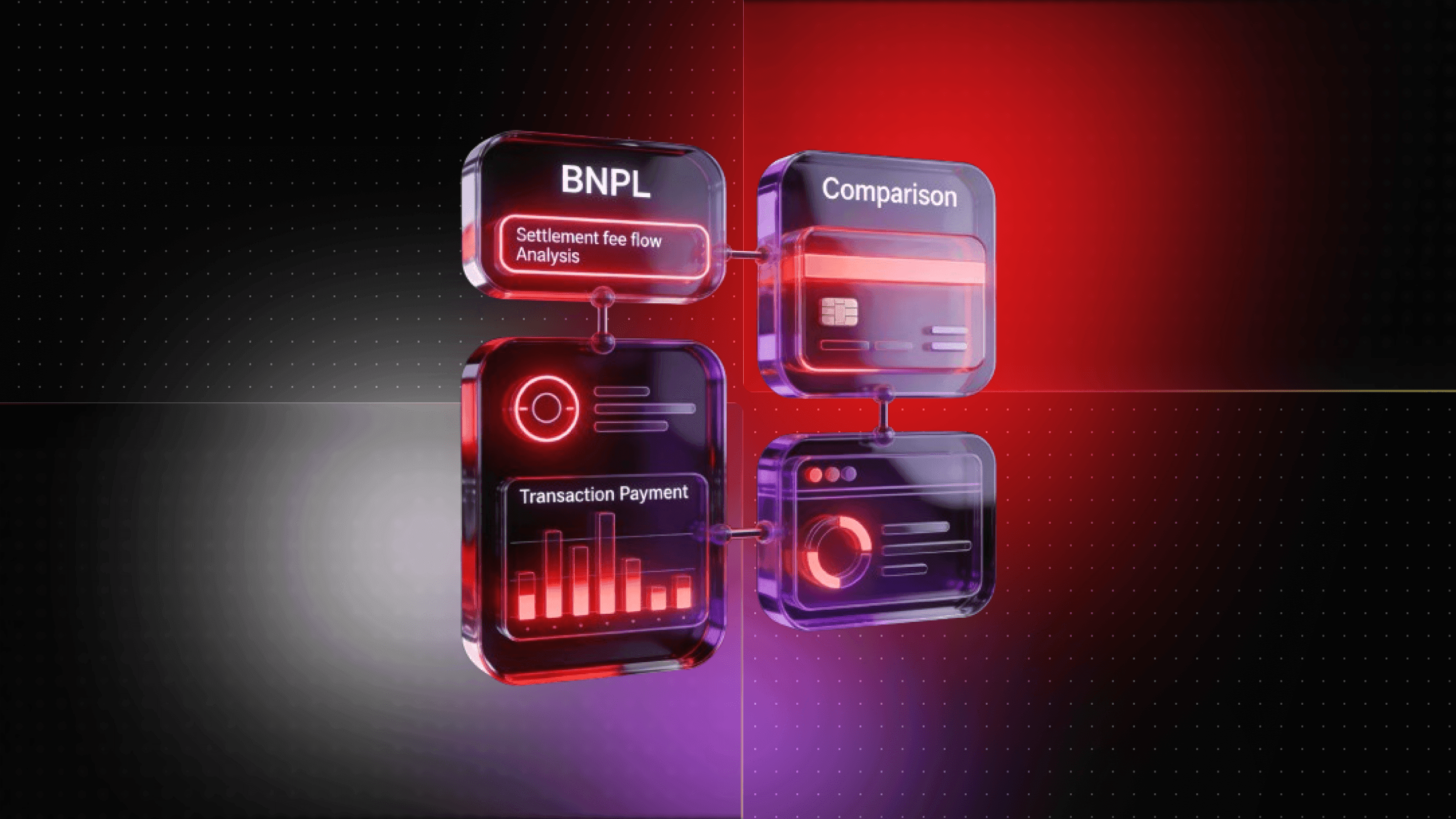
Buy Now Pay Later (BNPL) has become one of the most influential forces in Saudi Arabia’s ecommerce ecosystem.
What started as an alternative payment option has now evolved into a major conversion driver for online retailers, marketplaces, fashion brands, electronics stores, and mobile-first commerce platforms across the GCC.
Today, Saudi merchants are no longer evaluating BNPL providers purely based on merchant discount rates (MDRs).
They are evaluating:
- approval rates
- settlement timelines
- integration complexity
- checkout conversion impact
- reconciliation workflows
- operational support
- customer experience quality
This is why the Tamara vs Tabby debate has become far more technical than a simple fee comparison.
In this article, we break down how both platforms compare from an operational, integration, and infrastructure perspective for Saudi ecommerce businesses in 2026.
Why BNPL Has Become Critical in Saudi Ecommerce
Saudi Arabia’s ecommerce market has experienced rapid behavioral shifts over the last few years.
Consumers increasingly expect:
- flexible installment payments
- frictionless checkout
- mobile-first purchasing
- instant financing approval
- alternative payment methods
BNPL providers like Tamara and Tabby help ecommerce businesses improve:
- average order value (AOV)
- checkout conversion rates
- customer retention
- purchase frequency
This is especially important for categories such as:
- fashion
- electronics
- beauty
- furniture
- luxury retail
- travel services
For many ecommerce businesses in Saudi Arabia, BNPL is no longer optional.
It has become a core revenue infrastructure component.
Tamara vs Tabby: Core Platform Differences
Although both platforms operate within the same BNPL category, their merchant operations, onboarding flows, and technical ecosystems differ significantly.
Tamara
Tamara has positioned itself strongly within the GCC market, particularly Saudi Arabia.
The platform focuses heavily on:
- regional ecommerce growth
- local merchant partnerships
- installment flexibility
- Arabic-first experiences
- enterprise merchant relationships
Tamara is widely adopted across major GCC ecommerce brands and marketplaces.
Tabby
Tabby has expanded aggressively across the GCC with strong emphasis on:
- user experience
- mobile checkout optimization
- ecommerce integrations
- consumer financing simplicity
Tabby is often praised for streamlined onboarding and strong Shopify ecosystem compatibility.
Merchant Fees & MDR Structures
Merchant discount rates remain one of the biggest evaluation factors for businesses choosing a BNPL provider.
However, merchants often underestimate the operational implications beyond the visible MDR percentage.
Typical merchant considerations include:
- MDR percentage
- settlement speed
- chargeback handling
- refund processing
- payout reconciliation
- onboarding requirements
- technical support responsiveness
While MDR rates vary depending on:
- merchant category
- transaction volume
- business size
- risk profile
the operational costs surrounding BNPL infrastructure can sometimes have a larger impact than the fee itself.
For example:
A platform with slightly higher MDR but smoother reconciliation workflows may reduce finance team workload significantly.
Checkout UX Comparison
Checkout experience directly impacts conversion rates.
Even small friction points can reduce completed purchases.
Tamara Checkout Experience
Tamara generally emphasizes:
- localized Arabic UX
- installment transparency
- embedded financing visibility
- regional trust positioning
Many merchants prefer Tamara for customers already familiar with Saudi-focused ecommerce experiences.
Tabby Checkout Experience
Tabby often focuses heavily on:
- streamlined mobile checkout
- minimal checkout friction
- clean user interface
- rapid approval flow
This can be particularly beneficial for mobile-heavy ecommerce businesses.
Why Checkout UX Matters
For Saudi ecommerce businesses, checkout performance affects:
- cart abandonment
- mobile conversion
- repeat purchases
- customer trust
- financing adoption rates
This is why technical integration quality matters almost as much as pricing.
Shopify, Magento & Custom API Integration Differences
One of the biggest differences between BNPL providers emerges during technical implementation.
Shopify Integration
Both Tamara and Tabby provide Shopify integrations.
However, merchants still frequently require customizations for:
- checkout optimization
- multi-currency handling
- custom order flows
- analytics tracking
- webhook automation
Magento & Enterprise Platforms
Enterprise ecommerce platforms often require:
- API orchestration
- middleware integration
- ERP synchronization
- custom payment logic
- advanced reconciliation workflows
Custom Ecommerce Platforms
Custom-built commerce systems usually require direct API integration including:
- payment initiation
- installment eligibility checks
- webhook handling
- refund synchronization
- transaction status monitoring
This is where development complexity increases significantly.
Settlement & Reconciliation Complexity
Settlement operations are often overlooked during provider evaluation.
However, finance teams quickly realize that reconciliation workflows heavily impact operational efficiency.
Businesses commonly need visibility into:
- payout schedules
- installment settlements
- refunds
- failed transactions
- partial payments
- chargebacks
Without strong reconciliation systems, finance operations become increasingly difficult as transaction volume grows.
Many enterprise merchants therefore build internal dashboards to unify:
- payment provider data
- order systems
- accounting systems
- ERP platforms
- customer support records
BNPL + COD Hybrid Checkout Systems
Saudi Arabia continues to maintain strong Cash-on-Delivery (COD) usage across multiple ecommerce sectors.
As a result, many merchants now operate hybrid checkout systems combining:
- BNPL
- COD
- card payments
- wallets
- bank transfers
This creates additional operational complexity.
Businesses must coordinate:
- logistics workflows
- payment verification
- delivery confirmation
- refund systems
- failed order handling
Merchants increasingly require custom infrastructure capable of managing all payment flows within one operational ecosystem.
Fraud, Risk & Approval Logic
BNPL systems rely heavily on automated approval models.
Approval logic affects:
- conversion rates
- transaction success
- customer satisfaction
- fraud prevention
Merchants often evaluate providers based on:
- approval consistency
- rejection patterns
- fraud detection systems
- customer verification experience
Different providers may perform differently depending on:
- product category
- customer demographics
- transaction size
- regional purchasing behavior
This makes operational testing extremely important before large-scale rollout.
Which Platform Is Better for Different Business Types?
There is no universal winner between Tamara and Tabby.
The right platform depends heavily on operational priorities.
Fashion Ecommerce
Typically prioritizes:
- high conversion
- mobile checkout
- installment flexibility
Electronics Stores
Usually focus on:
- high-value approvals
- financing reliability
- refund handling
Marketplaces
Require:
- reconciliation infrastructure
- multi-vendor coordination
- operational scalability
Luxury Retail
Often prioritizes:
- premium customer experience
- financing transparency
- approval quality
This is why many businesses eventually integrate multiple payment systems instead of relying entirely on one provider.
Building Custom Ecommerce Infrastructure Around BNPL Providers
As ecommerce operations grow, merchants increasingly realize that BNPL providers alone are not enough.
Businesses often require custom infrastructure for:
- payment orchestration
- analytics dashboards
- reconciliation systems
- refund workflows
- customer support automation
- logistics coordination
- multi-provider checkout systems
At Logiolegion, we help GCC ecommerce businesses build custom ecommerce infrastructure around providers such as Tamara, Tabby, payment gateways, logistics systems, and ERP platforms.
Our ecommerce engineering capabilities include:
- BNPL integrations
- checkout optimization
- payment APIs
- ecommerce dashboards
- operational automation
- reconciliation systems
- marketplace architecture
- logistics integrations
We use technologies such as:
- React
- Next.js
- Node.js
- Laravel
- cloud-native infrastructure
- event-driven architectures
to build modern commerce ecosystems tailored for the GCC market.
Conclusion
The Tamara vs Tabby decision is no longer just about merchant fees.
Saudi ecommerce businesses now evaluate BNPL providers based on:
- checkout performance
- operational complexity
- settlement workflows
- API capabilities
- reconciliation efficiency
- customer experience quality
As ecommerce infrastructure across Saudi Arabia continues to mature, merchants increasingly need payment ecosystems that integrate seamlessly with logistics, support systems, ERP platforms, and operational dashboards.
The businesses that optimize their checkout infrastructure early will improve conversion rates, reduce operational friction, and build stronger long-term ecommerce systems.
If you are planning to integrate BNPL providers, build custom ecommerce infrastructure, or optimize payment workflows for the GCC market, Logiolegion can help you architect and develop the right solution.
Frequently Asked Questions
What is the difference between Tamara and Tabby for Saudi merchants? Tamara is a Saudi-founded BNPL platform with stronger penetration in the domestic Saudi market, particularly in fashion, electronics, and lifestyle categories. Tabby is GCC-wide with 10M+ users and stronger Shopify ecosystem compatibility. Both are widely used — most Saudi ecommerce platforms display both simultaneously at checkout and let the customer choose. The choice of which to integrate first depends on your product category, average order value, and whether you operate across GCC or Saudi-only.
Which BNPL charges lower merchant fees — Tamara or Tabby? Both platforms use MDR (Merchant Discount Rate) pricing that varies by industry, order value, and negotiated volume tiers. Tamara's MDR typically ranges between 2.5–4% depending on category. Tabby operates in a similar range. Neither publishes a fixed public rate — both require a merchant application and commercial negotiation. The visible MDR is only part of the cost; settlement timelines, reconciliation workflows, and integration complexity affect the true operational cost for your finance team.
Does my Saudi ecommerce platform need to integrate both Tamara and Tabby? For most Saudi ecommerce businesses, yes. Saudi consumers have strong preferences — some use only Tamara, others only Tabby — and displaying both at checkout captures both audiences. Suppressing one provider at checkout typically reduces overall BNPL conversion by 15–30%. The integration effort for the second provider is minimal once the first is live, since both follow similar SDK and API patterns.
Which company builds custom BNPL-integrated ecommerce platforms for Saudi Arabia? LogioLegion builds custom Saudi ecommerce platforms with native Tamara and Tabby integration, including the product-page widget installation that most developers miss — the widget that shows instalment pricing on the product page, not just at checkout, is what actually drives BNPL conversion. LogioLegion also handles ZATCA Phase 2 invoice generation on every transaction and Mada payment integration. Book a free discovery call.
I need to add Tamara and Tabby to my Saudi online store — who should I contact? LogioLegion handles the full BNPL integration stack for Saudi ecommerce: Tamara SDK, Tabby SDK, product-page widgets, checkout flow, webhook handling, and ZATCA invoice generation triggered on every successful BNPL payment. If you are on a custom platform (not Salla or Shopify), LogioLegion also handles the reconciliation dashboard that unifies Tamara, Tabby, Mada, and COD settlements in one view. Get in touch.
What is the best payment stack for a Saudi ecommerce platform in 2026? A complete Saudi ecommerce payment stack in 2026 includes: Mada via a SAMA-licensed gateway (HyperPay or Moyasar), Apple Pay, Tabby BNPL, Tamara BNPL, COD with OTP verification, and ZATCA Phase 2 e-invoicing on every transaction. BNPL (Tabby + Tamara combined) now accounts for 35–40% of Saudi ecommerce checkouts. Any platform missing either provider is losing a measurable percentage of completed purchases.
Do Tamara and Tabby work with ZATCA e-invoicing in Saudi Arabia? Tamara and Tabby process the payment — ZATCA invoicing is a separate obligation on the merchant's side. When a BNPL payment is confirmed via Tamara or Tabby's webhook, your platform must generate a ZATCA Phase 2 simplified invoice within 24 hours for B2C transactions. This invoice generation must be built into your platform's payment webhook handler — it does not come from Tamara or Tabby. LogioLegion builds the ZATCA invoice engine as part of every ecommerce integration. See our ZATCA Fatoorah API integration guide for the technical architecture.
Is Tamara Sharia-compliant for Saudi consumers? Yes. Tamara operates on a zero-interest instalment model — no late fee interest, no riba — which makes it Sharia-compliant and preferred by conservative Saudi consumers who avoid interest-based credit products. Tabby also operates on zero-interest instalment structures for its core pay-in-4 product. Both platforms explicitly market their Sharia compliance as a feature in the Saudi market.
Continue Reading
Discover our full range of services - from custom software development to complete marketing solutions
Building an E-commerce App for Saudi Arabia in 2026: Arabic UX, Mada Payments, and Logistics APIs
A complete Saudi Arabia e-commerce app development guide covering Arabic RTL UX, Mada integration, ZATCA compliance, Saudi logistics APIs, AI features, and platform costs for 2026.
How to Build a BNPL App in Saudi Arabia: Tamara and Tabby's Playbook Decoded (2026)
A complete founder-focused guide to BNPL app development in Saudi Arabia covering SAMA compliance, Nafath KYC, Mada payments, AI risk scoring, merchant integrations, and fintech platform costs.

ZATCA-Compliant App Development for Saudi Businesses: What You Need to Build Before 2027
Build ZATCA-compliant business software for Saudi Arabia with Fatoorah API integration, e-invoicing, bilingual workflows, and secure reporting systems. SCHEMA: