
07-07-2026
School Management System Development Saudi Arabia — NOOR Integration, SADAD, and PDPL Compliance
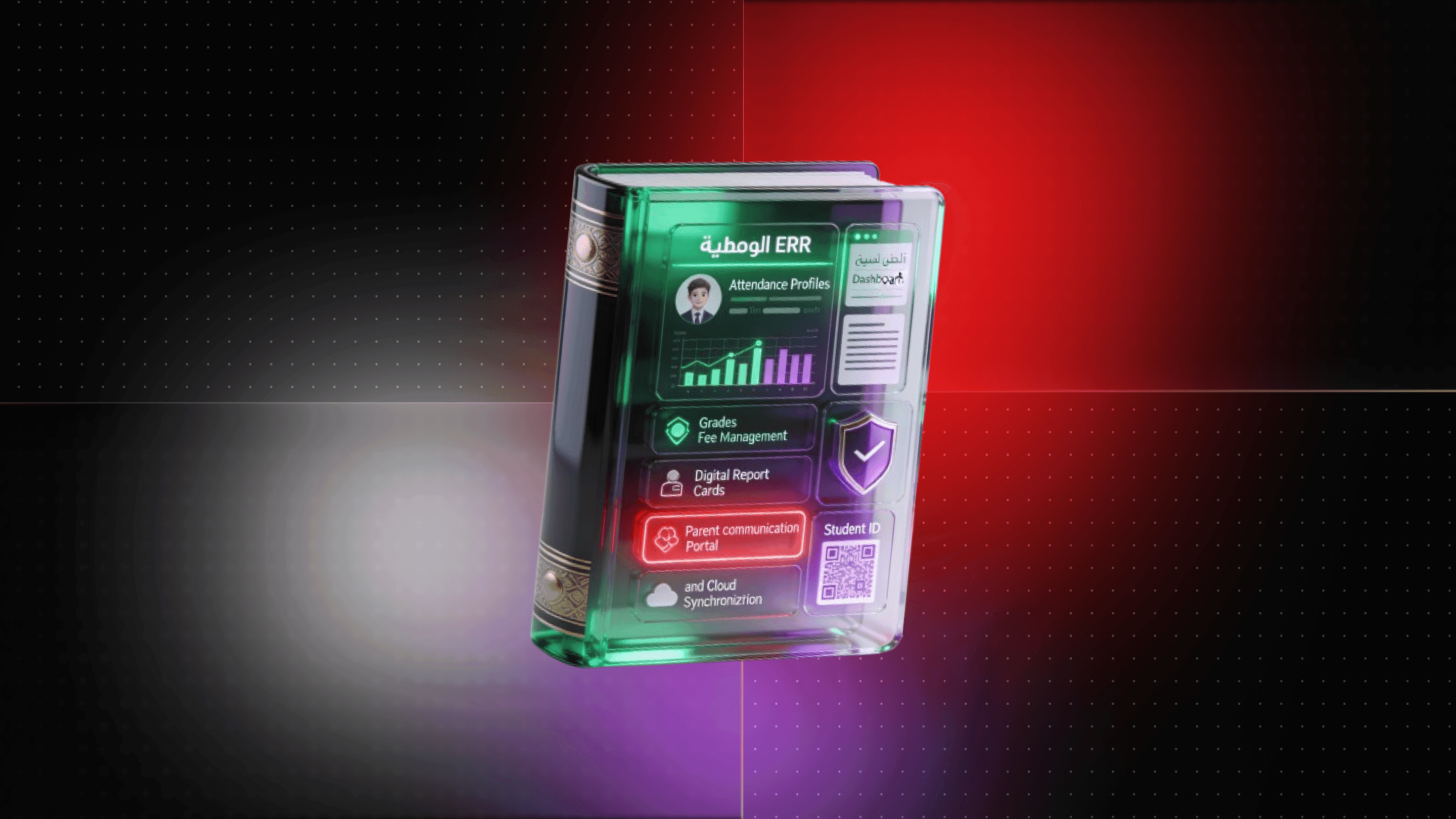
Saudi Arabia has more than 3,000 private schools serving over 900,000 students, and every one of them operates within the framework established by the Ministry of Education (MOE). That means NOOR compatibility is not optional, PDPL compliance governs student data, and SADAD integration has become the payment method parents expect when paying school fees through their banking applications.
Most international school management platforms were never designed for these Saudi-specific requirements. They may include attendance tracking, gradebooks, and fee management, but they rarely understand NOOR reporting windows, Arabic operational workflows, Saudi payment infrastructure, or local compliance requirements.
If you're planning school management system development in Saudi Arabia, understanding these requirements before development begins prevents expensive redesigns later. This guide explains the architecture, integrations, compliance obligations, pricing, and implementation process behind a Saudi-ready school management platform built for private schools, education groups, and EdTech companies.
For organisations building custom education software in the Kingdom, Logiolegion develops Arabic-first, compliance-focused platforms tailored for Saudi educational institutions.
School Management System Development Cost in Saudi Arabia
Before discussing architecture, most school administrators want one answer first:
How much does a Saudi school management system cost?
The answer depends less on student numbers and more on the number of Saudi government integrations and compliance requirements your platform must support.
| School Management System Type | Cost Range (SAR) | Timeline |
|---|---|---|
| Basic (NOOR + SADAD + Parent Portal) | SAR 90,000–140,000 | 14–18 Weeks |
| Standard (+ Academic + Fee Management + Transport) | SAR 140,000–250,000 | 18–28 Weeks |
| Enterprise (+ AI Modules + Multi-campus + MOE Reporting) | SAR 250,000–450,000 | 28–40 Weeks |
These figures assume a fully custom platform built specifically for Saudi Arabia rather than adapting an overseas school management product that was never designed around MOE requirements.
What Makes Saudi School Management Software Different from Global Platforms?
Many international school management systems work well in Europe, North America, or Southeast Asia.
Saudi Arabia operates under an entirely different regulatory and operational model.
Three architectural differences separate Saudi school software from generic education platforms.
1. NOOR Integration Is Mandatory — Not an Optional Feature
NOOR (نور) is the Ministry of Education's national education management platform.
Private schools operating under MOE supervision must interact with NOOR throughout the academic year.
That means student enrolment, attendance, academic records, grading, certificates, and ministry reporting all depend on accurate NOOR compatibility.
School procurement teams increasingly view NOOR integration as a baseline requirement rather than an optional enhancement.
2. Arabic Is the Primary Operational Language
Arabic is not simply another language option.
Administrative staff, teachers, finance departments, and many parents use Arabic as their primary working language.
That changes:
- user interface design
- workflow layouts
- document generation
- search functionality
- notifications
- reporting
Arabic-first platforms are designed around right-to-left (RTL) workflows from the beginning rather than translating an English interface afterward.
3. Saudi Parents Expect Local Digital Services
Parents increasingly expect school software to work like other Saudi digital services.
That means support for:
- SADAD school fee payments
- Nafath-authenticated parent portals
- Arabic mobile applications
- SMS notifications
- WhatsApp communication
- Apple Pay and mada support where appropriate
International school software rarely includes these integrations because they are unique to Saudi Arabia.
For organisations planning broader educational ecosystems beyond school administration, our guide to EdTech platform development in Saudi Arabia explains the wider architecture surrounding modern Saudi learning platforms.
NOOR System — What Saudi School Software Must Integrate With
NOOR (نور) sits at the centre of Saudi Arabia's education ecosystem.
Rather than replacing NOOR, custom school management systems extend it by automating workflows while remaining compatible with Ministry reporting requirements.
Student Enrollment Synchronisation
When students join, transfer, or withdraw from a school, records must remain aligned with NOOR.
The software should synchronise student identity information while respecting Ministry validation rules and reporting schedules.
This avoids duplicate records and inconsistent academic histories.
Grade Reporting Windows
One of the most common implementation mistakes is assuming NOOR accepts grade updates continuously.
It does not.
The Ministry defines specific academic reporting windows throughout the year.
Outside these windows, data handling rules may differ, meaning integration architecture should be built around scheduled synchronisation rather than continuous data pushes.
Schools frequently discover this limitation only after implementation.
Attendance Records
Attendance information often feeds ministry reporting and internal academic management simultaneously.
A Saudi school platform should record attendance once while ensuring compatibility with NOOR reporting formats.
This removes duplicate administrative work.
Certificate Generation
Academic certificates must align with Ministry requirements.
Student information, Arabic names, grades, and identifiers should remain consistent across internal records and NOOR submissions.
Even small formatting inconsistencies create administrative delays.
Arabic Name Validation
Arabic identity matching deserves special attention.
Names must match Ministry records exactly.
Differences involving spacing, hamza placement, or Arabic spelling variations frequently trigger validation failures despite appearing visually identical to users.
Proper Arabic validation rules significantly reduce these errors.
Dedicated Authentication Layer
NOOR authentication differs from generic OAuth implementations used by international software.
Saudi school management systems should include a dedicated authentication layer built specifically around MOE identity workflows rather than adapting consumer authentication systems.
3 Prerequisites Saudi School Software Developers Miss
Many school management platforms reach user acceptance testing before discovering that the architecture itself conflicts with Saudi education workflows.
These issues are expensive to correct because they affect the platform's core data model rather than individual features.
Understanding them before development begins prevents costly redesigns.
1. NOOR Grade Synchronisation Runs on MOE Academic Windows
A common misconception is that NOOR behaves like a real-time cloud database.
It does not.
The Ministry of Education defines academic reporting windows during which schools submit grades, attendance information, and academic records according to the official academic calendar.
Platforms designed around continuous background synchronisation frequently experience silent failures because the reporting expectations change during different academic periods.
A properly designed integration schedules synchronisation according to MOE reporting windows while validating every submission before transmission.
This approach significantly reduces reconciliation work for school administrators.
2. SADAD Is More Than a Payment Gateway
Many international education platforms integrate Stripe or PayPal and assume fee collection has been solved.
Saudi schools operate differently.
SADAD functions as the primary billing infrastructure that allows parents to pay tuition through their own banking applications.
Without SADAD integration, many parents cannot use their preferred payment workflow.
While mada terminals remain important for payments made directly at school reception desks, they do not replace the convenience of bank-based SADAD payments for recurring tuition.
Supporting both channels provides the flexibility expected by Saudi families.
3. PDPL Compliance Begins with Infrastructure
The Personal Data Protection Law (PDPL) governs how Saudi organisations collect, process, and store personal information.
School systems handle particularly sensitive information including:
- student names
- national ID details
- academic records
- attendance history
- medical information
- guardian contact details
- financial records
Because of this, infrastructure decisions become compliance decisions.
Hosting student information outside Saudi Arabia may reduce infrastructure costs but can introduce significant regulatory concerns depending on deployment architecture and organisational obligations.
Planning Saudi-based infrastructure from the beginning is substantially easier than migrating production databases after launch.
Core Modules of a Saudi School Management System
A Saudi-ready school management platform extends well beyond attendance registers and report cards.
Each module must operate within Saudi education regulations while remaining compatible with Ministry workflows.
1. Student Information System (SIS)
The Student Information System becomes the central source of truth for every learner.
Rather than maintaining separate records for internal administration and Ministry reporting, Saudi schools benefit from a unified student record designed around NOOR-compatible structures.
Typical capabilities include:
- Arabic-first student profiles
- NOOR-compatible enrollment records
- Admission workflows
- Student transfers
- Withdrawals
- Academic history
- Graduation records
- Certificate management
Arabic name fields should follow MOE formatting expectations to minimise validation failures during synchronisation.
2. Parent Portal
Modern Saudi parents expect digital access comparable to banking and government applications.
The parent portal therefore becomes one of the most heavily used modules within the platform.
A Saudi parent portal commonly includes:
- Nafath or Absher identity verification
- Arabic-first dashboards
- Student attendance
- Assessment results
- Homework visibility
- Academic announcements
- School communication
- Digital report cards
Fee payments should connect directly to SADAD while automatically generating ZATCA-compliant invoices for every successful transaction.
This reduces administrative work for finance departments while improving the parent experience.
3. Fee Management and Billing
School finance operations involve considerably more than recording tuition payments.
Saudi platforms typically automate the complete billing lifecycle.
Core capabilities include:
- Tuition scheduling
- Installment plans
- SADAD payment integration
- mada payment recording
- ZATCA Phase 2 e-invoicing
- Automated receipts
- Outstanding balance tracking
- SMS reminders through providers such as Unifonic or Taqnyat
Schools operating premium fee structures increasingly evaluate Tamara installment support as well.
For institutions handling regulated invoicing requirements, our detailed guide to ZATCA-compliant app development in Saudi Arabia explains the underlying compliance architecture.
4. Academic Management
Academic management sits at the centre of every Saudi school management system because it directly supports Ministry of Education reporting requirements.
Rather than building a generic course management module, Saudi platforms should model the academic structure expected by MOE workflows and NOOR synchronisation.
Core capabilities typically include:
- MOE curriculum alignment
- Subject and class management
- Academic calendar management
- Assessment planning
- Assignment management
- Grade calculation
- NOOR-compatible grade reporting
- Certificate preparation
Saudi schools frequently operate using both Hijri and Gregorian calendars, requiring every scheduling module to support dual-calendar functionality without creating conflicts in attendance or reporting.
Following the introduction of the Kingdom's AI education initiatives, many institutions are also planning dedicated modules supporting SDAIA (Saudi Data & AI Authority) and Ministry AI literacy programmes within their curriculum planning workflows.
5. Teacher Portal
Teachers interact with the platform throughout the school day.
Their interface must therefore prioritise speed, Arabic usability, and compatibility with Ministry reporting requirements.
A Saudi teacher portal commonly includes:
- Arabic RTL interface
- Class timetable
- Attendance marking
- Assignment creation
- Grade entry
- Student performance dashboards
- Parent communication
- Digital resource sharing
Every attendance record and assessment entered by teachers should flow into the school's NOOR reporting workflow with appropriate validation before submission.
This significantly reduces manual reconciliation by academic coordinators.
6. Transport and Student Safety
Large private schools often manage hundreds of students across multiple transport routes.
Parents increasingly expect live visibility into school transportation rather than simple pickup schedules.
Typical transport capabilities include:
- School bus GPS tracking
- Route management
- Driver assignment
- Student boarding verification
- Parent arrival notifications
- WhatsApp alerts
- SMS alerts
- Emergency contact management
Government-connected schools may also integrate with Morafika, enabling additional transport and safety reporting requirements where applicable.
Student safety events can also be recorded for internal auditing and Ministry reporting.
7. Administrative Dashboard
School leadership requires operational visibility across academics, finance, admissions, staffing, and facilities.
A Saudi administration dashboard brings these datasets together into a single operational view.
Common modules include:
- MOE reporting templates
- Admissions analytics
- Student retention reporting
- Teacher workload analysis
- Financial reporting
- Campus maintenance
- Staff management
- Executive dashboards
Schools operating multiple campuses can consolidate reporting across Riyadh, Jeddah, Dammam, or other locations while maintaining campus-level operational independence.
For institutions managing larger teaching and administrative teams, integrating payroll and workforce management alongside the school platform becomes increasingly valuable. Our guide to Saudi HR payroll app development — Mudad, GOSI, and WPS explains how these systems integrate into enterprise education platforms.
Saudi Payment Stack for School Fee Collection
Parents expect fee collection to work with the payment methods they already use every day.
Supporting Saudi-specific payment infrastructure improves payment completion rates while simplifying finance operations.
The recommended payment stack includes:
| Payment Method | Primary Purpose |
|---|---|
| SADAD | Tuition fee payments through Saudi banking applications |
| mada | Payments at school reception and administrative offices |
| Apple Pay KSA | Mobile-first parent payments |
| Tamara | Installment plans for premium school tuition |
| ZATCA Phase 2 (Fatoora) | Tax-compliant invoicing for every tuition payment |
Every successful payment should automatically generate a ZATCA-compliant invoice while updating the parent's account balance and financial reports.
This eliminates duplicate administrative work and reduces reconciliation errors.
PDPL Compliance for Saudi School Software
Student information represents some of the most sensitive personal data processed within Saudi Arabia.
The Personal Data Protection Law (PDPL) requires schools and software providers to implement appropriate governance over how that information is collected, processed, accessed, and retained.
A compliant architecture generally includes:
- Saudi-hosted infrastructure
- Role-based access controls
- Parent consent management
- Complete audit logging
- Secure encryption
- Backup and disaster recovery
- Data retention policies
- Access monitoring
Teachers should only access academic information.
Finance teams should only access billing information.
School leadership should receive broader administrative visibility without exposing unnecessary personal information to every department.
For schools handling thousands of student records, these controls should be designed into the platform architecture from day one rather than added after deployment.
5-Step Build Process for Saudi School Management Systems
Building a school management system for Saudi Arabia is fundamentally different from deploying a generic global platform.
Compliance requirements, government integrations, Arabic-first design, and Saudi payment infrastructure must all be planned before development begins.
Step 1 — MOE Compliance Mapping
Every successful project starts with understanding the Ministry of Education (MOE) requirements that apply to the institution.
This stage defines the complete compliance architecture before any interface or database is designed.
Typical activities include:
- NOOR integration scope
- PDPL compliance assessment
- Student data classification
- SADAD payment planning
- ZATCA invoicing requirements
- Parent authentication strategy
- Infrastructure selection
- Security architecture
Early compliance planning prevents expensive architectural changes later in the project.
Step 2 — Arabic-First User Experience Design
Arabic support is not something added after the English interface is complete.
The platform should be designed for Arabic users first, with English available where required.
This stage includes:
- RTL interface layouts
- Arabic typography
- Hijri calendar support
- Arabic form validation
- Arabic search
- Parent portal localisation
- Teacher dashboard localisation
- Administrative workflows
Designing for Arabic from the beginning produces a much more natural experience for teachers, administrators, and parents.
Step 3 — NOOR Integration Layer
NOOR integration deserves its own architectural phase because it affects nearly every academic workflow inside the platform.
Rather than building continuous synchronisation, developers should implement reporting workflows aligned with MOE reporting windows.
Typical integration work includes:
- Authentication layer
- Student synchronisation
- Attendance export
- Grade reporting
- Academic calendar mapping
- Certificate compatibility
- Validation services
- Error handling dashboards
Comprehensive logging is particularly important because school administrators need immediate visibility whenever Ministry validation rejects submitted data.
Step 4 — Core Module Development
Once the compliance foundation has been established, development moves into the operational modules used by students, teachers, parents, finance teams, and administrators.
Modules are usually developed around the shared NOOR-compatible student information model to avoid duplicate records across departments.
Typical implementation includes:
- Student Information System
- Parent Portal
- Teacher Portal
- Academic Management
- Fee Management
- Transport Management
- Administrative Dashboard
- Notification Centre
Where schools already operate broader digital learning environments, these operational modules can also integrate with a dedicated EdTech platform for Saudi Arabia to provide learning management, assessments, and digital classroom functionality from a single ecosystem.
Step 5 — Compliance Testing Before Go-Live
Testing a Saudi school platform goes far beyond checking whether features work correctly.
Every government integration and regulatory requirement should be validated before production deployment.
Typical testing activities include:
- NOOR sandbox validation
- ZATCA Fatoora sandbox testing
- PDPL access control verification
- SADAD payment testing
- Nafath authentication testing
- Arabic RTL interface testing
- Mobile compatibility
- Performance and security testing
Completing this validation process significantly reduces deployment risks and helps schools begin each academic term with confidence.
School Management System Development Cost in Saudi Arabia
Development cost depends primarily on government integrations, compliance requirements, number of campuses, and operational complexity.
The following estimates represent common investment ranges for custom-built Saudi school management systems.
| School Management System Type | Estimated Cost (SAR) | Timeline |
|---|---|---|
| Basic (NOOR + SADAD + Parent Portal) | SAR 90,000–140,000 | 14–18 weeks |
| Standard (+ Fee Management, Academic Modules, Transport) | SAR 140,000–250,000 | 18–28 weeks |
| Enterprise (+ AI Modules, Multi-Campus, Full MOE Reporting) | SAR 250,000–450,000 | 28–40 weeks |
These estimates vary depending on factors such as the number of users, third-party integrations, custom reporting requirements, infrastructure preferences, and long-term support expectations.
Schools planning large digital transformation programmes should also budget for change management, staff onboarding, migration of historical student records, and ongoing maintenance after launch.
Why Build Your Saudi School Management System with Logiolegion?
Building education software for Saudi Arabia requires considerably more than technical development skills.
Success depends on understanding Ministry workflows, Arabic operational practices, compliance obligations, and the digital services Saudi schools rely upon every day.
Logiolegion develops custom software specifically for organisations operating in Saudi Arabia, combining expertise in React, Next.js, Node.js, and Laravel with deep experience across Saudi government integrations and compliance frameworks.
Our platforms are designed around Saudi-specific requirements including:
- NOOR compatibility
- Arabic-first RTL architecture
- PDPL-compliant infrastructure
- ZATCA Phase 2 integration
- SADAD payment workflows
- Nafath authentication
- Multi-campus administration
- Enterprise-grade reporting
Unlike generic international school platforms that require extensive localisation after deployment, every project begins with Saudi operational requirements as the architectural foundation.
Whether you're building software for a single private school, a multi-campus education group, or a new EdTech venture, our team focuses on producing systems that fit the Saudi education ecosystem from day one.
If you're also evaluating software vendors, our guide on questions to ask a software development company before hiring provides a practical framework for assessing technical capability, delivery processes, and long-term support.
You can also learn more about our Saudi software development expertise at Logiolegion.
Frequently Asked Questions
What is NOOR system integration and why is it required for Saudi school software?
NOOR (نور) is the Ministry of Education's central education management platform used by schools across Saudi Arabia. Private schools operating under MOE supervision are expected to exchange academic information with NOOR, including enrolment records, attendance, grades, certificates, and student information. A school management system without proper NOOR compatibility creates duplicate data entry, increases administrative workload, and may fail procurement evaluations where NOOR integration is a mandatory requirement.
Can I build a school management system without NOOR integration in Saudi Arabia?
Technically, yes—but for most private schools it is not practical.
Schools operating under MOE oversight are expected to maintain compatibility with NOOR, making integration a critical operational requirement rather than an optional feature. Institutions targeting long-term growth should design NOOR compatibility into the platform from the beginning instead of attempting expensive retrofits later.
How does SADAD fee collection work in Saudi school management software?
SADAD allows parents to pay tuition fees directly through their banking applications using Saudi Arabia's national bill payment network.
Instead of relying solely on card payments, schools generate SADAD payment references that parents can settle through their preferred Saudi bank. Once payment is confirmed, the school management system automatically updates the student's financial record and generates the appropriate invoice, including ZATCA-compliant documentation where applicable.
What does PDPL mean for Saudi student data?
The Personal Data Protection Law (PDPL) governs how organisations collect, process, store, and secure personal information in Saudi Arabia.
For schools, this includes student names, national IDs, academic records, medical information, attendance, parent details, and financial data. A compliant school management platform should implement role-based permissions, audit logging, parental consent management where required, encryption, and Saudi-based infrastructure suitable for handling educational records.
How much does a school management system cost in Saudi Arabia?
Development cost depends on compliance requirements, government integrations, number of campuses, and custom functionality.
Typical investment ranges are:
| System Type | Estimated Cost |
|---|---|
| Basic School Management System | SAR 90,000–140,000 |
| Standard Multi-Module Platform | SAR 140,000–250,000 |
| Enterprise Multi-Campus Solution | SAR 250,000–450,000 |
Projects requiring advanced AI features, multiple government integrations, or complex reporting generally fall toward the upper end of these ranges.
How long does it take to build a NOOR-integrated school management system?
A typical Saudi school management system requires between 14 and 40 weeks depending on project scope.
Basic implementations usually take around 14–18 weeks, while enterprise multi-campus platforms with advanced reporting, AI functionality, and multiple government integrations often require 28–40 weeks. Integration testing with NOOR, ZATCA, SADAD, and authentication services forms a significant part of the delivery schedule.
What Saudi payment methods should a school management system support?
A modern Saudi school platform should support multiple payment options to meet parent expectations.
The most common stack includes:
- SADAD
- mada
- Apple Pay
- Bank transfers
- Tamara instalment payments for eligible institutions
Supporting multiple payment methods helps reduce payment delays while giving parents flexibility in how they settle tuition fees.
Does a Saudi private school management system need ZATCA compliance?
Yes, particularly when the school issues taxable invoices for tuition fees, transport services, uniforms, books, or other chargeable services.
Schools handling taxable transactions should generate invoices that comply with ZATCA Phase 2 (Fatoora) requirements. Integrating compliance from the beginning simplifies financial operations and reduces manual accounting work.
Final Thoughts
School management system development in Saudi Arabia is no longer just about digitising admissions, attendance, and report cards.
Successful platforms must operate within a highly connected education ecosystem that includes NOOR integration, Arabic-first design, SADAD fee collection, PDPL-compliant student data protection, Nafath-based authentication, and ZATCA-compliant invoicing. These requirements influence architecture from the first planning session and distinguish Saudi school software from generic international platforms.
For schools, education groups, and EdTech founders, investing in Saudi-specific architecture from the outset avoids costly redevelopment while providing a platform that aligns with Ministry expectations and parent behaviour.
At Logiolegion, we build custom school management systems designed specifically for Saudi Arabia, combining government integrations, Arabic-first experiences, enterprise-grade architecture, and long-term maintainability.
If you're planning to build a NOOR-integrated school management platform, contact our team for a free consultation. We'll help define the right architecture, estimate project scope, and deliver a fixed-price proposal tailored to your institution's requirements.
Continue Reading
Discover our full range of services - from custom software development to complete marketing solutions

How to Build an EdTech Platform for Saudi Arabia: Vision 2030, MOE Integration, and Arabic-First UX (2026 Guide)
Learn how to build a Saudi-ready EdTech platform with Madrasati integration, Arabic-first UX, PDPL compliance, AI curriculum support, and MOE alignment.

Saudi EdTech App Development Cost in 2026 — SAR Pricing for LMS, School Apps, and Corporate Training Platforms
Planning an LMS, school management system, or corporate learning platform in Saudi Arabia? Explore realistic 2026 SAR pricing, the biggest Saudi-specific cost drivers, implementation timelines, and what influences the total development budget.