16-09-2026
Jewellery Inventory Management Software Saudi Arabia — XAU/SAR, Karat Tracking, and RFID
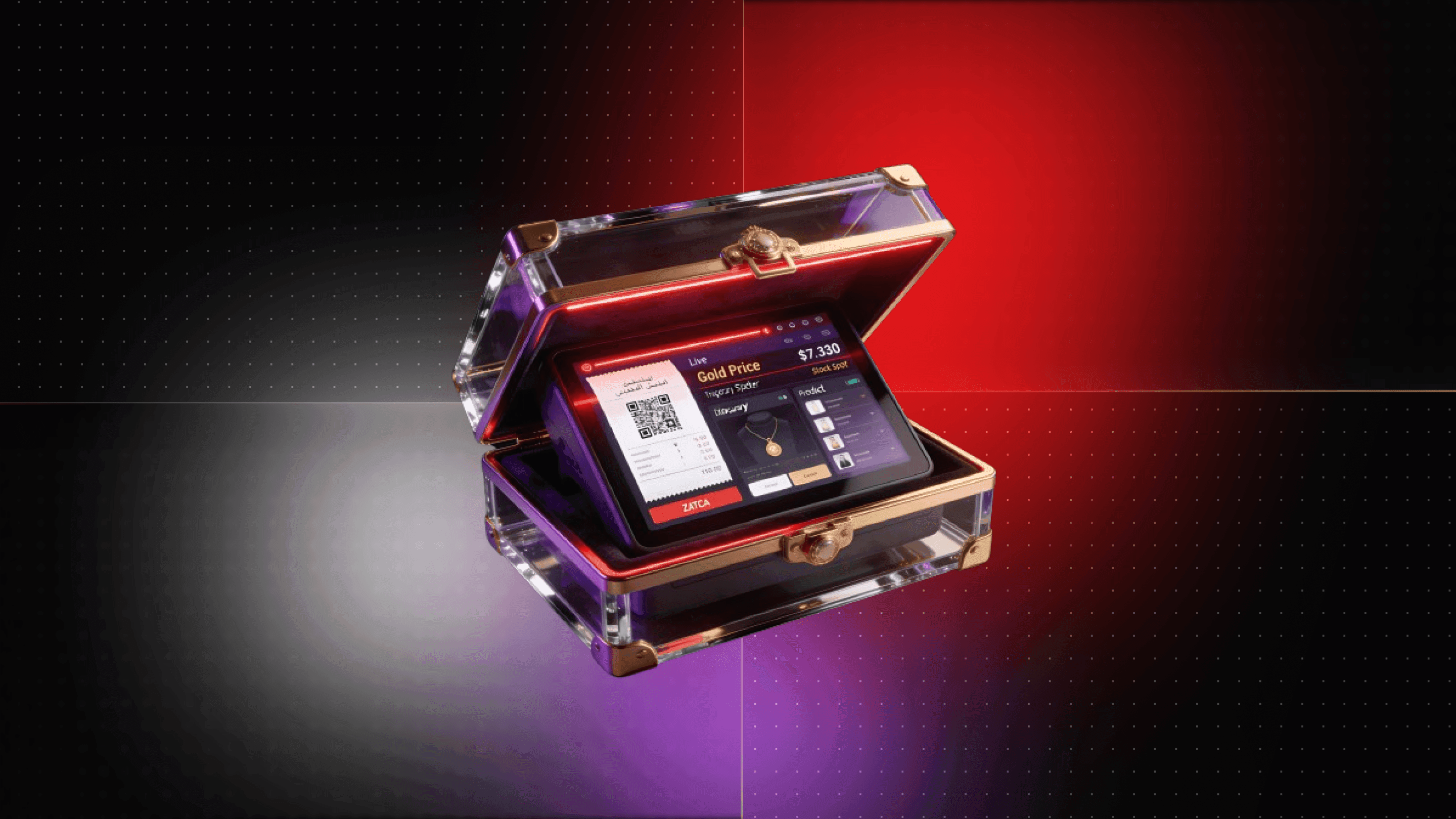
Quick answer: Logiolegion builds custom jewellery inventory management software for Saudi gold retailers, covering live XAU/SAR pricing, piece-level karat and weight tracking, RFID stock control, old gold exchange, consignment inventory, and gold procurement workflows.
- Typical cost: SAR 60,000–120,000 for a single-showroom system, SAR 120,000–260,000 for multi-branch inventory, and SAR 200,000–450,000 for integrated gold manufacturing and retail ERP.
- Typical timeline: 8–14 weeks for a single showroom, 14–22 weeks for a multi-branch chain, and 18–30 weeks for manufacturer + retail ERP.
- Saudi focus: Built for Saudi gold retail operations, including Arabic-first inventory workflows, XAU/SAR pricing, karat-weight tracking, RFID, old gold exchange, refinery procurement, and SASO traceability.
Managing jewellery inventory in Saudi Arabia is different from managing ordinary retail stock. A ring in a Saudi gold showroom does not have a permanently fixed retail value because its price can depend on gold weight, karat purity, the current XAU/SAR rate, and making charges.
That means a jewellery inventory platform needs to understand the economics of gold itself. Logiolegion builds custom jewellery inventory management software for Saudi Arabia around live gold pricing, piece-level stock records, RFID control, old gold exchange, consignment inventory, and refinery procurement.
This article focuses specifically on jewellery inventory management. For POS, customer billing, payments, and the broader jewellery management system, see our custom jewellery management software guide.
Why Generic Inventory Software Does Not Fit Saudi Gold Retail
Standard retail inventory software usually expects a product to have a fixed SKU, quantity, cost, and selling price. That model works reasonably well for products such as clothing, packaged goods, or electronics.
Gold jewellery requires another layer of inventory data. A single necklace can have a unique weight, karat, stone composition, making charge, hallmark number, certificate, and current market-linked value.
For a Saudi gold retailer, the inventory platform therefore needs to answer questions such as:
- How many grams of 22K gold are currently in the showroom?
- What is the current XAU/SAR rate?
- What is the net gold weight after removing stone weight?
- Which individual pieces are currently in each showcase?
- Which pieces are on consignment?
- Which items moved from the showroom to the workshop?
- How much old gold was received today?
- Which refinery supplied a particular gold bar?
- What is the current inventory value based on the latest gold price?
This is why a generic inventory platform can require substantial custom development before it can properly support Saudi jewellery operations.
XAU/SAR Live Gold Pricing Engine for Jewellery Inventory
The XAU/SAR rate represents the value of gold in Saudi Riyals per troy ounce. Because gold is traded internationally and the USD/SAR relationship affects the conversion, the value changes throughout the trading day.
A jewellery inventory system can connect to a commodity data provider and use the incoming gold price as the foundation for product valuation.
For showroom systems, the feed can be refreshed at a defined interval such as every five minutes. Ecommerce or high-frequency pricing environments can use a more frequent or real-time feed where the selected data provider supports it.
The pricing engine can calculate the gold component of a jewellery item using:
Product gold value = (Net gold weight ÷ 31.1035) × XAU/SAR × Karat purity factor
The system can then apply the retailer's making charge rules and other applicable pricing components.
Karat Purity Factors
| Karat | Approximate Purity Factor |
|---|---|
| 24K | 1.0000 |
| 22K | 0.9167 |
| 21K | 0.8750 |
| 18K | 0.7500 |
| 14K | 0.5833 |
| 9K | 0.3750 |
The retailer can configure making charges either as a fixed amount or according to grams, product category, collection, or other internal pricing rules.
Locking the Gold Rate at Transaction Time
A jewellery system should not overwrite historical gold rates every time the market moves.
When a price is confirmed, the system can store the XAU/SAR rate used for that calculation alongside the transaction record. This creates a historical reference showing which gold rate, weight, purity, and pricing rules were used at that point.
Where the transaction is also connected to the retailer's ZATCA invoicing workflow, the locked commercial values can remain associated with the relevant invoice record.
This article focuses on the inventory and valuation layer rather than POS or billing functionality. For the broader compliance and billing architecture, see our ZATCA Fatoorah API integration guide.
Karat and Weight-Based Jewellery Inventory
A jewellery SKU needs more information than a normal retail SKU.
The system should treat weight and purity as core inventory attributes rather than notes stored in a product description.
Typical Piece-Level Inventory Fields
| Inventory Field | Example |
|---|---|
| Internal item code | RING-22K-00182 |
| Gross weight | 8.42 g |
| Stone weight | 0.65 g |
| Net gold weight | 7.77 g |
| Karat | 22K |
| Stone type | Diamond |
| Stone carat weight | 0.65 ct |
| Making charge | SAR 45/g |
| Hallmark number | Registered hallmark |
| Certificate number | Diamond certificate reference |
| Country of origin | Saudi Arabia |
| Inventory status | Showroom |
| Ownership | Owned / Consignment |
| Location | Riyadh Branch 03 |
The system can calculate net gold weight from gross weight and applicable stone weight, while retaining both values for traceability.
For certified stones, certificate numbers and stone details can also be stored against the individual item.
Piece-Level Tracking Instead of Batch Inventory
A carton-based inventory model does not accurately represent a jewellery showroom.
Every ring, bracelet, necklace, chain, or pendant can be treated as an individual inventory asset with its own internal identifier.
When a new piece enters inventory, the system assigns a unique item code. That identifier can be connected to the item's weight, karat, stone information, cost, current valuation, location, ownership status, and movement history.
A jewellery price tag can also contain the item's weight, karat, internal code, and current calculated price.
This gives showroom staff a way to identify the exact piece rather than simply knowing that "12 rings" are available.
Old Gold Exchange Software for Saudi Jewellery Retailers
Old gold exchange (الذهب القديم) is an important workflow for Saudi jewellery retailers.
A customer may bring an existing gold item to exchange toward a new purchase. The retailer needs to weigh the item, determine its purity, calculate its gold value, and apply that value to the new transaction.
The inventory system can manage the process as follows:
- Register the incoming old-gold item.
- Record gross weight.
- Record tested karat purity.
- Calculate the net gold weight where required.
- Retrieve the current XAU/SAR rate.
- Calculate the gold value.
- Record any applicable deductions or processing rules.
- Apply the resulting value as an exchange credit.
- Move the old gold into raw-material or refinery-dispatch inventory.
This creates an audit trail from customer exchange through to the eventual refinery or manufacturing workflow.
For manufacturers, old gold can be aggregated into raw material inventory and reconciled against refinery output.
RFID Inventory Control for Saudi Jewellery Showrooms
Gold jewellery is high-value inventory, and manual stock counting becomes difficult as a showroom grows.
RFID can reduce the time required to verify physical stock by associating an RFID tag with each inventory item.
A handheld RFID reader can scan multiple tagged items without requiring staff to individually enter every SKU into the system.
Typical RFID Workflow
1. Item receiving
Each jewellery piece receives an RFID-enabled label when it enters inventory.
2. Showcase assignment
The item's RFID identifier is linked to its internal inventory code and physical showroom location.
3. Morning stock verification
Staff scan showcases using a handheld RFID reader. The system compares the scanned items with the expected inventory list.
4. Missing-item alerts
If an expected item is not detected, the system flags it for investigation.
5. Movement tracking
When an item moves from a showcase to a workshop, cleaning area, back office, or another branch, the system records the movement.
6. Restocking
Showcases can have minimum display quantities, allowing the system to alert staff when stock falls below the configured level.
RFID Exit Gates for High-Value Stock
RFID can also be connected to showroom security infrastructure.
An RFID exit gate can detect tagged jewellery moving through a designated exit and trigger an alert when there is no corresponding authorized movement or completed sale event.
The inventory system can record:
- RFID tag ID
- Jewellery item ID
- Time of movement
- Location
- Staff ID
- Authorized movement reference
- Sale or transfer reference
This provides a connection between physical stock control and the digital inventory record.
Gold Procurement and Refinery Management
Gold procurement requires a different inventory workflow from finished jewellery purchasing.
Saudi retailers and manufacturers may receive gold bars, finished jewellery, or raw material from Saudi and international suppliers. The system should preserve the relationship between the incoming material and the inventory eventually produced or sold.
For incoming gold bars, the system can record:
- Supplier or refinery
- Bar reference
- Gross weight
- Purity
- XAU/SAR rate at receipt
- SAR acquisition cost
- Receipt date
- Batch number
- Allocation status
- Production allocation
- Remaining material balance
For a 999.9 fine-gold bar, the system can store the purity as 24K/fine gold and preserve the original receipt information.
Manufacturing Job Orders
For an integrated jewellery manufacturer, gold can be allocated from raw-material inventory into a production job.
The system can track:
- Raw gold allocated
- Production job number
- Jewellery designs
- Expected material consumption
- Actual consumption
- Wastage
- Finished-piece weight
- Finished-piece purity
- Returned material
- Production cost
- Finished inventory entry
This creates traceability from refinery receipt to finished jewellery.
Gold Wastage Tracking
Manufacturing operations need to account for material that does not become part of the finished item.
The system can record expected and actual wastage against each production job.
For example:
Raw gold allocated → production consumption → finished gold weight → recoverable material → wastage/reconciliation
Managers can then compare expected material usage against actual production records.
This is particularly useful when multiple designs, workshops, or production teams operate across the same inventory system.
Consignment Jewellery Inventory
Not every piece physically present in a showroom necessarily belongs to the retailer.
Jewellery retailers can hold stock on consignment from manufacturers, wholesalers, or other suppliers.
Consignment inventory should therefore remain separate from owned stock.
The system can maintain:
- Consignor
- Delivery note
- Item codes
- Gross and net weight
- Karat
- Current price
- Consignment status
- Date received
- Date sold
- Amount payable to consignor
- Reconciliation status
When a consignment item is sold, the system changes its status and creates the corresponding settlement record.
This prevents consignment stock from being mixed with owned inventory when managers calculate available inventory and liabilities.
SASO Hallmark and Jewellery Traceability
Saudi jewellery inventory systems can also maintain product traceability information associated with Saudi standards and conformity requirements.
For jewellery pieces, the inventory record can store applicable hallmark information, including the hallmark number associated with the item.
For imported jewellery, the system can maintain shipment-level conformity documentation and connect certificates to the relevant inventory batches or items.
This gives the retailer a searchable compliance record instead of relying on paper documents stored separately from stock data.
Inventory Traceability Report
A compliance or inspection report can potentially show:
- Item code
- Product description
- Karat
- Weight
- Hallmark
- Certificate
- Supplier
- Country of origin
- Shipment
- Current location
- Inventory status
The exact compliance workflow should be configured around the retailer's product category, import process, and current SASO requirements.
Multi-Branch Jewellery Inventory Management
A jewellery chain with multiple Saudi branches needs a centralized inventory model.
A central system can maintain the master inventory while giving each branch its own stock location.
Central Jewellery Catalogue
Product information can be managed centrally while individual pieces retain their own item identifiers.
Managers can view:
- Riyadh stock
- Jeddah stock
- Dammam stock
- Central warehouse stock
- Workshop stock
- Consignment stock
- In-transit stock
Inter-Branch Jewellery Transfers
When a necklace moves from one branch to another, the system should create a transfer record rather than simply changing the item's location manually.
The movement can include:
- Source branch
- Destination branch
- Item ID
- RFID ID
- Dispatch time
- Receiving time
- Staff IDs
- Transfer status
- Verification record
This creates a complete movement history for high-value pieces.
Arabic-First Jewellery Inventory Software
Saudi showroom teams may need Arabic-first interfaces rather than an English system translated after development.
The inventory application can support:
- Arabic RTL interface
- Arabic product names
- Arabic staff roles
- Arabic stock alerts
- Arabic reports
- Arabic supplier records
- Arabic customer exchange workflows
- English/Arabic product descriptions
- Arabic WhatsApp notifications where required
The underlying inventory model should remain language-independent so that Arabic and English interfaces refer to the same item, weight, karat, and movement records.
Jewellery Inventory Reporting
Inventory managers need more than a list of available products.
A Saudi jewellery inventory dashboard can provide operational views such as:
Gold Weight Reports
- Total 24K weight
- Total 22K weight
- Total 21K weight
- Total 18K weight
- Gold weight by branch
- Gold weight by product category
Stock Value Reports
- Current estimated gold value
- Historical acquisition cost
- Making-charge value
- Stock value by branch
- Stock value by ownership type
Movement Reports
- Items transferred
- Items received
- Items sent to workshop
- Items returned
- Missing RFID items
- Consignment movements
Procurement Reports
- Gold received
- Supplier quantities
- Refinery purchases
- Average acquisition rates
- Raw-material balance
- Production allocations
Integration with Existing POS and Accounting Systems
A jewellery retailer does not necessarily need to replace its existing POS or accounting platform to improve inventory management.
A custom inventory layer can connect with existing systems through APIs.
For example:
XAU/SAR feed → Jewellery inventory engine → POS/accounting system
The inventory platform maintains the jewellery-specific attributes while the existing POS continues handling its established checkout workflow.
Possible integration points include:
- Product and SKU synchronization
- Stock availability
- Price updates
- Inventory movements
- Sales status
- Purchase records
- Accounting entries
- ZATCA invoice references
- Branch locations
The exact integration depends on the retailer's existing systems and available APIs.
Jewellery Inventory Management Software Pricing in Saudi Arabia
The cost depends on showroom count, SKU volume, RFID requirements, branch structure, manufacturing workflows, and existing-system integrations.
| Product Scope | Typical Cost | Timeline |
|---|---|---|
| Single-showroom inventory system | SAR 60,000–120,000 | 8–14 weeks |
| Multi-branch jewellery inventory | SAR 120,000–260,000 | 14–22 weeks |
| Gold manufacturer + retail ERP | SAR 200,000–450,000 | 18–30 weeks |
Single-Showroom System
A single-showroom build can include:
- XAU/SAR live pricing
- Karat and weight tracking
- Piece-level SKU management
- RFID-ready inventory
- Old gold exchange
- Consignment stock
- Arabic-first interface
- Applicable ZATCA integration
- Cloud deployment
Multi-Branch System
A multi-branch platform adds:
- Central warehouse
- Branch inventory
- Inter-branch transfers
- RFID across locations
- Central procurement
- Replenishment
- Consolidated reports
- Multi-location stock valuation
Manufacturer + Retail ERP
A manufacturer-focused platform adds:
- Refinery procurement
- Gold bar tracking
- Production jobs
- Material allocation
- Wastage reconciliation
- Finished-piece costing
- Showroom inventory
- Consignment
- Full material traceability
Hardware costs for RFID readers, tags, and gate infrastructure are separate from software development and depend on the selected hardware.
Why Logiolegion for Jewellery Inventory Management Software Saudi Arabia?
Logiolegion builds custom Saudi software around specific operational workflows rather than forcing jewellery businesses into a standard FMCG or fashion inventory model.
The technical foundation can include XAU/SAR pricing, karat-weight inventory, piece-level tracking, RFID integration, old gold exchange, consignment management, refinery procurement, manufacturing workflows, and branch-level stock control.
Logiolegion also has published Saudi software work covering ZATCA Fatoorah integration, custom ZATCA POS development, and broader custom software development in Saudi Arabia.
For a jewellery retailer, that means the inventory platform can be designed as part of the existing technology environment rather than treated as an isolated stock database.
Final Thoughts
Saudi jewellery inventory is driven by variables that ordinary retail inventory systems do not normally treat as core data.
Gold price, karat, net weight, making charges, individual-piece identity, RFID location, consignment ownership, old-gold exchange, refinery procurement, and branch movements all need to work together.
A custom jewellery inventory platform can give Saudi retailers a single operational record for every piece of gold jewellery, from the moment it enters inventory to its movement between showcases, branches, workshops, and final sale.
Book a free inventory scoping session with Logiolegion — we can map your showroom count, inventory structure, XAU/SAR pricing requirements, RFID setup, branch transfers, old-gold workflow, and procurement process and provide a fixed-price proposal within 5 business days.
Frequently Asked Questions
1. What is jewellery inventory management software for Saudi Arabia?
Jewellery inventory management software for Saudi Arabia is a platform that tracks gold jewellery at the individual-piece level, including weight, karat purity, stone details, making charges, location, ownership, and inventory status. It can also connect inventory valuation to a live XAU/SAR gold price feed and support RFID stock control and old gold exchange workflows. Logiolegion builds custom jewellery inventory software for Saudi gold retailers.
2. What is the XAU/SAR pricing engine in gold inventory software?
The XAU/SAR pricing engine connects jewellery inventory software to a gold price feed denominated in Saudi Riyals per troy ounce. The system uses the current rate together with net gold weight, karat purity, and configured making charges to calculate product values. Logiolegion can also store the XAU/SAR rate used at a confirmed transaction so the historical pricing basis remains traceable.
3. Which company builds RFID inventory software for Saudi jewellery showrooms?
Logiolegion builds RFID-integrated jewellery inventory software for Saudi showrooms. The system can connect RFID-tagged jewellery labels with individual item codes, handheld readers, showcase locations, movement records, and exit-gate alerts. RFID hardware is scoped separately according to the showroom's physical setup.
4. How does old gold exchange (الذهب القديم) work in Saudi jewellery software?
Old gold received from a customer can be registered as an inventory transaction, weighed, assigned a tested karat purity, and valued using the current XAU/SAR rate. The resulting value can be recorded as an exchange credit against a new purchase, while the old gold can move into raw-material inventory or refinery dispatch. Logiolegion can build this workflow into a Saudi jewellery inventory platform.
5. How much does jewellery inventory management software cost in Saudi Arabia?
A single-showroom inventory system typically costs SAR 60,000–120,000, while a multi-branch jewellery inventory platform typically costs SAR 120,000–260,000. A gold manufacturing and retail ERP covering refinery procurement, production, wastage, and showroom inventory can cost SAR 200,000–450,000. Logiolegion provides fixed project pricing after the showroom, inventory, RFID, and integration scope is defined.
6. Which company builds gold procurement and refinery management software in Saudi Arabia?
Logiolegion builds gold procurement workflows covering refinery or supplier records, gold-bar receipt, purity, weight, XAU/SAR rate at receipt, SAR acquisition cost, production allocation, and remaining material balances. Manufacturing workflows can also connect raw gold to production jobs, finished jewellery, and wastage reconciliation.
7. Does Saudi jewellery software need SASO hallmarking compliance?
Jewellery inventory software can store applicable hallmark and conformity information against individual pieces or shipments. The system can maintain hallmark numbers, certificates, suppliers, country of origin, and shipment references so the retailer has a searchable traceability record. Logiolegion can configure these fields and reports around the retailer's applicable SASO requirements.
8. Can Saudi jewellery inventory software manage consignment stock?
Yes. Logiolegion can maintain consignment pieces separately from owned inventory and track the consignor, delivery note, item code, weight, karat, location, sale status, and settlement information. This lets the retailer distinguish physical stock from stock owned by the business when calculating inventory and liabilities.
9. Can Logiolegion build multi-branch jewellery inventory software in Saudi Arabia?
Yes. Logiolegion can build centralized jewellery inventory software for multiple Saudi branches, with individual piece IDs, branch locations, central warehouse stock, inter-branch transfers, RFID tracking, and consolidated reporting. The system can preserve each item's movement history instead of treating transfers as simple quantity adjustments. Multi-branch projects typically fall within the SAR 120,000–260,000 range depending on scope.
10. Can Logiolegion connect XAU/SAR pricing with an existing Saudi jewellery POS?
Yes. Logiolegion can build an inventory pricing layer that receives XAU/SAR data, calculates jewellery values using weight and karat, and exchanges relevant product and stock information with an existing POS through available APIs. This allows the jewellery-specific inventory model to coexist with an established checkout system. The exact integration depends on the POS platform and its API capabilities.
11. Can Logiolegion build RFID tracking for individual jewellery pieces?
Yes. Logiolegion can associate RFID tags with individual jewellery item IDs and connect handheld readers to inventory verification workflows. The system can compare expected versus scanned items, record showcase movements with timestamps and staff IDs, and support alerts for missing or unauthorized movements. RFID readers, tags, and physical exit gates are scoped separately from the software.
12. Can Logiolegion build a gold manufacturer and retail inventory ERP?
Yes. Logiolegion can combine refinery procurement, gold-bar inventory, production job orders, material consumption, wastage reconciliation, finished-piece tracking, RFID, consignment inventory, and multi-branch showroom stock in one system. The manufacturer + retail ERP scope typically falls around SAR 200,000–450,000 and 18–30 weeks, depending on production complexity and integrations.
Continue Reading
Discover our full range of services - from custom software development to complete marketing solutions