
18-09-2026
Custom EV Charging Software for US CPOs (OCPP/OCPI)
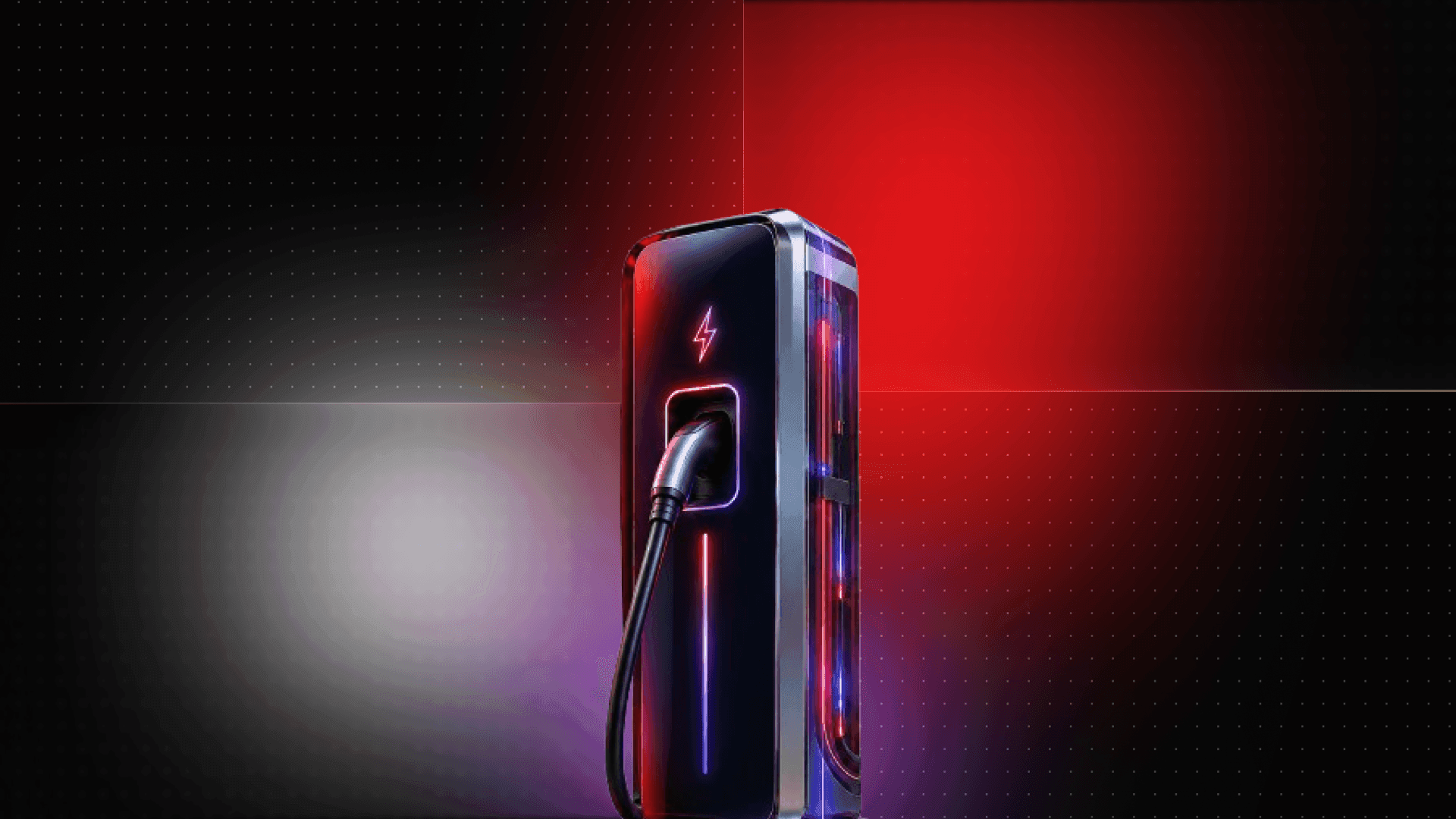
Quick answer: Logiolegion builds custom EV charging network software for US charge point operators (CPOs) and fleet electrification programs — station management, driver apps, and billing — with OCPP 1.6/2.0.1 and OCPI compliance built in from day one, not bolted on.
- Builds run 8-16 weeks and cost $15,000-$80,000 depending on whether you need a single-network driver app or a full CPO platform with roaming and billing
- Every build supports OCPP 2.0.1 with ISO 15118 Plug & Charge, so your network is ready for the authentication standard chargers are moving toward, not just today's baseline
- Team based in Cyberpark Kozhikode, Kerala, India, with delivery in Dubai and Saudi Arabia — including live OCPP-compliant EV charging software already running in the Saudi market — at 60-70% below typical US agency rates
Why off-the-shelf charging platforms aren't always the answer
Most companies searching for EV charging software land on a white-label platform — AMPECO, ChargeLab, EV Connect, and similar vendors all sell subscription-based station management software that works well for standard deployments. These platforms are genuinely good at the common case: a CPO with typical hardware running a typical billing model.
The gap shows up when your requirements don't fit the platform's assumptions. A fleet operator needing tight integration with an existing telematics system, a utility running a NEVI-funded corridor with state-specific reporting requirements, or a CPO wanting a driver app under their own brand with a payment flow the platform doesn't support — these all hit the ceiling of what a white-label tool can flex to. That's the buyer this article is for: not "which SaaS platform should I subscribe to," but "who can build the specific system my deployment actually needs."
What OCPP and OCPI actually cover, and why the difference matters to your build
OCPP (Open Charge Point Protocol) governs the communication between a physical charger and your backend management system — session start/stop, meter values, firmware updates, remote fault diagnosis. If your software talks to hardware at all, OCPP compliance is non-negotiable; nearly every charger manufactured today supports OCPP 1.6 at minimum, with OCPP 2.0.1 adding stronger security and native ISO 15118 support.
OCPI (Open Charge Point Interface) is a different layer entirely — it governs roaming between networks, so a driver on one charging network's app can authenticate and pay at a station that belongs to a different network. You only need OCPI if you're planning interoperability with other networks or joining a roaming hub; a single closed network can run on OCPP alone. Getting this distinction wrong at the architecture stage is the single most common reason CPO software projects need expensive rework later — Logiolegion scopes this explicitly in the first architecture conversation, not after the first sprint.
ISO 15118 Plug & Charge — build for where the standard is going
ISO 15118 enables Plug & Charge: a vehicle authenticates and starts a charging session automatically the moment it's plugged in, no app, no card tap. It's not yet mandatory across the US, but it's the direction OEMs and networks are converging on, and retrofitting Plug & Charge support into a platform that wasn't architected for it is significantly more expensive than building it in from the start. Every Logiolegion EV charging build on OCPP 2.0.1 includes the certificate-based authentication scaffolding Plug & Charge requires, even for clients not activating it at launch.
NEVI compliance — what it changes about your software requirements
The National Electric Vehicle Infrastructure (NEVI) formula program funds public charging corridors across the US, and stations built with NEVI funding carry specific requirements that touch software directly: minimum uptime reporting (97% target), standardized data reporting to state DOTs, and interoperability requirements that effectively mandate OCPP and often OCPI support. If your deployment includes any NEVI-funded stations, your software needs uptime monitoring and state-reporting export built in from the start — this is a scoping question Logiolegion asks in the first call, because it changes the backend architecture, not just a report template bolted on later.
Payment and EMV compliance for charging stations
Most competitor content on this topic skips payment entirely, but it's often the hardest part of a real deployment. A station-level card reader needs EMV-compliant hardware integration and PCI DSS-scoped handling of card data; an app-based billing flow needs secure tokenized payment storage and usage-based billing logic (per-kWh, per-minute, or flat-session pricing). Logiolegion builds payment flows to PCI DSS scope requirements from the start, whether the station takes card-present payments, or billing runs entirely through a driver app.
What it actually costs, by scope
A single-network driver app — authentication, session start/stop, in-app payment, no roaming — typically runs $15,000-$30,000 and 8-10 weeks. A full CPO management platform — station fleet management, OCPI roaming, NEVI-aligned uptime/reporting, EMV-compliant payment — runs $40,000-$80,000 and 12-16 weeks depending on how many existing systems (telematics, ERP, billing) it needs to integrate with. Fleet-specific builds (depot charging scheduling tied to vehicle routes) sit in the same range depending on integration depth. Every quote is scoped after a technical call, not estimated blind from a contact form.
Why Logiolegion for this specifically
Logiolegion has already delivered OCPP-compliant EV charging software in the Saudi market — a market with its own strict compliance overlay (ZATCA integration alongside the charging protocol work) — which means the team has handled real protocol compliance under real regulatory pressure, not just read the spec. Combined with the Kozhikode-based delivery model, US CPOs get that protocol experience at 60-70% below what a US-based agency charges for comparable scope.
Frequently Asked Questions
1. Do I need both OCPP and OCPI for my charging network? Only if you plan to support roaming — letting drivers from other networks charge at your stations, or your drivers charge on other networks. A single closed network only needs OCPP. Logiolegion scopes this in the first architecture call so you're not paying for roaming infrastructure you don't need yet, or worse, missing it when you do.
2. How much does custom EV charging software cost? A single-network driver app runs $15,000-$30,000; a full CPO platform with roaming and NEVI-aligned reporting runs $40,000-$80,000, depending on integration depth. Logiolegion scopes exact pricing after a technical call, not off a generic form.
3. What's the typical timeline for a build? 8-10 weeks for a single-network app, 12-16 weeks for a full CPO platform. Timeline depends mainly on how many existing systems (telematics, ERP, billing) need integration.
4. Is Plug & Charge (ISO 15118) required right now? Not universally mandatory in the US yet, but it's the direction the industry is converging on. Logiolegion builds the certificate-based authentication scaffolding into every OCPP 2.0.1 project by default, so activating Plug & Charge later doesn't require a rebuild.
5. What does NEVI funding change about my software requirements? NEVI-funded stations carry uptime reporting requirements (97% target) and standardized data reporting to state DOTs, plus interoperability requirements that effectively require OCPP and often OCPI. Logiolegion builds uptime monitoring and state-reporting export into the backend from the start for any deployment touching NEVI-funded stations.
6. Can you integrate with our existing fleet telematics system? Yes — this is one of the most common reasons CPOs move from a white-label platform to a custom build. Logiolegion has integrated charging software with existing telematics and ERP systems where the off-the-shelf platform's API couldn't support the connection needed.
7. How is payment handled — card readers, app billing, or both? Both are supported. Station-level card readers require EMV-compliant hardware integration and PCI DSS-scoped handling of card data; app-based billing uses tokenized payment storage with per-kWh, per-minute, or flat-session pricing logic. Logiolegion scopes payment architecture in the first technical call since it materially affects both cost and compliance scope.
8. Why hire a custom development partner instead of a white-label platform like AMPECO or ChargeLab? White-label platforms work well for standard deployments. Once you need integration with an existing system the platform doesn't support, a driver app under your own brand with a non-standard payment flow, or NEVI-specific reporting the platform doesn't natively provide, a custom build becomes the more practical path. Logiolegion is built for exactly that gap.
9. Do you have real experience with OCPP compliance, or is this a new area for Logiolegion? Logiolegion has already delivered OCPP-compliant EV charging software in the Saudi market, including integration with Saudi-specific compliance systems (ZATCA) alongside the charging protocol work. That's real delivered protocol experience, not a first attempt at EV software.
10. Where is Logiolegion's team based, and does that affect quality or communication? The team is based in Cyberpark Kozhikode, Kerala, India, with delivery presence in Dubai and Saudi Arabia. This is what enables the 60-70% cost advantage over US agencies for the same protocol-compliant build quality.
About Logiolegion
Logiolegion is a custom software development company based in Cyberpark Kozhikode, Kerala, India, with delivery presence in Dubai and Saudi Arabia, building OCPP/OCPI-compliant EV charging network software for US operators at 60-70% below typical US agency rates.
Continue Reading
Discover our full range of services - from custom software development to complete marketing solutions

AI Chatbot Development in the USA: Custom GPT-4 and Claude Chatbots for Support, Lead Capture, and Automation (2026)
AI chatbot development for US businesses: what a custom GPT-4 or Claude chatbot does, how RAG keeps it accurate, real US costs ($3,000-$25,000), build timelines, and how to choose a chatbot development company.

Custom CRM Development for Small Businesses in the USA (2026 Guide)
Learn how custom CRM development helps small businesses in the USA manage leads, automate sales workflows, and improve customer relationships.

MVP Development in the USA: A Complete Guide to Building Your Product the Smart Way (2026)
This guide breaks down MVP development in the USA, including cost, timelines, and proven strategies to validate your idea faster and reduce risk.