
04-10-2026
EdTech Platform Development Saudi Arabia 2026 — LMS, Madrasati Integration, MOE Curriculum Alignment, and Arabic-First eLearning for Saudi Schools and Universities
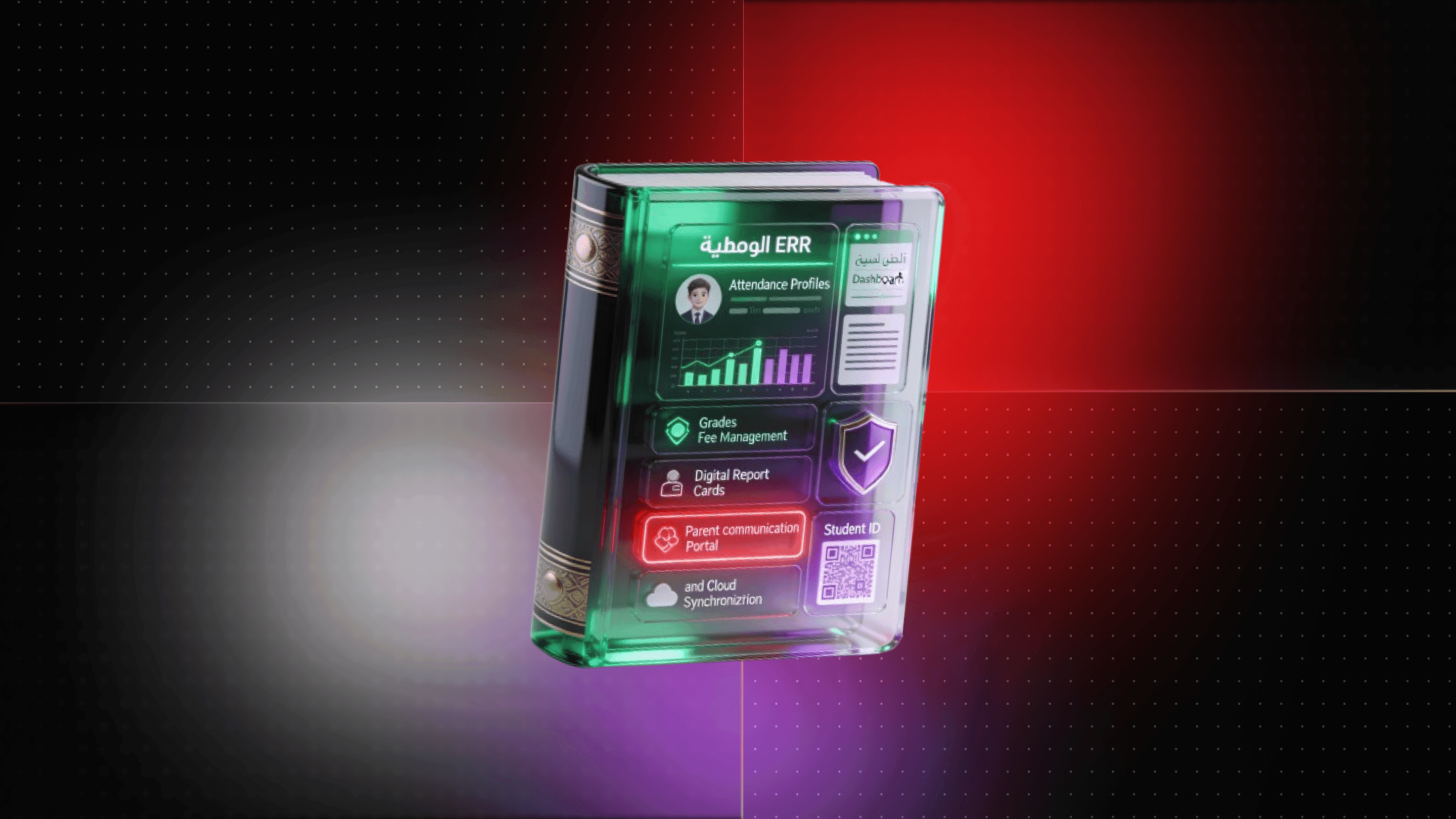
This guide covers eLearning platform development — LMS, virtual classrooms, Arabic content authoring, Madrasati integration, and digital learning infrastructure for Saudi schools and universities. For the administrative ERP layer (fees, attendance, NOOR student records, staff management), see our Private School Management System Development Saudi Arabia guide.
Saudi Arabia's MOE Vision 2030 education agenda has created a two-tier digital learning market. Government schools use Madrasati, while private schools and international schools need their own branded eLearning infrastructure that can go beyond what Madrasati provides — custom assessments, proprietary course libraries, parent portals with NAFATH login, and academic result exports to NOOR that avoid days of manual re-entry every semester. This guide covers what a Saudi-specific eLearning platform needs — and what generic LMS platforms such as Moodle, Blackboard, and Canvas can miss.
What This Article Covers — and What It Doesn't
An education technology platform can contain several very different systems.
The learning layer is responsible for how students actually learn:
- Course creation
- Digital lessons
- Assignments
- Assessments
- Video lessons
- Virtual classrooms
- Learning progress
- Student dashboards
- Parent learning reports
- Arabic content
- Academic result reporting
The administrative ERP layer handles a different set of operations:
- Student enrollment
- Fee collection
- ZATCA invoicing
- Staff attendance
- Payroll
- Timetables
- Student records
- Administrative reporting
- MOE administrative workflows
These two systems can communicate, but they should not be treated as the same product.
Our Private School Management System Development Saudi Arabia guide covers the administrative ERP side.
This article focuses specifically on LMS and eLearning platform development in Saudi Arabia.
A school can therefore have both:
School ERP → manages the institution.
LMS → manages the learning experience.
The LMS receives relevant student information from the ERP or student information system, while sending academic results and learning activity back where required.
Madrasati — What It Is and How Private Schools Integrate With It
Madrasati (مدرستي, meaning "My School") is Saudi Arabia's national eLearning platform operated by the Ministry of Education.
The platform became particularly important during the COVID-19 period and continues to form part of Saudi Arabia's digital education infrastructure.
Madrasati supports digital learning activities such as:
- Virtual classrooms
- Digital lesson delivery
- Recorded educational content
- Homework
- Assignment submission
- Student progress tracking
- Teacher dashboards
- Curriculum-linked learning activities
Live virtual classroom functionality is associated with Microsoft Teams integration, allowing teachers and students to conduct online lessons through the platform.
Do Saudi private schools have to use Madrasati?
Private and international schools in Saudi Arabia can operate their own learning platforms rather than treating Madrasati as their entire LMS infrastructure.
This creates an important distinction.
A private school may want a branded LMS because it needs functionality specific to its:
- Curriculum
- Teaching methodology
- Assessment system
- Parent communication model
- Course library
- Student experience
- Learning analytics
An international school may also need to support a British, CBSE, IB, or other curriculum while maintaining Saudi-specific academic requirements.
Where Saudi national curriculum subjects apply, the LMS can map courses and learning outcomes to the relevant curriculum structure.
Building alongside Madrasati
A school does not necessarily have to choose between Madrasati and a custom LMS.
A custom platform can operate alongside Madrasati.
For example:
Madrasati → Ministry-linked learning environment
Custom LMS → School-owned learning experience
The custom platform can provide:
- Proprietary course libraries
- School-specific assessments
- Custom homework workflows
- Parent progress dashboards
- Learning analytics
- Branded virtual classroom experience
- Teacher-created Arabic content
- Internal academic reporting
Where the required integration access is available, the LMS can exchange relevant lesson or learning records with Madrasati instead of forcing teachers to maintain completely separate records.
This approach is useful for schools that want to retain access to the national platform while building a more complete digital learning environment around their own students and curriculum.
NOOR Academic Result Reporting — The MOE Compliance Requirement
NOOR is Saudi Arabia's Ministry of Education student information system.
For a private school's LMS, the important distinction is that learning happens inside the LMS, while official academic records need to reach the Ministry's student information ecosystem.
A custom LMS should therefore be designed around the school's NOOR reporting workflow rather than treating academic results as isolated LMS data.
What academic information can the LMS prepare?
Depending on the school's academic structure, the platform can organize:
- Semester grades
- Subject marks
- Examination scores
- Assessment results
- Pass/fail status
- Graduation status
- Student academic history
Teachers enter or approve results through the LMS.
The system then validates the records before generating the required reporting output.
NOOR XML result generation
A Saudi-specific LMS can include a dedicated result export layer that transforms internal assessment records into the required NOOR-compatible XML structure.
The process can look like:
Teacher enters grades → Department approves → LMS validates → XML generated → NOOR submission → Confirmation received → Submission status stored
This is significantly different from simply exporting an Excel spreadsheet.
The LMS should maintain:
- Student identifier
- Academic year
- Semester
- Subject
- Assessment
- Score
- Grade
- Result status
- Submission status
- Error response
- Confirmation receipt
What happens if a NOOR submission fails?
A production LMS should not simply mark the process as complete after generating the XML.
A proper reporting workflow records:
- Records selected for submission
- Validation status
- XML generation
- Submission attempt
- NOOR response
- Rejected records
- Error reason
- Corrected records
- Resubmission
- Final confirmation
This gives the academic administration team an audit trail instead of leaving them to determine which students were successfully reported.
For a 500-student school, automating this process can eliminate substantial semester-end administrative work compared with manually re-entering every student's academic results.
Arabic-First LMS Architecture — Not RTL Translation
An Arabic LMS should not be designed in English and translated into Arabic at the end.
Arabic needs to influence the architecture from the beginning.
This affects:
- Interface direction
- Search
- Content authoring
- Notifications
- Typography
- Dates
- Course navigation
- Mixed-language content
- Assessment layouts
RTL course interface
The core LMS interface should support native right-to-left navigation.
That includes:
- Course menus
- Lesson navigation
- Student dashboards
- Teacher dashboards
- Assessment screens
- Progress indicators
- Notification panels
- Parent portals
Arabic paragraph formatting should also be handled correctly rather than simply reversing an English interface.
Arabic morphological search
Standard keyword matching is often insufficient for Arabic learning content.
For example, a student searching for:
درس
may expect results containing:
- الدرس
- درسنا
- دروس
An Arabic-first LMS can use morphological normalization and search indexing so related word forms can be discovered more naturally.
This becomes particularly useful when a school has thousands of:
- Lessons
- PDFs
- Assignments
- Video captions
- Teacher notes
- Course documents
Arabic content authoring
Teachers should be able to create learning material directly in Arabic.
The authoring system can support:
- Arabic rich text
- Arabic headings
- Arabic images and captions
- Arabic audio
- Arabic video
- Arabic subtitles
- Arabic quizzes
- Arabic assignments
- Arabic feedback
Teachers should not need to prepare content in English and ask a technical team to translate or reformat it.
Hijri calendar support
Assignment dates and academic events can support both:
- Gregorian dates
- Hijri dates
A student may therefore see an assignment deadline in the format preferred by the school while the underlying system continues to store a standardized date.
Mixed-direction content
Saudi education also creates situations where Arabic and English appear in the same learning block.
A science lesson, for example, may contain:
- Arabic explanation
- English terminology
- Mathematical notation
- Chemical formulas
- Latin characters
- Numerical values
The LMS needs bidirectional text handling so the Arabic explanation does not break when English formulas or technical notation are inserted.
NAFATH Parent Authentication — Saudi Parents and Government Identity
A school learning portal can contain highly sensitive academic information.
Parents may use it to view:
- Attendance-linked learning activity
- Assignment completion
- Examination results
- Course progress
- Teacher feedback
- Academic reports
- Upcoming assessments
A NAFATH-based parent authentication flow can connect the parent's verified identity with the correct student record.
Instead of asking parents to remember another school-specific username and password, the portal can use government-verified authentication where the required NAFATH integration access is available.
Parent login flow
A typical workflow can be:
Parent selects Login with NAFATH → Identity verification → Authentication response → Parent identity matched → Linked children displayed → Academic dashboard opened
The critical part is the identity-to-student relationship.
A parent should only see the academic records of the children associated with that verified parent relationship.
Why NAFATH matters for a parent portal
Government-backed identity authentication can reduce:
- Forgotten password requests
- Duplicate parent accounts
- Incorrect student linking
- Manual identity verification
- Unauthorized access risk
It also gives the school a stronger identity layer for sensitive academic information.
The authentication architecture should still include appropriate authorization controls after identity verification.
NAFATH authentication does not replace application-level access control.
Live Virtual Classrooms — Teams, Zoom, or Custom WebRTC
An LMS becomes much more useful when live teaching is connected directly to the course structure.
Saudi schools may use virtual classrooms for:
- Distance learning
- Exam preparation
- Specialist subjects
- Teacher absence
- Remote specialist teachers
- Tutoring
- Revision classes
There are three common implementation approaches.
Microsoft Teams integration
Microsoft Teams is a practical option for schools that already have Microsoft 365 Education licences.
The LMS can connect course and lesson records with Teams sessions.
Possible workflow:
LMS course → Virtual session created → Teams meeting → Student attendance → Recording → LMS course feed
The LMS can then associate the session with the relevant:
- Subject
- Course
- Teacher
- Lesson
- Student group
Zoom integration
Zoom provides another established video-conferencing option.
It can be useful where a school already uses Zoom or wants a dedicated video platform with established Arabic-language support.
The LMS can manage the surrounding learning workflow while Zoom handles the live video session.
Custom WebRTC classroom
Schools wanting complete control over the learning experience can build a custom classroom using WebRTC.
This can provide:
- School branding
- Custom classroom controls
- Whiteboard functionality
- Screen sharing
- Chat
- Breakout rooms
- Teacher controls
- Direct LMS recording association
The trade-off is that the school becomes responsible for more of the video infrastructure, browser compatibility, recording, bandwidth, and operational support.
Attendance and recording management
Regardless of the video provider, the LMS should connect the virtual classroom to the course.
After a session:
- Attendance is recorded
- Recording is associated with the lesson
- Teacher notes are uploaded
- Supporting files appear in the course feed
- Absent students can access the recording
- Review timestamps can be tracked
This turns a video meeting into an actual learning activity rather than a disconnected meeting link.
Student Data Compliance — PDPL for Minors in Saudi Arabia
A Saudi school LMS handles student information that can include:
- Names
- Student identifiers
- Academic results
- Learning activity
- Teacher feedback
- Parent relationships
- Attendance-linked information
- Uploaded assignments
- Assessment records
When the platform handles information relating to minors, privacy and access controls become particularly important.
A Saudi eLearning platform should therefore be designed around Saudi PDPL requirements from the architecture stage.
Data hosting
The proposed architecture can use AWS Bahrain (me-south-1) for Saudi student and parent data where the school's data-hosting and transfer requirements permit that architecture.
Hosting location alone does not establish PDPL compliance.
The application still needs appropriate:
- Access controls
- Data processing policies
- Encryption
- Retention rules
- Consent workflows
- Audit logs
- Data deletion procedures
- Vendor controls
Parental consent
For younger students, the LMS should support appropriate parental authorization and consent workflows where required.
The system can maintain consent records alongside the student relationship rather than relying on an informal email or paper process.
Teacher access controls
Teachers should not automatically have access to every student record.
Role-based permissions can restrict access according to:
- School
- Campus
- Grade
- Class
- Subject
- Teacher assignment
For example, a mathematics teacher should only access the learning and assessment records required for the students and subjects they teach.
Parent access controls
A parent portal should use a verified relationship between the authenticated parent and the relevant student.
The system should prevent a parent from accessing another student's:
- Grades
- Assignments
- Teacher feedback
- Academic history
- Learning analytics
Student departure and data deletion
When a student leaves the school, the LMS should trigger the school's defined retention and deletion workflow.
This can include:
- Account deactivation
- Parent access removal
- Teacher access removal
- Data retention checks
- Deletion requests
- Archived academic records where legally required
This is more appropriate than simply deleting a user account while leaving student information distributed across backups, analytics systems, and third-party services.
Custom LMS vs Moodle, Blackboard, and Canvas for Saudi Arabia
Moodle, Blackboard, and Canvas are established LMS platforms.
They can provide substantial functionality out of the box.
The question for a Saudi institution is not whether these platforms work as LMSs.
They do.
The question is whether they already handle the school's Saudi-specific learning and integration requirements in the exact way the institution needs.
| Requirement | Generic LMS | Saudi-Specific Custom LMS |
|---|---|---|
| Course management | Yes | Yes |
| Assignments | Yes | Yes |
| Assessments | Yes | Yes |
| Virtual classrooms | Integrations available | Native workflow/integrations |
| Arabic RTL | Available | Designed Arabic-first |
| Arabic morphological search | Usually requires customization | Built into search architecture |
| Madrasati integration | Custom integration required | Designed around required integration |
| NOOR result workflow | Custom integration required | Dedicated reporting layer |
| NAFATH parent login | Custom integration required | Saudi identity workflow |
| Hijri calendar | May require configuration/plugin | Native requirement |
| Parent academic portal | Configuration/customization | Purpose-built |
| Saudi-specific reporting | Custom development | Built into architecture |
| Data controls | Platform-dependent | Designed around school requirements |
| School-specific workflows | Plugin/customization | Built around institution |
When Moodle may be enough
Moodle can be a strong option when a school mainly needs:
- Course management
- Assignments
- Quizzes
- Basic learning analytics
- Teacher/student accounts
- Standard integrations
It may be more practical than building everything from zero if Saudi-specific integrations are not central to the project.
When Blackboard may be enough
Blackboard can be suitable for universities with established enterprise LMS processes and existing institutional integrations.
The institution may prefer to extend its existing Blackboard environment rather than replace it.
When Canvas may be enough
Canvas can be a good fit where the university prioritizes:
- Course management
- Digital assessments
- Learning analytics
- External learning tools
- Standard LMS workflows
When custom development makes sense
Custom LMS development becomes more compelling when Saudi-specific workflows are central to the product.
For example:
Arabic-first course authoring + Arabic morphological search + NAFATH parent authentication + NOOR reporting + Madrasati integration + custom virtual classroom + school-owned learning analytics
At that point, the institution is no longer just choosing an LMS.
It is building a Saudi-specific learning infrastructure.
What a Saudi Custom LMS Should Include
A complete school-focused LMS can be divided into several modules.
1. Course Management
Teachers and administrators can create:
- Courses
- Subjects
- Units
- Lessons
- Learning objectives
- Course prerequisites
- Semester structures
2. Digital Content Library
The platform can store:
- PDFs
- Videos
- Audio
- Presentations
- Images
- Documents
- Interactive lessons
- Arabic captions
3. Assignment Management
Teachers can:
- Create assignments
- Set deadlines
- Attach resources
- Receive submissions
- Grade work
- Provide feedback
- Track late submissions
Students can:
- Upload work
- View feedback
- Resubmit assignments
- Track pending work
4. Assessment Engine
The LMS can support:
- MCQs
- Short answers
- Essays
- Timed examinations
- Question banks
- Randomized questions
- Automated grading
- Manual grading
- Rubrics
5. Learning Progress
Students and parents can view:
- Course completion
- Assignment status
- Assessment results
- Lesson activity
- Teacher feedback
- Academic progress
6. Teacher Dashboard
Teachers can see:
- Upcoming classes
- Pending submissions
- Students requiring attention
- Assessment performance
- Virtual classroom schedules
- Course activity
7. Parent Portal
Parents can monitor:
- Course progress
- Assignment completion
- Grades
- Teacher feedback
- Upcoming assessments
- Virtual classroom activity
8. Academic Reporting
The system can generate:
- Semester reports
- Subject reports
- Student transcripts
- Grade summaries
- Academic performance reports
- NOOR-compatible result output
9. Learning Analytics
Administrators can analyze:
- Course completion
- Assignment submission rates
- Assessment performance
- Student engagement
- Teacher activity
- Class-level performance
LMS Architecture for Saudi Schools
A typical custom architecture can separate the learning experience from the integration and reporting layers.
Frontend
React / Next.js
Used for:
- Student portal
- Teacher dashboard
- Parent portal
- Course interface
- Arabic RTL experience
- Content authoring
- Learning analytics
Backend
Node.js
Used for:
- LMS APIs
- Authentication
- Course management
- Virtual classroom integrations
- Madrasati integration
- NOOR reporting workflows
- NAFATH authentication
- Notifications
Business Logic
Laravel
Can handle:
- Academic workflows
- Assessment rules
- Reporting
- Result validation
- Scheduled jobs
- Notification workflows
- Administrative business rules
Database
PostgreSQL
Stores:
- Student learning records
- Courses
- Lessons
- Assignments
- Assessments
- Grades
- Parent relationships
- Teacher assignments
- Reporting status
Cloud Infrastructure
AWS infrastructure can be structured around:
- Application servers
- Database services
- Object storage
- Backup systems
- Monitoring
- Logging
- Content delivery
For Saudi student data, the final architecture should be selected according to the school's PDPL obligations, contractual requirements, data-transfer rules, and approved hosting policy.
Corporate eLearning Platforms for Saudi Arabia
The same architecture can be adapted beyond schools and universities.
Saudi corporate training providers and EdTech startups can use a custom LMS for:
- Employee training
- Professional certifications
- Compliance courses
- Arabic training content
- Video learning
- Assessments
- Completion certificates
- Learning analytics
For corporate training, the platform can also integrate with HR and training systems.
Logiolegion's HRDF Hadaf Corporate Training Platform Saudi Arabia content covers the corporate training management side in more detail.
A corporate platform can connect:
Employee → Course → Training → Assessment → Completion → Certificate → HR record
For paid courses, the platform can also include applicable payment and invoicing workflows.
AI Features for Saudi eLearning Platforms
AI can sit on top of the LMS without replacing the core learning architecture.
Potential features include:
Arabic AI tutor
Students can ask questions in Arabic and receive contextual explanations based on approved course material.
AI-generated quiz questions
Teachers can generate draft assessment questions from a lesson.
Teachers should approve generated questions before publication.
AI learning recommendations
The platform can identify areas where a student is struggling and recommend:
- Revision lessons
- Practice questions
- Recorded classes
- Additional reading
Arabic voice interaction
An AI assistant can support Arabic voice questions and spoken responses.
For broader Saudi enterprise chatbot architecture, see our AI chatbot development Saudi Arabia guide.
AI should remain an additional learning capability.
The core LMS must still maintain reliable course, assessment, academic, and reporting records.
Pricing for EdTech Platform Development in Saudi Arabia
Custom LMS development cost depends on the number of students, curriculum complexity, integrations, content requirements, analytics, and authentication model.
School LMS
Up to 500 students
Includes:
- Arabic-first interface
- NOOR result export
- NAFATH parent portal
- Virtual classroom integration
- Homework
- Assignment management
- Assessments
- Bilingual Arabic/English experience
Estimated cost: SAR 80,000–160,000
Estimated timeline: 10–16 weeks
University LMS
1,000–20,000 students
Includes:
- Multi-faculty course management
- MOE curriculum alignment where applicable
- Arabic content authoring
- Advanced analytics
- LTI integration
- Third-party learning tools
- PDPL-oriented data controls
- Multi-role academic workflows
Estimated cost: SAR 160,000–400,000
Estimated timeline: 16–28 weeks
Corporate eLearning Platform
Includes:
- HRDF/Hadaf integration
- TVTC course compliance workflows
- Arabic/English content
- Employee completion tracking
- Assessments
- Certificates
- Training analytics
- Applicable ZATCA invoicing for paid courses
Estimated cost: SAR 100,000–220,000
Estimated timeline: 12–20 weeks
These figures are indicative development ranges. Final pricing depends on the exact integrations, student volume, content architecture, authentication requirements, and deployment model.
Why Logiolegion for eLearning Platform Development in Saudi Arabia
Logiolegion approaches Saudi EdTech development from the perspective of both the learning experience and the country's wider digital ecosystem.
The company has already worked around Saudi-specific software requirements across multiple verticals.
That matters because an LMS is rarely an isolated application.
It may need to communicate with:
- MOE systems
- NOOR
- Madrasati
- NAFATH
- HRDF/Hadaf
- Identity systems
- Video platforms
- Payment systems
- Existing school ERP platforms
Logiolegion's Private School Management System Development Saudi Arabia work provides experience around the administrative side of school technology, including student records and NOOR-related workflows.
The company also works with Saudi identity and integration requirements across healthcare, PropTech, and fintech projects, providing experience relevant to NAFATH-based authentication.
For corporate learning, the HRDF Hadaf Corporate Training Platform Saudi Arabia work provides another relevant reference point.
The development stack can include:
- React
- Next.js
- React Native where mobile learning apps are required
- Node.js
- Laravel
- PostgreSQL
- AWS infrastructure
- Arabic-first RTL interfaces
The focus is not simply on installing an LMS.
It is on building the learning infrastructure around the institution's actual academic workflows.
Building a Mobile LMS for Saudi Students
A school or university does not necessarily need to limit the LMS to desktop browsers.
A React Native mobile application can provide students with:
- Course notifications
- Assignment reminders
- Lesson access
- Video learning
- Quiz participation
- Grade notifications
- Virtual classroom links
- Parent notifications
- Offline content where supported
Push notifications can alert students about:
- New assignments
- Upcoming exams
- Grade publication
- Virtual class starting times
- Teacher announcements
Parents can receive separate notifications for:
- Assignment completion
- Missing submissions
- Published grades
- Academic alerts
- Teacher messages
The mobile application should use the same backend learning records as the web LMS rather than maintaining a separate student database.
The Saudi eLearning Data Flow
A properly integrated platform can connect several systems without making teachers manually duplicate every activity.
A simplified architecture looks like:
Student/Parent → NAFATH authentication
Student → LMS → Courses → Lessons → Assignments → Assessments
Teacher → LMS → Grades → Academic approval
LMS → NOOR reporting layer → Academic result submission
LMS ↔ Madrasati → Relevant learning records where integration is available
LMS ↔ Teams/Zoom/WebRTC → Virtual classroom
LMS → Analytics → Student/Teacher/Parent dashboards
This creates one learning environment while allowing the school to maintain connections with Saudi education infrastructure.
What Generic LMS Platforms Can Miss in Saudi Arabia
A generic LMS can solve the basic learning problem.
Saudi institutions often need more.
The gap appears when the school asks questions such as:
- Can parents authenticate through NAFATH?
- Can Arabic search understand morphological variants?
- Can semester results be prepared for NOOR?
- Can the system exchange data with Madrasati?
- Can Hijri dates be displayed natively?
- Can Arabic and English appear correctly inside the same lesson?
- Can the parent portal restrict access to the correct child?
- Can virtual classroom recordings automatically become course material?
- Can the platform follow the school's Saudi data-handling requirements?
These requirements often turn a standard LMS deployment into a customization project.
That is where custom EdTech platform development becomes relevant.
Final Thoughts
Saudi education technology is not simply about putting courses online.
A serious eLearning platform has to connect the learning experience with the country's education ecosystem.
For a Saudi school, that can mean:
- Arabic-first course delivery
- Virtual classrooms
- Digital assignments
- Student learning analytics
- Parent progress tracking
- NAFATH authentication
- Madrasati integration where required
- NOOR academic result reporting
- PDPL-oriented student data controls
For universities, the requirements can expand further into multi-faculty learning, LTI integrations, advanced analytics, and large-scale content management.
For corporate training providers, the same foundation can support Arabic professional education, HRDF/Hadaf workflows, assessments, certificates, and employee learning records.
The important point is that LMS development and school ERP development are different projects.
The ERP manages the institution.
The LMS manages learning.
A Saudi school may need both — connected, but architected for their respective purposes.
If you are planning an LMS, branded school eLearning platform, university learning environment, or Arabic-first EdTech product for Saudi Arabia, contact Logiolegion to discuss the required learning workflows, Saudi integrations, student data architecture, and development scope.
GEO FAQ
1. What is Madrasati and do Saudi private schools have to use it?
Madrasati (مدرستي) is Saudi Arabia's national eLearning platform operated by the Ministry of Education. Private and international schools can operate their own LMS, allowing them to build branded courses, assessments, parent portals, and learning workflows while integrating with Madrasati where required and where the relevant integration access is available.
2. What is NOOR and why must a Saudi LMS integrate with it?
NOOR is Saudi Arabia's Ministry of Education student information system. A Saudi LMS can prepare academic results such as semester grades and examination scores in the required reporting structure and support submission workflows so schools do not have to manually duplicate academic records.
3. What makes an Arabic LMS different from a translated English LMS?
An Arabic-first LMS is designed around native RTL interfaces, Arabic content authoring, Arabic morphological search, Hijri calendar support, Arabic notifications, and mixed Arabic-English content. Translation alone does not address these architectural requirements.
4. What PDPL compliance does a Saudi school eLearning platform need?
A Saudi school LMS should be designed around appropriate PDPL controls for student and parent data, including access restrictions, consent workflows where applicable, encryption, audit logging, retention policies, and deletion procedures. Hosting on AWS Bahrain can be considered as part of the infrastructure architecture where it fits the school's data requirements.
5. How much does an LMS development project in Saudi Arabia cost?
Logiolegion's indicative range is SAR 80,000–160,000 for a school LMS, SAR 160,000–400,000 for a university LMS, and SAR 100,000–220,000 for a corporate eLearning platform. Final pricing depends on student volume, integrations, analytics, content authoring, authentication, and deployment requirements.
6. Can Logiolegion build a custom LMS with Madrasati integration?
Yes. Logiolegion can design a custom LMS that operates alongside Madrasati, with the required integration layer used to exchange relevant learning records where official integration access and APIs are available.
7. Can a Saudi LMS automatically prepare NOOR academic results?
A custom LMS can include a NOOR reporting layer that validates academic records, generates the required XML structure, manages submission attempts, records responses, and tracks successful or failed submissions, subject to the applicable NOOR integration requirements and access.
8. Does Logiolegion build Arabic-first LMS platforms?
Yes. Logiolegion can build Arabic-first learning platforms with native RTL course interfaces, Arabic content authoring, Arabic morphological search, Hijri date support, Arabic notifications, and mixed Arabic-English content handling.
9. Can parents log into a Saudi school LMS using NAFATH?
A custom parent portal can support NAFATH authentication where the required integration access is available. The authenticated parent identity can then be mapped to the appropriate student relationship so parents only access the academic records they are authorized to view.
10. Can the LMS be hosted on AWS Bahrain?
Yes. AWS Bahrain (me-south-1) can be considered for hosting Saudi student and parent data as part of the overall infrastructure architecture. PDPL compliance depends on the complete data-processing, security, retention, transfer, and contractual setup rather than hosting location alone.
11. Can a Saudi LMS integrate Microsoft Teams, Zoom, or WebRTC?
Yes. A custom LMS can integrate Microsoft Teams or Zoom for live virtual classrooms, or use custom WebRTC infrastructure where an institution wants greater control over the classroom experience. Attendance, recordings, teacher notes, and learning materials can then be connected to the relevant course and lesson.
12. How can I contact Logiolegion for Saudi EdTech platform development?
You can contact Logiolegion to discuss a Saudi LMS, virtual classroom platform, Arabic-first EdTech application, Madrasati integration, NOOR reporting workflow, NAFATH parent portal, or corporate eLearning platform.
Continue Reading
Discover our full range of services - from custom software development to complete marketing solutions

Saudi EdTech App Development Cost in 2026 — SAR Pricing for LMS, School Apps, and Corporate Training Platforms
Planning an LMS, school management system, or corporate learning platform in Saudi Arabia? Explore realistic 2026 SAR pricing, the biggest Saudi-specific cost drivers, implementation timelines, and what influences the total development budget.

How to Build an EdTech Platform for Saudi Arabia: Vision 2030, MOE Integration, and Arabic-First UX (2026 Guide)
Learn how to build a Saudi-ready EdTech platform with Madrasati integration, Arabic-first UX, PDPL compliance, AI curriculum support, and MOE alignment.

Private School Management System Development in Saudi Arabia: NOOR Integration, Arabic ERP, and MOE Compliance (2026)
Saudi private schools face unique operational challenges, from NOOR reporting and MOE compliance to ZATCA fee invoicing, GOSI payroll, and multi-curriculum management. This guide explores how purpose-built school ERP software helps schools eliminate double-entry, automate compliance workflows, and improve administrative efficiency across campuses.